
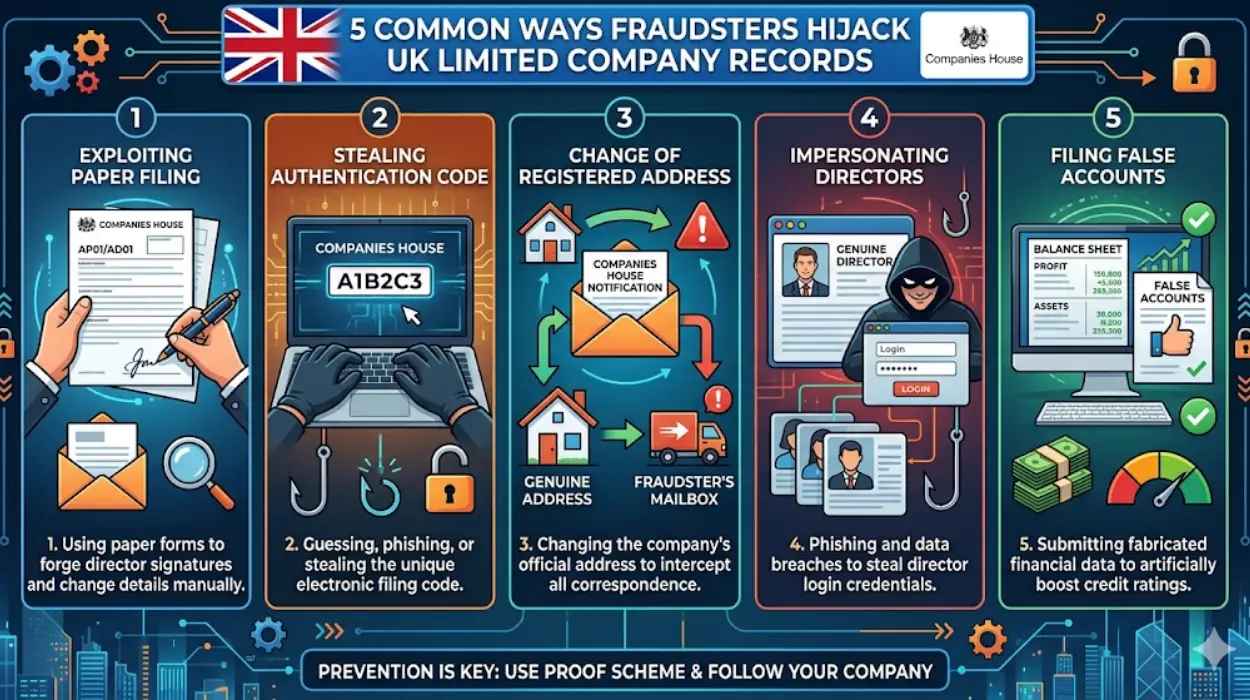
Fraudsters hijack UK limited company records primarily through unauthorized filings at Companies House, exploiting its historically permissive “good faith” filing system. The five most common methods include fraudulent director appointments, false charge satisfactions, dormant company revivals, address changes, and share transfer manipulations.
These tactics allow criminals to seize control of legitimate businesses for money laundering, loan fraud, or asset theft, often targeting inactive or poorly monitored companies.
Understanding the Threat to UK Businesses
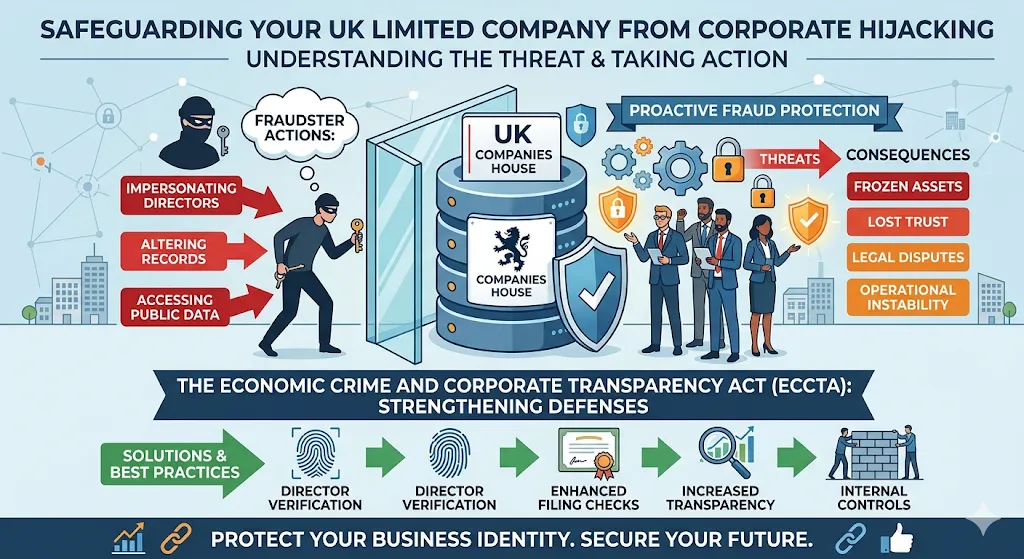
UK limited company records held at Companies House represent a public ledger of corporate identities, making them vulnerable to manipulation. Fraudsters access basic company details like director names, registered addresses, and filing history freely online, using this information to impersonate officers or alter records without detection. This corporate hijacking, also known as business identity theft, has surged with digital filing ease, affecting thousands of entities annually as noted in recent Economic Crime and Corporate Transparency Act (ECCTA) reforms.
The impact extends beyond immediate control loss; hijacked records can confuse lenders, partners, and authorities, leading to frozen assets or legal disputes. For startups and SMEs, which form the bulk of UK limited companies, such breaches erode trust and operational stability, underscoring the need for proactive Fraud Protection measures.
Method 1: Fraudulent Director Appointments
One prevalent tactic involves filing false appointment forms (TM01 or AP01 equivalents) to install fraudsters as directors, ousting legitimate ones. Criminals forge signatures or use stolen identities, submitting documents online where minimal verification historically occurred. This grants them authority to open bank accounts, sign contracts, or redirect funds under the company’s name.
In practice, a fraudster might scan Companies House for a dormant firm, file a director change citing “resignation” of originals, and assume control within days. Legitimate owners discover this only during credit checks or bank alerts, by which time damage mounts. Recent ECCTA updates mandate identity verification, yet gaps persist for older filings.
Method 2: False Charge Satisfaction Filings
Fraudsters submit bogus MR04 forms claiming secured charges (like bank loans) are satisfied, misleading lenders about collateral status. A notable 2024 incident saw 800 such filings hit 190 companies, including NatWest and HSBC, creating widespread confusion over billions in lending security.
This method exploits public reliance on accurate records; victims face delayed recoveries as courts untangle false satisfactions. Banks must then refile proofs, incurring costs and delays. For limited companies with assets tied to loans, this can halt expansions or trigger defaults, highlighting vulnerabilities in bulk digital submissions.
Method 3: Dormant Company Revivals
Inactive or struck-off companies attract revival scams where fraudsters file resurrection documents, appointing themselves as controllers. These “shell” entities, often lapsing due to owner neglect, hold clean records ideal for laundering. Criminals monitor registries for dormant statuses, then submit reactivation forms with fabricated board resolutions.
Consider a scenario where a defunct tech startup’s records are revived; fraudsters pivot it into a loan farm, securing advances against non-existent operations. Owners reclaiming control face administrative hurdles, including tax authority disputes. Form My Company’s Fraud Protection services help by monitoring for such unauthorized revivals.
Method 4: Unauthorized Address Changes
Altering registered office addresses via an online AR01 form diverts official mail, isolating owners from notices. Fraudsters select companies with outdated addresses, filing changes to PO boxes or accomplices’ locations, severing communication lines.
This subtle hijack enables cascaded fraud, like ignoring dissolution threats or tax demands. A logistics firm, for instance, might lose strike-off warnings, defaulting into fraudster hands. Regular checks via Companies House alerts mitigate this, but busy directors often overlook them until credit reports flag anomalies.
Method 5: Bogus Share Transfers
Filing invalid share transfer forms (SH01) dilutes ownership by issuing new shares to criminals, granting voting rights. This exploits lax verification on private companies, where share ledgers aren’t centrally validated. Fraudsters pose as shareholders, backdating transfers to legitimize control.
In a case-study style example, a family retail business sees shares “transferred” during director absence; fraudsters then pledge them for illicit loans. Recovery demands shareholder votes or court orders, draining resources. Linking to enhanced safeguards, explore Why Companies House Webfiling Protection is a Startup Essential for deeper insights on preventive filing locks.
Why Companies House Remains Vulnerable
Companies House’s shift from paper to WebFiling streamlined business but amplified risks, processing millions of filings yearly with automated acceptance. Pre-ECCTA, no routine ID checks existed; post-reform, while penalties rose, fraudsters adapt via mules or stolen credentials.
Dormant firms over 4 million UK-wide form 70% of targets due to absentee monitoring. Semantic keywords like “UK company record hijacking” and “limited company fraud prevention” surge in searches, reflecting rising awareness. Businesses must layer defenses beyond basic compliance.
Real-World Implications for Limited Companies
Hijacked records fuel broader crimes: money laundering via fake invoices or property flips under stolen identities. Lenders reject financing suspect firms; suppliers halt terms. A mid-sized manufacturer might lose a contract after a fraudulent director signs bad deals, cascading into insolvency.
Insurance rarely covers registry fraud, leaving directors personally liable. Proactive Fraud Protection from Form My Company integrates monitoring with compliance, flagging anomalies swiftly. For decision-makers eyeing security upgrades, consider Activate Enhanced Fraud Protection for Your Limited Company Now to secure your operations.
Protective Strategies for Business Owners
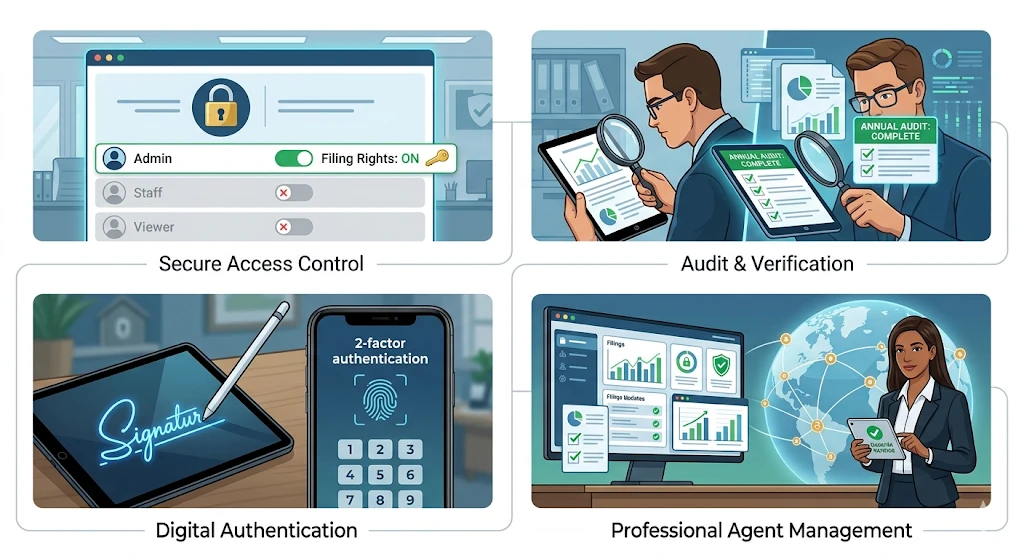
Directors should enroll in Companies House PROOF for filing alerts, review records monthly, and use nominee services for privacy. Digital signatures with two-factor authentication deter forgers; professional agents handle updates.
Form My Company’s Fraud Protection offers tailored monitoring, ensuring UK limited company records stay intact amid threats. Pair this with segmented access limit filing rights to trusted admins and annual audits. These steps transform vulnerability into resilience.
Emerging Trends and Regulatory Shifts
ECCTA 2023 empowers Companies House to quash false data proactively, with fines up to £10,000 for inaccuracies. Identity verification rollouts target directors, yet overseas mules evade via proxies. AI-driven fraud detection pilots promise faster flags.
For TOFU awareness, understanding these 5 common ways fraudsters hijack UK limited company records equips founders. As threats evolve, vigilance remains key.
In closing, Form My Company delivers professional Fraud Protection solutions, safeguarding your limited company records through expert monitoring and compliance support. Stay ahead of hijackers with reliable services designed for UK businesses.
What is Fraud Protection for UK limited companies from Form My Company?
Fraud Protection from Form My Company involves monitoring and securing Companies House records against unauthorized changes like director appointments or address alterations. It uses automated alerts and verification tools to detect hijacking attempts early, helping businesses maintain control. This service aligns with ECCTA requirements for identity checks and record integrity.
How do fraudsters commonly hijack UK company records?
Fraudsters hijack UK limited company records through methods like fake director filings, false charge satisfactions, dormant company revivals, address changes, and bogus share transfers. These exploits target public registries with minimal initial verification. Proactive monitoring prevents such takeovers before they escalate.
Why is Fraud Protection essential for startups registering at Companies House?
Fraud Protection is crucial for startups as dormant or inactive profiles become prime targets for criminals seeking clean records for laundering or loans. Form My Company’s service flags anomalies like unauthorized filings swiftly. It complements Webfiling safeguards to protect emerging businesses from identity theft.
How can Form My Company help prevent Companies House fraud?
Form My Company provides Fraud Protection by enrolling clients in filing alerts, conducting regular record audits, and advising on secure digital practices. This reduces risks from common tactics such as revival scams or share dilutions. Businesses gain peace of mind through compliant, layered defenses.
What steps should I take if my limited company records are hijacked?
If hijacked, immediately contact Companies House to dispute filings and provide evidence of fraud, while notifying your bank and insurers. Form My Company’s Fraud Protection can assist with rapid rectification and monitoring recovery. Act fast to minimize damage from altered directors or addresses.