
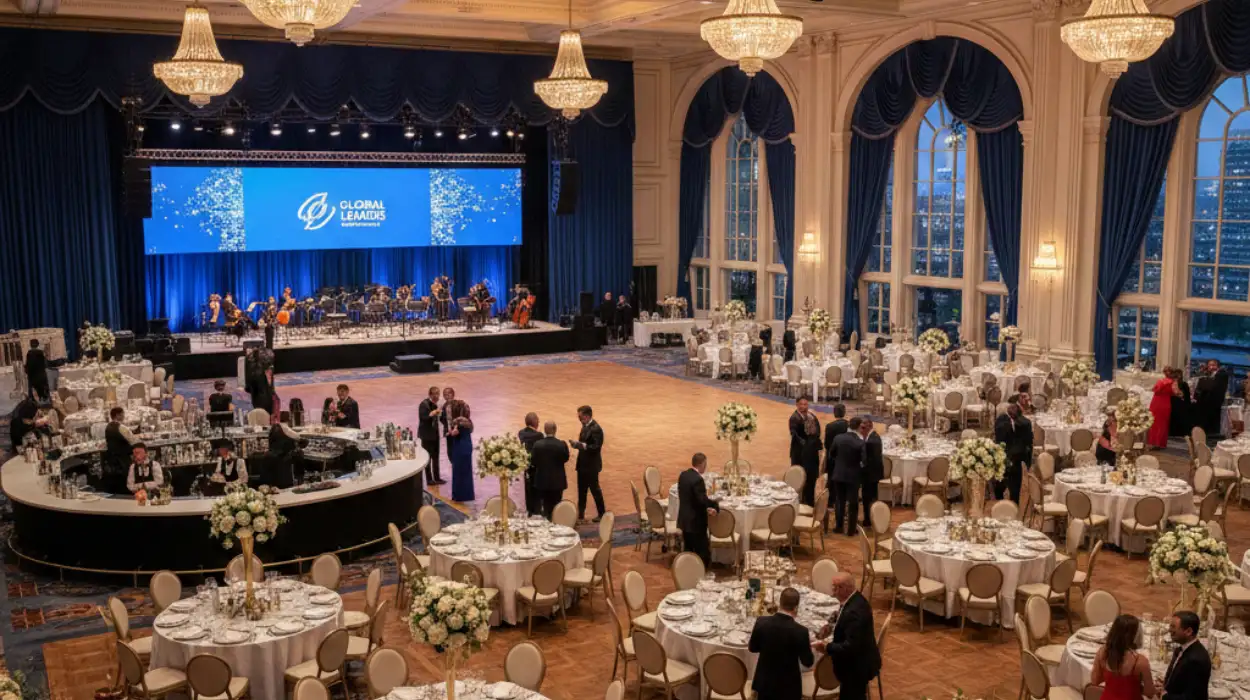
Large conference rooms outperform smaller venues for corporate events by accommodating bigger audiences, advanced tech setups, and interactive formats that drive engagement and outcomes. They project professionalism essential for directors and shareholders while ensuring compliance with UK event regulations. This setup elevates events from routine to strategic milestones for growing businesses.
Corporate events whether annual general meetings (AGMs), product launches, or shareholder briefings are pivotal for UK companies navigating growth phases. A large conference room provides the scale and sophistication needed to impress stakeholders, facilitate meaningful interactions, and align teams on critical matters like Companies House compliance or VAT strategies. For entrepreneurs post-company formation, these events reinforce credibility, much like maintaining a professional registered office signals stability to regulators and partners.
Choosing the right venue impacts attendance, participation, and follow-through decisions. Small spaces constrain energy and logistics, while expansive conference rooms enable dynamic formats, keynotes, workshops, networking that mirror the structured governance of well-managed business structures. In a competitive landscape, where directors must demonstrate accountability to shareholders, opting for larger venues underscores commitment to excellence and legal adherence, setting the tone for productive corporate discourse.
Step-by-Step Explanation: Why Size Matters
Assessing Capacity and Layout Needs
Start by calculating attendee numbers, including directors, shareholders, staff, and guests often 50-200 for impactful events. Large conference rooms, typically 500+ square feet, offer flexible layouts: theatre-style for presentations on PAYE updates, cabaret for breakout discussions on business structures, or banquet for networking dinners. This scalability prevents overcrowding, ensuring comfort and sightlines.
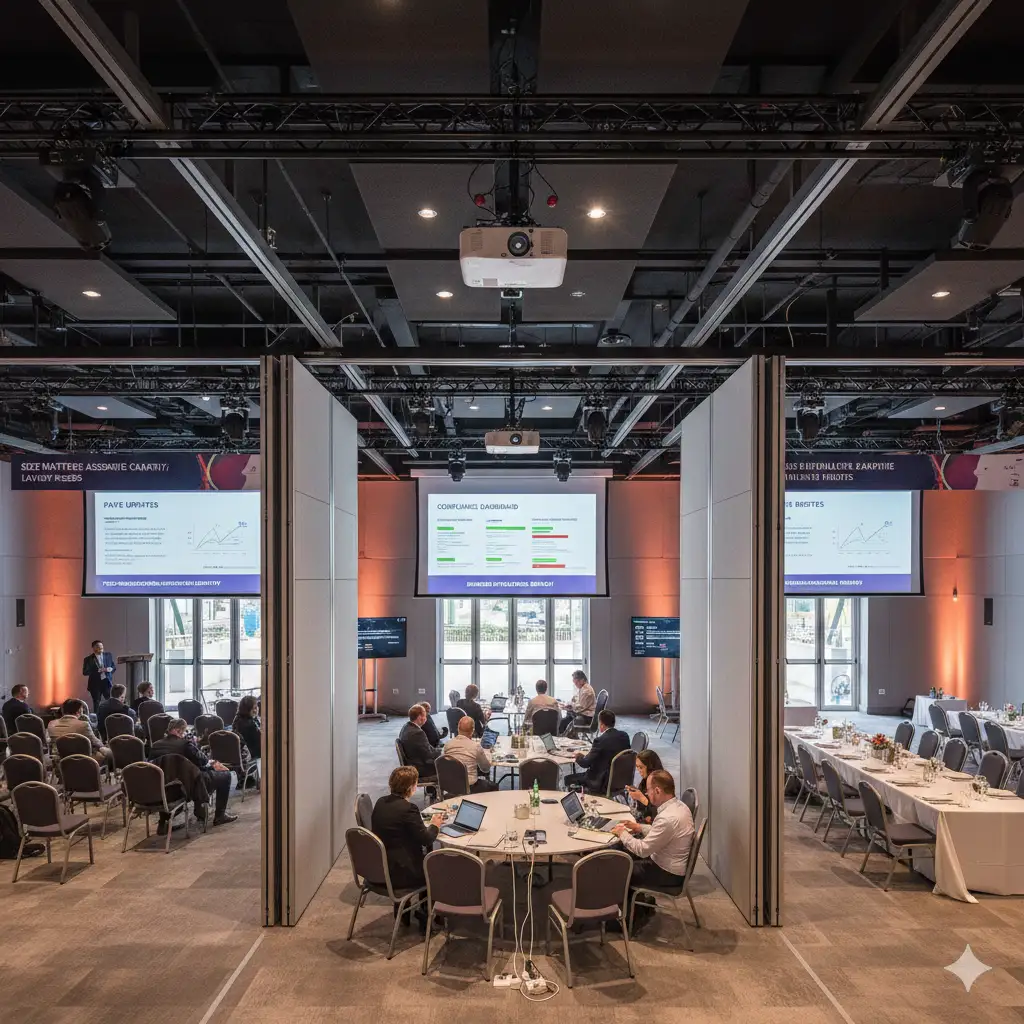
Evaluate tech infrastructure: high ceilings support projectors and lighting rigs, essential for displaying compliance dashboards or shareholder reports. Wide entrances and divisible walls allow seamless flow between sessions, like transitioning from AGM formalities to informal Q&A. Unlike cramped rooms, large spaces integrate AV seamlessly, with distributed microphones capturing input from all corners vital for documenting resolutions per Companies Act requirements.
Integrating Technology and Ambiance
Next, factor in acoustics and lighting. Expansive rooms with soundproofing and adjustable LED systems maintain clarity during director addresses, minimising echoes that plague smaller venues. Climate control across zones keeps comfort consistent, preventing fatigue in long sessions covering VAT thresholds or director appointments.
Ample power outlets and high-speed Wi-Fi support live polling or hybrid participation, crucial when shareholders join remotely. These elements create an immersive environment, elevating events beyond logistics to memorable experiences that reinforce corporate identity post-registration.
Benefits and Potential Risks
Large conference rooms deliver tangible advantages for corporate events. They foster inclusivity, allowing full attendance without turnaways, which boosts morale and shareholder buy-in. Superior tech enables polished presentations e.g., interactive charts on financial compliance enhancing decision quality. Networking zones in expansive layouts spark collaborations, directly impacting business growth.
Scalability future-proofs events as companies expand, aligning with milestones like surpassing VAT registration thresholds. Risks include higher costs rental fees can hit £500/hour straining budgets for new SMEs. Overly vast spaces may dilute intimacy if not zoned properly, leading to disengagement. Logistical challenges like catering for hundreds require precise planning. Balancing these with contingency budgets and vendor expertise mitigates downsides, much like proactive PAYE setup avoids penalties.
Legal and Compliance Considerations
UK corporate events must comply with the Companies Act 2006, mandating accurate AGMs or EGMs with quota attendance and minute decisions. Large conference rooms facilitate this by providing space for proxy voting stations and secure recording setups, ensuring evidential integrity for Companies House filings. Under UK GDPR, handling attendee data names, dietary needs, accessibility requests demands robust consent processes; ample room allows private registration desks.
Health and safety under the Health and Safety at Work Act requires clear evacuation routes, fire exits, and capacity limits easier managed in designed large venues with professional management. Equality Act 2010 compliance means wheelchair access, hearing loops, and quiet zones, standard in premium conference rooms. For regulated sectors, filming events for shareholder archives needs venue permissions. Adhering elevates trust, paralleling diligent confirmation statements.
Common Mistakes to Avoid
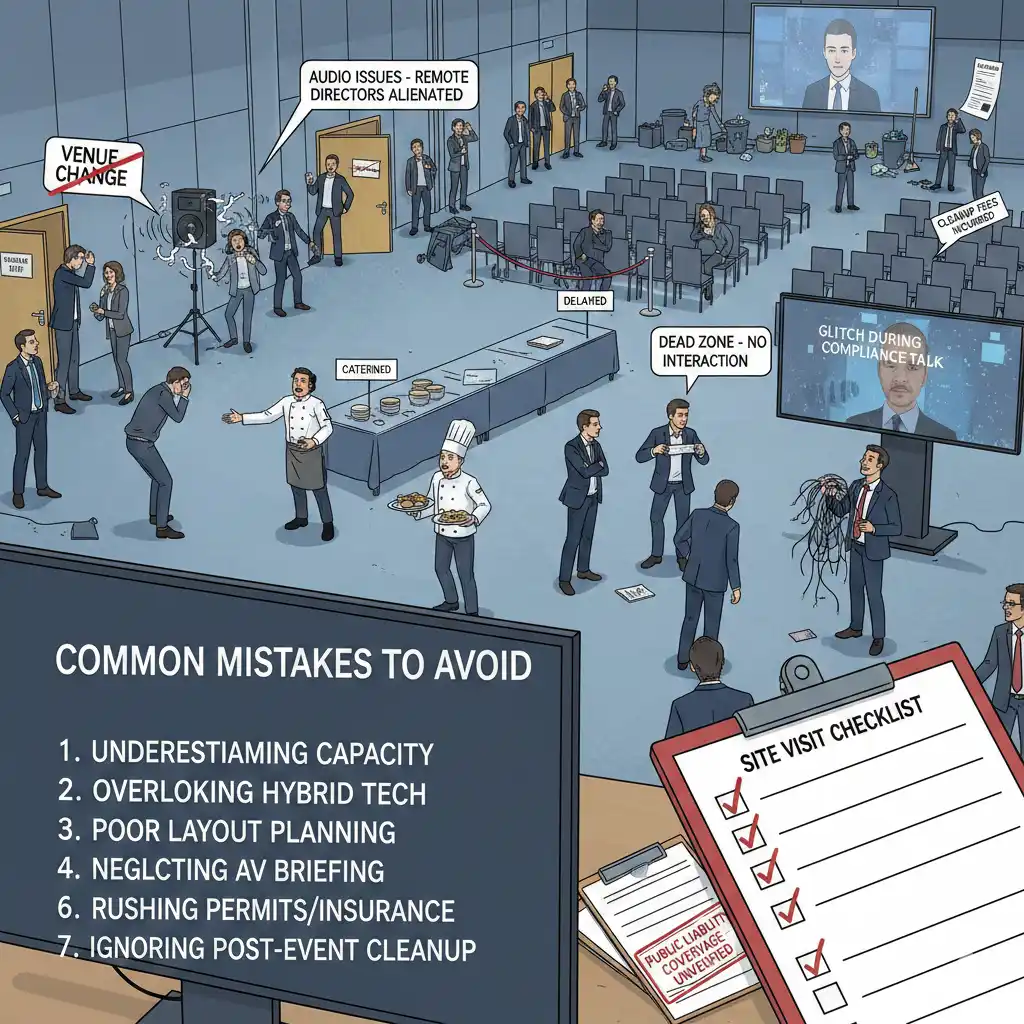
A top error is underestimating capacity, forcing last-minute venue changes that disrupt compliance timelines like AGM deadlines. Overlooking hybrid tech in large rooms leads to audio issues, alienating remote directors. Poor layout planning creates dead zones, stifling interaction on shareholder proposals.
Neglecting catering logistics for big groups causes delays, mirroring lapses in registered office maintenance. Failing to brief AV teams results in glitches during key compliance talks. Rushing permits or insurance exposes liability always verify public liability coverage. Ignoring post-event cleanup clauses incurs fees, akin to overlooked PAYE filings. Thorough site visits and checklists prevent these pitfalls, safeguarding reputation.
Practical Tips and Best Practices
Book venues 3-6 months ahead, negotiating packages including tech setup and catering tailored to UK preferences think full English breakfasts for morning AGMs. Zone the space: front for keynotes, mid for directors/shareholders, rear for media. Test tech walkthroughs twice, scripting transitions between compliance segments.
Incorporate branding banners on business structures, digital walls for Companies House updates to reinforce identity. Provide branded notebooks for notes, capturing action items. Schedule breaks strategically, using perimeter areas for informal chats. Partner with virtual office providers for bundled conference access post-formation. Measure success via post-event surveys on engagement and NPS scores, refining future events.
Large conference rooms transform corporate events into powerful platforms for strategy, compliance, and connection, outshining smaller alternatives in scale and impact. They enable entrepreneurs to showcase professionalism, unite directors and shareholders, and drive business forward within UK regulatory frameworks.
If you’re ready to register your company with confidence, Form My Company provides fast, fully online company formation with expert compliance support. Get started today and let our specialists handle the paperwork registration, VAT, PAYE, virtual offices while you focus on hosting events that grow your business.
Frequently Asked Questions
Why choose large rooms over hotels for corporate events?
Large conference rooms offer dedicated corporate tech and compliance-ready setups, unlike hotels’ multipurpose spaces prone to conflicts, ensuring seamless AGMs and shareholder meets.
How do they support hybrid corporate events?
Multiple cameras, high-bandwidth streaming, and echo-cancellation tech maintain parity for remote directors, complying with inclusive governance standards.
What costs should startups budget?
£200-£800/hour plus VAT; bundle with virtual office services for discounts, offsetting post-registration expenses like PAYE setup.
Are large rooms accessible for disabled attendees?
Premier venues provide ramps, lifts, induction loops, and reserved parking, meeting Equality Act mandates fully.
How to ensure data security during events?
Use venue Wi-Fi with VPNs, secure registration apps, and GDPR-compliant vendors for attendee lists and recordings.