
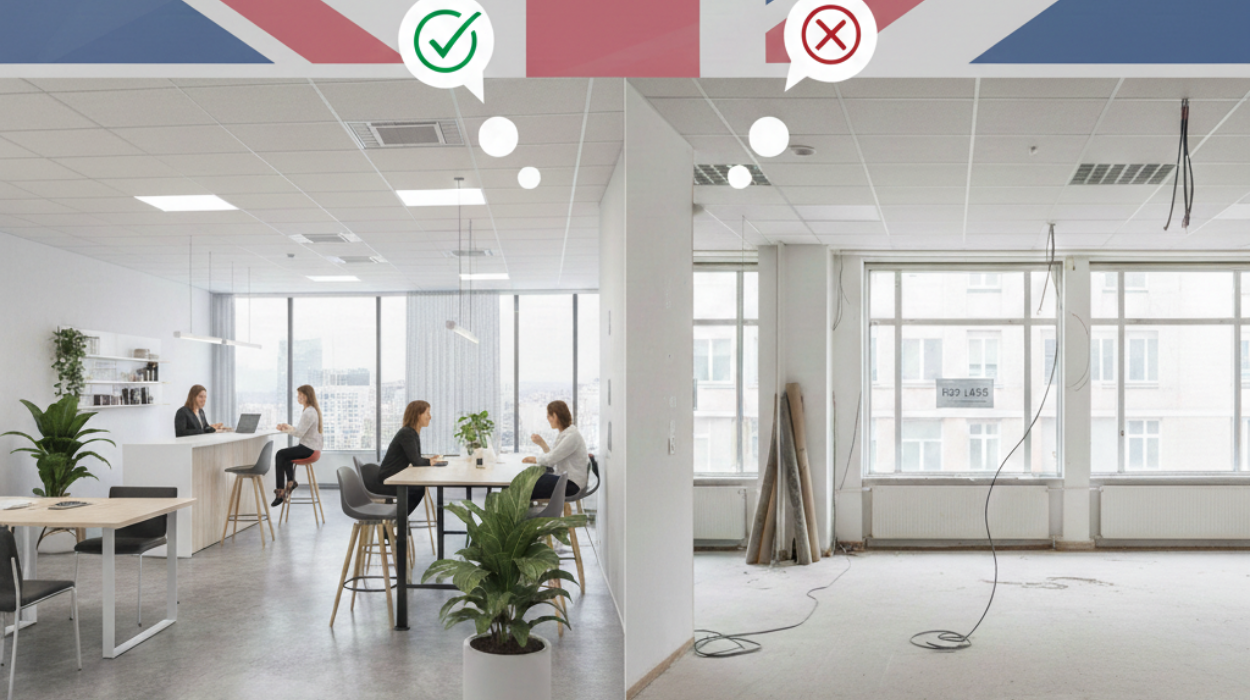
Serviced offices offer UK SMEs superior flexibility, all-inclusive costs, and rapid scalability compared to traditional leases, making them ideal for dynamic growth phases post-company formation. Traditional leases provide long-term stability and potentially lower per-square-foot rates but lock businesses into rigid commitments that can strain cash flow during economic shifts. The choice hinges on your business structure, compliance needs, and strategic goals, with serviced options often aligning better for startups managing VAT, PAYE, and Companies House obligations.
Choosing the right office space is a pivotal decision for UK SMEs, directly influencing operational efficiency, overheads, and compliance during company formation and beyond. With over 5.5 million small and medium enterprises registered at Companies House in 2026, many directors and shareholders grapple with balancing cost, flexibility, and professionalism. Serviced offices fully furnished, utility-inclusive spaces with short-term contracts contrast sharply with traditional leases, which demand lengthy commitments, fit-out investments, and separate utility arrangements.
For new limited companies navigating VAT thresholds, PAYE setups, and annual confirmation statements, serviced offices provide a professional registered office alternative without the burdens of long-term liability. Traditional leases suit established firms prioritising customisation but expose SMEs to risks like dilution penalties or renegotiation hurdles amid HMRC audits. This comparison equips entrepreneurs with data-driven insights into costs, legalities, and real-world implications, drawing from UK commercial property trends and governance standards under the Companies Act 2006.
Step-by-Step Comparison of Serviced Offices vs Traditional Leases
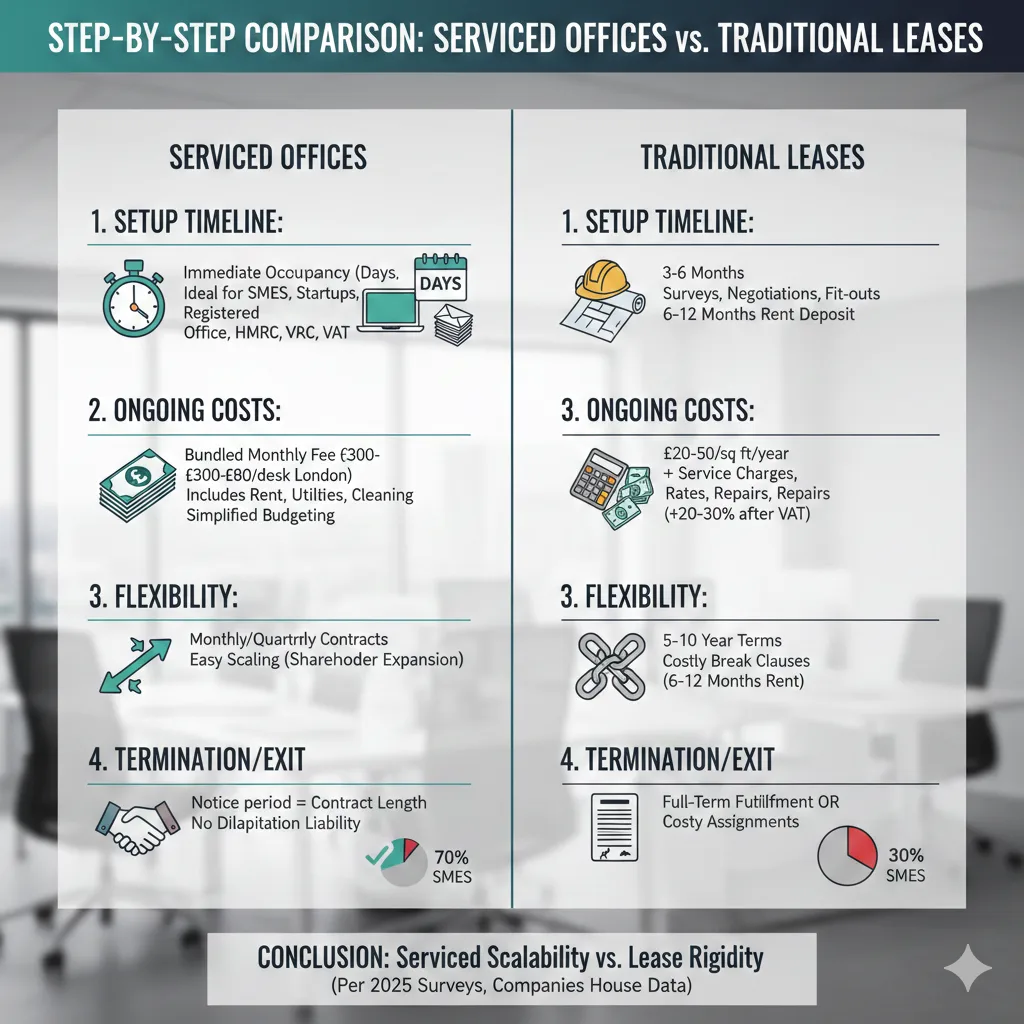
Evaluating serviced offices against traditional leases requires a structured breakdown. Assess setup timelines. Serviced offices enable immediate occupancy often within days ideal for SMEs post-incorporation needing a registered office for Companies House filings. A tech startup can book a desk, receive HMRC correspondence, and commence VAT-registered trading without delays. Traditional leases involve surveys, negotiations, and fit-outs spanning 3-6 months, plus deposits equivalent to 6-12 months’ rent.
Examine ongoing costs. Serviced spaces bundle rent, utilities, cleaning, and maintenance into monthly fees (£300-£800 per desk in London), simplifying PAYE budgeting. Traditional leases start at £20-£50 per sq ft annually but add service charges, business rates, and repairs potentially 20-30% more after VAT. Step three: Flexibility review. Serviced contracts roll monthly or quarterly, allowing scaling for shareholder expansions; traditional 5-10 year terms incur break clauses costing 6-12 months’ rent.
Termination and exit. Serviced offices require notice matching contract length, with no dilapidation liabilities. Leases demand full-term fulfilment or costly assignments. For a growing e-commerce Ltd handling PAYE for 20 staff, serviced scalability trumps lease rigidity. This process reveals serviced offices suiting 70% of SMEs under Companies House data, per 2025 surveys.
Benefits and Potential Risks of Each Option
Serviced offices excel in flexibility and speed, benefiting SMEs during volatile growth. All-inclusive pricing aids cash flow forecasting for VAT returns and PAYE submissions, while professional amenities reception, meeting rooms, IT support enhance client impressions without capex. Prestige addresses in Mayfair or Manchester elevate credibility for directors courting investors or shareholders. Risks include higher per-desk costs (20-50% premium) and limited customisation, potentially misaligning with unique branding needs.
Traditional leases offer cost savings over time lower rents post Year 3 and full control for bespoke layouts supporting complex operations like dedicated compliance teams. Long-term stability fosters team culture, vital for retaining PAYE-registered staff. However, risks abound: Market downturns strand overcommitted spaces, with assignment fees averaging £10,000-£50,000. Upfront costs (£50,000+ fit-outs) strain post-formation finances, and variable utilities complicate budgeting amid HMRC scrutiny.
A 2025 case: A Bristol fintech SME switched from lease to serviced amid recession, saving £80,000 annually while maintaining Companies House compliance. Benefits favour serviced for agility; leases suit predictability.
Legal and Compliance Considerations for UK SMEs
Under UK law, both options must support registered office requirements if serving that function physical accessibility for Companies House documents is mandatory per Companies Act 2006 Section 86. Serviced offices qualify seamlessly, often providing mail handling compliant with HMRC for VAT and PAYE notices. Providers indemnify against service failures, reducing director liability.
Traditional leases demand due diligence: Ensure heads of terms cover break options, assignments, and subletting to avoid PSC register complications for shareholders. Dilapidation schedules at lease-end can yield £20,000+ disputes; serviced avoids this via inclusive maintenance. Business rates liability shifts post-VAT registration (£12,000 average for 1,000 sq ft), easier managed in serviced with central billing.
For Ltd companies, serviced spaces facilitate hybrid compliance training on governance duties. Leases risk non-compliance if voids occur, triggering strike-off risks. HMRC accepts both for correspondence, but serviced’s digital forwarding streamlines remote directors. Legal advice during formation ensures alignment with fiduciary duties.
Common Mistakes SMEs Make When Choosing Office Space
SMEs often underestimate total lease costs, overlooking service charges (up to 40% of rent) and fit-out overruns, crippling cash flow for new PAYE hires. Opting for long leases without exit strategies traps firms during pivots, as seen in 2024’s 15% SME insolvency spike tied to property overhangs. Ignoring scalability dooms serviced users who outgrow without notice periods matching growth.
Another pitfall: Neglecting registered office suitability traditional spaces require explicit Companies House notification changes, risking filing delays. Overlooking VAT implications on fit-outs adds 20% costs unexpectedly. Shareholders undervalue serviced prestige, opting for cheap leases that undermine investor confidence.
A Manchester agency leased prematurely, facing £30,000 break fees amid remote work shift. Avoidance demands financial modelling spanning 3-5 years, incorporating Companies House and HMRC timelines.

Practical Tips and Best Practices for Decision-Making
Begin with a 3-year forecast integrating revenue projections, headcount for PAYE, and VAT tiers. Trial serviced spaces via day rates to test fit before committing. For leases, engage surveyors early for rent-free periods and caps on uplifts.
Best practice: Hybrid model core serviced for flexibility, satellite lease for stability. Verify provider accreditations (IPSO for serviced) ensuring compliance-ready addresses. Negotiate serviced add-ons like virtual office bundles for Companies House.
Budget 10-15% of turnover for space; review annually against KPIs like staff retention. A Leeds startup scaled via serviced, accommodating 50% growth without disruption. Integrate with formation: Use serviced as registered office from incorporation.
Serviced offices outperform traditional leases for most UK SMEs seeking agility amid compliance demands, though leases fit stable operations. Weigh flexibility against customisation for optimal business structures.
If you’re ready to register your company with confidence, Form My Company provides fast, fully online company formation with expert compliance support, virtual office addresses, VAT & PAYE handling, and professional guidance. Get started today and let our specialists handle the paperwork while you focus on growing your business.
Frequently Asked Questions
Can serviced offices serve as a registered office for Companies House?
Yes, provided physical access for mail; most providers comply fully, handling HMRC and filings seamlessly for directors and shareholders.
How do costs compare long-term for serviced vs traditional leases?
Serviced averages £15,000/year per desk; leases drop to £10,000 post-Year 3 but add variables ideal for short-term SMEs.
Are there tax implications for choosing serviced offices?
VAT-inclusive serviced simplifies reclaim; leases allow deductions on fit-outs but complicate PAYE budgeting.
Can SMEs sublet traditional lease space if needs change?
Possible via assignments, but landlord consent and fees apply riskier than serviced monthly rolls.
Which suits startups post-company formation best?
Serviced: Quick setup, compliance focus, scalability for VAT/PAYE growth without lease burdens.