

A registered office address serves as your business’s official public address, keeping your personal or home address off public records and acting as the first line of defense against fraud by masking sensitive information from scammers. This simple step reduces risks like identity theft and fraudulent registrations that exploit publicly available data.
Why Public Business Addresses Attract Fraudsters
When you register a company, government databases require a registered office address, which becomes publicly searchable. Using a home address exposes personal details to anyone, including fraudsters who mine this data for scams. A professional registered office address from a service like Form My Company changes this dynamic, listing a neutral business location instead.
This exposure isn’t theoretical. Scammers use public records to link personal addresses to businesses, enabling identity fraud or fake filings that hijack your company’s details. By contrast, a dedicated registered office centralizes legal mail and service of process discreetly, preventing direct access to your private information. Businesses that adopt this practice early avoid the cascade of issues from unwanted solicitations to legal entanglements.
The Mechanics of Fraud Through Address Exposure
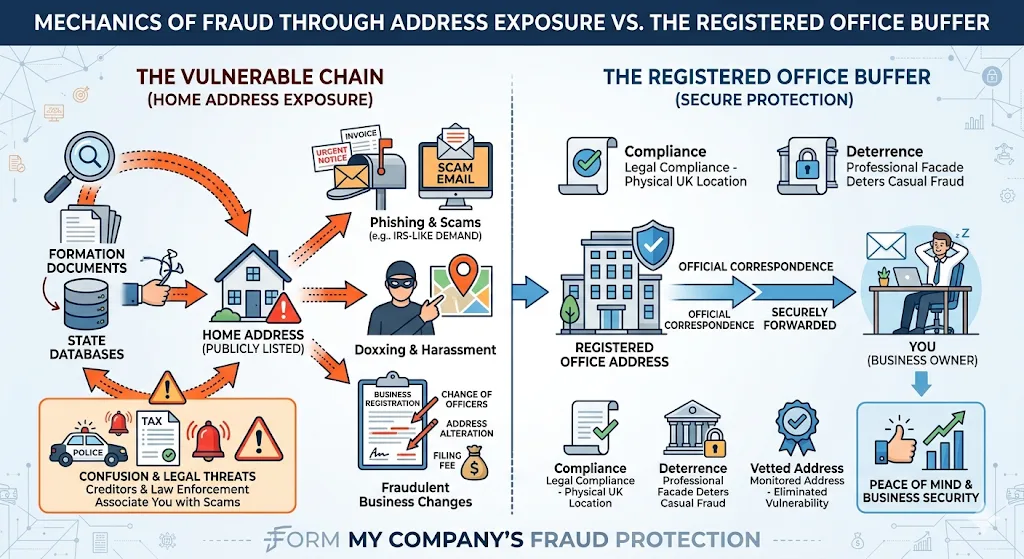
Fraudsters target registered addresses because they appear in formation documents, annual reports, and state databases. If your home address is listed, it provides a direct vector for phishing, doxxing, or filing fraudulent changes to your business registration like altering officers or addresses for just a filing fee. These tactics create confusion with creditors, tax authorities, or law enforcement, who may associate you with scams.
A registered office address interrupts this chain. It acts as a secure buffer, receiving official correspondence while forwarding it promptly to you. This setup not only complies with legal requirements but also builds a professional facade that deters casual fraud attempts. For UK companies, where Companies House mandates a registered office, this is especially critical as the address must be a physical UK location open to public inspection.
Consider a small consultancy using its founder’s home address. A scammer spots it online, registers a shell company there, and suddenly the owner receives debt collection notices or IRS-like demands. Switching to a registered office address from Form My Company‘s Fraud Protection service eliminates this vulnerability by providing a vetted, monitored address.
Legal Requirements and Hidden Risks
UK law requires every company to maintain a registered office address for official communications, making it a mandatory shield if chosen wisely. Listing a home address heightens risks outlined in discussions around Why Using Your Home Address Increases Your Risk of Fraud, where personal exposure invites targeted scams. Fraudsters exploit this by filing bogus amendments, leading to reputation damage or financial mix-ups.
Beyond compliance, the address serves as a fraud detection point. Professional services monitor incoming mail for anomalies, alerting you to suspicious activity like unrecognized filings. This proactive layer contrasts with self-managed addresses, where delays in noticing fraud can compound damages. Data from business protection guides shows that address masking via registered agents reduces identity theft attempts significantly.
Real-World Vulnerabilities Without Protection
Home-based businesses face amplified threats, as their address doubles as a personal residence. Public exposure invites unwanted mail, subpoenas, or even physical visits from process servers, eroding privacy. High-net-worth owners or those in sensitive industries like finance see even greater dangers, with scammers using address data to craft sophisticated phishing or loan fraud schemes.
Retailers with storefronts might think their location suffices, but public service of process there risks embarrassing scenes or operational disruptions. Frequent relocations exacerbate issues, as updates lapse and notifications miss deadlines. A stable registered office address ensures continuity, regardless of your operational changes, forming a robust first defense.
Imagine a tech startup whose founders list a shared flat. Fraudsters register fake entities there, triggering credit freezes or vendor disputes. Adopting a professional solution averts this, channeling all official interactions through a secure hub.
How a Registered Office Enhances Fraud Protection
The core benefit lies in separation: your business address stays public-facing while personal details remain private. This setup thwarts data harvesting, a common fraud precursor. Services bundle monitoring, ensuring rapid response to threats like fraudulent director appointments or address hijacks.
Integration with broader Fraud Protection plans amplifies this. These include compliance checks and alerts, turning the address into an active sentinel. For MOFU-stage businesses evaluating options, this positions Form My Company as a comprehensive partner, blending address services with vigilant oversight.
Practical implementation is straightforward. Select a provider, update Companies House, and redirect mail flows. The result? A fortified perimeter that professionalizes your presence and safeguards assets.
Building Additional Layers Around Your Address
While the registered office is foundational, pair it with credit freezes and regular database audits for defense-in-depth. Monitor Companies House for unauthorized changes, reporting anomalies swiftly. Virtual mailboxes complement this, digitizing non-legal mail to minimize physical risks.
For growing firms, multi-state or international operations demand scalable solutions. A single, reliable registered office adapts, supporting expansion without exposing new vulnerabilities. Form My Company’s Fraud Protection service exemplifies this, offering tailored plans that evolve with your needs.
Case-Style Insights from Common Pitfalls
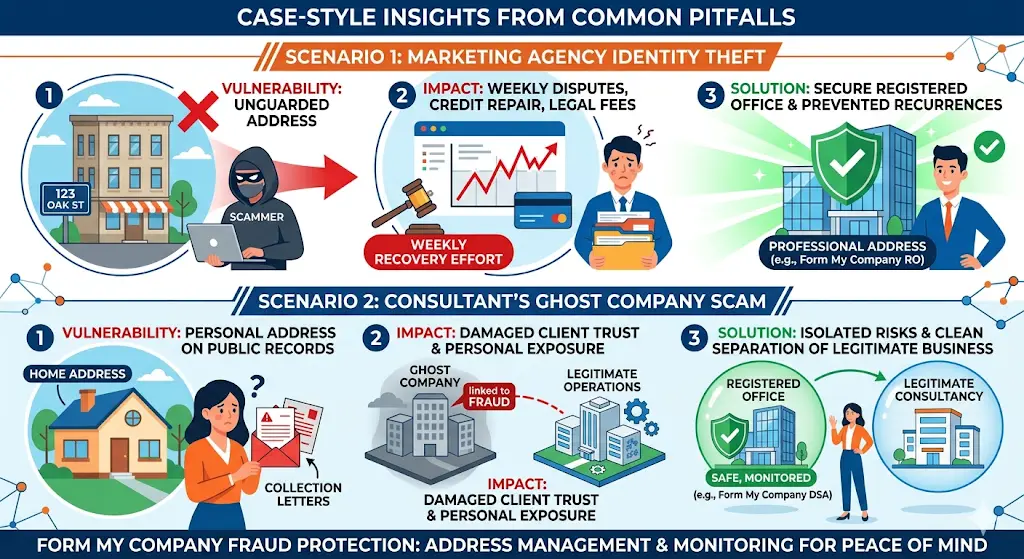
A marketing agency overlooked its registered address, leading to a scammer’s fake loan application using their details. Recovery involved weeks of disputes, credit repairs, and legal fees. Post-incident, switching to a professional address prevented recurrences, highlighting the address’s role as proactive defense.
Another scenario: a consultant received collection letters for a ghost company at her home. Public records linked her to the fraud, damaging client trust. A registered office resolved this by isolating future incidents, allowing clean separation of legitimate operations.
These examples underscore how Form My Company’s Fraud Protection integrates address management with monitoring, delivering peace of mind through structured safeguards.
Long-Term Benefits for Business Resilience
Over time, a strategic registered office builds credibility, signaling stability to partners and regulators. It reduces administrative burdens, freeing focus for growth. In fraud-heavy landscapes, this edge compounds, protecting against evolving threats like AI-driven scams targeting public data.
Businesses report fewer disruptions and enhanced compliance, attributing it to professional address handling. For UK entrepreneurs, where fraud costs billions annually, this investment yields outsized returns.
Partnering with Experts for Lasting Security
Form My Company provides professional registered office solutions as part of its Fraud Protection offerings, ensuring your first defense line is impenetrable. Ready to Secure Your Business with Our Address and Fraud Protection Plan? Their services deliver authoritative protection tailored for modern businesses.
What is Fraud Protection from Form My Company?
Fraud Protection from Form My Company is a service that safeguards businesses by providing a registered office address and monitoring for unauthorized filings or scams. It keeps personal addresses private from public records like Companies House while alerting you to suspicious activity. This creates a secure barrier against identity theft and fraudulent company registrations.
How does a registered office address help prevent fraud?
A registered office address acts as the official public location for your business, masking your home address from scammers who exploit public databases. It receives legal mail and serves as a point for official notices, allowing providers to detect anomalies like fake director changes early. This separation reduces risks of phishing or bogus filings tied to personal details.
Why is Fraud Protection important for UK companies?
UK companies must list a registered office on Companies House, making address exposure a common fraud entry point for scams like address hijacking. Fraud Protection services monitor these records and provide a professional address to minimize vulnerabilities. This compliance-focused shield protects against financial and reputational damage from identity fraud.
What are common signs of business fraud targeting addresses?
Common signs include unexpected debt collection notices, unrecognized filings on Companies House, or mail about unfamiliar companies at your address. Fraudsters use public data to link or mimic your business, leading to credit issues or legal mix-ups. Proactive Fraud Protection from Form My Company spots these early through dedicated monitoring.
Can Fraud Protection stop all types of business fraud?
While Fraud Protection from Form My Company excels at address-related threats like fraudulent registrations, it complements other defenses such as credit monitoring. It primarily blocks scams exploiting public business records but works best alongside cybersecurity and regular audits. No single service eliminates all fraud, but it fortifies the foundational address layer.