
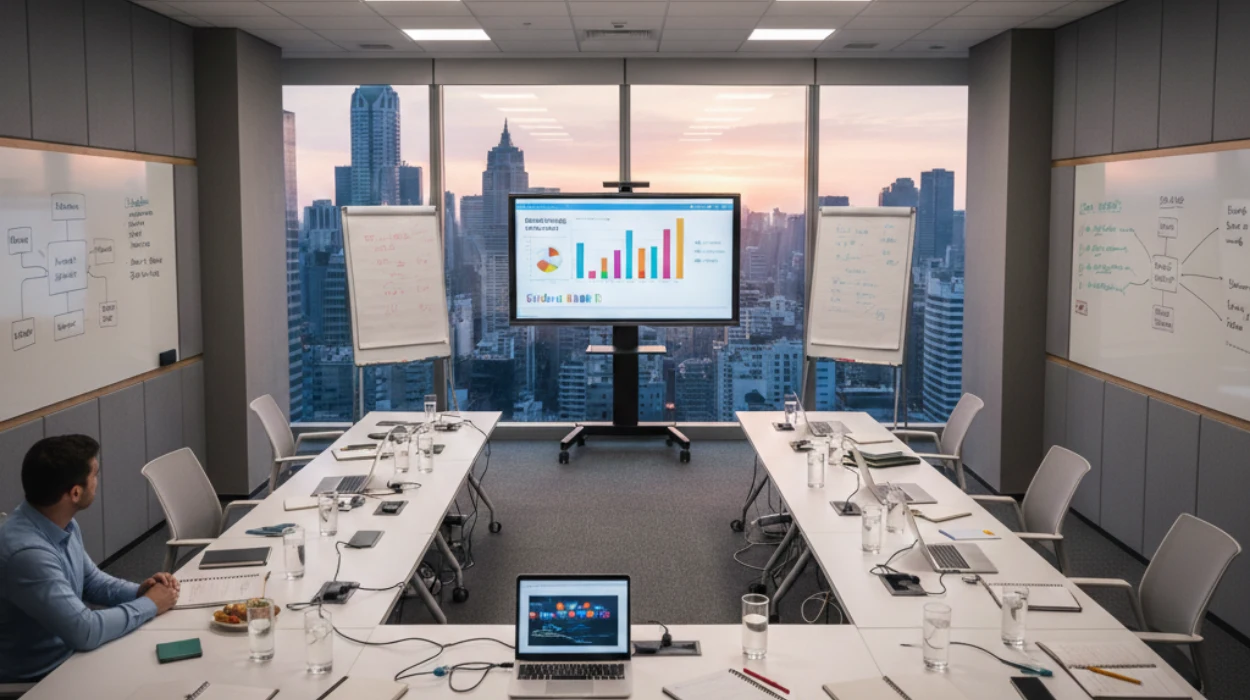
Professional training rooms significantly enhance employee learning by providing a focused, well-equipped environment that supports concentration, interaction, and knowledge retention. When combined with structured training programmes and clear business objectives, they help turn abstract concepts into skills that directors, managers, and staff can apply immediately in their roles. For UK companies, they also provide an ideal setting to embed compliance, governance, and operational knowledge that underpins long-term growth.
In a competitive UK business landscape, employers cannot afford poorly trained teams. Whether you are a start-up fresh from company formation at Companies House or an established limited company managing complex VAT and PAYE obligations, the quality of your employee training has a direct impact on efficiency, risk, and profitability. Professional training rooms dedicated, purpose-built spaces for learning are increasingly seen as a strategic asset rather than a “nice-to-have”. They create a neutral, distraction-free environment where staff can step away from day-to-day pressures and fully engage with new systems, regulations, or business structures.
For entrepreneurs and directors, the question is no longer whether to invest in training, but how to deliver it effectively. A professional training room, whether on-site or in a serviced business centre, allows you to combine high-quality facilities, reliable technology, and structured content delivery. This is particularly valuable when covering topics such as internal compliance procedures, Companies House filing responsibilities, or HMRC rules relating to VAT, PAYE, and payroll. Well-designed training sessions in the right environment help ensure that shareholders’ expectations are met through improved governance and fewer operational mistakes. Over time, this investment directly supports sustainable growth and a stronger culture of accountability.
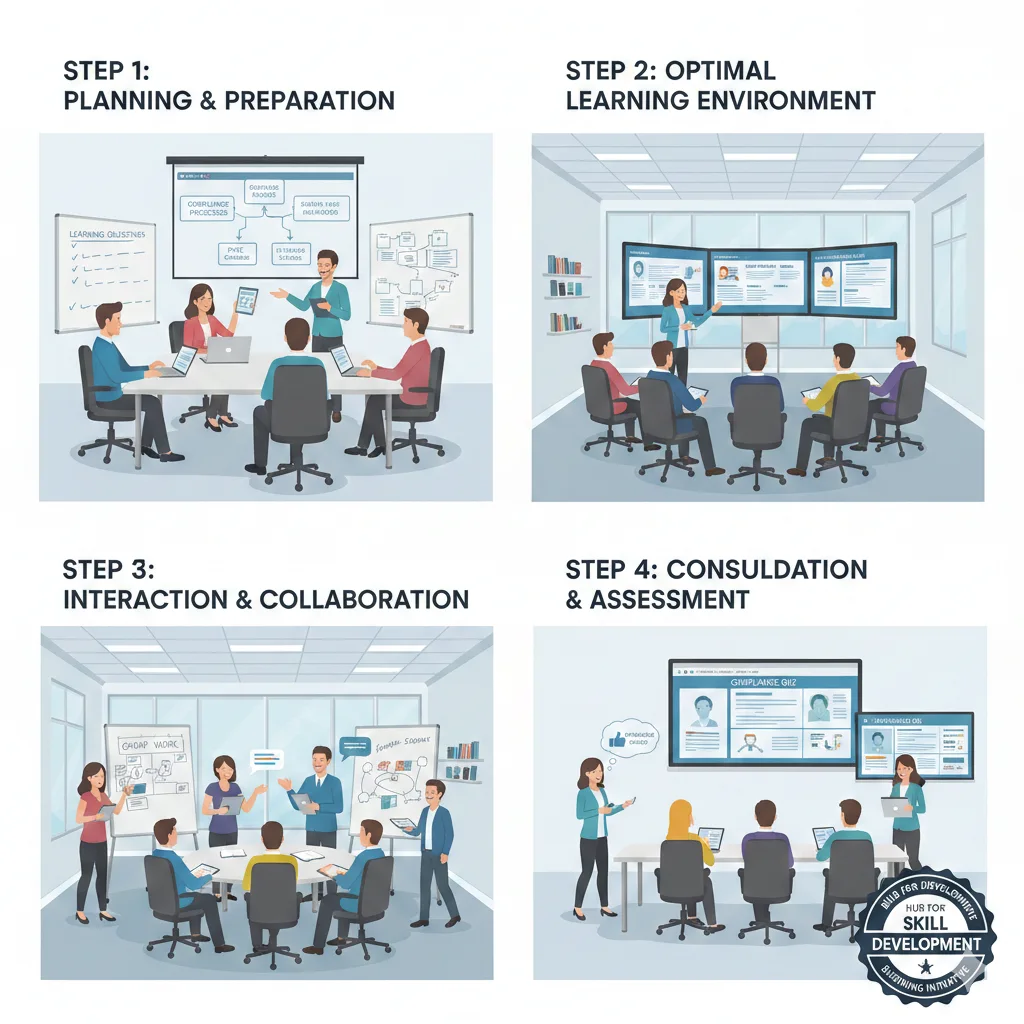
How Do Professional Training Rooms Support Employee Learning Step by Step?
The impact of a professional training room begins before a single employee sits down. Step one is the planning stage, where directors or HR managers define the learning objectives for example, introducing new compliance processes, explaining changes to PAYE and pension auto-enrolment, or training staff on systems that support accurate invoicing and VAT accounting. Knowing that a dedicated room is available encourages more thorough preparation of materials, from slide decks to practical exercises. This contrasts with ad‑hoc training at desks or in cramped meeting rooms, where noise and interruptions undermine the learning process.
Step two is the environment itself. Professional training rooms are usually laid out with comfortable seating, clear sight lines to screens, and reliable connectivity all of which support engagement. Trainers can move freely, use multiple screens, and incorporate live demonstrations of company formation portals, Companies House filings, or accounting software. Employees benefit from being physically separated from their normal workspace; phones are put away, and the clear signals of a “learning setting” help them focus. Step three is interaction: structured group work, breakouts, and Q&A sessions are easier to manage in a room designed for that purpose, with whiteboards, flipcharts, and space to move.
Finally, step four is consolidation. A professional training environment makes it easier to end sessions with clear actions and assessments. For example, staff can complete short quizzes on compliance rules, simulate submitting a confirmation statement, or run a mock payroll including PAYE and National Insurance. Trainers can gather feedback, identify knowledge gaps, and schedule follow-up sessions. Over multiple cycles, the training room becomes a recognised hub for skill development and governance, sending a strong message that the business takes learning seriously.
What Are the Benefits and Potential Risks of Using Professional Training Rooms?
The benefits of professional training rooms fall into several categories. First, there is the quality of learning. Employees are more likely to absorb complex information about regulatory frameworks, internal procedures, and business structures when they are not distracted by phone calls, customers, or email alerts. A dedicated room allows for immersive sessions on topics such as anti‑money laundering checks during company formation, directors’ duties under UK law, or how to handle VAT on international transactions. This contributes to fewer errors and a stronger culture of compliance, which is particularly important for regulated sectors and for companies looking to maintain a good standing at Companies House and with HMRC.
Second, there is the impact on employee morale and retention. Providing a high-quality environment for training demonstrates that the business values its staff and is willing to invest in their development. This can improve engagement, especially when the training is clearly linked to career progression, promotions, or broader responsibilities in finance and governance. Professional training rooms also support hybrid and remote teams; many serviced offices offer rooms with integrated video conferencing, enabling overseas shareholders, directors, or regional managers to join sessions in real time.
However, there are potential risks and drawbacks. Cost is a key consideration: hiring external training rooms or fitting out in-house facilities involves upfront investment and ongoing fees. If the sessions are poorly designed, even the best room will not deliver a return – staff may leave feeling confused, or the content may fail to address real-world challenges like day‑to‑day bookkeeping or payroll processing. There is also a risk of over‑formalising learning; if everything must happen in a formal room, spontaneous coaching and informal knowledge sharing may decline. Finally, relying heavily on physical rooms without considering accessibility can disadvantage remote workers or those with caregiving responsibilities. To maximise benefits, professional training rooms should be used as part of a blended learning approach that includes e‑learning, on‑the‑job mentoring, and clear documentation.
What Legal and Compliance Considerations Are Linked to Employee Training?
From a UK legal and compliance perspective, training is far more than a tick-box exercise. Many obligations that fall on directors and companie such as health and safety requirements, GDPR, financial reporting standards, and sector-specific regulations assume that staff are properly trained to carry out their duties. When a company forms a new business entity or changes its structure, it often adopts new internal policies around record-keeping, handling client funds, or reporting to regulators. Professional training rooms offer the ideal setting to roll out and document this training, which can be important evidence if the business is ever investigated by HMRC, the Information Commissioner’s Office, or other regulators.
For companies dealing with VAT and PAYE, regular training can help ensure that payroll teams understand changes in thresholds, reporting deadlines, and digital filing requirements. Errors in these areas can lead to penalties, interest charges, and damage to the company’s reputation. In regulated sectors, regulators often expect to see clear records of staff training including attendance lists, learning objectives, and outcomes especially for roles dealing with client money, due diligence, and compliance checks. Using a professional training room helps formalise this process and signals that the business takes its responsibilities seriously.
Directors also have fiduciary duties to promote the success of the company and to exercise reasonable care, skill and diligence. Ensuring that employees have up‑to‑date knowledge about internal controls, financial procedures, and statutory duties is part of meeting those obligations. If the business operates from a registered office address that differs from its trading location, training in a dedicated space can help staff understand exactly how mail handling, legal notices, and Companies House correspondence should be managed. This helps avoid missed deadlines or misdirected documents, which can have serious consequences such as late filing penalties or even strike‑off proceedings.
What Common Mistakes Do Businesses Make When Using Training Rooms?
A frequent mistake is treating the training room itself as the solution, rather than focusing on the content and outcomes. Some businesses invest in attractive spaces but deliver sessions that are poorly structured, too theoretical, or disconnected from the day‑to‑day realities of running a company, managing VAT returns, or handling PAYE. Employees leave without clear guidance on what has changed or how to apply the information in their own roles. Another mistake is overloading a single session with too much material. Trying to teach new joiners everything about company formation, internal compliance policies, and sector-specific regulations in one day often leads to information overload and poor retention.
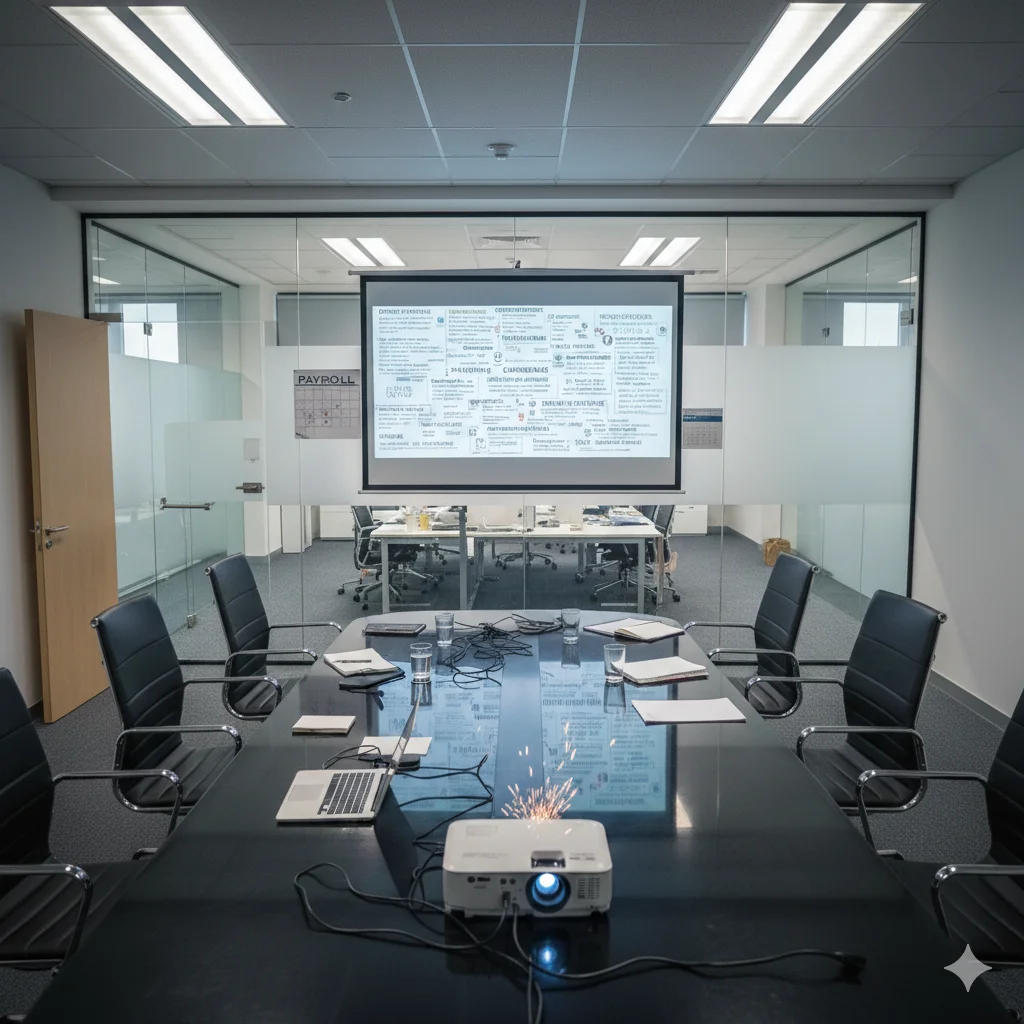
Scheduling can also be mishandled. Running training sessions at the busiest times of the month for example, around payroll deadlines or key client reporting dates means staff are distracted and resentful. Businesses sometimes neglect to invite the right people; for instance, directors sign off new internal governance structures but fail to include finance or operations staff who will actually implement them. On the technical side, failing to test equipment before sessions can be highly disruptive. If the projector, Wi‑Fi, or video conferencing platform fails mid‑way through an important training on new HMRC rules, the credibility of the entire programme suffers. Finally, some firms do not follow up; they never check whether staff have embedded the new practices or whether refresher training is needed. This lack of reinforcement limits the long‑term impact, regardless of how professional the room is.
What Practical Tips and Best Practices Enhance the Impact of Training Rooms?
To get the best from professional training rooms, start by aligning each session with a specific strategic goal. For example, you might design a half‑day workshop focused solely on improving the accuracy of VAT records and invoices, or on clarifying the responsibilities of directors and company secretaries in relation to Companies House filings. Make the objectives explicit to attendees so they understand why their presence matters and what is expected of them afterwards. Use the room’s facilities to support a mix of teaching styles: short presentations, live software demonstrations, case studies, and small-group exercises where staff work through realistic scenarios.
Another best practice is to embed compliance and governance into broader training topics. When you run a session on customer onboarding, include a segment on anti‑money laundering checks and the importance of maintaining accurate shareholder and PSC (person with significant control) records. When training finance staff on new systems, explicitly cover how those systems support accurate PAYE calculations and timely submissions to HMRC. Take advantage of professional rooms’ privacy and security to discuss sensitive subjects, such as internal control weaknesses or lessons learned from past mistakes, in a constructive way.
It is also helpful to design a training calendar that spreads learning throughout the year, rather than relying on one-off “big bang” sessions. Professional rooms can be booked for shorter, focused modules that build on each other, making it easier for staff to absorb complex topics. For hybrid or international teams, choose venues that support high-quality video conferencing, and provide digital copies of materials in advance. Finally, always gather feedback and track impact: ask attendees what worked, what did not, and whether they feel more confident about compliance, financial processes, or their own responsibilities. Use this insight to refine future sessions and ensure the training room remains a genuine asset, not just a cost centre.
Professional training rooms have a clear and measurable impact on employee learning, especially in areas that are critical to a company’s legal and financial health. By creating a dedicated environment for focused, structured sessions, they help staff understand complex topics such as Companies House filings, VAT, PAYE, and internal compliance in a way that ad‑hoc desk-side briefings rarely can. When used thoughtfully, they contribute to better governance, fewer operational errors, and a stronger sense of professionalism across the organisation.
If you’re ready to register your company with confidence, Form My Company provides fast, fully online company formation with expert compliance support, virtual office solutions, VAT & PAYE handling, and ongoing professional guidance. Get started today and let our specialists handle the paperwork while you focus on building a skilled, well-trained team and growing your business.
Frequently Asked Questions
Do small businesses and start-ups really need professional training rooms?
Yes, even small businesses can benefit from professional training rooms, especially during periods of rapid growth or structural change. When a start-up incorporates as a limited company and begins dealing with Companies House filings, VAT registration, or its first PAYE payroll, training staff properly is critical to avoiding early mistakes. Hiring an external room for key sessions can be more cost-effective than fitting out an in‑house space, and it sends a clear message that the business is serious about governance and learning. For small teams, even a single well-planned session in a professional environment can set standards that shape culture as the company scales.
Can training rooms help reduce compliance and tax risks?
Professional training rooms create the ideal setting to explain complex compliance requirements in detail and ensure staff can ask questions without distractions. When you bring together finance, HR, and operational staff in a focused environment, you can walk through real examples of VAT returns, PAYE submissions, and statutory accounts, clarifying responsibilities and common pitfalls. This reduces the risk of misinterpretation, missed deadlines, or inaccurate filings, all of which can lead to penalties or investigations. Documenting attendance and content covered also creates an audit trail that may be useful if regulators later question the adequacy of staff training.
Are virtual or hybrid training sessions as effective as in‑person room-based training?
Virtual and hybrid formats can be highly effective if they are supported by professional facilities and careful planning. Many training rooms now include high-quality cameras, microphones, and screens designed to ensure remote participants feel included and can interact fully. However, it is important to adapt your approach: sessions should allow for frequent interaction, clear visual materials, and occasional breaks to maintain attention. For topics that involve sensitive information or detailed hands-on practice such as using internal finance systems in‑person training in a secure room may still have the edge. Often, a blended approach works best, combining room-based workshops with follow-up online sessions.
How often should companies run formal training in dedicated rooms?
The frequency depends on your size, sector, and regulatory exposure, but a useful benchmark is to schedule at least quarterly formal sessions in a professional training room. These can cover topics like annual changes to tax rules, updates to internal policies, or lessons from recent incidents or audits. In addition, you may need ad-hoc sessions when you implement new software, restructure your business, or expand into new markets. The key is consistency: making training a recurring feature of your calendar reinforces its importance and helps build a culture where continuous learning is expected.