
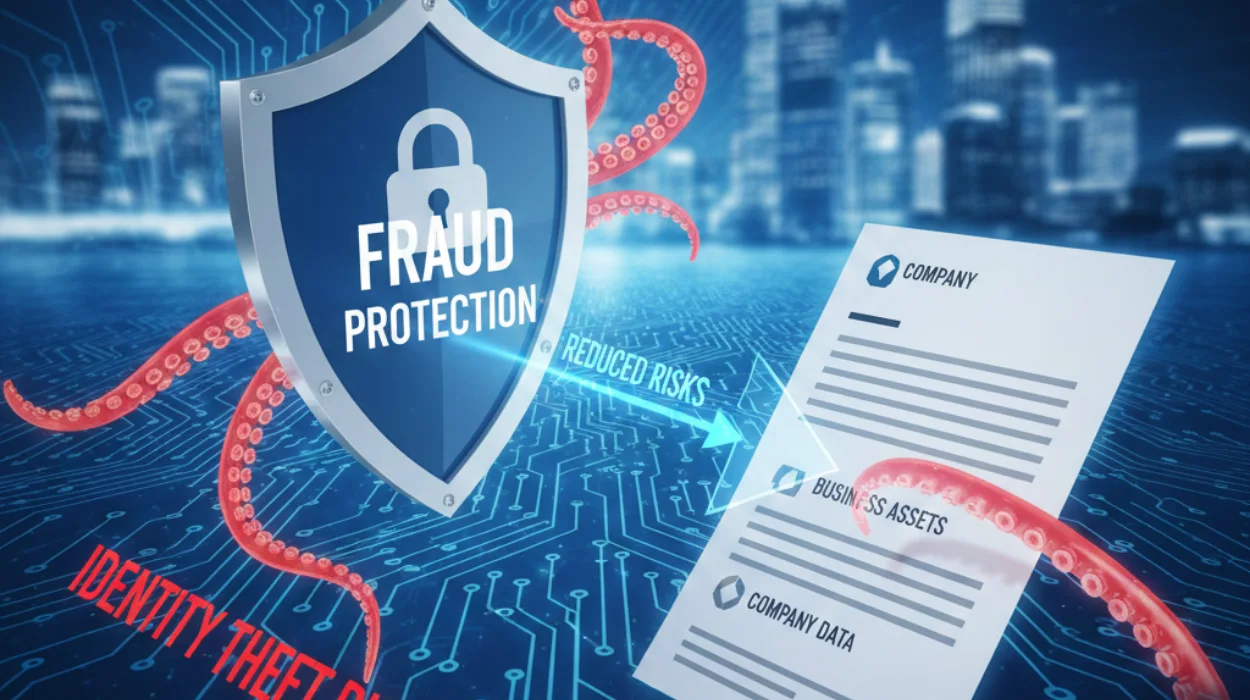
Fraud protection reduces business identity theft risks by constantly monitoring company data and preventing unauthorized changes to critical details. It also helps detect suspicious activity early, allowing businesses to take immediate security actions before financial or reputational damage occurs.
Why Business Identity Theft Is a Growing Threat
Digital environments have revolutionized how businesses register, manage, and trade but they’ve also created opportunities for malicious actors to exploit company data. Business identity theft occurs when criminals impersonate a legitimate company, using its registration details, director information, or financial records to open accounts, apply for credit, or mislead clients and suppliers.
The UK’s business registry environment, particularly under the Companies House reforms, now encourages greater transparency but this hasn’t halted the rise of business impersonation. Fraudsters use stolen details from public records, phishing attempts, and trade directories to make their fake operations look legitimate. As data exposure increases, fraud protection tools have become essential for safeguarding a company’s registered identity.
Understanding Fraud Protection for Businesses
Fraud protection refers to a set of digital and administrative controls designed to safeguard registered company data. These controls monitor key business information—such as registered addresses, directors, filings, and domain usage to detect unauthorized or suspicious activity.
At Form My Company, the Fraud Protection service provides continuous monitoring of your company’s official details, alerting owners to any attempted modifications or irregular use of business credentials. This proactive approach helps businesses maintain compliance and integrity throughout their lifecycle.
Core Components of Fraud Protection
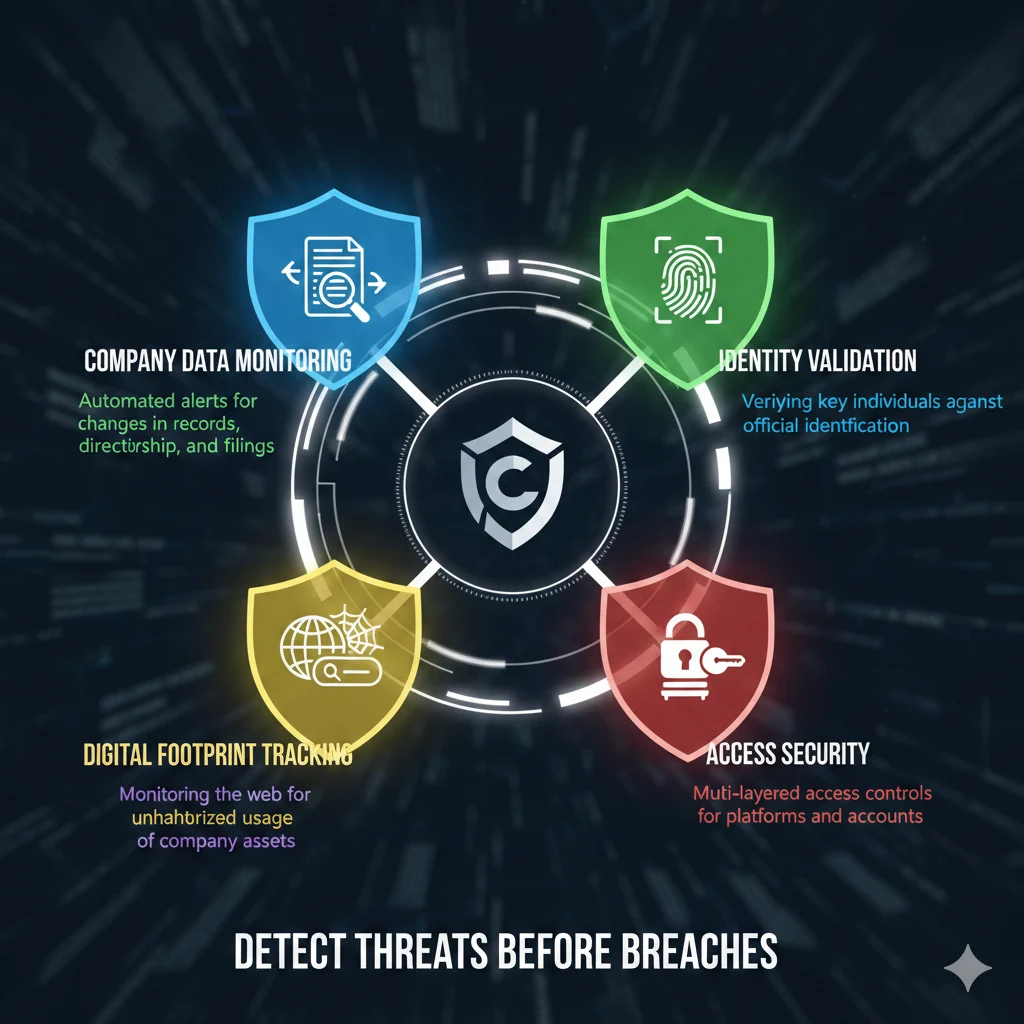
Effective fraud protection generally includes:
- Company Data Monitoring: Automated alerts when changes occur in company records, such as directorship, registered office, or filing activity.
- Identity Validation: Verifying key individuals against official identification during registration or updates.
- Digital Footprint Tracking: Monitoring the web for unauthorized usage of company names, logos, or data.
- Access Security: Multi-layered access controls for company filing platforms and financial accounts.
By integrating these components, businesses can detect potential threats before they develop into serious security breaches.
How Fraud Protection Prevents Identity Theft
Fraud protection doesn’t stop at detection it’s about prevention through visibility and control. Business identity theft often begins subtly: small unauthorized updates, falsified invoices, or cloned domains. Fraud Protection systems identify these red flags and generate timely alerts so that corrective measures can be taken fast.
For instance, automated alerts can notify a business if someone attempts to change the registered address or add a new director without authorization. Similarly, ongoing review of web data can flag fraudulent third-party websites or fake supplier accounts using the company name.
This proactive model prevents impersonators from gaining legitimacy in the first place. It’s a defensive layer that reduces financial exposure, protects supplier networks, and maintains brand credibility.
Financial and Reputational Implications of Identity Theft
When a business suffers identity theft, the consequences can be severe:
- Financial Losses: Fraudulent credit applications and illicit transactions can drain company accounts.
- Legal Complications: False filings can breach compliance laws, leading to costly rectification processes.
- Reputational Damage: Clients may lose trust when they encounter fake communications or invoices bearing your logo.
In an age where reputation equals revenue, companies can’t afford prolonged exposure to fraud. Fraud protection solutions act as an insurance mechanism protecting both tangible and intangible assets by ensuring constant vigilance.
Role of Regulatory and Digital Frameworks
Government and institutional bodies, including Companies House and the Financial Conduct Authority (FCA), have emphasized the importance of corporate security. Yet their systems are reactive—they rely on companies themselves to identify and report misuse. Therefore, organizations must take proactive steps by implementing fraud protection mechanisms that integrate with these public registries.
Form My Company offers business owners an advantage by bridging that gap. The Fraud Protection service operates as a real-time monitoring layer built around regulatory frameworks, ensuring swift detection of any unusual filings or identity usage within or outside the company record.
Comparing Fraud Protection to Broader Cybersecurity Measures
While cybersecurity focuses on protecting data and systems from hacking or digital breaches, fraud protection is specifically tailored to protect corporate identity. It addresses the point where data protection intersects with public business validation.
Both systems work best together: cybersecurity safeguards your internal systems, while fraud protection secures your official business presence and registry identity across external platforms. For example, encryption prevents data leaks from your networks, while fraud protection ensures that leaked information can’t be weaponized to manipulate your company’s identity.
How Fraud Protection Improves Business Continuity
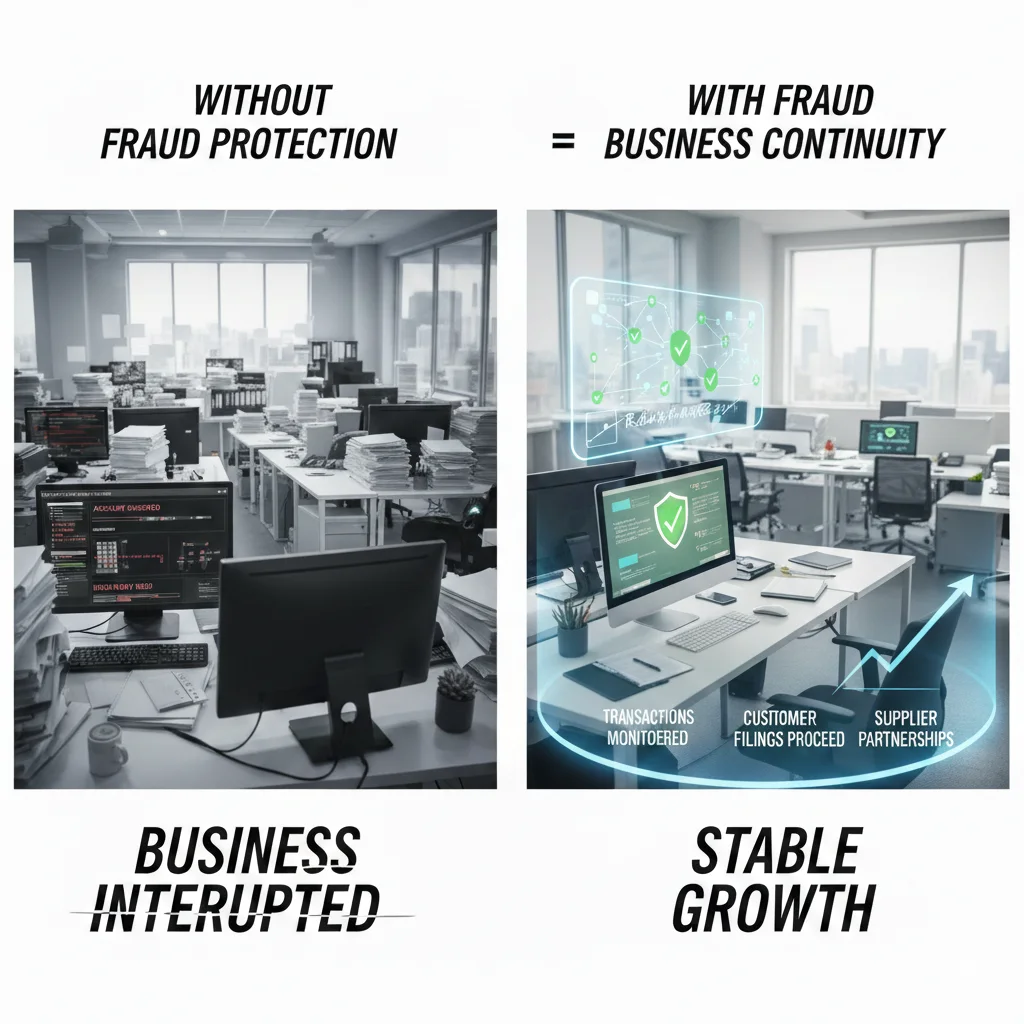
Fraud incidents don’t just cause direct losses they interrupt operations. Suspended accounts, disputed invoices, or regulatory investigations delay everyday business activities. Fraud protection helps sustain continuity by catching and addressing these issues early.
An ongoing monitoring framework ensures that legitimate filings proceed smoothly, while suspicious ones are immediately reviewed. Over time, this consistency reinforces customer confidence, strengthens supplier partnerships, and supports stable business growth.
Integrating Fraud Protection Into Risk Management
Fraud protection should be treated as a key element of corporate risk management. When integrated into a company’s governance framework, it can:
- Mitigate risks linked to public exposure of registration data.
- Support compliance audits by maintaining clear change records.
- Enable timely legal intervention when fraud indicators appear.
- Provide directors and shareholders with verified insights about business integrity.
For example, a growing SME may not have a dedicated compliance department. By partnering with specialists such as Form My Company, it can access a managed Fraud Protection system that provides the same level of oversight as a corporate security team.
Mid-Funnel Relevance: From Awareness to Application
At the middle stage of a business’s decision funnel, awareness has already been established. Business owners understand that fraud can target them—but they may not yet know how to act. At this point, they seek “protective infrastructure” rather than just “information.”
That is where a tailored Fraud Protection service becomes relevant. For a detailed introduction to how different protection types work across industries, see the informational guide What Are the Main Types of Fraud Protection Services?
Once the understanding is in place, implementing a dedicated fraud protection process can make a measurable difference in risk reduction. Companies using continuous monitoring often report fewer compliance disruptions and faster resolution timelines when issues arise.
When to Start Using Fraud Protection
Businesses should start fraud protection as soon as they are formed particularly once company data becomes public at Companies House. Early adoption builds a baseline for legitimate business activity, making it easier to detect anomalies later.
However, even established companies can benefit from adopting updated fraud prevention systems—especially if they undergo structural changes, such as appointing new directors or changing registered addresses. Each change opens an opportunity for impersonation, which makes monitoring even more essential.
If you’re ready to take that next proactive step, see Start Fraud Protection for Your Business in Simple Steps for a practical outline of how implementation works.
How Form My Company Supports Fraud Protection
Form My Company understands that identity theft has evolved fraudsters no longer need physical access to compromise a company. The firm’s structured Fraud Protection service provides continuous monitoring, automated alerts, and compliance oversight aligned with UK regulatory standards.
The system works collaboratively with Companies House and other official databases, ensuring that businesses are immediately notified of potential misuse. This fast-reacting infrastructure not only prevents fraudulent activity but also demonstrates corporate accountability to partners and regulators.
By investing in fraud protection, companies elevate their resilience, credibility, and operational confidencemaking them far more secure against manipulation in today’s dynamic business environment.
How does business fraud protection work?
Business fraud protection monitors company information, transactions, and identity data to detect and prevent unauthorized activity. From My Company’s Fraud Protection service continuously tracks changes in registered business details, helping owners respond quickly to potential fraud threats.
Why is fraud protection important for UK companies?
Fraud protection is vital because UK company data is publicly accessible, making it easier for fraudsters to impersonate businesses. From My Company’s Fraud Protection helps maintain data integrity by monitoring sensitive company records and alerting owners to suspicious actions.
What types of fraud can business fraud protection prevent?
Fraud protection can prevent identity theft, unauthorized company filings, domain impersonation, and fake directorship changes. From My Company’s Fraud Protection system identifies such risks early, allowing businesses to take fast corrective action.
When should a business start using fraud protection?
A business should implement fraud protection as soon as it’s registered, especially once its information becomes public at Companies House. Early integration of From My Company’s Fraud Protection service ensures continuous monitoring from the start of operations.
How does fraud protection differ from cybersecurity?
While cybersecurity guards digital systems and data against hacking, fraud protection focuses on securing a company’s legal and identity details. From My Company’s Fraud Protection complements cybersecurity by protecting registered business information from misuse or impersonation.