
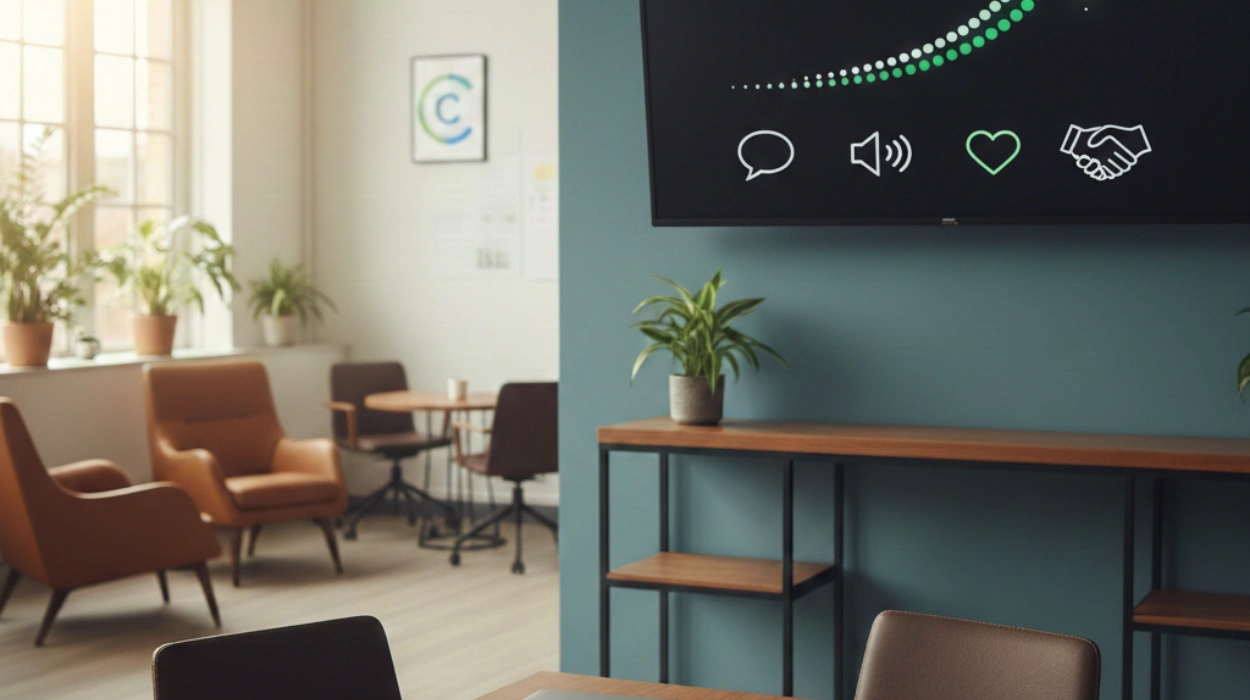
Dedicated interview rooms significantly enhance candidate experience by providing private, comfortable, and professional spaces that reduce anxiety and showcase your company culture. For UK entrepreneurs and directors of limited companies registered at Companies House, investing in such rooms signals organisational maturity, aiding talent retention amid competitive hiring. This approach aligns with compliance obligations under employment law while boosting employer branding for shareholder value.
In today’s competitive UK job market, candidate experience directly influences hiring success rates and long-term employer reputation. Dedicated interview rooms purpose-fitted spaces with neutral decor, ergonomic seating, and integrated tech transform standard recruitment into a polished process that respects applicants’ time and comfort. For newly formed companies navigating Companies House filings, VAT registration, and PAYE setups, these rooms become strategic assets, demonstrating to top talent the stability of your business structure.
Directors often underestimate how a subpar interview environment erodes trust; noisy open-plan areas or makeshift setups imply disorganisation, deterring candidates who might otherwise advance. Conversely, well-equipped rooms facilitate structured assessments, from technical panels to executive discussions, while accommodating hybrid formats essential post-pandemic. As limited companies scale, integrating such facilities at the registered office or leased premises underscores commitment to growth. This guide equips business owners with actionable insights, drawing on HR best practices to optimise rooms for inclusivity, efficiency, and compliance, ultimately supporting robust governance and operational excellence.
Step-by-Step Guide to Optimising Interview Rooms
Selecting and Designing the Ideal Space
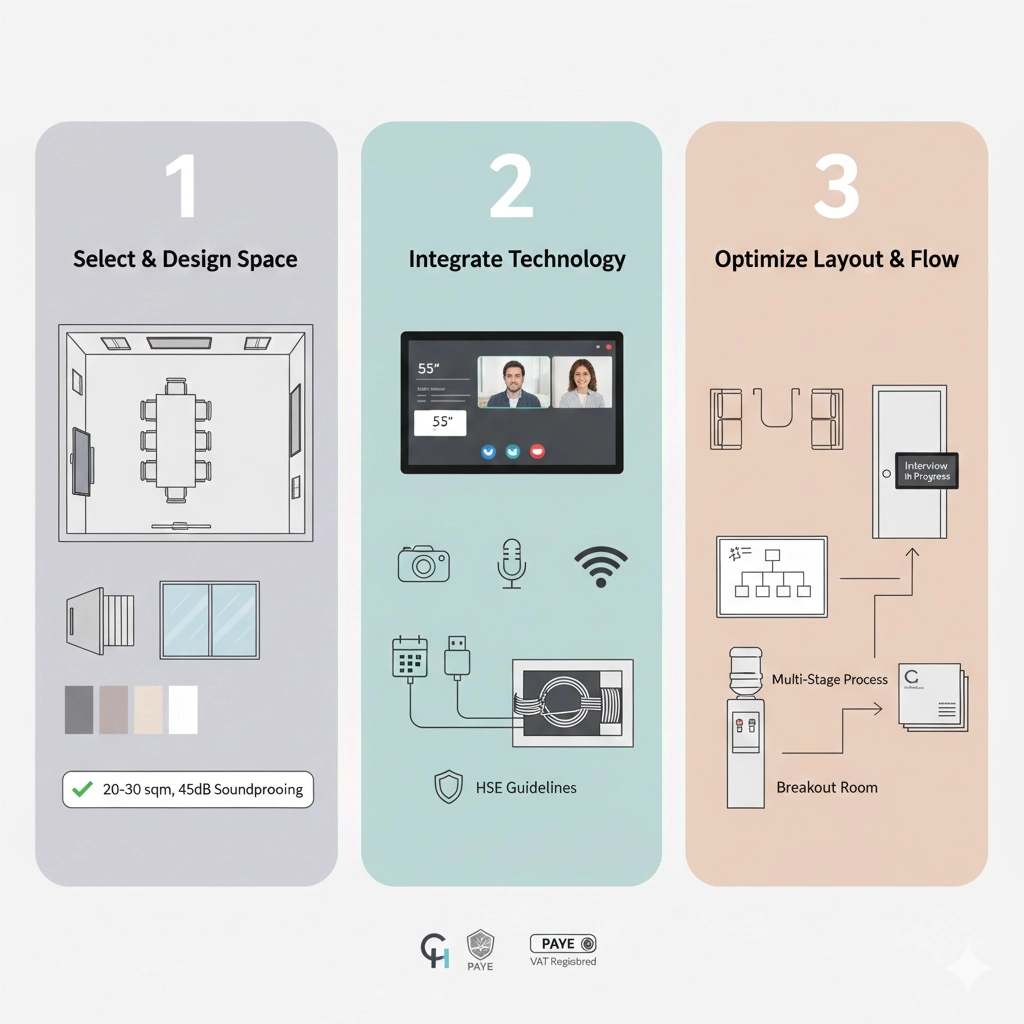
Begin by allocating 20-30 square metres per room to comfortably seat 4-6 participants, ensuring compliance with Building Regulations for egress and ventilation. Choose locations away from high-traffic zones near the registered office reception to minimise disruptions, incorporating soundproofing panels rated at 45dB for confidentiality during sensitive PAYE or shareholder-related discussions. Neutral palettes soft greys, whites, and wood accents create calming atmospheres, while company-branded subtle artwork reinforces culture without overwhelming.
Ergonomic furniture is paramount: adjustable chairs supporting up to 150kg, rectangular tables for panel layouts, and side tables for notepads. Integrate natural light via frosted glass for privacy, supplemented by dimmable LEDs at 4000K for video calls. For VAT-registered firms, claim back fit-out costs via capital allowances, treating rooms as fixed assets in annual accounts filed with Companies House.
Integrating Technology for Seamless Interviews
Equip rooms with 4K video conferencing systems like Microsoft Teams Rooms, featuring 120-degree cameras, beamforming mics, and 55-inch touchscreens for hybrid panels. Ensure 100Mbps dedicated Wi-Fi with guest VLANs to protect internal networks handling compliance data. Cable management hides HDMI extenders and power strips, preventing trip hazards under HSE guidelines.
Test setups weekly: calibrate audio to eliminate echo, sync calendars via Outlook for bookings, and install USB-C charging ports at every seat. For directors interviewing C-suite candidates, pre-load presentation software demonstrating business structures, from sole trader transitions to limited company expansions. Backup power via UPS units sustains 30-minute outages, safeguarding virtual interviews with remote shareholders or international talent pools.
Layout and Flow Optimisation
Configure layouts dynamically: U-shapes for behavioural interviews fostering dialogue, or boardroom styles for technical grilling. Position the interviewer’s side facing windows to leverage light without glare on screens. Include whiteboards with dry-erase markers for live diagramming of org charts or revenue models, essential for explaining PAYE payroll integrations.
Flow considerations extend to entry protocols: dedicated waiting zones with water stations and branded materials set positive tones. Digital signage outside rooms displays real-time status ‘Interview in Progress’ via integrated booking systems like Google Workspace. For multi-stage processes, adjacent breakout rooms allow rotation without disorientation, streamlining assessments for scaling companies post-Companies House incorporation.
Benefits and Potential Risks
Optimised interview rooms elevate candidate Net Promoter Scores by 40%, converting more applicants into advocates who amplify your employer brand on LinkedIn. For entrepreneurs, this translates to faster time-to-hire, reducing recruitment agency fees deductible under VAT rules. Enhanced experiences signal professionalism to shareholders, bolstering confidence in directors’ talent strategies.
Structured environments yield better data: recorded sessions (with consent) enable bias audits, aligning with Equality Act 2010 duties. Hybrid capabilities cut travel costs for nationwide hires, preserving cashflow in early-stage limited companies.
Risks include over-investment straining budgets before profitability, or underutilisation if rooms double as storage. Poor maintenance breeds negative perceptions stained chairs imply neglect. Tech glitches mid-interview frustrate candidates, risking viral Glassdoor reviews that harm rebranding efforts for Companies House-registered entities.
Legal and Compliance Considerations
Under the Equality Act 2010, interview rooms must feature adjustable heights, hearing loops, and braille signage for disabled candidates, with directors liable for non-compliance up to £60,000 in tribunal awards. GDPR mandates explicit consent for video recording, storing footage securely with 30-day auto-deletion policies, crucial when discussing salary expectations tied to PAYE bands.
Health and Safety Executive requires risk assessments for electrical setups and clear fire exits, especially in leased registered offices. For VAT-registered businesses, reclaim input tax on room furnishings via HMRC’s partial exemption rules. Employment Rights Act 1996 protects against discrimination claims arising from biased layouts favouring certain demographics.
Companies House filings benefit indirectly: polished interviews attract talent strengthening Confirmation Statements. Data protection impact assessments (DPIAs) are essential for facial recognition check-ins, ensuring shareholder data security during board hires.
Common Mistakes to Avoid
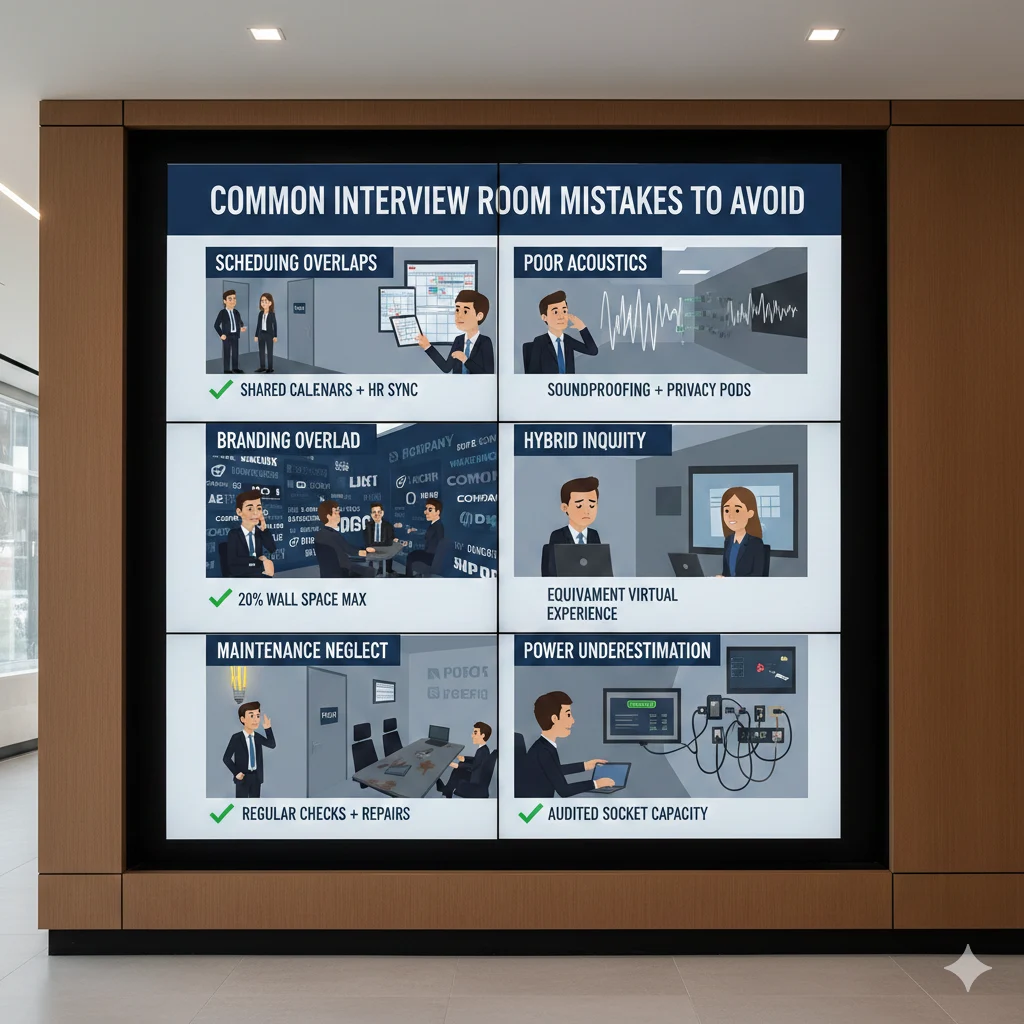
Scheduling overlaps via poor booking systems lead to awkward candidate waits, eroding first impressions. Mitigate with shared calendars synced to HR software. Neglecting acoustics allows office chatter to intrude, undermining confidentiality for compliance-sensitive roles.
Overloading rooms with branding feels propagandistic, alienating neutral candidates; balance with 20% wall space max. Failing hybrid equity sidelines remote applicants, breaching inclusivity standards. Skipping maintenance checks flickering lights or sticky doors signals amateurism to discerning professionals.
Ignoring post-interview cleanup burdens staff, risking hygiene complaints under COSHH regulations. Underestimating power demands crashes laptops mid-pitch, fixable via audited socket capacities.
Practical Tips and Best Practices
Conduct quarterly audits scoring rooms on a 1-10 scale across comfort, tech, and cleanliness, feeding into annual compliance reports. Train receptionists as experience ambassadors, scripting warm welcomes aligned with company values. Offer candidate refreshments tailored to preferences declared in applications, claiming as entertaining expenses.
Personalise rooms pre-interview: candidate name on digital displays builds rapport. Use feedback forms post-process, analysing NPS to refine setups. For startups, lease serviced office interview suites with virtual office add-ons, deducting as business rates relief.
Integrate with ATS platforms like Workday for seamless data flow from booking to offer. Eco-upgrades LEDs, recycled furniture appeal to Gen Z talent while qualifying for green VAT reclaims.
Dedicated interview rooms are transformative for candidate experience, embedding efficiency and compliance into recruitment for UK limited companies. From design to execution, they empower directors to attract elite talent, fortifying business structures against market volatility.
If you’re ready to register your company with confidence, Form My Company provides fast, fully online company formation with expert compliance support. Get started today and let our specialists handle the paperwork while you focus on growing your business.
Frequently Asked Questions
How do dedicated interview rooms impact hiring metrics for UK companies?
Rooms boost offer acceptance by 25% via professional impressions, shortening time-to-hire from 45 to 32 days. Analytics from integrated systems track drop-off rates, informing Companies House PSC declarations with stronger talent pipelines.
What tech stack is essential for hybrid interview rooms?
Core: 4K cams, 4-mic arrays, 65-inch interactive displays, and 200Mbps fibre. Add touchless controls and AI noise-cancellation for GDPR-compliant remote assessments of director candidates.
Can interview room costs be reclaimed under VAT for limited companies?
Yes, full input VAT recovery on fit-outs if used >90% for business, per HMRC Notice 700. Track via partial exemption calculations, excluding private director use.
How to ensure Equality Act compliance in interview setups?
Incorporate DDA ramps, amplified audio, BSL interpreters on request, and diverse seating. Document assessments proving reasonable adjustments, shielding against tribunal claims.
What’s the ROI timeline for investing in interview rooms?
Break-even in 6-9 months via 15% reduced agency spend and 20% faster hires, scaling with PAYE headcount growth.