
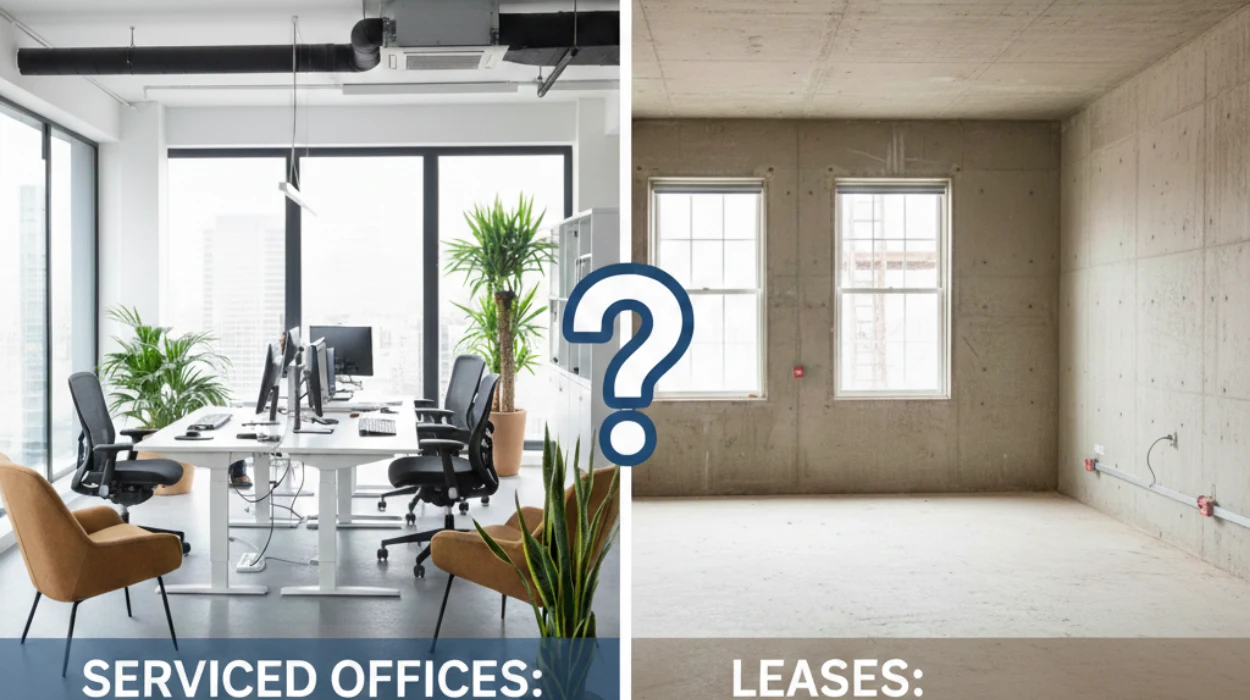
Serviced offices offer superior flexibility and all-inclusive costs for startups and scaling businesses, often proving more cost-effective short-term despite higher per-square-foot rates. Traditional leases suit established firms with stable needs, delivering long-term savings after upfront investments. Weighing these factors depends on your company’s growth stage, cash flow, and compliance priorities during UK company formation.
In the evolving UK commercial property market of 2026, entrepreneurs face pivotal decisions on office space that impact not just overheads but also operational agility and legal compliance. Serviced offices fully furnished, managed spaces with flexible terms contrast sharply with traditional leases, which involve long-term commitments, custom fit-outs, and tenant-managed responsibilities. With prime rents hitting £93 psf in London’s City core and regional growth of 1-5.3%, understanding the true cost-benefit is essential for directors and shareholders navigating company formation, Companies House filings, and VAT/PAYE registrations.
This analysis draws on current market data to guide business owners. Whether establishing a registered office for your new limited company or scaling post-incorporation, the choice influences cash flow, tax deductions, and growth potential. Let’s dissect the economics, risks, and strategies step by step.
Step-by-Step Cost Comparison
Evaluating serviced offices against traditional leases requires a granular breakdown of expenses over time horizons.
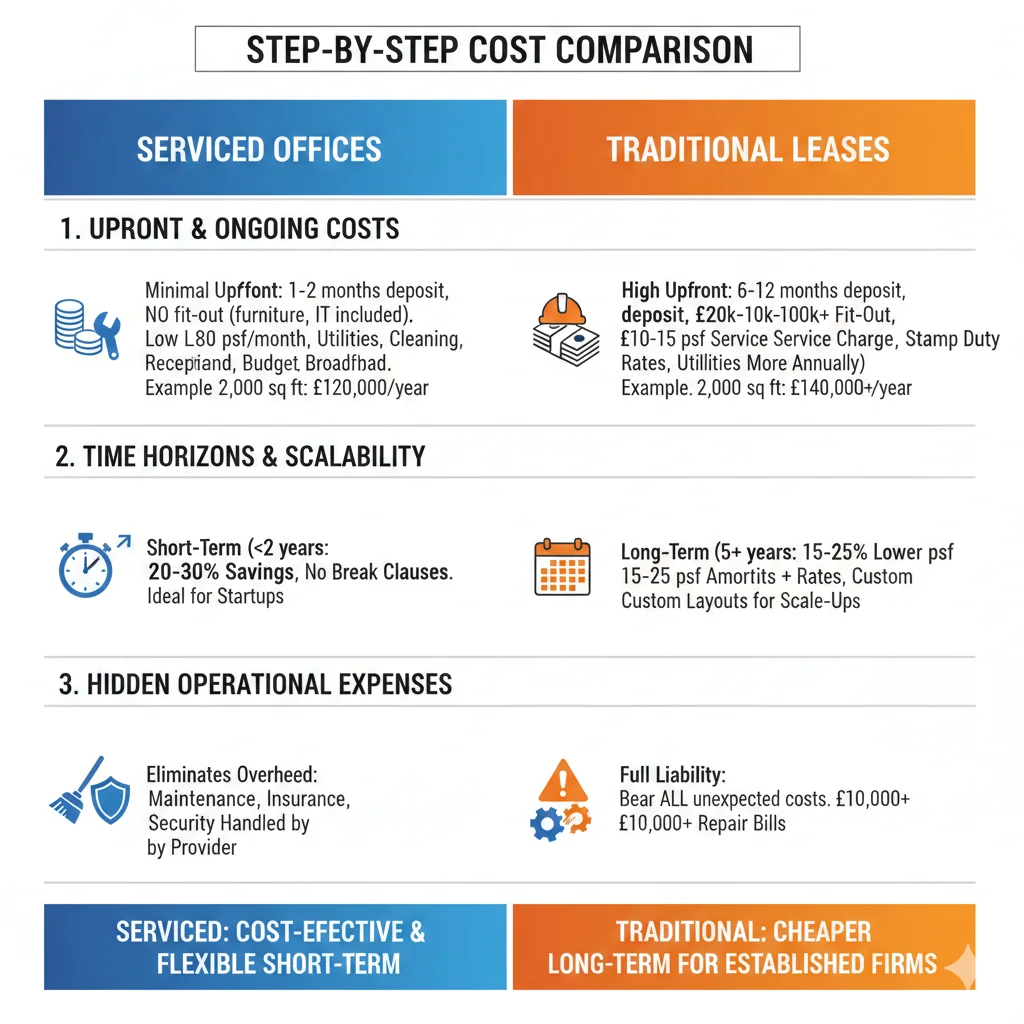
1. Calculate Upfront and Ongoing Costs
Serviced offices demand minimal initial outlay: typically 1-2 months’ deposit, no fit-out (furniture, IT included), and negligible legal fees via simple licence agreements. Monthly all-inclusive fees, £50-£80 psf in central London cover rent, utilities, cleaning, reception, and broadband, simplifying budgeting for new companies focused on Companies House compliance.
Traditional leases, conversely, require 6-12 months’ rent deposit, plus £20,000-£100,000+ for bespoke fit-outs (desks, partitioning, branding). Legal fees (£5,000-£15,000) and stamp duty add layers. Base rents (£40-£70 psf) exclude service charges (£10-£15 psf), rates, and utilities, potentially totalling 30-50% more annually once operational. For a 2,000 sq ft space, serviced might cost £120,000/year; traditional £140,000+ after variables.
2. Factor in Time Horizons and Scalability
Short-term (under 2 years): Serviced wins with 20-30% effective savings via flexibility no break clauses or dilution fees. Ideal for startups post-formation testing markets.
Long-term (5+ years): Traditional edges out, amortising upfronts over time for 15-25% lower psf costs. Scale-up firms benefit from custom layouts suiting shareholder meetings or VAT-registered operations.
3. Include Hidden Operational Expenses
Serviced eliminates management overhead; providers handle maintenance, insurance, security. Traditional tenants bear full liability, risking unexpected £10,000+ repair bills.
Benefits and Potential Risks
Both models offer advantages, but risks vary by business structure.
Benefits of Serviced Offices
Flexibility reigns: month-to-month scaling suits volatile growth, vital for tech startups or consultancies during PAYE onboarding. All-inclusive pricing aids cash flow forecasting, crucial for Companies House solvency statements. Prestigious addresses enhance credibility for directors seeking bank accounts or investor pitches. Networking in shared lounges fosters partnerships, and amenities like meeting rooms support compliance training without extra VAT.
Examples: A Manchester fintech registers via Companies House, opts for serviced space at £45 psf all-in—saving £25,000/year vs traditional setup.
Benefits of Traditional Leases
Cost predictability long-term: Post-fit-out, effective costs drop below serviced rates. Full control allows branding aligned with business structures, like private offices for shareholder privacy. Tax relief on CapEx via capital allowances benefits profitable firms.
Potential Risks
Serviced: Premium pricing (10-20% higher psf) erodes margins for large teams; limited customisation hampers growth. Lease expiry risks relocation during peak compliance seasons.
Traditional: Illiquidity ties capital; market shifts (e.g., hybrid work) leave surplus space, breaching director duties under Companies Act 2006. Dilapidation costs at exit average £15 psf.
Legal and Compliance Considerations
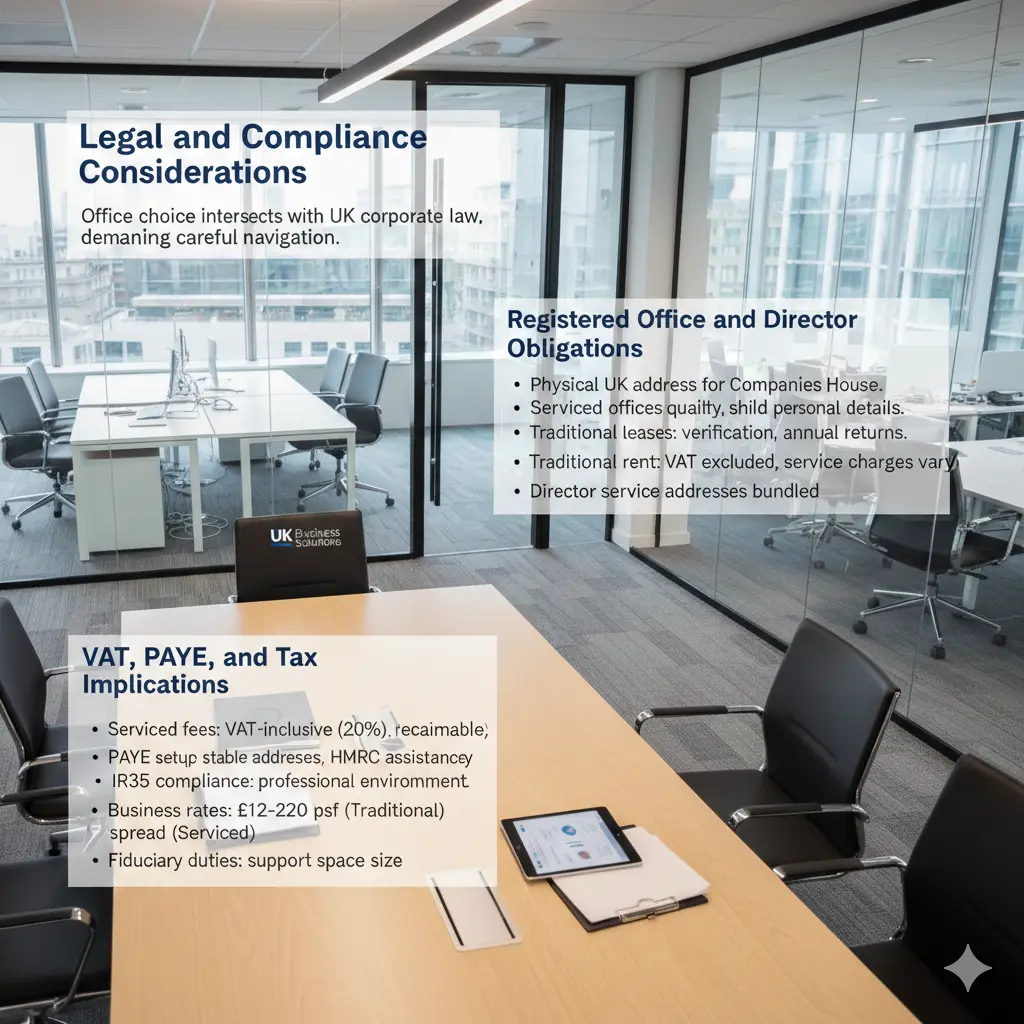
Office choice intersects with UK corporate law, demanding careful navigation.
Registered Office and Director Obligations
Your registered office must be a physical UK address for Companies House filings. Serviced offices qualify seamlessly, often bundling director service addresses to shield personal details publicly. Traditional leases demand lease verification during incorporation, plus ongoing compliance like annual returns.
VAT, PAYE, and Tax Implications
Serviced fees are typically VAT-inclusive (20%), reclaimable for VAT-registered companies. Traditional rents exclude VAT, but service charges may qualify. PAYE setup requires stable addresses; serviced providers assist HMRC correspondence. IR35 compliance for contractors benefits from professional serviced environments proving legitimacy.
Leaseholders face full business rates (£12-£20 psf), non-dilutable. Serviced spreads costs. Directors must ensure space supports fiduciary duties oversized traditional leases risk shareholder scrutiny.
Common Mistakes to Avoid
Pitfalls can inflate costs or derail compliance.
1. Ignoring Total Occupancy Cost (TOC)
Many fixate on headline rent, overlooking serviced’s predictability vs traditional’s variables (rates +20%, utilities +15%). A £50 psf serviced trumps £40 psf traditional at TOC £75 psf.
2. Overcommitting to Long Leases Prematurely
Startups sign 10-year traditional leases pre-growth validation, facing sublet losses. Example: 2024 firm downsized post-redundancies, incurring £80,000 penalties.
3. Neglecting Exit Clauses and Dilapidations
Traditional leases hide £10-£30 psf reinstatement costs. Serviced offers clean exits.
4. Overlooking Compliance Fit
Using non-commercial home addresses risks Companies House rejection; serviced provides instant legitimacy.
Practical Tips and Best Practices
Optimise your decision with these strategies.
1. Conduct a 3-Year TOC Projection
Model scenarios: growth 20%? Serviced. Stable? Traditional. Tools like Excel factor inflation (2.7% rental growth 2026).
2. Negotiate Hybrid Terms
Mid-sized firms blend: serviced for agility, sub-lease traditional for core teams.
3. Leverage Providers for Compliance Bundles
Choose serviced operators offering registered office add-ons, integrating with formation services for seamless VAT/PAYE.
4. Benchmark Regional Variations
London West End £200 psf serviced vs £150 traditional; Birmingham £47 psf serviced offers value.
Serviced offices excel in flexibility and startup efficiency, while traditional leases reward stability and scale. In 2026’s tight market, align choice with your lifecycle: formation-phase agility via serviced, maturity via leases. Prioritise TOC, compliance, and scalability for optimal returns.
If you’re ready to register your company with confidence, Form My Company provides fast, fully online company formation with expert compliance support. From registered office and virtual office solutions to VAT & PAYE registration, our specialists ensure seamless setup. Get started today and let our team handle the details while you build your business empire.
Frequently Asked Questions
1. When do serviced offices outperform traditional leases financially?
For tenancies under 3 years or teams <20, serviced saves 15-25% via low upfronts and inclusions, ideal for post-formation scaling.
2. Can a serviced office serve as my company’s registered office?
Yes, most qualify under Companies Act 2006 if physical and UK-based, streamlining Companies House and HMRC processes.
3. How do business rates factor into the comparison?
Serviced bundles rates into fees (reclaimable); traditional exposes you to full liability (£12-£20 psf), volatile with rate revaluations.
4. Are there tax advantages to either option?
Traditional allows CapEx allowances on fit-outs; serviced offers immediate VAT recovery and OpEx deductibility for startups.
5. What if my business grows rapidly, how to switch?
Serviced’s 1-3 month notice enables seamless upsizing; traditional break premiums average 6 months’ rent.