
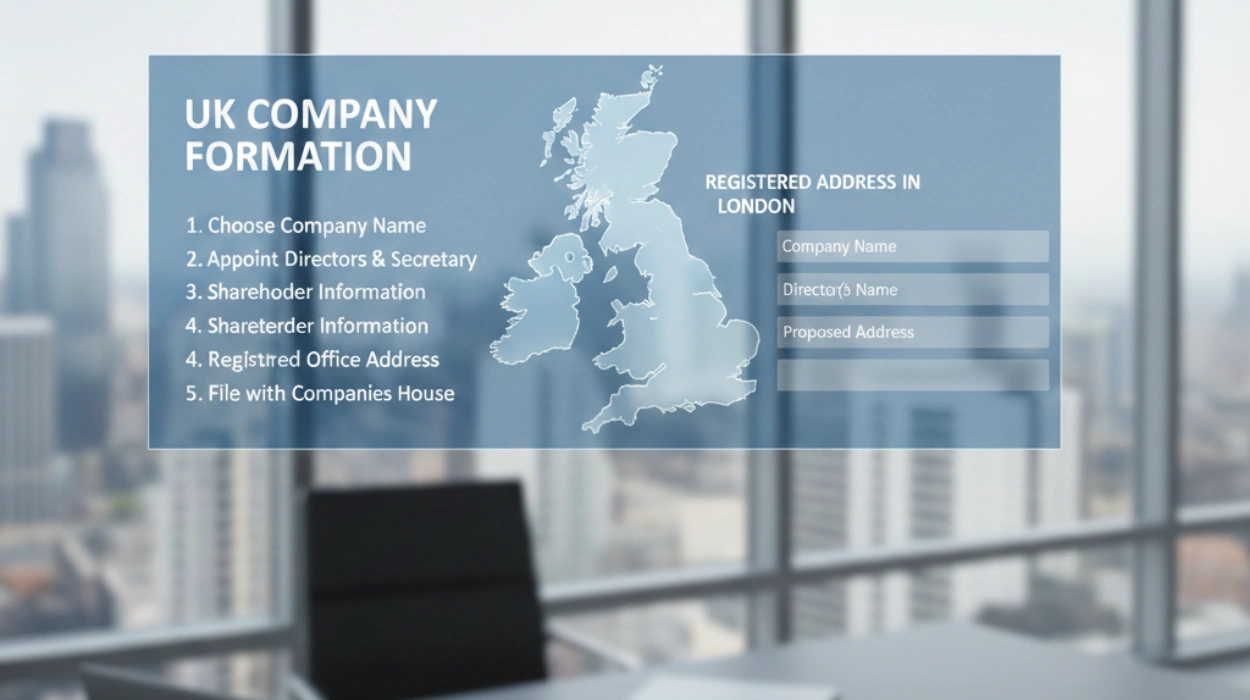
Company formation with a registered address in the UK mandates providing a physical UK-based address during Companies House incorporation, serving as the official location for statutory documents from HMRC and regulators. This address must match your company’s jurisdiction, such as England and Wales, and cannot be a PO Box under post-2024 rules. Formation agents like Form My Company bundle verified registered addresses with seamless online filing for instant compliance.
Embarking on company formation in the UK establishes a legal entity with limited liability, but the registered office address forms its cornerstone, publicly listed and pivotal for receiving legal notices, court papers, and tax correspondence. Under the Companies Act 2006, as reinforced by the Economic Crime and Corporate Transparency Act 2023, this requirement ensures transparency while demanding an “appropriate” physical premises capable of acknowledging deliveries. For directors and shareholders—often the same in private limited companies (Ltd)—it balances accountability with privacy concerns, as home addresses risk exposure on the public register.
Over 5 million active companies navigate this, with virtual offices surging 40% post-pandemic for prestigious London or regional postcodes without lease costs. Non-residents qualify using UK agents, linking to VAT, PAYE, and banking setups. Non-compliance invites defaults to Companies House proxies or strike-offs, underscoring precision. This authoritative guide dissects integration of registered addresses in formation, empowering entrepreneurs with practical steps, rooted in official protocols, to launch compliantly amid 2026’s heightened verification standards. Whether sole traders or SMEs, master these for robust foundations. (238 words)
Step-by-Step Guide to Company Formation with Registered Address
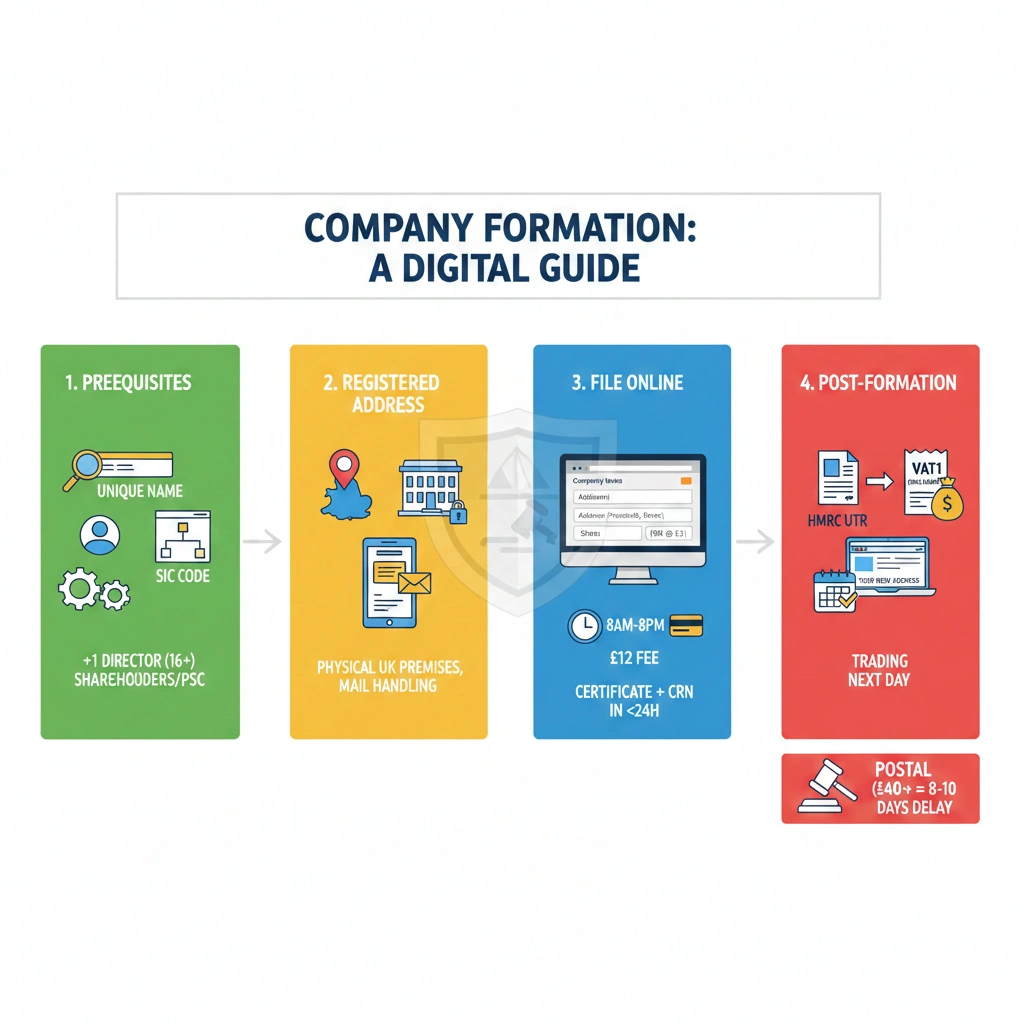
The process unfolds digitally via Companies House Web Incorporation Service (£12 fee). Step 1: Validate prerequisites. Confirm unique company name via WebCHeck, appoint at least one director (natural person over 16), shareholder(s), and person(s) with significant control (PSC)—typically overlapping for simplicity. Select SIC code reflecting activities.
Step 2: Secure registered office address. Must be physical UK premises in incorporation jurisdiction (e.g., England/Wales), staffed or agent-monitored for mail receipt. Obtain owner permission; virtual providers supply compliant options with scanning/forwarding. No trading address needed initially.
Step 3: File online 8am-8pm. Enter address precisely—street, postcode verified. Adopt model articles of association; allocate shares (e.g., 100 ordinary £1 each). Submit with payment; approvals yield certificate of incorporation and CRN within 24 hours, often minutes.
Step 4: Post-formation actions. HMRC auto-issues UTR for Corporation Tax; register VAT1 if turnover nears £90,000 or voluntary for reclaims. Update stationery, websites with address. Example: Consultant inputs Manchester virtual address at 10am, incorporated by noon, applies for Starling bank account afternoon—trading next day with reclaimed setup VAT. Postal filings (£40+) delay 8-10 days. Precision averts rejections.
Benefits and Potential Risks of Using a Registered Address in Formation
A dedicated registered address elevates professionalism: Central London EC1 postcodes impress clients, banks, and investors, outperforming residential ones in credibility. Privacy shields directors’ homes from 4 million annual public searches, reducing spam and security risks—70% of new Ltds opt for virtuals at £10-50/month, including mail handling.
Compliance streamlines: Ensures HMRC notices reach promptly, dodging £100+ late CT fines; facilitates PAYE/VAT swift setups. Cost-effective scalability—no physical office until growth; non-residents gain UK presence for e-commerce like Amazon. Example: Tech startup uses Birmingham agent address, secures NatWest account Day 2, scales without relocation.
Risks demand caution: Inappropriate addresses (unstaffed, overseas) trigger 14-day rectification or defaults to Companies House Cardiff PO Box 4385, halting filings and risking unserved documents. Banks reject mismatched proofs; persistent issues lead to strike-off, dissolution costs £200+. Data breaches expose if providers lax. Directors face £5,000 fines personally. Vetted services mitigate, reclaiming 95% of pitfalls via guarantees.
Legal and Compliance Considerations
Section 86 Companies Act 2006 requires every UK company maintain an appropriate registered office at all times—physical, UK-jurisdiction aligned, capable of receiving/acknowledging post or hand-delivery. Post-March 2024, PO Boxes banned; virtual offices qualify if compliant providers sign for mail.
ECCTA 2023 empowers Companies House proactive enforcement: Digital ID verification for directors, automatic defaults without notice, 28-day objection periods before strike-off. Changes file via AD01 (£8 online, 24 hours); display address on all business letters, websites, invoices mandatory. Links to PSC service addresses for privacy.
HMRC/VAT/PAYE nexus: Principal place of business often matches; non-residential aids GDPR data separation. Annual Confirmation Statement verifies. Penalties: £1,000+ company fines, officer disqualification. Auditors inspect records. Example: Scottish Ltd uses London address—rejected outright, jurisdiction mismatch voids. LLPs/partnerships follow suit. Integrate AML/KYC; solicitors for guarantees/holdings.
Common Mistakes to Avoid
Jurisdiction errors prevail: English incorporations cannot use Scottish addresses, per GOV.UK silos—instant rejection, restart delays. PO Boxes linger from legacy habits, triggering defaults post-2024.
Permission oversights: Third-party addresses (accountants) without written consent spark disputes, mail mishandling. Incomplete entry: Postcode mismatches halt processing. Neglecting updates: 14-day AD01 lapses post-move yield £150 fines.
Privacy naivety: Home listings invite doxxing; 60% regret exposure. Example: E-com director inputs relative’s unmonitored flat—misses HMRC winding-up petition, faces bankruptcy after strike-off. Virtual unverified: Fails “appropriate” test. Forecast mail volume; trial provider deliveries pre-filing.

Practical Tips and Best Practices
Select tier-1 virtual providers with Companies House track records—London/Manchester options bundle scanning/daily forwards (£25/month). Test: Post tracked letter pre-submission. Permission letters: Notarise for third-parties.
Bundle formation: Agents pre-verify addresses, same-day guarantees. Post-CRN: Sync VAT/PAYE applications. Banks: Share lease proofs/utilities. Annual audits: Review during Confirmations (£34). Tech: Automate AD01 via WebFiling.
Example: SaaS founder chooses EC2 virtual, incorporates 11am, reclaims £3k pre-VAT by evening, pitches VC with polished docs. Retain 6-year mail scans for HMRC. Scale to serviced offices seamlessly.
Frequently Asked Questions
Can virtual offices serve as registered addresses for formation?
Yes, if physical, staffed, and UK-based—providers handle statutory mail compliantly. Avoid unproven cheap options risking defaults. Ideal for privacy/scalability.
What makes a registered address “appropriate” legally?
Physical UK premises enabling mail acknowledgment; no PO Boxes/overseas. Must match jurisdiction; permissioned if not owned. Companies House verifies proactively.
How quickly can I form a company with a new registered address?
Online: 24 hours typically, minutes peak times. Postal 8-10 days. Virtual bundles enable same-day.
Do I need director permission for the registered office?
No, only premises owner/agent. Document consent to avoid disputes; virtuals include this.
What if Companies House rejects my registered address?
Rectify within 14 days via resubmission/AD01. Persistent issues default address, risking strike-off.
Integrating registered addresses into company formation fortifies UK businesses with compliance and professionalism from inception. Diligent selection averts disruptions, fuels expansion.
If you’re ready to register your company with confidence, Form My Company provides fast, fully online company formation with expert compliance support, including verified registered addresses, VAT & PAYE setups, virtual offices, and professional guidance. Get started today and let our specialists handle the paperwork while you focus on growing your business.