
Hosting large events in modern conference rooms demands meticulous planning around venue capacity, AV technology, catering logistics, and attendee management to ensure seamless execution. UK business owners must prioritise compliance with health and safety regulations while aligning event goals with company formation structures like limited companies registered at Companies House. Effective logistics not only elevate brand reputation but also support shareholder value through successful networking and product launches.
Modern conference rooms have evolved into sophisticated hubs for large-scale events, blending cutting-edge technology with flexible layouts to accommodate hundreds of delegates. For entrepreneurs and directors of UK-registered companies, hosting such events whether annual general meetings (AGMs), product unveilings, or corporate training summits requires navigating complex logistics that impact operational compliance and business growth. A limited company’s registered office might serve as the administrative base, but scaling to large events in professional venues underscores the need for strategic planning tied to VAT-registered operations and PAYE-managed staff.
The stakes are high: poor logistics can derail shareholder confidence and expose directors to legal risks under the Companies Act 2006. This guide draws on industry best practices to unpack every facet, from site selection to post-event audits. With UK venues like those in Birmingham and London offering spaces for up to 1,000 delegates, understanding power supplies, bandwidth demands, and hybrid formats is essential for seamless delivery. Entrepreneurs forming new companies via Companies House often overlook how these events reinforce compliance narratives, such as demonstrating robust governance to investors. By mastering logistics, businesses transform conference rooms into launchpads for expansion, ensuring events align with broader structures involving shareholders, directors, and regulatory filings.
Step-by-Step Guide to Event Logistics
Venue Selection and Capacity Planning
Selecting the right modern conference room starts with assessing delegate numbers against venue specs, ensuring rooms scale from 350 to over 1,000 capacity as seen in suites like Birmingham’s Britannia Suite. Directors must verify flexible partitioning for breakout sessions, natural daylight options, and air-conditioned spaces to maintain focus during multi-day AGMs. Factor in proximity to transport hubs London venues near major motorways reduce attendee no-shows, critical for VAT-registered firms tracking travel expenses.
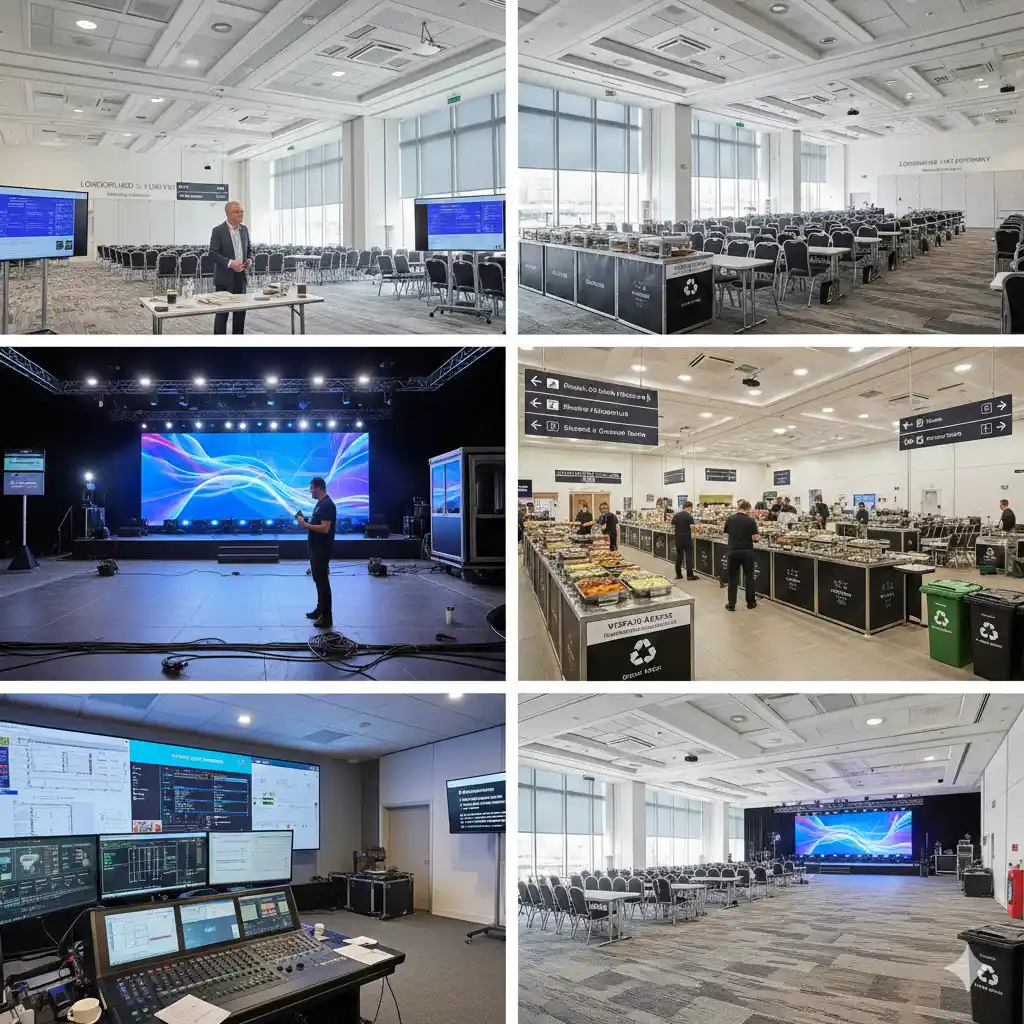
Power infrastructure is non-negotiable: large events demand 200Mbps Wi-Fi, multiple projectors, and backup generators to support live polling or VR demos. Acoustic treatments and blackout facilities prevent distractions, while integrated AV desks streamline tech transitions. For companies with a registered office in central London, hybrid setups via Zoom integration allow remote shareholders to participate, complying with modern governance expectations. Site visits reveal hidden gems like on-site catering kitchens, slashing logistics timelines.
Technical Setup and AV Coordination
Deploying AV logistics involves pre-event audits of conference room tech stacks, including 4K projectors, LED walls, and distributed audio systems for 500+ attendees. Coordinate with venue technicians to map cable runs, avoiding trip hazards under Health and Safety Executive (HSE) guidelines. For limited companies hosting investor pitches, seamless streaming to Companies House-compliant virtual platforms ensures inclusivity.
Bandwidth allocation prioritising 100Mbps per stream prevents lag during Q&A sessions. Test microphones, interpreters’ booths, and accessibility aids like induction loops days ahead. Lighting rigs must balance stage illumination with room-wide visibility, using DMX controls for dynamic effects. Backup internet via 4G failover protects against outages, safeguarding PAYE payroll demos or shareholder voting apps. Professional riders detail specs, aligning with business structures where directors oversee budgets tied to event ROI.
Catering, Registration, and Delegate Flow
Catering logistics hinge on dietary tracking via pre-registration portals, scaling buffets or plated service for 800 delegates in modular conference rooms. UK venues often provide in-house kitchens compliant with Food Standards Agency rules, enabling hot meals without external deliveries clogging loading bays. Time buffet openings to peak breaks, using flow managers to prevent queues exceeding 15 minutes.
Registration desks with badge printers and QR scanners expedite entry, integrating with CRM systems for Companies House-verified attendee lists. Wayfinding signage and apps guide delegates to breakout rooms, minimising confusion in multi-level venues. For shareholder events, secure zones for NDAs protect sensitive compliance discussions. Waste management plans, including recycling mandates, align with ESG goals for modern limited companies.
On-Site Execution and Vendor Management
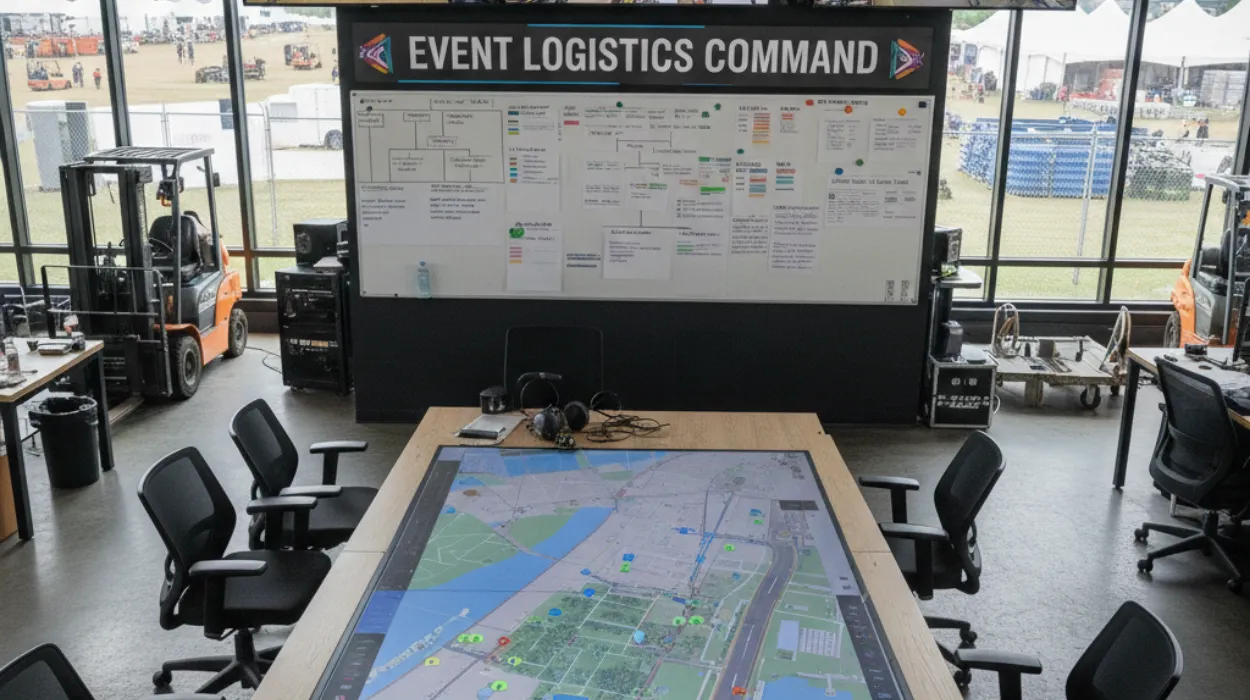
Day-of coordination demands a command centre with walkie-talkies and real-time dashboards tracking timelines. Assign runners for rapid response to AV glitches or catering shortages. For large events, stage manager briefs ensure speakers adhere to slots, vital for time-sensitive VAT webinars.
Vendor SLAs cover setup tear-down within 4 hours post-event, preserving deposits for registered offices doubling as backup spaces. Emergency protocols defibrillators, fire wardens meet HSE standards, with evacuation apps for conference rooms over 500 capacity.
Benefits and Potential Risks
Hosting large events yields networking ROI, forging partnerships that bolster shareholder returns for newly formed companies. Modern conference rooms enhance credibility, with immersive tech impressing clients and facilitating lead capture via interactive polls. Compliance benefits include documented AGMs satisfying Companies House filings, while hybrid formats cut costs by 30% versus fully in-person.
Risks loom large: overcapacity strains fire egress, breaching Building Regulations 2010. Tech failures disrupt proceedings, eroding director authority. Budget overruns from unvetted vendors hit VAT thresholds unexpectedly. Reputational damage from poor catering affects brand trust, critical for startups post-registration.
Mitigation via insurance riders covering public liability up to £10m protects against slips in high-traffic foyers. Data breaches in registration systems risk GDPR fines, underscoring secure hosting for shareholder data.
Legal and Compliance Considerations
UK law mandates risk assessments under Management of Health and Safety at Work Regulations 1999 for conference rooms hosting 100+ delegates. Directors of limited companies bear personal liability for breaches, potentially voiding D&O insurance. Capacity certificates from venue operators confirm compliance with Approved Document B fire safety.
Accessibility under Equality Act 2010 requires ramps, hearing loops, and braille signage. For VAT-registered entities, reclaimable expenses demand HMRC-compliant invoices. Events discussing finances trigger Money Laundering Regulations checks on high-value sponsors.
Companies House scrutiny intensifies for public events; audio recordings of AGMs must archive resolutions accurately. GDPR governs delegate data, mandating consent for post-event marketing. Alcohol service needs Personal Licence validation, avoiding fines for directors.
Common Mistakes to Avoid
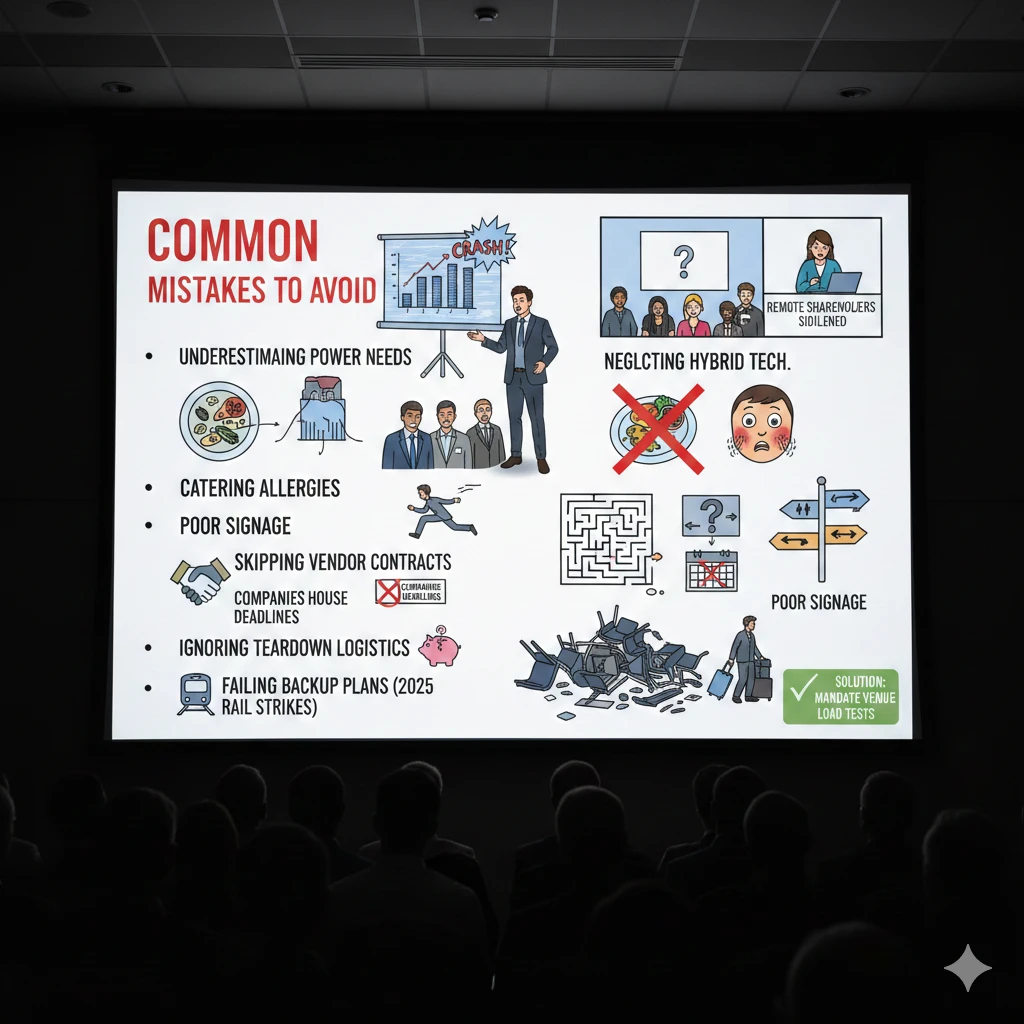
Underestimating power needs crashes AV mid-presentation, a pitfall for unprepared entrepreneurs. Solution: mandate venue load tests. Neglecting hybrid tech leaves remote shareholders sidelined, breaching inclusivity duties.
Overlooking catering allergies invites lawsuits; always cross-check registrations. Poor signage causes chaos in labyrinthine venues, inflating stress costs. Skipping vendor contracts risks no-shows, derailing timelines tied to Companies House deadlines.
Ignoring teardown logistics leaves deposits forfeit, straining cashflow for new formations. Failing backup plans during strikes like 2025 rail disruptions strands delegates.
Practical Tips and Best Practices
Book 6-12 months ahead for peak seasons, negotiating volume discounts for repeat limited company events. Use 360° venue tours for virtual scouting. Implement RFID badges for seamless tracking and cashless concessions.
Partner with AV firms experienced in UK conference rooms for plug-and-play setups. Schedule dry runs with directors role-playing speeches. Eco-tips: opt for digital collateral, reducing print VAT.
Post-event NPS surveys refine future logistics, feeding into compliance reports. Leverage virtual offices for registration addresses, streamlining admin.
Mastering the logistics of large events in modern conference rooms empowers UK businesses to deliver impactful gatherings that drive growth and compliance. From venue audits to post-event analytics, each step reinforces operational resilience for directors and shareholders alike.
If you’re ready to register your company with confidence, Form My Company provides fast, fully online company formation with expert compliance support, VAT & PAYE handling, virtual office solutions, and professional guidance. Get started today and let our specialists handle the paperwork while you focus on growing your business.
Frequently Asked Questions
How do I ensure GDPR compliance for delegate data in large events?
Implement consent forms at registration, detailing data use for marketing or sharing with sponsors. Use encrypted platforms for storage, appointing a DPO for events over 250 attendees. Retain data only as necessary, purging post-event per ICO guidelines vital for Companies House filings.
What AV specs are essential for 500-delegate conference rooms?
Demand 4K projectors, 200Mbps dedicated Wi-Fi, and distributed PA systems with 120dB coverage. Include HDMI extenders for lecterns and Crestron panels for control. Test hybrid feeds to YouTube for overflow.
How can I manage catering costs under VAT thresholds?
Source in-house venue kitchens for 20% VAT reclaim eligibility. Bulk-buy alcohol under AWRS checks. Plate services for premium events cap waste, yielding 15% savings.
What fire safety measures apply to UK conference rooms?
Venue must provide fire risk assessments, wardens per 50 delegates, and 7.5m egress paths. Install AVD systems; brief attendees on assembly points.
How do logistics differ for hybrid versus in-person large events?
Hybrids need multi-cam rigs and cloud streaming, doubling bandwidth. In-person focuses on flow; hybrids prioritise latency under 2s for Q&A.