

Registering a company in the UK is a straightforward process managed through Companies House, typically completed online in 24 hours for a small fee. Choose your structure, prepare essential documents like your memorandum and articles of association, and submit via the official portal—professional services can streamline this for compliance from day one.
Launching a business in the UK offers entrepreneurs access to one of the world’s most dynamic economies, with London as a global hub for finance, tech, and innovation. However, before trading, you must formally register your company with Companies House, the official registrar, to gain legal recognition as a limited company—most popular for its liability protection and tax advantages. This process, governed by the Companies Act 2006, ensures your business is publicly recorded, enabling you to open bank accounts, sign contracts, and build credibility with suppliers and customers.
Understanding how to register a company in the UK is crucial for compliance, as non-registration exposes owners to unlimited personal liability and fines. Whether you’re forming a private limited company (Ltd), the default choice for startups, or exploring alternatives like a public limited company (PLC) or limited liability partnership (LLP), the steps involve selecting a unique name, appointing directors and shareholders (known as members), and designating a registered office address in the UK. Semantic elements like SIC codes (Standard Industrial Classification) classify your activities, while post-registration obligations include VAT registration if turnover exceeds £90,000 and PAYE for employees.
This guide draws on over a decade of expertise in UK company formation, providing a step-by-step blueprint tailored for 2026 regulations. From sole traders transitioning to limited status for growth to international founders seeking a UK base, mastering this process minimises risks like rejection or penalties. With digital tools at Companies House now mandatory for most filings, efficiency is key—yet pitfalls abound for the unprepared. By following this authoritative resource, you’ll navigate bureaucracy confidently, positioning your venture for success amid post-Brexit trade rules and evolving tax landscapes.
Step-by-Step Guide to Company Registration
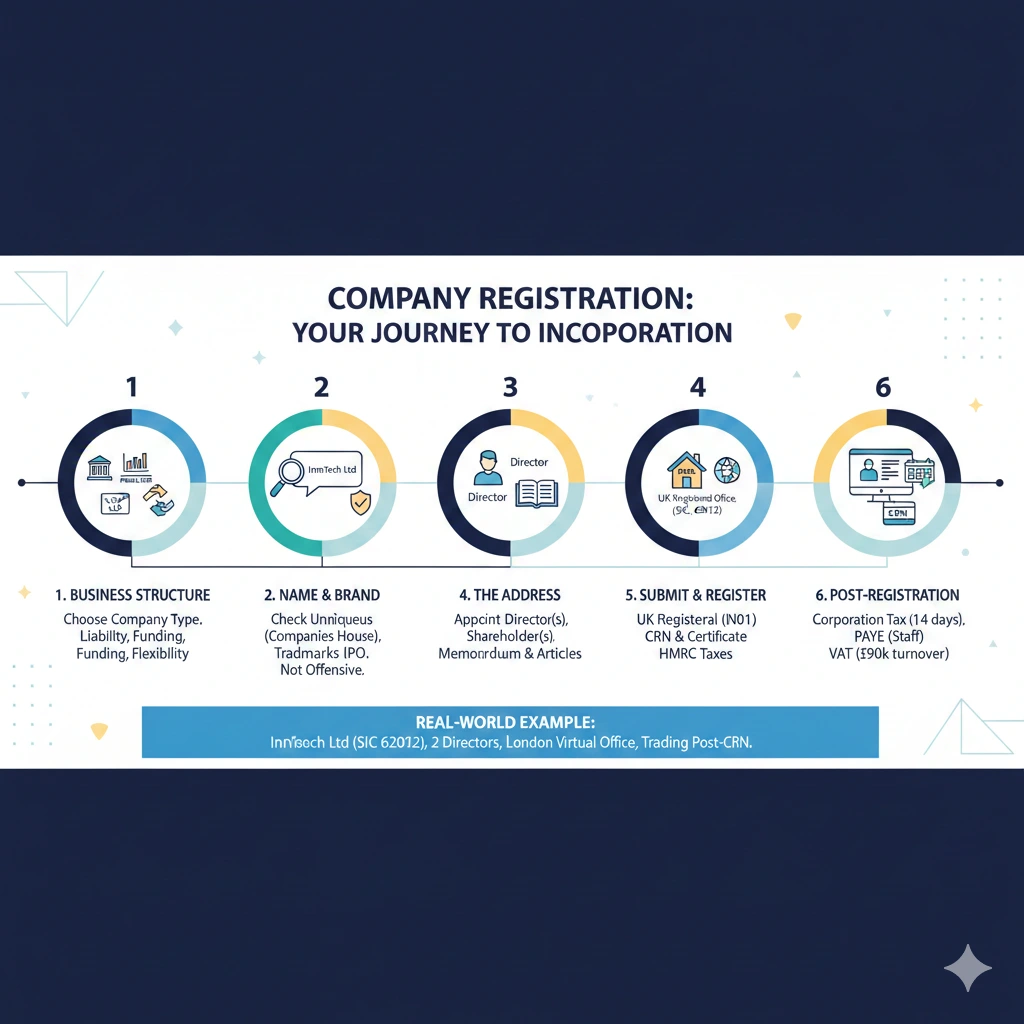
The journey begins with strategic decisions that shape your business structure. First, select your company type: a private company limited by shares (Ltd) suits most, limiting director liability to unpaid shares while allowing share issuance for funding. Public limited companies require £50,000 share capital but enable stock market listing—rare for startups. LLPs offer partnership flexibility with limited liability, ideal for professionals like solicitors.
Next, check and reserve your company name via Companies House’ webCHeck service. It must be unique, not offensive, and avoid sensitive terms like “Royal” without permission. Sensitive words such as “Bank” or “University” trigger additional scrutiny. Use the name availability tool to generate variations, ensuring it reflects your brand without infringing trademarks—search the Intellectual Property Office database simultaneously.
Appoint at least one director (no residency requirement since 2008) and a company secretary (optional for private firms). Directors bear fiduciary duties under the Companies Act, including acting in good faith. Shareholders provide capital; a private Ltd needs just one. Prepare the memorandum of association, a simple agreement signed by initial shareholders, and adopt model articles or custom governance rules outlining decision-making.
Secure a UK registered office address—your legal nexus for official mail, publicly listed on the register. Virtual offices suffice if compliant, avoiding home addresses for privacy. Assign SIC codes (e.g., 62012 for ready-made interactive software) to categorise activities accurately, aiding HMRC audits.
Submit via the Companies House online portal (IN01 form digitally). Fees start at £12 for same-day service or £50 for standard. Provide director/shareholder details, including service addresses (private residential optional). Post-submission, receive your certificate of incorporation instantly online, activating your CRN (Company Registration Number). Within 14 days, register for Corporation Tax with HMRC using your CRN. If employing staff, set up PAYE immediately; VAT thresholds demand registration at £90,000 turnover.
For non-UK residents, use a UK agent for filings. Expedited services via formation agents handle authentication. This digital process, streamlined since 2020, contrasts with paper filings’ delays, ensuring most complete within hours. Real-world example: A tech startup registers as “InnoTech Ltd” (SIC 62012), appoints two directors, uses a London virtual office, and launches trading post-CRN.
Benefits of Registering a Company and Potential Risks
Registering yields tangible advantages. Limited liability shields personal assets from business debts, vital for high-risk ventures like e-commerce. The “Ltd” suffix signals professionalism, easing bank loans, investor pitches, and supplier credit—studies show limited firms secure 20% more funding. Tax efficiency shines: Corporation Tax at 19-25% (2026 rates) beats higher income tax bands for sole traders (up to 45%). Shareholders enjoy dividend allowances (£500 tax-free), and loss relief offsets future profits.
Public credibility via Companies House’ open register builds trust; customers prefer verified entities. Scalability supports share issues for growth, unlike sole traders. Post-Brexit, UK registration facilitates EU trade under TCA rules, with easier access to R&D tax credits and SEIS/EIS investor reliefs.
Risks demand caution. Directors face personal liability for wrongful trading or phoenixing (closing to evade debts), with disqualification up to 15 years. Non-filing annual accounts incurs £1,500 fines escalating to strike-off. Name changes cost £8-30, and public registers expose details—use service addresses to mitigate. VAT/PAYE non-compliance triggers penalties: 30% of unpaid tax for late VAT. Over-expansion without cashflow risks insolvency, where directors must prioritise creditors.
Example: A freelance consultant registers as Ltd, deducts home office expenses, and attracts angel investors via SEIS—benefits realised. Conversely, ignoring Confirmation Statements led to a £400 fine for a retailer. Balancing these, registration propels legitimate growth while underscoring diligent compliance.
Legal and Compliance Considerations
UK company law mandates ongoing obligations post-registration. Annually file a Confirmation Statement (£13 online), confirming director/shareholder details—late filings bar banking. Micro-entities (turnover <£632,000) submit abridged accounts; full audits apply above thresholds. PSC Register (Persons with Significant Control) tracks 25%+ influencers, filed publicly.
HMRC integration is seamless: Corporation Tax returns via iXBRL-tagged accounts due 12 months post-year-end. PAYE setup for salaries requires Real Time Information submissions; VAT quarterly if registered. GDPR compliance protects customer data, with ICO registration (£40-£2,900) for processors.
Anti-money laundering (AML) rules demand director vetting; formation agents verify ID. Brexit-era updates include UKCA marking for goods. Shareholder agreements prevent disputes, detailing exit clauses.
Non-compliance risks dissolution, director bans, or criminal probes. Example: A 2025 case saw a director fined £12,000 for falsifying accounts. Expert services ensure adherence, from PSC maintenance to dormant filings (£12 annually). Robust governance fosters investor confidence and audit-proof operations in a regulated landscape.
Novices falter on name selection, choosing unavailable or non-compliant terms, delaying by weeks—always pre-check. Omitting SIC codes halts incorporation; select precisely (62090 for IT consultancy). Incomplete director details, like missing DOB, trigger rejections—double-validate.
Using non-UK addresses for registered office invites penalties; opt for compliant virtual solutions. Neglecting PSC registration exposes fines (£500+). Post-incorporation lapses, like missing CT600 returns, accrue interest at 7.75% (2026 base rate +2.5%).
Sole traders bypass registration but lose liability protection; many regret amid disputes. Ignoring shareholder pacts breeds litigation—draft early. VAT threshold miscalculation leads to retrospective bills; monitor quarterly.
Real case: A startup reused a dissolved name, costing £200 re-filing. Another skipped PAYE, facing £3,000 HMRC arrears. Avoidance strategies: Use checklists, professional review, and software like FreeAgent for reminders. Proactive diligence averts 90% of pitfalls.
Practical Tips and Best Practices
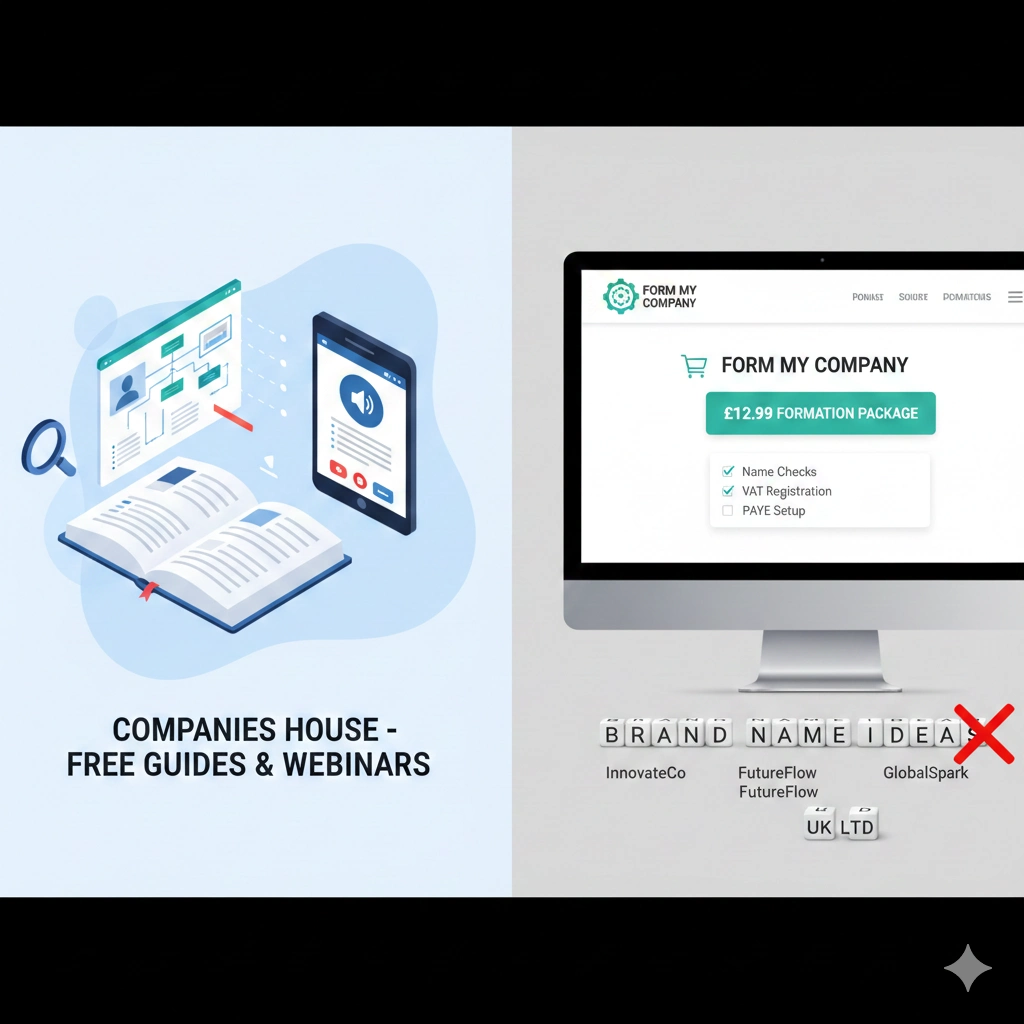
Leverage Companies House’ free guides and webinars for clarity. Engage formation agents like Form My Company for £12.99 packages including name checks and VAT/PAYE setup. Choose memorable, brandable names avoiding “UK Ltd” restrictions.
Secure a professional registered office via virtual services (£20/month), shielding home privacy. Appoint multiple directors for resilience; train on duties via IoD courses. Integrate Xero/QuickBooks early for compliant bookkeeping.
For scale-ups, incorporate SEIS/EIS eligibility (trading <2 years). Non-residents appoint UK directors or use corporate services. Best practice: File early—dormant returns prevent dormancy flags. Network via FSB for peer advice.
Example: A cafe owner registers mid-week, opens bank account via CRN, and claims startup reliefs. Annual calendar alerts ensure filings. These habits build a compliant, scalable foundation. (142 words)
Frequently Asked Questions (FAQs)
How long does it take to register a company in the UK?
Online applications process in 24 hours, often minutes, yielding instant CRN. Postal IN01 takes 8-10 days (£40). Expedited priority (£100) guarantees 24 hours. Factors like name objections extend to 5 days—agents mitigate via pre-vetting.
Do I need a UK address to register?
Yes, a UK registered office is mandatory for service of documents. Non-residents use virtual offices compliant with Companies House (no PO Boxes). This address appears publicly; service addresses protect director privacy.
What are the costs involved?
Companies House: £12 software/subscriber, £50 paper. Agents: £10-£100 packages. Ongoing: £13 Confirmation, £40 ICO, PAYE/VAT free setup. Bank fees vary (£0-£25/month). Budget £200 year one.
Can a foreigner register a company in the UK?
Yes, no nationality/residency bar. Provide passport ID; use UK agents for filings. Benefits include global banking access.
What happens if I don’t register for Corporation Tax?
Automatic HMRC enrolment post-CRN; notify within 3 months of trading. Late penalties: £100-£1,500 scaling.
Mastering how to register a company in the UK equips you for entrepreneurial success, blending simplicity with safeguards. From name selection to compliance, each step fortifies your venture against risks while unlocking growth levers like tax reliefs and credibility.
If you’re ready to register your company with confidence, Form My Company provides fast, fully online company formation with expert compliance support, VAT & PAYE setup, virtual office solutions, and professional guidance. Get started today and let our specialists handle the paperwork while you focus on growing your business.