
Renting the perfect meeting room on a budget is about matching the space to your objective and guest list, then ruthlessly stripping out anything you do not actually need. Once you know your requirements, you can compare venues by total cost (room, tech and refreshments) rather than headline hourly rate, so you stay professional without overspending.
Why budget meeting rooms matter for growing businesses
For many small businesses and growing limited companies, a rented meeting room is the missing piece between working remotely and presenting as a serious, organised organisation. You might run your operations from home, a virtual office or a co‑working space, but key moments investor pitches, client negotiations, board meetings with directors and shareholders demand a professional environment that reflects your brand. In the UK context, particularly for companies that have recently completed company formation with Companies House and are building relationships with banks, suppliers and advisers, the space you use can significantly shape perceptions of your competence and stability. A well‑chosen, affordable meeting room lets you host people in a neutral, well‑equipped setting without the long‑term cost of a lease.
Budget discipline is essential because these costs come on top of statutory expenses like confirmation statements, annual accounts preparation, VAT returns and PAYE payroll. Treat meeting room hire as a strategic investment rather than a luxury: use it when it materially improves the outcome of the meeting, and make sure every pound you spend supports a clear objective, whether that is winning a contract, resolving a dispute or aligning your leadership team. With a structured approach, you can consistently secure rooms that impress your guests, support good decision‑making and integrate neatly into your wider compliance and governance routines.
Step-by-step: how to define and book the right room
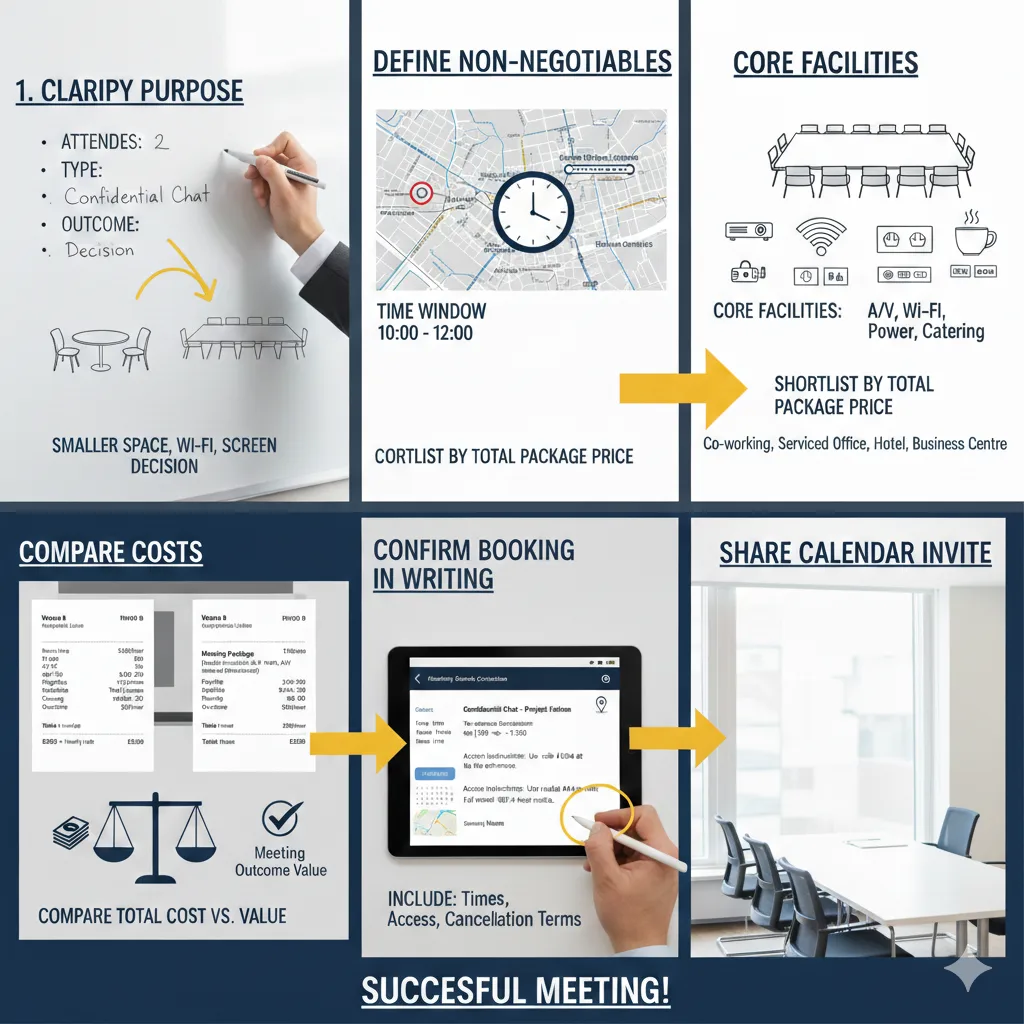
Start by clarifying your purpose. A two‑person confidential chat between directors needs a very different space to a 12‑person strategy session involving shareholders, external advisers and dense financial models. Write down three things: the number of attendees, the type of meeting (presentation, workshop, negotiation, board) and what must happen by the end of it (decision, signature, scoping or training). This simple exercise prevents you from over‑specifying the room and paying for features you will not use. A smaller space with strong Wi‑Fi and a decent screen is usually enough for most SME meetings, whereas occasional all‑hands sessions might justify a larger conference room.
Next, define your non‑negotiables: location, time window and core facilities. Location might be central London for transport links, or a city near your registered office to reinforce your local presence. Facilities typically include: a screen or projector, reliable Wi‑Fi, enough power sockets for laptops, a table configuration that suits your format, and basic refreshments or space for catering. Once you know this, you can shortlist venues co‑working spaces, serviced offices, hotels, business centres—by total package price rather than the headline hourly rate. Always ask for a breakdown of costs (room, AV, flipcharts, tea/coffee, cleaning, overtime) and compare that figure to the value of the meeting outcome. Finally, confirm the booking in writing, including start and end times, access instructions and cancellation terms, then share a clear calendar invite with your attendees so everyone knows where to go and what to expect.
Benefits and potential risks of budget meeting room hire
The main benefit of budget meeting rooms is financial efficiency. Instead of committing to a long‑term lease and the business rates, utilities and fit‑out that come with it you pay only for the hours or days you actually need. For early‑stage companies that have just gone through incorporation, perhaps registered a new office address, and are still working towards stable revenue, this flexibility protects cash flow and reduces fixed overheads. It also lets you match the venue to the occasion: a modest local room for internal planning, a more polished central venue for lenders or investors, and specialist rooms with better acoustics for training or recording. Over a year, this modular approach often costs far less than even the cheapest dedicated office, while providing a more professional backdrop than a café or kitchen table.
There are, however, risks to manage. Cheap can slide into false economy if the room lacks the basics you need: weak Wi‑Fi that derails a live demo, poor lighting that leaves people tired, or a noisy environment that undermines confidential discussions between directors and key clients. Inconsistent quality between venues can also undermine your brand if guests feel you have cut corners. There is a practical risk that late‑running previous occupants or overbooked venues compress your schedule, causing meetings about sensitive topics such as shareholder agreements or compliance issues to feel rushed. Finally, some budget providers may have strict cancellation policies or hidden extras, leading to unpleasant surprises on your invoice. Recognising these risks allows you to ask better questions upfront and reserve truly low‑risk, good‑value spaces.
Legal and compliance considerations when renting a meeting room
From a legal and compliance perspective, meeting rooms may seem low risk, but they intersect with your obligations as a UK company in several ways. First, consider confidentiality and data protection. If you are discussing client files, employee records, tax planning, or board‑level matters involving directors and shareholders, you must ensure the room setup respects privacy. That means choosing venues where conversations cannot easily be overheard from corridors or cafés, and confirming that any on‑site tech (like shared computers or recording systems) is not capturing your discussions without explicit consent. For businesses subject to UK GDPR, this is part of your duty to protect personal data in any environment where it is handled or discussed.
Second, think about health and safety. As an employer operating PAYE and responsible for staff, you owe your employees a duty of care even when they are offsite. You should be confident the venue provides safe access, clear fire exits, and appropriate seating and lighting. While the venue operator is primarily responsible for premises compliance, your company should still consider how you brief employees and guests about emergency procedures. Finally, if you have chosen a business structure that emphasises good governance such as a private limited company with formal board meetings you may want to keep accurate minutes and records of decisions taken in rented rooms, especially around financial commitments or compliance policies. The room itself does not change your duties to Companies House or HMRC, but it is often where the decisions that affect those filings are made.
Common mistakes to avoid when hiring budget meeting rooms
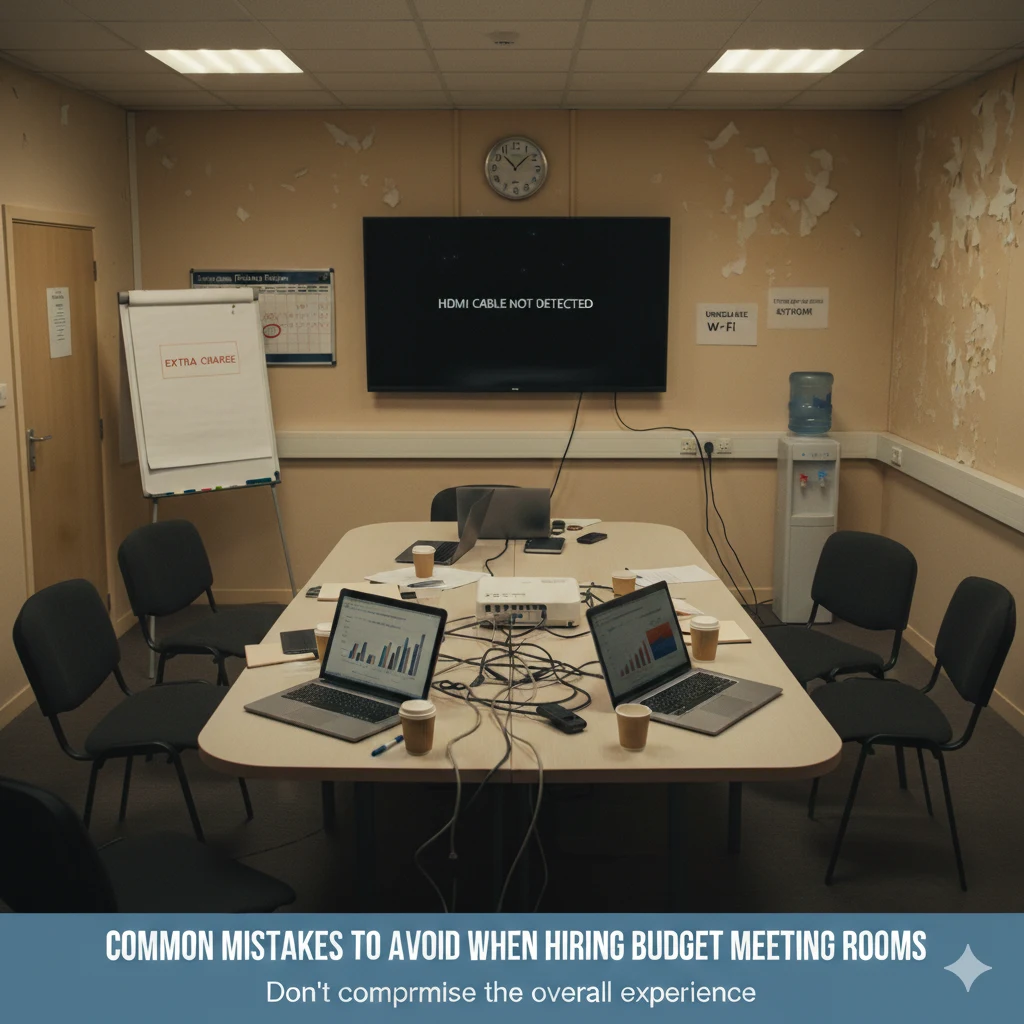
One common mistake is focusing only on the hourly rate and ignoring the overall experience. A room that is £10 cheaper per hour may cost you far more if the technology fails, causing you to abandon a key sales presentation or reschedule an investor pitch. Another error is underestimating travel time and accessibility: choosing a venue far from main transport links might push attendees to arrive late or leave early, undermining the value of carefully planned sessions involving busy directors or external advisers. Business owners sometimes assume that all meeting rooms offer similar equipment, only to discover on arrival that there is no HDMI cable, no video‑conferencing kit or unreliable Wi‑Fi, which can be catastrophic for hybrid meetings.
A second mistake is failing to scrutinise the contract and cancellation terms. Short notice cancellations, overruns or last‑minute changes to numbers can trigger unexpected charges, which are particularly painful for small businesses working within tight budgets. Some venues charge extra for basics like flipcharts, coffee or extended Wi‑Fi usage, turning a seemingly cheap booking into an expensive one. Another pitfall is ignoring the layout and comfort of the space. Cramming twelve people into a small, stuffy room with no windows for a four‑hour strategy session will damage morale and productivity, even if the price looks attractive. Finally, some owners forget to coordinate with their wider compliance calendar; they schedule critical financial review meetings close to filing deadlines in unsuitable rooms, increasing stress at precisely the moment when clear thinking is most needed.
Practical tips and best practices for renting on a budget
To rent the perfect meeting room on a budget, start with an internal checklist before you even look at venues. List your must‑haves (capacity, screen, Wi‑Fi, quiet environment) and nice‑to‑haves (natural light, on‑site catering, break‑out areas) and rank them. This prevents you being upsold to larger or more luxurious rooms that do not actually serve your meeting’s purpose. When you search, filter by location, capacity and facilities first, then sort by price to see which venues deliver your essentials at the lowest total cost. Always request recent photos and, if possible, reviews from other business customers, especially those similar to yours in size or sector.
When negotiating, think in terms of packages instead of line‑items. Ask whether the venue offers a half‑day or full‑day rate that includes AV equipment and refreshments, which can be cheaper than paying separately by the hour. If your company books rooms regularly for example, quarterly board meetings or monthly client workshops ask for a loyalty discount or a retainer arrangement, which can deliver predictable pricing and guaranteed availability. Build a small roster of vetted venues in different locations: one near your registered office, one central for clients, and one near key staff or directors. After each meeting, debrief briefly with your team: did the room support the outcomes you wanted, was anything missing, and was it worth the cost? Capture this feedback in a simple log so future bookings become steadily more efficient. Over time, this disciplined approach delivers consistently good rooms at sustainable prices.
Renting the perfect meeting room on a budget is about clarity, discipline and alignment with your wider business strategy. When you define your objectives, prioritise essential facilities and compare total package costs instead of chasing the lowest hourly rate, you can secure professional spaces that support serious conversations without undermining your cash flow. Treat every booking as part of your governance toolkit where directors, shareholders and key partners meet to make decisions that will later appear in your filings and financial statements and you will naturally demand higher standards from the rooms you choose.
If you’re ready to build a more professional presence around your meetings, Form My Company can help underpin everything behind the scenes. From fast, fully online company registration and ongoing compliance support to VAT and PAYE setups, virtual office addresses and professional advisory services, we provide the infrastructure that lets you focus on running effective meetings and growing your business. Get started today and let our specialists handle the paperwork while you concentrate on the conversations that move your company forward.
Frequently Asked Questions
How far in advance should I book a meeting room
For standard business meetings, booking one to two weeks in advance usually secures good rates and availability, especially outside peak times such as mid‑week mornings. For high‑stakes events—like AGMs, board meetings or investor presentations—aim for three to four weeks, particularly in major cities where demand is higher. Early booking also gives you time to test any digital links or presentation setups before the day itself.
What time of day is cheapest for meeting room hire?
Rates are often lower during off‑peak slots, such as late afternoons, early mornings or Fridays, depending on the venue. If you are flexible, ask specifically about quieter times when the provider may be willing to negotiate on price. Aligning internal meetings with these cheaper slots can reduce your annual room‑hire spend without affecting core operations.
Should I choose a co‑working space, hotel or business centre?
Each has strengths. Co‑working spaces often provide modern, well‑equipped rooms at competitive prices and are ideal for creative workshops or tech‑focused teams. Hotels may be better for client‑facing meetings that require on‑site catering or accommodation. Business centres and serviced offices suit more formal board meetings and regulatory discussions, offering a corporate environment aligned with your company’s professional image.
How can I make a small, cheap room feel more professional?
Preparation matters more than décor. Arrive early to set up slides, test Wi‑Fi and arrange seating so everyone can see and hear clearly. Bring printed agendas, name badges for unfamiliar attendees, and ensure water, notepads and pens are available. Clear structure and confident hosting often leave a stronger impression than the furniture.
Can meeting room costs be treated as business expenses?
In most cases, yes. For UK companies, meeting room hire used wholly and exclusively for business purposes—such as client meetings, internal planning or training—is normally deductible as an allowable expense when calculating corporation tax. Keep invoices and records in case HMRC ever queries your costs, and consult your accountant for advice tailored to your specific business structure.