

Selecting the right corporate conference venue streamlines events, boosts attendee engagement, and aligns with your business goals. For UK entrepreneurs, this decision impacts company formation celebrations, shareholder meetings, or compliance training sessions. A strategic choice enhances brand credibility while ensuring legal and operational compliance.
Corporate conference venue selection is a pivotal decision for entrepreneurs establishing or scaling their businesses in the UK. Whether launching a new company registered with Companies House, hosting annual general meetings (AGMs) for directors and shareholders, or conducting VAT and PAYE compliance workshops, the venue sets the tone for professionalism and success. Poor choices can lead to logistical nightmares, diluted messaging, and even regulatory oversights, while an optimal venue amplifies networking, fosters innovation, and reinforces your business structure’s stability.
In the competitive UK landscape, where limited companies, LLPs, and sole traders navigate stringent rules from HMRC and Companies House, venue selection extends beyond aesthetics. It involves assessing capacity for 50 to 500 delegates, proximity to registered offices or virtual office addresses, and facilities supporting hybrid formats post-pandemic. Entrepreneurs must weigh costs against long-term value, considering how a venue in London, Manchester, or Birmingham influences attendee travel and carbon footprints under emerging ESG compliance. Real-world examples abound: a tech startup’s product launch at a riverside Manchester venue drew investors, accelerating funding rounds, whereas a mismatched rural site for a London-based fintech AGM caused delays and frustration. This guide equips you with a framework to make informed decisions, drawing on practical insights from years of advising UK business owners on seamless event execution tied to their corporate lifecycle. By prioritising venue attributes like AV tech, catering, and accessibility, you safeguard compliance while maximising ROI.
Step-by-Step Guide to Selecting a Corporate Conference Venue
Define Your Event Objectives and Audience
Begin by clarifying the conference’s purpose be it strategy sessions for directors, shareholder updates, or compliance training on Companies House filings and VAT thresholds. Identify your audience: are they C-suite executives expecting luxury boardrooms, remote shareholders joining via Zoom, or entry-level staff needing interactive spaces? Map attendee demographics, including numbers (e.g., 100-200), travel origins, and special needs like wheelchair access under the Equality Act 2010.
Budget allocation follows: allocate 20-30% of your total event spend to the venue, factoring in day delegate rates (£50-£150 per head) and add-ons like VAT-exclusive packages. For a new company formation celebration, opt for urban hubs near transport links; established firms might choose countryside retreats for team-building. Example: A Bristol-based e-commerce LTD hosting a PAYE seminar selected a city-centre hotel with breakout rooms, accommodating 150 delegates efficiently. Document requirements in a brief: capacity, layout (theatre vs. cabaret), and tech specs. This foundational step prevents scope creep, ensuring the venue supports your business structure’s growth narrative.
Research and Shortlist Venues
Leverage platforms like Venuefinder or BookaMeeting, cross-referencing with Google reviews and LinkedIn recommendations from fellow entrepreneurs. Prioritise UK regions aligning with your registered office London for international appeal, Edinburgh for Scottish incorporations. Shortlist 5-7 options based on criteria: location (within 30 minutes of major airports), capacity flexibility, and sustainability credentials for modern compliance.
Site visits are non-negotiable: inspect natural light, acoustics, and Wi-Fi speeds (minimum 50Mbps). Request references from similar events, such as AGMs for plcs or director retreats. For compliance-focused conferences, verify on-site printing for last-minute Companies House forms. A Midlands manufacturing firm shortlisted three venues for their shareholder meeting, ultimately choosing one with redundant power supplies after a power-outage scare during a trial. Use RFPs (Request for Proposals) to compare quotes, negotiating 10-15% discounts for off-peak bookings. This methodical approach aligns venue choice with your company’s operational ethos.
Evaluate Logistics, Technology, and Contracts
Assess logistics: parking for 50+ cars, catering accommodating dietary needs (vegan, halal), and proximity to hotels for overnight stays. Tech is critical ensure 4K projectors, interactive whiteboards, and hybrid streaming compliant with GDPR for virtual shareholders. Test integrations with tools like Teams or Hopin.
Contracts demand scrutiny: include force majeure clauses for Brexit-related disruptions, cancellation policies (free up to 90 days out), and liability for damages. Specify VAT handling, as venues often reclaim input tax vital for VAT-registered firms. Example: A London startup’s conference nearly derailed due to untested AV, but a backup generator clause saved the day. Finalise with a deposit (10-20%) and timeline for F&B menus. This phase locks in reliability, mirroring the precision needed in PAYE filings.

Benefits and Potential Risks of Strategic Venue Selection
Strategic venue selection yields multifaceted benefits for UK entrepreneurs. Enhanced professionalism elevates your brand, attracting investors during funding pitches or partners at networking events tied to company growth. Cost efficiencies emerge from all-inclusive packages, reducing overruns by 15-20%, while prime locations boost attendance rates by 25%, per industry benchmarks. Productivity surges in well-equipped spaces, fostering breakthroughs in compliance strategy sessions or director brainstorming.
Risks, however, loom large. Overspending strains cashflow, especially for startups post-incorporation. Inadequate capacity leads to cramped sessions, eroding credibility; poor tech causes hybrid failures, alienating remote directors. Location missteps inflate travel costs, breaching per diems under HMRC rules. Sustainability oversights invite backlash amid net-zero mandates. A Cardiff SME’s risky choice of a flood-prone venue during a shareholder AGM resulted in £10k losses and reputational harm. Mitigation through due diligence transforms risks into opportunities, ensuring events propel your business structure forward.
Legal and Compliance Considerations
UK entrepreneurs must navigate legalities in venue selection to uphold Companies Act 2006 obligations. For AGMs or board meetings, venues qualify as valid if accessible to shareholders, with minutes recordable per statutory demands. Ensure data protection: venues handling delegate lists must be GDPR-compliant, with DPAs signed.
VAT implications are key reclaimable on venue hire if business-related, but confirm with HMRC guidelines. PAYE considerations apply for staff events: mileage allowances and subsistence rates cap claims. Accessibility under the Equality Act mandates ramps and hearing loops. Alcohol licensing affects evening receptions; verify TENS for one-offs. Directors’ duties extend here: prudent selection avoids conflicts, like choosing venues linked to shareholders without disclosure. For overseas directors, immigration checks on visa-compliant spaces. Non-compliance risks fines or invalid meetings, e.g., a proxy voting glitch from poor Wi-Fi nullified resolutions. Partnering with services like Form My Company ensures filings reflect seamless events.
Common Mistakes to Avoid
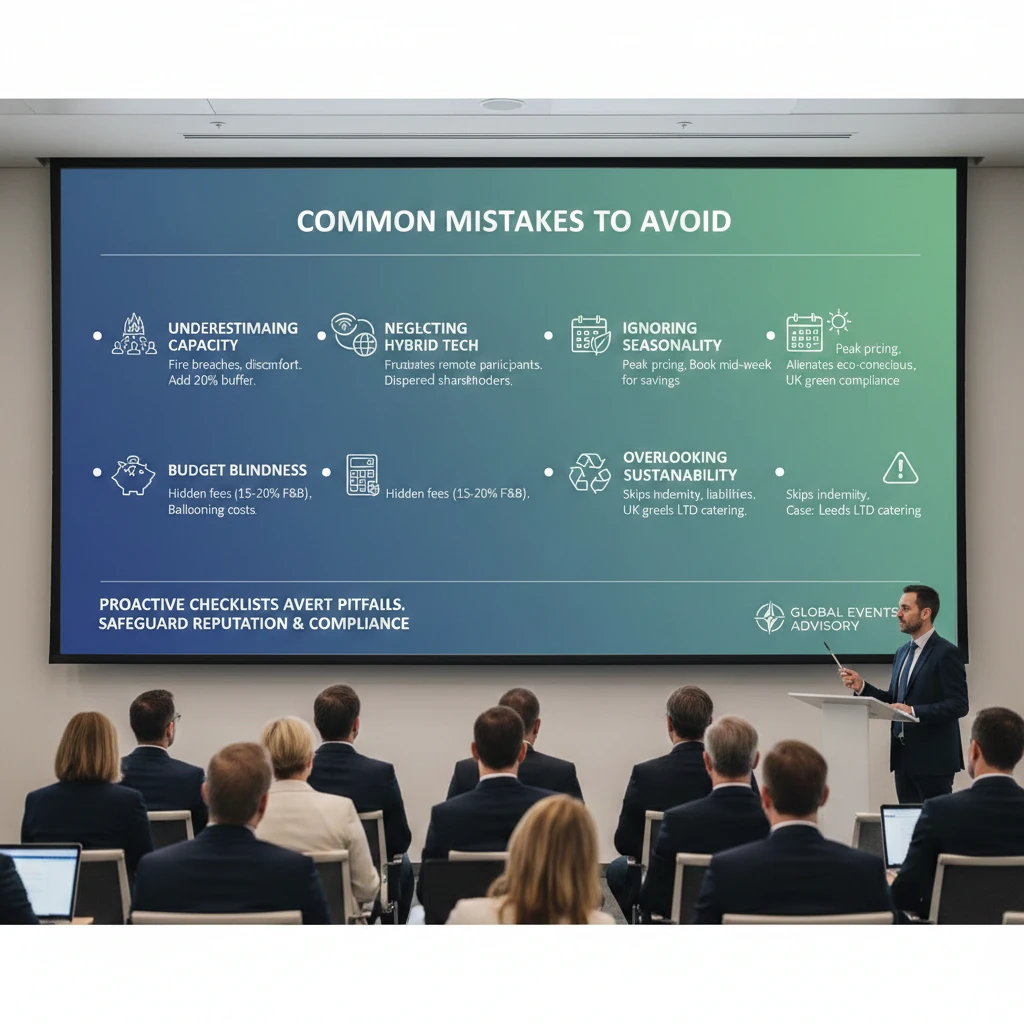
A frequent error is underestimating capacity, leading to fire regulation breaches or discomfort always add 20% buffer. Neglecting hybrid tech compatibility frustrates remote participants, vital for dispersed shareholders. Budget blindness ignores hidden fees like service charges (15-20% on F&B), ballooning costs.
Ignoring seasonality traps you in peak pricing; book mid-week for savings. Overlooking sustainability alienates eco-conscious stakeholders amid UK green compliance. Failing contract reviews skips indemnity clauses, exposing you to liabilities. Case: A Leeds LTD’s conference flopped due to unvetted catering allergens, sparking complaints. Rushing site visits misses red flags like noise bleed. Forgetting inclusivity sidelines diverse teams, contravening equality laws. Proactive checklists avert these pitfalls, safeguarding your company’s reputation and compliance record.
Practical Tips and Best Practices
Prioritise venues with modular spaces for agenda flexibility. Negotiate bespoke packages: bundle AV, F&B, and accommodation for 10-15% savings. Leverage tech like virtual tours pre-visit. Book 6-12 months ahead for prime slots, using blackout dates for leverage.
Sustainability best practice: choose BREEAM-rated sites with EV charging. Post-event audits refine future choices track NPS scores. For compliance events, integrate Companies House e-filing stations. Hybrid mastery: test bandwidth with providers like Zoom Enterprise. Partner with local PCOs for execution. Example: A Glasgow firm adopted rotating regional venues, cutting travel emissions by 30% while engaging Scottish shareholders. Track ROI via lead generation metrics. These practices elevate events, mirroring robust governance in your business structure.
Mastering corporate conference venue selection empowers UK entrepreneurs to host impactful events that drive growth and compliance. From objective-setting to contract finalisation, this guide provides a roadmap for success amid evolving business structures.
If you’re ready to register your company with confidence, Form My Company provides fast, fully online company formation with expert compliance support, VAT & PAYE handling, virtual office solutions, and professional guidance. Get started today and let our specialists handle the paperwork while you focus on growing your business.
Frequently Asked Questions
How does venue choice impact Companies House compliance?
Venue selection ensures AGMs meet quorum and proxy rules under the Companies Act. Poor tech risks invalid resolutions; opt for reliable spaces to document minutes accurately, avoiding filing delays or penalties.
What VAT considerations apply to conference venues?
Venue hire is typically standard-rated at 20%, reclaimable if business-use. Confirm partial exemption rules with HMRC; all-inclusive packages simplify claims, especially for VAT-registered LTDs.
Can virtual offices influence venue decisions?
Yes, proximity to your registered office or virtual office aids logistics for directors. It reinforces branding during investor meets, streamlining travel for compliance-mandated gatherings.
How to handle risks for large shareholder events?
Secure comprehensive insurance riders, contingency plans, and scalable contracts. Vet for business continuity, ensuring events align with director duties and PAYE expense protocols.