
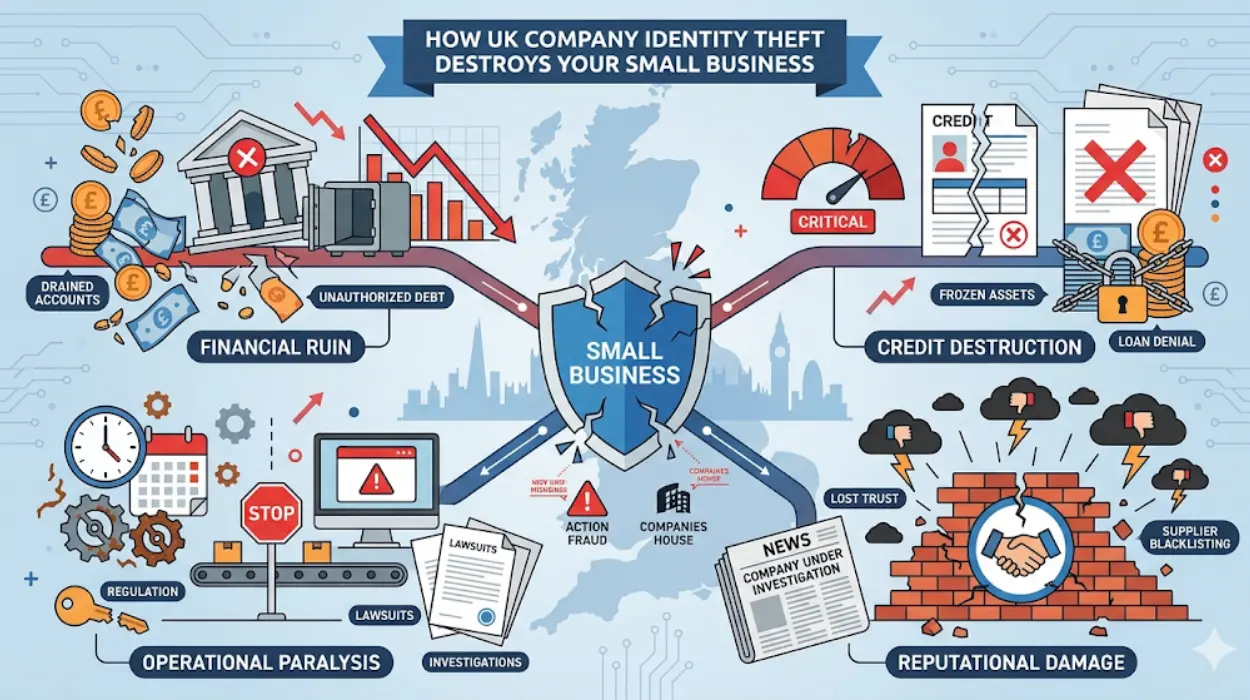
UK company identity theft occurs when fraudsters hijack a small business’s Companies House registration, leading to severe financial losses, legal battles, and operational shutdowns. This crime can wipe out years of hard work by enabling unauthorised loans, fake transactions, and damaged supplier relationships.
Understanding UK Company Identity Theft
Company identity theft in the UK targets small businesses registered with Companies House, where criminals exploit lax verification to seize control of a firm’s legal identity. Fraudsters file false documents to change directors, addresses, or issue shares, often using stolen personal data from data breaches or phishing attacks. Small businesses suffer disproportionately because they lack the robust cybersecurity and legal teams of larger firms, making recovery slow and costly.
Semantic keywords like business identity fraud highlight how these attacks mimic personal identity theft but strike at the core of a company’s existence. According to recent reports, over 70% of UK SMEs worry about their data being misused, amplifying vulnerabilities in outdated registration systems. For a small retailer in Manchester, this might start with a phishing email leading to a director change, halting all banking access overnight.
Common Tactics Used by Identity Thieves
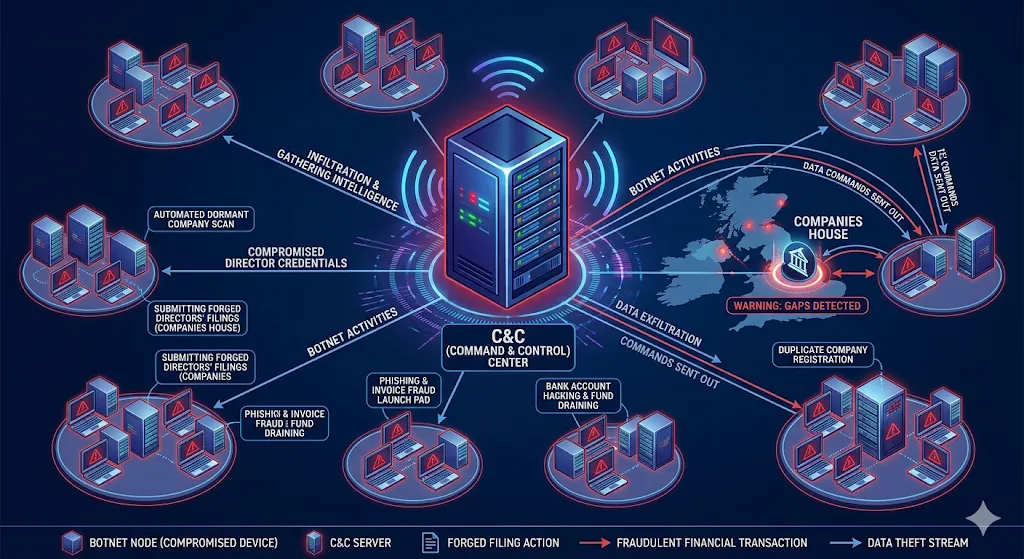
Thieves begin by gathering public data from Companies House filings, social media, or leaked databases, then submit forged paperwork to impersonate directors. Phishing remains prevalent, with 24% of UK SMBs hit by scams that trick owners into revealing credentials, followed by invoice fraud at 26%. Automated bots now scan for dormant companies, filing rapid changes before owners notice.
In one typical scenario, fraudsters register a duplicate company using the same name and number, diverting supplier payments or securing loans in the victim’s name. Bank account hacks affect 23% of cases, where thieves drain funds post-hijack. These tactics exploit the UK’s paper-based verification gaps, allowing attacks to complete in days while disputes drag on for months.
Financial Devastation from Identity Theft
The average UK small business loses around £3,808 to fraud annually, but company identity theft escalates this to tens of thousands through unauthorised debts and frozen assets. Banks halt services upon detecting irregularities, starving firms of cash flow essential for payroll and stock. Recovery involves legal fees exceeding £10,000, often forcing owners to dip into personal savings 22% report direct personal financial hits.
Consider a family-run cafe facing a hijacked registration: suppliers refuse deliveries over unpaid “debts” from fraudulent orders, loans rack up interest, and HMRC flags suspicious filings, triggering audits. Visa research notes 41% of SMBs have fallen victim, with total economic costs nearing billions when scaled across 5.6 million enterprises. Without swift intervention, bankruptcy looms as revenue plummets.
Operational Disruptions and Reputational Harm
Beyond money, identity theft paralyses daily operations by locking owners out of their own company records. Suppliers, partners, and customers question legitimacy, leading to lost contracts 28% of victims lose trust in third parties. Online marketplaces suspend accounts, and search engines flag sites linked to fraudulent activity, tanking SEO rankings and organic traffic.
A tech startup in Bristol might find its domain hijacked alongside Companies House control, erasing client databases and halting service delivery. Mental health suffers too, with 20% of SMB leaders reporting strain and 29% losing decision-making confidence. Rebuilding reputation involves public notices and credit repairs, diverting focus from growth and potentially causing staff turnover.
Legal and Regulatory Challenges
Navigating Companies House disputes requires proving ownership via court orders, a process fraught with delays due to backlogged systems. Fraudsters exploit free filing loopholes, and victims must strike off fake entities while defending against HMRC penalties for “non-compliance.” Over 8 in 10 SMEs support digital ID solutions to curb the £6.8 billion annual fraud cost.
Legal battles expose businesses to director disqualification risks if changes go unchallenged, compounding stress. For Form My Company clients, proactive monitoring reveals anomalies early, preventing escalation. Regulatory gaps, like manual verifications, leave small firms exposed, unlike corporations with dedicated compliance teams.
Long-Term Business Survival Risks
Identity theft can trigger a death spiral: frozen finances lead to missed taxes, eroding credit scores and blocking future loans critical for 45% of SMEs eyeing growth. Cascading effects hit communities, from job losses to reduced local services, as noted in economic analyses. Without intervention, 70% vulnerability rates mean many never recover fully.
Survivors face higher insurance premiums and perpetual scrutiny, stifling innovation. Comparing manual monitoring vs. automated company fraud alerts reveals why reactive fixes fail against sophisticated threats. Proactive Fraud Protection services safeguard Companies House records, preserving long-term viability.
Protecting Your Business with Fraud Protection
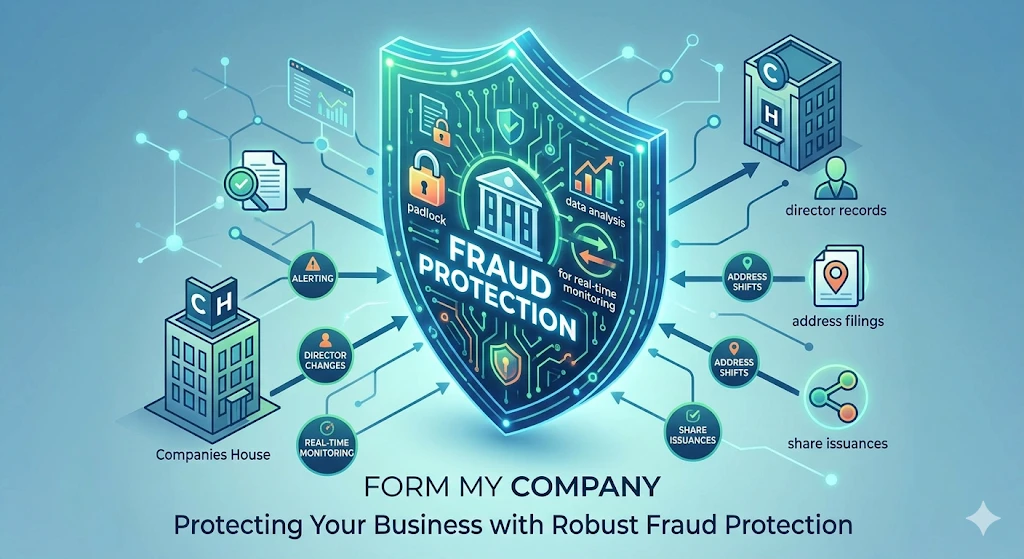
Implementing robust Fraud Protection starts with real-time Companies House monitoring, alerting owners to filings instantly. Form My Company‘s Fraud Protection service scans for director changes, address shifts, or share issuances, offering peace of mind for small businesses.
Practical steps include two-factor authentication on accounts, staff training on phishing, and annual audits. For decision-makers ready to secure their future, get 24/7 Fraud Protection for Your Companies House Records ensures uninterrupted operations. Form My Company integrates these tools seamlessly, supporting SMEs against rising threats.
Why Small Businesses Remain Prime Targets
SMEs comprise 99.9% of UK firms but invest less in defences, relying on basic measures amid economic pressures like inflation. Fraudsters prioritise them for quick gains, knowing limited resources delay responses. Modernising with digital corporate IDs, as 80%+ of SMEs endorse, could revolutionise protection.
Form My Company addresses this by delivering tailored Fraud Protection, blending automation with expert oversight. Early adoption prevents the cascade from theft to collapse.
Emerging Solutions and Best Practices
Digital Company IDs promise unified, real-time verification, reducing duplication and fraud. Best practices: limit public data sharing, use encrypted comms, and subscribe to monitoring. Form My Company’s Fraud Protection exemplifies this, empowering businesses to thrive securely.
In conclusion, while UK company identity theft poses existential risks, professional solutions from Form My Company equip small businesses with resilient Fraud Protection, ensuring stability amid evolving threats.
What is company fraud protection for UK businesses?
Company fraud protection involves monitoring Companies House records to detect unauthorised changes like director appointments or address updates. Services like Form My Company’s Fraud Protection alert business owners instantly to prevent identity theft and financial losses. This proactive approach safeguards small business registrations against common fraud tactics.
How does Fraud Protection prevent Companies House identity theft?
Fraud Protection scans public filings daily for suspicious activity, such as fake director changes or share issuances, using automated alerts. Form My Company’s service notifies users via email or dashboard, enabling quick disputes before fraud escalates. It targets vulnerabilities in the UK’s registration system exploited by criminals.
What are the signs of company identity theft on Companies House?
Key signs include unexpected director changes, address alterations, or new charges filed without your knowledge, often discovered during routine checks. Form My Company’s Fraud Protection identifies these anomalies early through real-time monitoring. Victims typically notice bank freezes or supplier payment issues shortly after.
How much does Fraud Protection cost for small UK businesses?
Costs for Fraud Protection vary by provider but typically start at affordable monthly subscriptions tailored to small businesses. Form My Company’s service offers tiered plans based on company count and monitoring depth, ensuring value without high upfront fees. Pricing reflects ongoing Companies House surveillance and rapid response support.
Can Fraud Protection recover a hijacked Companies House record?
Fraud Protection focuses on prevention through alerts, but it guides recovery by providing evidence logs for Companies House disputes. Form My Company’s experts assist in filing objections and striking off fraudulent entries. Full recovery involves legal steps, often faster with documented monitoring proof.