
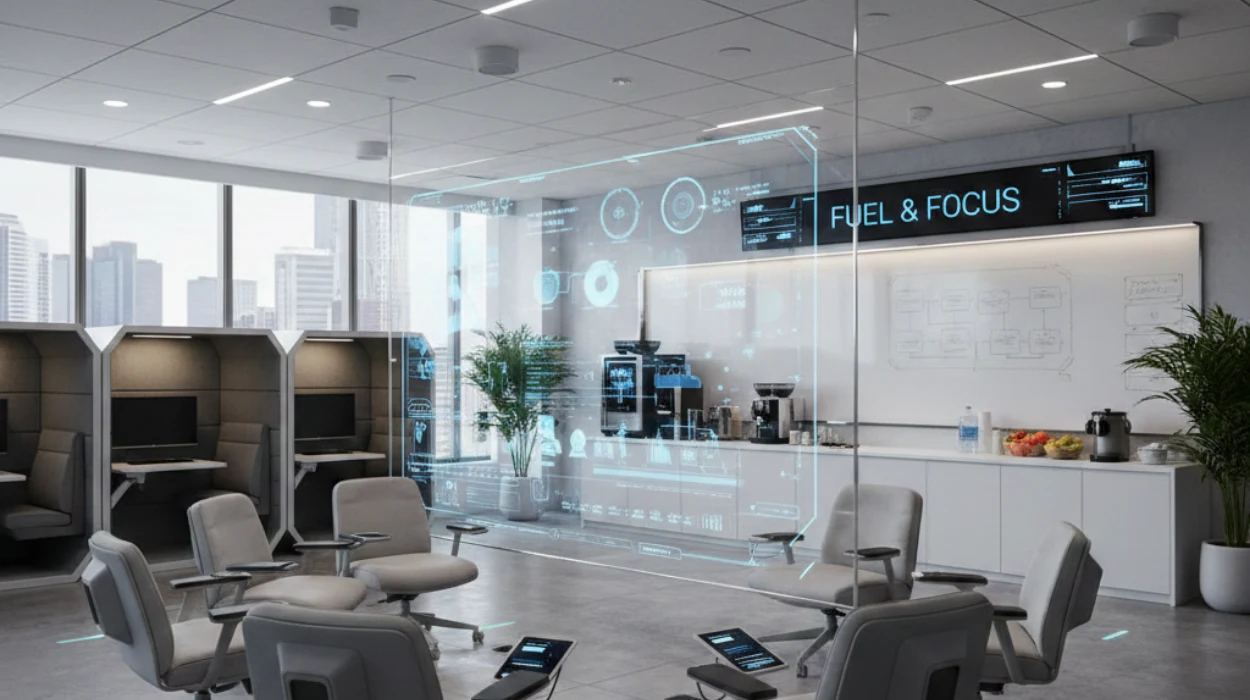
Modern training rooms should prioritise high-speed Wi-Fi, interactive displays, ergonomic furniture, natural light and hybrid conferencing tools to ensure effective learning outcomes for teams. These amenities support UK businesses by facilitating professional development sessions that align with compliance training on Companies House filings, VAT and PAYE obligations. Selecting the right features maximises engagement while fitting budget constraints for growing limited companies.
Why Amenities Define Training Room Success
For UK entrepreneurs and business owners, investing in the right training room amenities is crucial as companies scale beyond initial formation stages, requiring structured sessions on governance, compliance and skills development. Directors and shareholders often mandate training on Companies Act duties, HMRC regulations for VAT and PAYE, or software for statutory filings, where substandard facilities undermine retention and results. Modern training rooms go beyond basic seating to incorporate tech integrations, ergonomic designs and flexible layouts that accommodate hybrid teams vital in a post-pandemic landscape where 60% of UK firms blend remote and in-person work.
These spaces serve multiple roles: onboarding new PAYE employees, upskilling for Companies House confirmation statements, or strategic workshops near your registered office. Amenities like 4K interactive screens and noise-cancelling audio ensure clarity during discussions on shareholder agreements or PSC notifications. Poor choices waste time and money, while optimal setups boost productivity by 25-40%, per industry benchmarks, directly impacting compliance accuracy and business growth. Thoughtful selection aligns physical environments with operational needs, elevating your limited company’s professional stature.
Step-by-Step: Identifying and Prioritising Key Amenities
Begin by mapping session types: compliance workshops (e.g., VAT threshold training) need stable internet and projectors; interactive skills sessions require writable walls and modular furniture. Capacity dictates scale 10-person huddles suit agile setups, 20+ demand tiered seating with sightlines to screens. Assess connectivity: mandatory 100Mbps+ Wi-Fi supporting 4K streaming, plus Ethernet ports for secure HMRC portal access during PAYE demos.
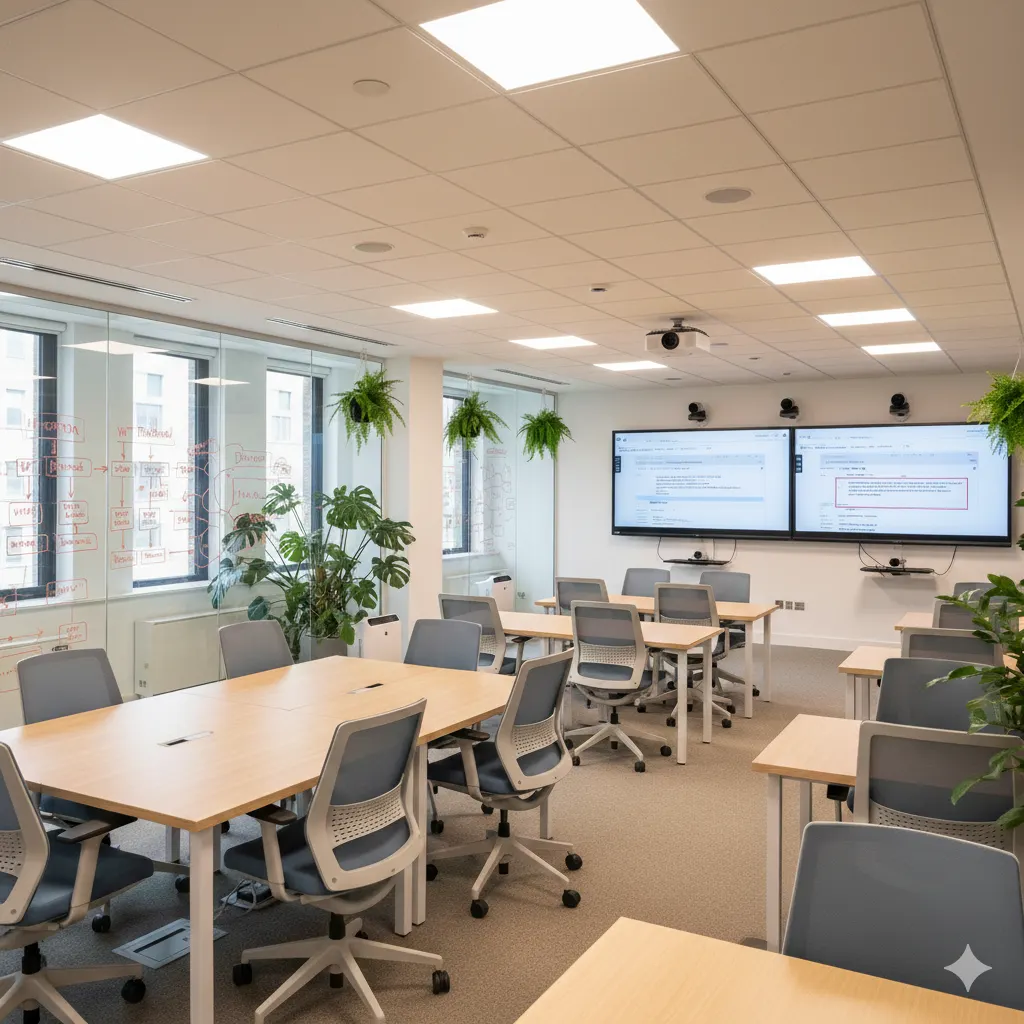
Next, evaluate AV: 75-inch+ interactive flat panels (IFPs) for annotations on Companies House forms, ceiling mics for clear audio, and cameras with 120-degree fields for hybrid participants joining via Teams or Zoom. Comfort follows: adjustable chairs with lumbar support, height-variable desks, and biophilic elements like plants for focus during long sessions on director duties. Ventilation and light HEPA filters, dimmable LEDs, natural windows combat fatigue. Test via site visits: run a mock training on shareholder registers, timing setup and gauging acoustics. Budget 40% tech, 30% furniture, 20% AV, 10% extras. This methodical audit ensures amenities drive outcomes, not distractions.
Benefits and Potential Risks of Essential Amenities
High-quality amenities deliver measurable benefits, starting with enhanced learning retention interactive tools increase comprehension by 30%, ideal for complex topics like PSC filings or corporation tax calculations. Hybrid capabilities keep remote directors engaged, ensuring alignment on compliance strategies without travel costs. Ergonomics reduce absenteeism; studies show proper seating cuts back pain claims under PAYE health obligations by 20%. Flexible layouts support evolving needs from formation workshops to shareholder AGMs maximising ROI on hires near registered offices.
Scalability shines: modular rooms adapt as teams grow, avoiding redundant leases. Branding elevates with premium setups impressing clients during VAT training demos. Risks include over-specification inflating costs—£5k+ IFPs gather dust if underused or tech failures disrupting sessions, eroding trust in your compliance expertise. Poor acoustics amplify distractions in shared spaces, hindering focus on nuanced Companies Act rules. Maintenance neglect voids warranties, while incompatible integrations (e.g., non-UK plugs) delay setups. Balanced selection mitigates these, turning amenities into strategic assets.
Legal and Compliance Considerations for Training Facilities
Training rooms intersect with UK legal duties, particularly for limited companies under health and safety laws. The Health and Safety at Work Act 1974 mandates risk assessments for venues: fire exits, accessible toilets, and ergonomic compliance to prevent DSE-related injuries during prolonged screen use on PAYE software training. GDPR applies if sessions handle personal data like employee records or director details requiring secure Wi-Fi (WPA3 encryption) and data wipe policies for shared devices.
For PAYE employers, facilities must accommodate diverse needs: hearing loops for accessibility, quiet zones for neurodiverse learners during compliance modules. Equality Act 2010 obligations extend to layouts avoiding trip hazards. Companies House indirectly influences: accurate training on filings reduces errors, but venues must permit recordings for audit trails. Lease terms should cover business use, indemnifying against damage during workshops. HMRC accepts training costs as deductible if wholly business-related, but document for VAT recovery. Compliant amenities safeguard liabilities while reinforcing governance culture.
Common Mistakes Businesses Make in Amenity Selection
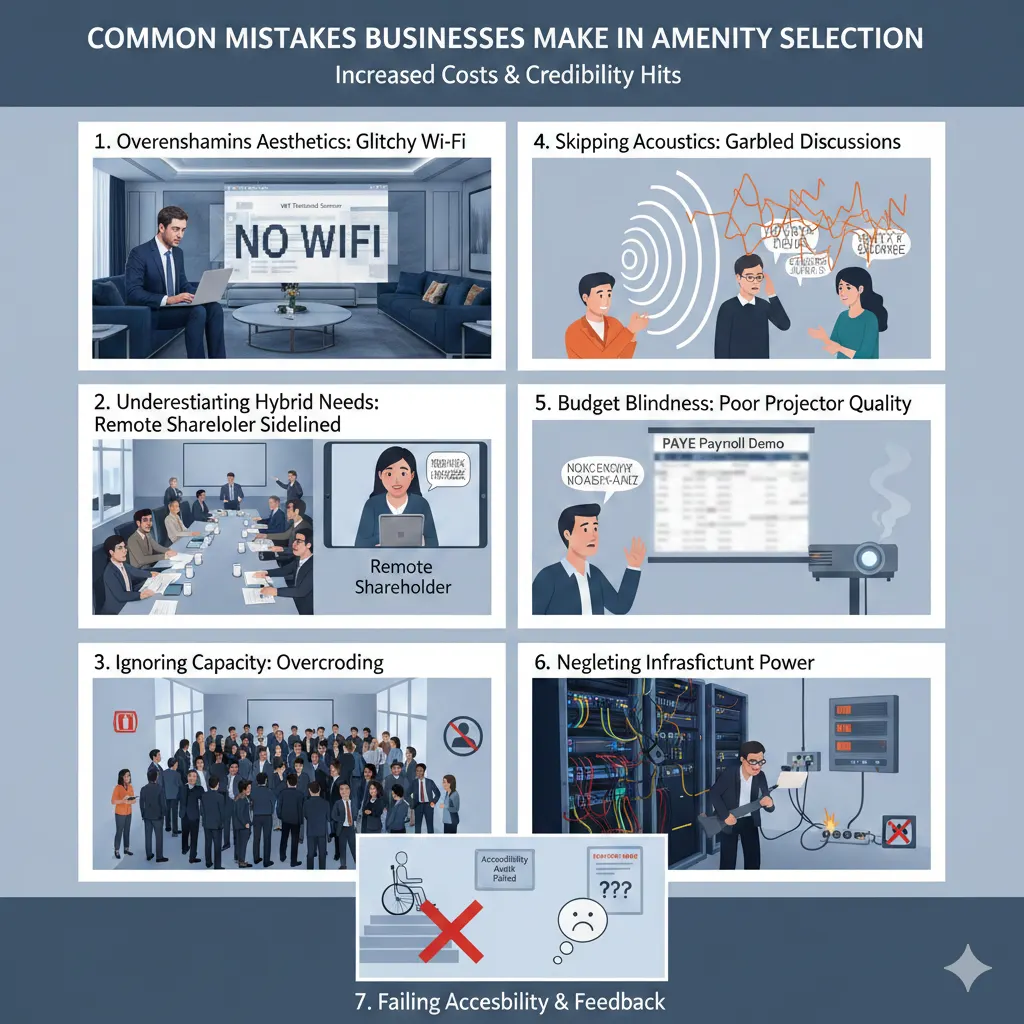
Overemphasising aesthetics neglects functionality—one flashy room with glitchy Wi-Fi derails a critical VAT threshold seminar, frustrating attendees and delaying HMRC registrations. Underestimating hybrid needs leaves remote shareholders sidelined, misaligning on PSC notifications. Ignoring capacity fluctuations cram sessions, breaching fire regs and comfort standards under HSE guidelines.
Skipping acoustics tests amplifies echoes, garbling Companies House form discussions. Budget blindness chases cheap projectors that fail 1080p, unfit for detailed PAYE payroll demos. Neglecting maintenance clauses burdens in-house IT with fixes, diverting from core compliance. Overlooking power infrastructure insufficient outlets halts laptop-heavy trainings on shareholder agreements. Failing accessibility audits risks Equality Act claims, tarnishing reputations. Post-hire, not soliciting feedback perpetuates mismatches. These errors compound costs and credibility hits, underscoring rigorous vetting.
Practical Tips and Best Practices for Optimal Selection
Conduct needs-led audits quarterly: survey teams on pain points from past sessions (e.g., “Wi-Fi dropped during director duties module”), prioritising fixes. Demo tech live plug in laptops, test mics, annotate screens during mock PAYE scenarios. Benchmark three venues: score on 10 criteria (Wi-Fi speed, ergonomics, acoustics), targeting 8/10 averages.
Negotiate bundles: all-day rates including tech/setup, free trials for recurring compliance trainings. Future-proof with scalable AV modular IFPs expandable for growth. Integrate biometrics: badge access logs attendance for HMRC training claims. Sustainability angles: low-energy LEDs qualify for green VAT perks. Post-session debriefs refine choices, tracking uplift in compliance pass rates. Pair with virtual offices for hybrid flexibility near registered addresses. Provider partnerships yield discounts for volume. These habits ensure amenities evolve with your business.
Essential amenities transform training rooms into high-impact hubs for compliance mastery and skills growth, directly bolstering UK business resilience. Prioritising tech, ergonomics and hybrid tools equips teams for Companies House, VAT and PAYE demands without excess spend.
If you’re ready to elevate your operations with seamless support, Form My Company provides fast, fully online company formation with expert compliance support, VAT & PAYE handling, virtual offices and professional guidance. Get started today and let our specialists handle the paperwork while you focus on growing your business.
Frequently Asked Questions
What AV tech is essential for hybrid compliance training?
4K interactive displays, 4K PTZ cameras, beamforming mics and 100Mbps+ Wi-Fi ensure clear visuals/audio for remote directors reviewing Companies House docs.
How do amenities impact health and safety compliance?
Ergonomic furniture, ventilation and lighting meet DSE regs, reducing injury risks during extended PAYE/VAT sessions; always verify venue risk assessments.
What’s the average cost for a premium training room day rate?
£300-£800 for 8-20 capacity in UK cities, inclusive of tech/catering; deduct as business expense against corporation tax if compliance-focused.
Can training rooms double as boardrooms for shareholders?
Yes modular tables, teleconferencing and whiteboards support AGMs, but confirm capacity and recording permissions for minutes.
How to test acoustics before booking?
Visit during peak hours, clap test for reverb, use phone mics for echo checks; request decibel specs under 40dB background noise.