Poor hiring decisions drain time, money, and morale from UK small businesses. Beyond the obvious recruitment costs, the real losses often lie in lowered productivity, damaged team culture, and the ripple effect of frequent turnover.
Successful small business growth isn’t just about filling roles it’s about finding the right people the first time. In the competitive UK market, especially for growing startups and SMEs, one bad hire can cost far more than a missed opportunity; it can disrupt operations, customer relationships, and revenue stability for months. This article explores the hidden costs of poor hiring, the financial and cultural impact on small businesses, and how structured recruitment processes supported by professional spaces like Interview Rooms can protect your business from these pitfalls.
The True Financial Burden of a Bad Hire
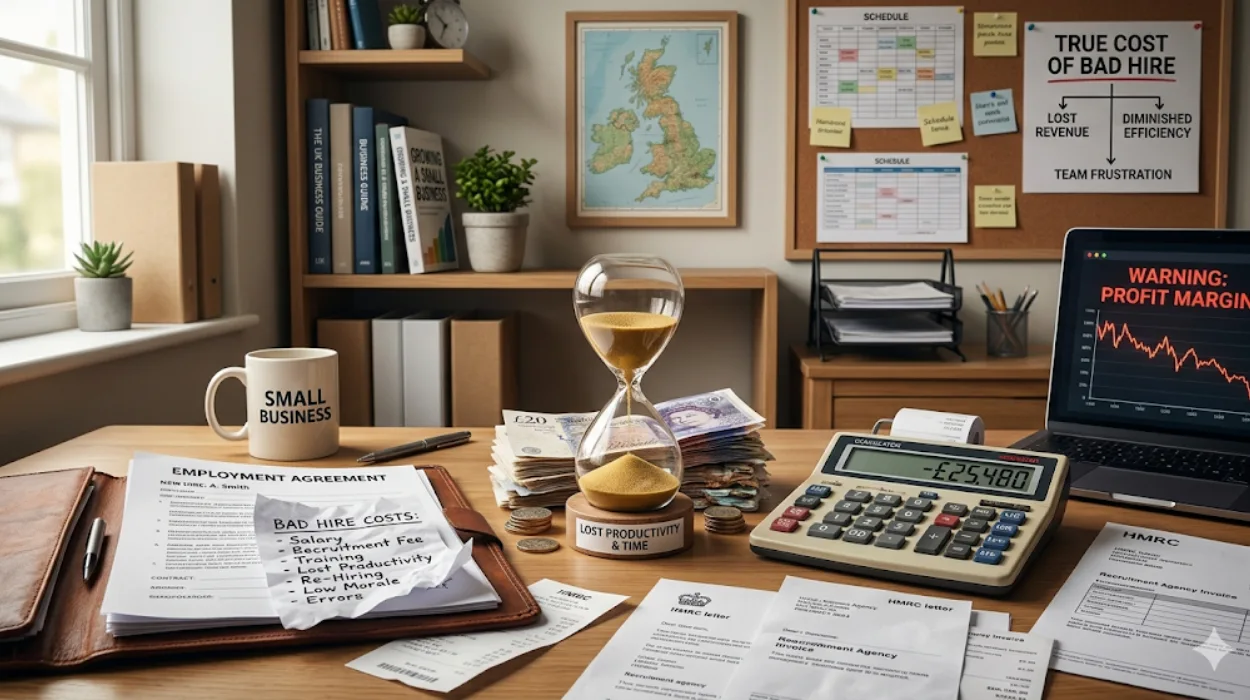
The direct costs of a poor hiring decision are easier to measure: advertising, recruiter fees, onboarding, and training. However, many of the most damaging costs are hidden in the operational aftermath.
Research by the Chartered Institute of Personnel and Development (CIPD) highlights that replacing an employee can cost up to £30,000 when factoring in lost productivity and training expenses. For a small business operating on tight margins, this loss can equate to several months of profit.
When a new hire underperforms or leaves prematurely, the business must reinvest in recruitment, diverting leadership attention from growth to crisis management. The impact compounds when customers or colleagues experience poor service or disrupted workflows a chain reaction that often takes months to repair.
Productivity Erosion and Its Ripple Effects
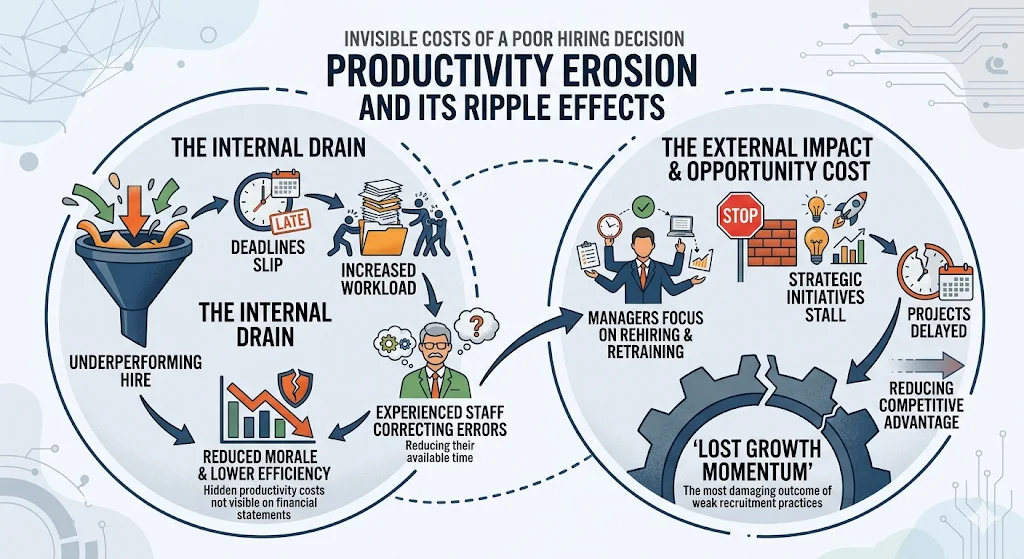
A single underperforming hire can quietly slow down an entire team. Deadlines slip, workloads increase, and experienced staff spend more time correcting errors or covering gaps. This leads to reduced morale and lower team efficiency hidden productivity costs that rarely appear on financial statements but deeply affect performance metrics.
The opportunity cost is equally critical. While managers focus on rehiring or retraining, strategic initiatives stall. Projects that could drive innovation or customer retention end up delayed, reducing competitive advantage. This “lost growth momentum” is one of the least visible but most damaging outcomes of weak recruitment practices.
Impact on Company Culture and Morale
Small businesses rely heavily on team cohesion and shared accountability. A poor hiring decision disturbs this dynamic. Cultural misalignment when a new hire’s values, communication style, or work ethic don’t fit creates friction that can spread across departments.
Staff who consistently compensate for an ineffective colleague often experience burnout or disengagement. In small teams, even one mismatch can undermine trust, making talented employees consider leaving. The ultimate result? Rising turnover rates and escalating recruitment costs—an expensive cycle that small firms can’t afford to sustain.
How Small Businesses Fall into the Hiring Trap
UK small businesses often lack large HR departments or advanced evaluation tools. Hiring decisions are frequently based on intuition or a single interview rather than structured assessment processes. In many cases, interviews take place in distracting or informal settings, which can prevent employers from objectively evaluating candidates.
Without access to a professional environment, hiring managers may rush decisions or overlook red flags. Over time, these rushed hires accumulate into operational difficulties, higher staff rotation, and inconsistent service delivery. Recognising this pitfall is the first step toward strategic hiring improvement.
The Value of Structured Interviews and Professional Environments
One of the most effective solutions to prevent poor hiring decisions lies in better interview structures. Using professional, neutral spaces such as Form My Company’s Interview Rooms helps businesses conduct assessments in an environment free of workplace distractions.
Professional interview settings create a sense of structure and fairness that benefits both employer and candidate. Interviewers can better assess behaviour, communication, and cultural fit, while candidates gain a positive impression of the company’s professionalism. This small shift enhances decision quality and reduces the likelihood of future hiring mistakes.
Additionally, functional interview environments allow for multi-panel interviews, confidential evaluations, and objective discussions all critical for mitigating bias and ensuring consistent hiring processes.
Quantifying the Hidden Cost Components
The full financial and operational cost of poor recruiting decisions can be divided into three categories:
- Direct costs: Recruitment, advertisements, onboarding sessions, and training resources.
- Indirect costs: Lost productivity, decreased morale, customer dissatisfaction, and project delays.
- Strategic costs: Missed innovation opportunities, reputational harm, and long-term talent instability.
When these layers are combined, the cost of a bad hire can far exceed an employee’s annual salary. Investing in structured, well-planned interviews early in the process consistently proves to be more cost-effective.
How Poor Hiring Decisions Affect Brand Reputation
For small UK businesses in service-oriented sectors, brand reputation is everything. A single employee who delivers subpar service or makes repeated mistakes can damage client trust. In the age of online reviews and social media, one poor customer experience can rapidly affect public perception.
This damage isn’t limited to external reputation; it also erodes employer branding. Qualified candidates who hear of a high turnover culture or chaotic management styles may avoid applying entirely, making future recruitment even harder. Maintaining a consistent, professional image during all hiring stages is therefore not just operational it’s strategic branding.
Building a Smarter Hiring Strategy for Sustainable Growth
By understanding these hidden costs, companies can prioritise better hiring frameworks. UK small business leaders can apply several key adjustments:
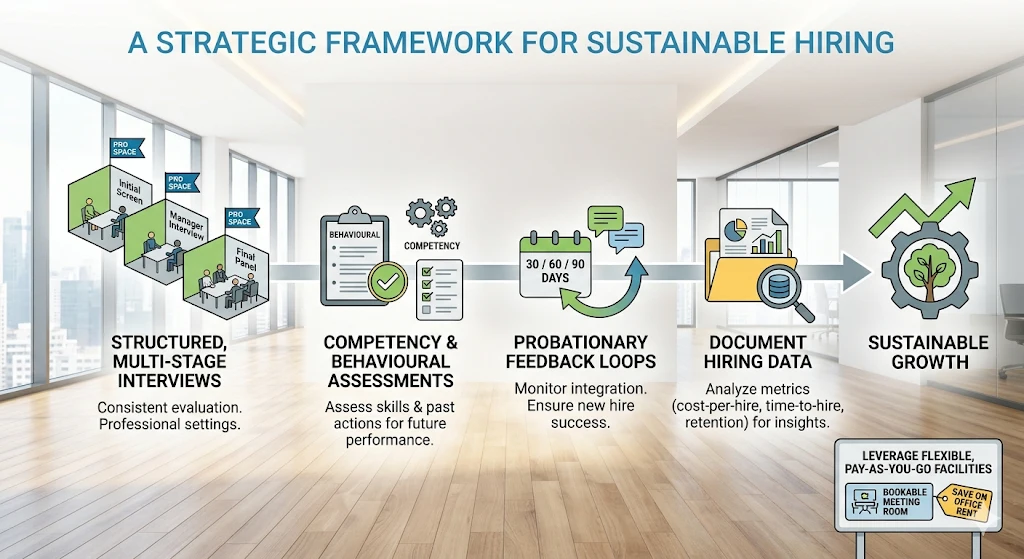
- Implement multi-stage interviews conducted in professional spaces.
- Incorporate competency-based questions and behavioural assessments.
- Use probationary feedback loops to monitor integration success.
- Document hiring data to identify patterns that lead to successful hires.
Establishing measurable processes turns recruitment into a predictable, performance-driven function rather than a reactive process. Leveraging flexible, pay-as-you-go facilities like those discussed in Why Pay-As-You-Go Interview Rooms Save You Money on Office Rent can help minimise cost without compromising professionalism.
The Role of Interview Environment in Decision Quality
The environment where interviews occur shapes perception, focus, and decision accuracy. Conducting interviews in casual settings such as cafés or crowded offices may seem cost-effective, but such spaces introduce distractions and security risks.
Professional interview settings provide not only privacy but also neutrality removing subconscious biases that can arise in less formal surroundings. A well-equipped room helps ensure equal opportunity, confidentiality, and structured dialogue.
Businesses using dedicated interview facilities often report shorter hiring cycles and improved retention because they attract serious candidates. Over time, that translates into measurable operational stability.
Turning Hiring from a Cost Centre into an Efficiency Driver
When small businesses treat hiring as a strategic function rather than a necessary expense, long-term efficiency improves across operations. Every avoided bad hire represents not just saved costs but also preserved momentum.
Outsourcing elements of the recruitment process like assessment centres, evaluation tools, and professional interview room bookings turns ad-hoc hiring into an organised system. This approach frees internal managers to focus on performance strategy and team development.
By aligning cost control with structured evaluation environments, small businesses can achieve higher hiring accuracy and reduce turnover rates without expanding overhead.
Sustainable Growth Through Smart Hiring Practices
In a broader sense, reducing hiring mistakes fosters long-term sustainability. Teams built through consistent processes are more likely to stay engaged, innovate, and deliver reliable service. Consistency in evaluation leads to consistency in culture and consistency in culture drives profitability.
Partnering with providers like Form My Company ensures access to purpose-built Interview Rooms that align with this vision. Their solutions support flexible, confidential interviews designed for growing firms that want scalable, cost-conscious hiring systems. For budget-minded businesses exploring practical office alternatives, the BOFU resource Affordable Hourly Interview Room Hire for Budget-Conscious Firms expands on how dedicated spaces can support smarter decisions throughout the hiring lifecycle.
The hidden costs of poor hiring in UK small businesses extend beyond financial loss they erode momentum, weaken culture, and compromise long-term stability. Implementing structured processes supported by professional environments reduces those risks dramatically.
By prioritising deliberate, well-managed evaluations instead of rushed decisions, UK small businesses can transform recruitment into a driver of growth rather than a source of loss. Through its tailored commercial space solutions, Form My Company helps ensure that every interview contributes to sustainable business success.
What are interview rooms used for in small businesses?
Interview rooms provide professional, private spaces for conducting job interviews, candidate assessments, and confidential HR meetings. Small businesses use [Form My Company] interview rooms to ensure focus, fairness, and a distraction-free environment during the hiring process.
Why should I rent an interview room instead of using my office?
Renting an interview room offers privacy, neutrality, and flexibility that a regular office may not provide. [Form My Company] interview rooms help maintain confidentiality and create a professional impression without the overhead of permanent space.
How can interview rooms improve hiring decisions?
Professional interview environments support structured evaluations by removing workplace distractions and allowing objective assessment. Using [Form My Company] interview rooms helps hiring managers focus on candidate performance and decision quality.
Are pay-as-you-go interview rooms cost-effective for small firms?
Yes, pay-as-you-go interview rooms eliminate fixed office rent and allow businesses to pay only for the time used. [Form My Company] offers flexible options that help control hiring costs while maintaining a professional setting.
What facilities are included in professional interview rooms?
Most interview rooms include comfortable seating, Wi-Fi, presentation tools, and secure spaces for private discussions. [Form My Company] interview rooms are designed to support productive interviews and ensure confidentiality for both employers and candidates.