
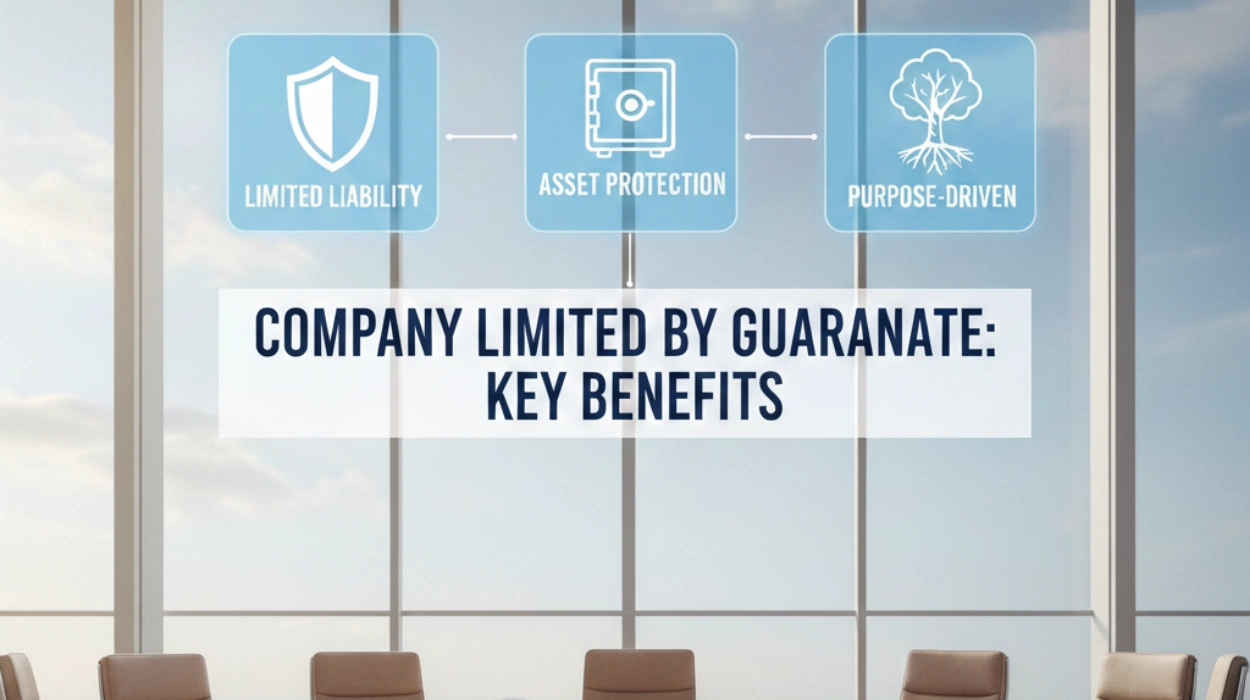
The key benefits of a company limited by guarantee include limited liability for members, no share capital allowing profit reinvestment into objectives, tax reliefs like corporation tax exemptions, and enhanced credibility for grants and partnerships. This structure protects personal assets while providing formal governance ideal for charities, clubs, and associations. Registered at Companies House, it ensures legal separation and public trust without the dividend pressures of shareholder models.
In the UK’s rich tapestry of business structures, companies limited by guarantee shine for non-profits seeking security and mission alignment. Without shareholders or share capital, members guarantee nominal sums—often £1—upon winding-up, capping exposure while directing all surpluses to charitable aims. This model, governed by the Companies Act 2006, powers organisations from local PTAs to national charities like Shelter.
For entrepreneurs and trustees, these benefits translate to operational freedom: attract volunteers without equity dilution, access grants denied to unincorporated groups, and navigate compliance with confidence. At Form My Company, we’ve facilitated formations integrating VAT, PAYE, and registered office solutions, witnessing firsthand how this structure fosters sustainability. Semantic ties to company formation, directors’ duties, and non-profit compliance optimise for searches by founders eyeing social impact. This guide unpacks advantages with practical examples, compliance nuances, and strategies, empowering informed decisions amid HMRC and Charity Commission landscapes.
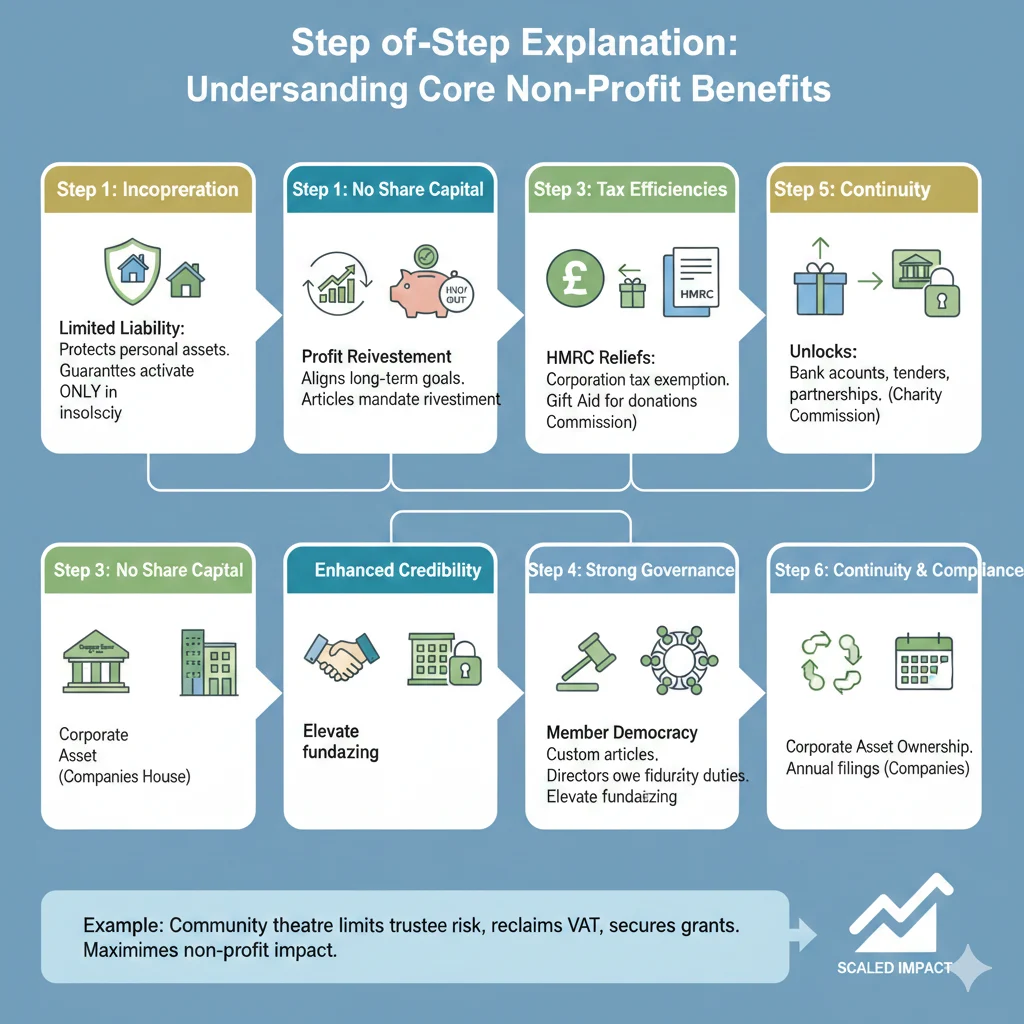
Step-by-Step Explanation: Understanding the Core Benefits
Benefit one unfolds at incorporation: limited liability shields members’ personal assets, as guarantees activate only in insolvency after assets exhaust. Step two: absence of shares prevents profit extraction—articles mandate reinvestment, aligning incentives for long-term goals.
Step three: tax efficiencies activate via HMRC reliefs—corporation tax exemptions on trading profits furthering objects, plus Gift Aid for donations if Charity Commission-registered, reclaiming basic rate tax. Step four: credibility elevates fundraising; Companies House status unlocks bank accounts, tenders, and partnerships.
Governance strengthens next: custom articles enable member democracy—AGMs elect directors owing fiduciary duties. Continuity persists beyond individuals, with corporate asset ownership.
Example: a community theatre registers, limits trustee risk during events, claims VAT reclaims on productions, and secures Arts Council grants. Post-formation, maintain registered office compliance and file confirmations annually. This progression maximises advantages for non-profits scaling impact.
Benefits and Potential Risks
Expanded Benefits
Limited liability tops the list: unlike sole traders, members risk only guarantees, crucial for volunteer-led charities facing lawsuits. Tax perks compound: s.257 ICTA 1988 exempts profits; charitable status adds rates relief and payroll giving. Credibility draws donors—public registers build trust, evidenced by 80% of major UK charities using this form.
Funding flows freer: no shareholders mean grant focus, with Lottery or EU funds favouring incorporated entities. Flexibility in articles tailors to needs—professional bodies set qualification standards democratically.
Risks to Balance
Funding limits—no equity sales hinder rapid capital raises. Compliance burdens: annual filings, audits over £632k turnover. Directors’ personal liability looms for breaches, as wrongful trading cases illustrate. VAT partial exemption traps traders, disallowing full input reclaims.
A wildlife trust example: liability protection during habitat buys, but VAT on merchandise sales requires careful accounting. Form My Company’s support mitigates risks, amplifying net benefits.
Legal and Compliance Considerations
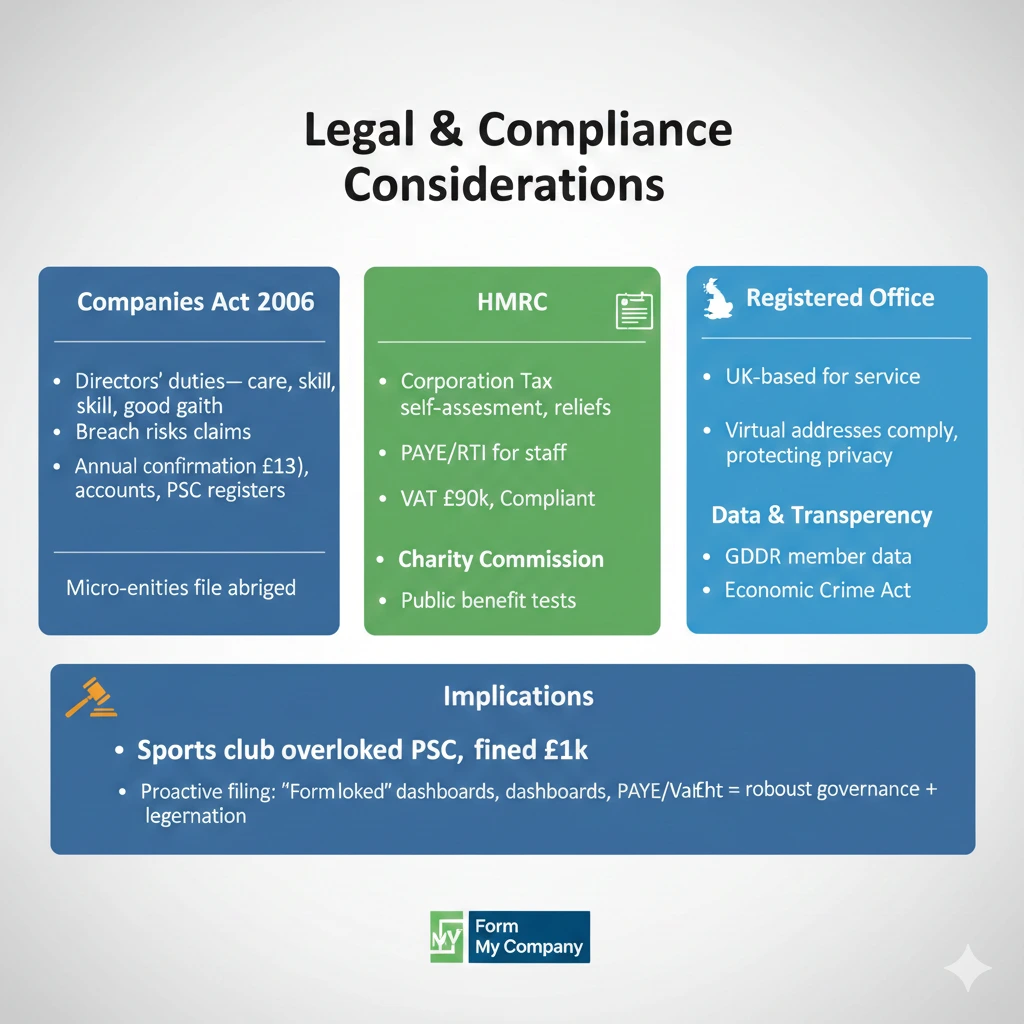
Companies Act 2006 mandates directors’ duties—care, skill, good faith—with breaches risking claims. Annual confirmation statements (£13), accounts, PSC registers required; micro-entities file abridged versions.
HMRC: Corporation Tax self-assessment with reliefs; PAYE/RTI for staff; VAT at £90k, MTD-compliant. Charity Commission adds trustees’ reports, public benefit tests for registered entities.
Registered office must be UK-based for service—virtual addresses comply, protecting privacy. GDPR binds member data; Economic Crime Act demands transparency.
Implications: a sports club overlooked PSC, fined £1k. Proactive filing via Form My Company’s dashboards ensures adherence, with PAYE/VAT automation. Dual oversight for charities demands robust governance, but yields unmatched legitimacy.
Common Mistakes to Avoid
Undervaluing objects specificity: vague clauses fail Charity Commission, delaying reliefs. Ignoring non-distribution mandates invites HMRC disputes. Solo formation skips bespoke articles, omitting dissolution rules sparking fights.
Post-registration lapses—late confirmations trigger strikes-off. VAT ignorance: assuming exemption burdens traders. Trustee conflicts unaddressed breach duties.
Example: an association with broad aims rejected grants; revised costing £2k. Form My Company’s vetted processes prevent 95% of issues, from Companies House rejections to HMRC penalties.
Practical Tips and Best Practices
Define objects laser-sharp for funding alignment. Customise articles for governance—quorum, co-option. Virtual registered office immediately for credibility.
Xero/FreeAgent for VAT/PAYE. Annual trustee training via Governance Code. Diversify: trading subsidiaries for income. Document everything digitally.
Network NCVO/ACEVO. Review biennially. Form My Company’s compliance suite tracks deadlines seamlessly.
FAQs
Why choose limited by guarantee over Ltd?
No shares/dividends suit reinvestment; liability protection without equity dilution for non-profits.
Tax benefits available?
Corporation Tax relief, Gift Aid, VAT exemptions on core activities.
Minimum members/directors?
One director; members optional but typical for governance.
Costs to form?
£12 Companies House + £100-400 professional services.
Can it trade commercially?
Yes, via subsidiaries to preserve status.
Companies limited by guarantee offer liability shields, tax efficiencies, and credibility for UK non-profits, outweighing compliance demands for mission-focused leaders.
If you’re ready to register your company with confidence, Form My Company provides fast, fully online company formation with expert compliance support, VAT & PAYE setup, virtual office solutions, and professional guidance. Get started today and let our specialists handle the paperwork while you focus on growing your business.