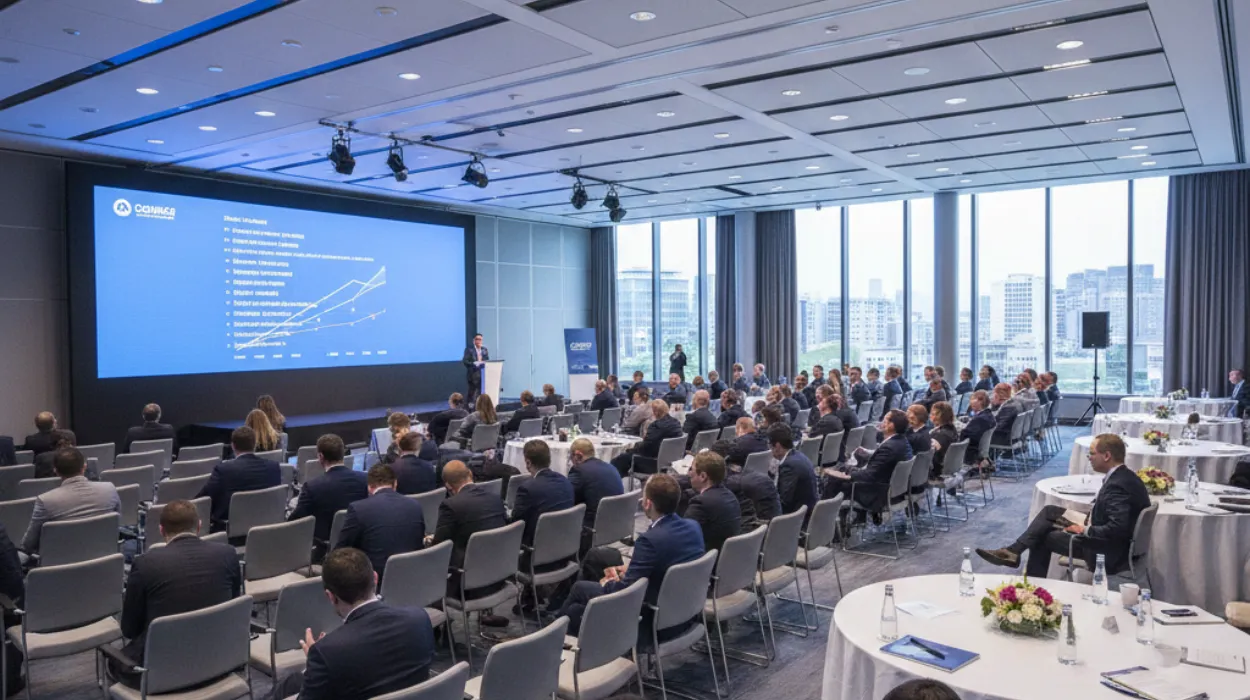
Large scale conference rooms are essential for corporate events because they provide the professional capacity, technology, and structure needed to host stakeholders at scale while reinforcing your brand’s authority. They allow UK businesses to run conferences, AGMs, training days, and product launches in a controlled environment that supports compliance, communication, and long-term growth.
For modern UK companies, corporate events are more than calendar entries they are strategic opportunities to influence clients, investors, directors, and shareholders in one setting. Whether you are presenting annual performance, launching a new product, training regional teams, or hosting an AGM, the venue you choose directly shapes how your organisation is perceived. Large scale conference rooms give you the infrastructure to gather people in a professional, coherent space that reflects your company’s ambition, governance, and reliability. They combine capacity, technology, and logistics to deliver a seamless attendee experience that would be impossible in a standard meeting room or improvised setting.
This is particularly important for businesses that have recently completed company formation with Companies House or operate primarily through a registered office orvirtual office address. You may not maintain a large in-house venue, but clients and stakeholders still expect corporate events to be delivered with polish and precision. Hiring or using large conference rooms bridges that gap, giving you “big business” presence without the ongoing costs of owning your own facility. In the UK business environment where compliance, VAT, PAYE, and transparent governance are increasingly under the spotlight professional events hosted in suitable conference spaces help demonstrate that your operations are organised, well-managed, and aligned with best practice.
Step-by-Step: How Large Conference Rooms Support Effective Events
The strategic value of a large scale conference room becomes clear when you break down the typical stages of planning and hosting a corporate event. Each step benefits from the space, structure, and services these venues provide.
First, during the planning phase, capacity and layout are critical. A large conference room allows you to invite all relevant stakeholders directors, key employees, major clients, and even prospective investors without worrying about overcrowding or access limitations. You can configure seating theatre-style for presentations, cabaret-style for workshops, or boardroom-style for more formal sessions. This flexibility is essential if your event combines multiple purposes, such as compliance updates followed by training and networking. Secondly, the technology infrastructure of a large conference room simplifies communication. Integrated AV systems, projection, sound, and high-speed internet make it straightforward to run hybrid events with remote shareholders or overseas directors, ensuring that everyone can participate and that decisions taken comply with internal governance rules.
Third, on the day of the event, logistics become the dominant factor. Large conference rooms in modern business centres or hotels typically include reception support, signage, catering coordination, and break-out areas. This means attendees are guided smoothly from arrival to registration, sessions, and refreshments, minimising confusion or delays. If your company formation is recent and you are still building brand recognition, this level of organisation reassures guests that you are a serious, professionally run operation. Finally, post-event activities such as collecting feedback, following up on action points with senior management, and recording decisions that may need to be reflected in Companies House filings are easier when the event has been run in a structured venue with clear zones, reliable recordings, and stable connectivity.
Benefits and Potential Risks
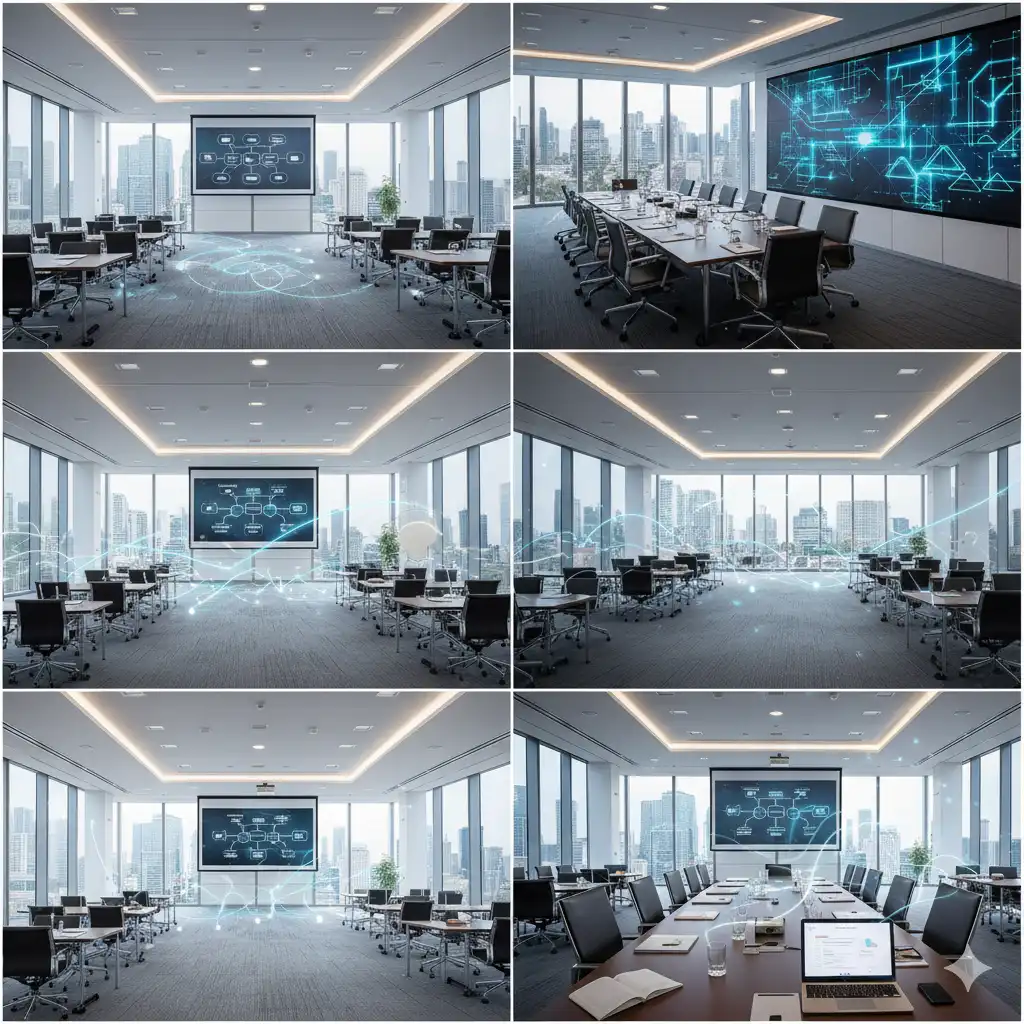
Large scale conference rooms bring a wide range of benefits for UK businesses, especially when events involve multiple stakeholders and complex agendas. One of the most important advantages is reputational: a well-chosen conference venue sends a clear signal that your company is established, confident, and capable of hosting events that meet the expectations of corporate clients and institutional investors. It provides a visual and organisational backdrop for key announcements, such as changes to business structures, new shareholders, or expansion into new markets. Combined with accurate filings at Companies House and transparent financial reporting, this helps reinforce your credibility as a compliant, well-governed entity.
Another crucial benefit is operational efficiency. When you hire a large conference room, you gain access to on-site support teams who manage technical setups, room changes, and catering. This allows your internal team directors, HR, finance, or compliance staff to focus on content rather than worrying about microphones and seating. Capacity is also a major advantage: in one room you can run training on PAYE, VAT procedures, and new compliance obligations for multiple departments, rather than running small, inefficient sessions across different locations. However, there are potential risks if planning is poor. Selecting a venue without checking accessibility, technology, or acoustics can lead to negative attendee experiences. Overbooking or underestimating numbers can create crowding or empty seats, both of which weaken the perceived success of the event. There is also a compliance angle: if sensitive information is being presented, you must ensure the venue offers appropriate privacy, data protection measures, and secure handling of any printed or digital materials.
Legal and Compliance Considerations
From a UK legal and compliance perspective, large scale corporate events often intersect with formal governance requirements. For example, annual general meetings, shareholder briefings, and director strategy days may need to be documented properly, with accurate minutes, resolutions, and voting outcomes. Large conference rooms support this by providing a structured environment where attendance can be recorded, presentations are clearly audible and visible, and formal votes can be conducted in an orderly way. For companies regulated by sector-specific bodies, such as financial services or healthcare, the ability to demonstrate that major decisions were discussed in professional, well-managed settings can support audit trails and regulatory reviews.
When events involve financial disclosures, staff remuneration policies, or changes to share capital, the content presented may later tie into filings at Companies House or HMRC. Directors have a duty to ensure that information provided in such settings is accurate, and that subsequent filings such as changes to directors, shareholders, or business structures reflect those decisions. Using a large conference room with good AV and recording facilities can help support internal record keeping, making it easier to verify who attended, what was agreed, and when. There are also data protection and health and safety obligations to consider. You must handle attendee information (names, contact details, dietary needs) in line with UK GDPR, and ensure that the venue complies with fire regulations, accessibility standards, and capacity limits. Good venues will provide documentation on their compliance status, but it remains the company’s responsibility to choose appropriately and integrate these factors into broader corporate governance.
Common Mistakes to Avoid
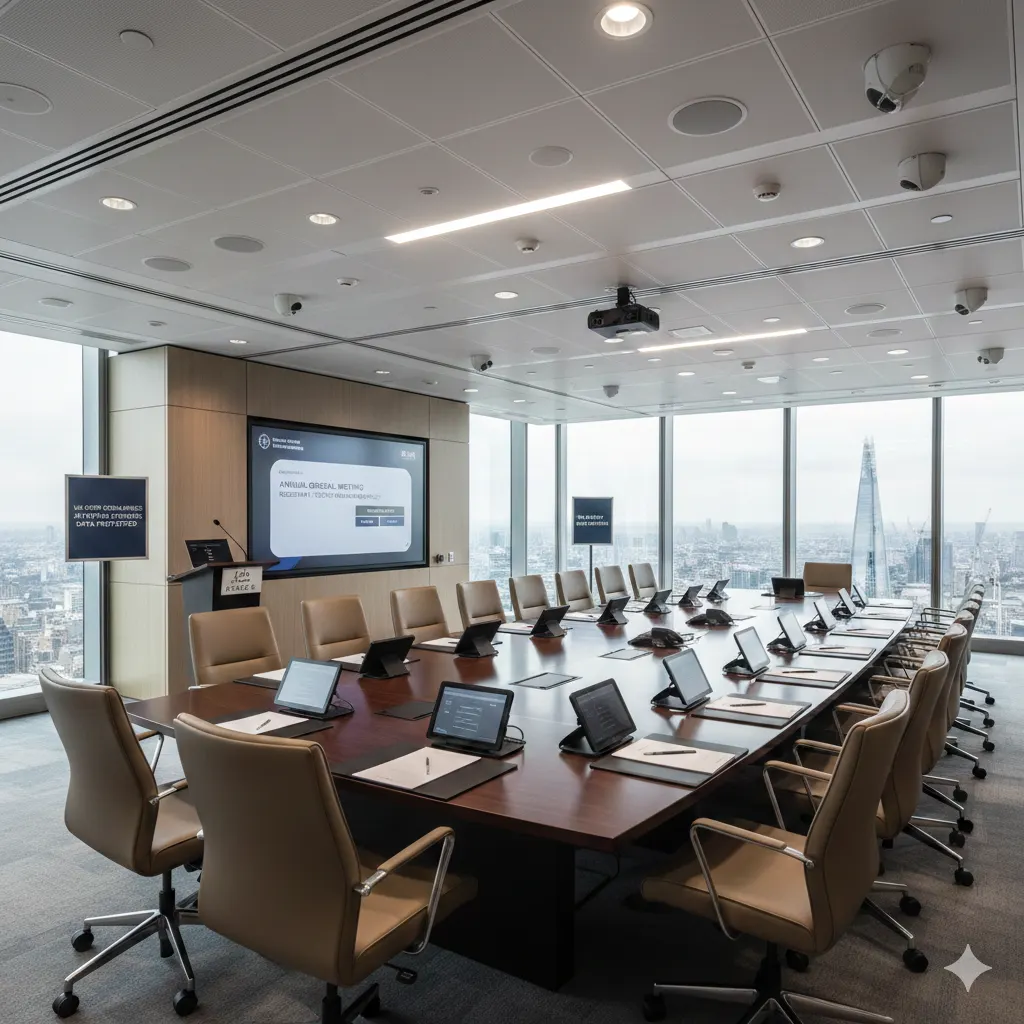
Many companies, especially fast-growing startups and newly incorporated entities, underestimate the planning required to use large conference rooms effectively. One common mistake is focusing purely on prestige choosing an impressive city-centre venue without checking whether the space actually fits the event format. For instance, a room may look impressive but lack adequate breakout spaces for workshops or private discussions between directors and key shareholders. Without those, networking and deeper engagement are compromised. Another frequent error is unclear objectives. If you hire a large conference room without a defined agenda such as training on VAT and PAYE, strategic planning, or investor updatesthe event can feel directionless, wasting both time and money.
Poor communication with attendees is another risk. Failing to provide clear joining instructions, timings, and expectations can lead to late arrivals, empty seats, and confusion over dress code or participation. Technical oversight is also a serious issue: many businesses neglect to test microphones, projectors, and conferencing tools before the event. This can lead to embarrassing delays, especially when remote directors or overseas investors are dialling in. Finally, some companies ignore the follow-up process. They host a large event but fail to circulate minutes, capture feedback, or translate discussions into concrete actions such as updating internal policies or making the necessary filings at Companies House. This weakens the long-term impact of the event and undermines the perception that the company is serious about governance.
Practical Tips and Best Practices
To maximise the value of large scale conference rooms for corporate events, start with a clear purpose. Define whether the event is focused on compliance training, shareholder engagement, client development, or internal strategy. This clarity will inform your choice of venue, layout, and agenda. Next, select a location that aligns with your brand. For example, a company that has recently completed UK company formation and operates from a prestigious registered office address can reinforce that image by hosting major events in a well-known business district, close to transport links and accommodation. Ensure the room has flexible layouts so you can combine plenary sessions with smaller discussions or Q&A panels.
Build technology checks into your timeline. Visit the venue in advance or arrange a virtual walkthrough to confirm AV capabilities, Wi-Fi strength, and hybrid meeting options. If directors or shareholders are joining remotely, test connections with them before the event. Integrate compliance into your planning by assigning responsibility for minute-taking, vote counting, and document storage. If the event includes sessions on VAT, PAYE, or regulatory changes, ensure materials are reviewed by your compliance or accounting advisors beforehand. On the day, use the venue’s support services reception teams, signage, and catering coordination to create a smooth attendee journey from arrival to departure. After the event, circulate summaries, confirm action points, and schedule any necessary follow-up meetings or filings. Treat each event not as a one-off occasion, but as part of an ongoing cycle of governance, communication, and brand building.
Large scale conference rooms are not just convenient venues; they are strategic assets that support brand authority, stakeholder engagement, and robust corporate governance. By providing the capacity, technology, and structure needed for AGMs, training sessions, launches, and compliance updates, they help UK businesses communicate clearly, meet legal obligations, and present a confident, organised image to the market. When combined with strong internal processes, they turn corporate events into powerful tools for growth and accountability.
If you’re ready to register your company with confidence, Form My Company provides fast, fully online company formation with expert compliance support. From registered office and virtual office services to VAT and PAYE registration and ongoing corporate governance guidance, our specialists help you build a professional platform from day one. Get started today and let us handle the formalities while you focus on hosting impactful corporate events and growing your business.
Frequently Asked Questions
Why are large conference rooms better than standard meeting rooms for corporate events?
Large conference rooms offer greater capacity, professional AV equipment, and flexible layouts, allowing you to host multiple stakeholder groups directors, employees, and clients in one coherent environment. This scale enhances engagement and ensures your corporate messages reach everyone consistently, which is vital for strategy updates, compliance briefings, and investor communication.
Are large conference rooms suitable for newly formed companies without their own premises?
Yes. Newly registered companies, including those using a virtual office or registered office service, can hire large conference rooms to project an established corporate image. This lets you host AGMs, product launches, or training days in a professional setting without committing to long-term leases, keeping overheads manageable while still meeting stakeholder expectations.
How do large conference rooms support compliance obligations?
They provide a structured space to present compliance updates, financial results, and governance changes clearly and consistently. With proper minute-taking and recording, decisions made in these events can be accurately reflected in internal records and any necessary filings at Companies House or HMRC, supporting directors’ duties and audit readiness.
What should I look for when choosing a large conference venue?
Prioritise capacity, accessibility, and technology. Check that the room can comfortably accommodate your expected numbers, offers reliable AV and internet, and has suitable breakout areas. You should also ask about data protection practices, health and safety compliance, and on-site support for registration, catering, and technical issues.
Can large conference rooms be used for hybrid events with remote attendees?
Absolutely. Many modern conference rooms are designed for hybrid events, with high-quality cameras, microphones, and screens. This allows overseas shareholders, remote directors, or key clients to participate fully, ensuring inclusivity and continuity even when not everyone can attend in person.