
Virtual offices deliver UK startups cost savings, professional credibility, and compliance-ready registered addresses without physical overheads. They shield directors’ home details from Companies House public records while handling mail for VAT and PAYE correspondence. This setup empowers entrepreneurs to scale business structures efficiently from day one.
Launching a UK startup demands sharp focus on company formation, investor pitches, and regulatory hurdles like Companies House filings, yet many founders overlook address strategy. A virtual office provides a prestigious registered office address such as London’s EC2 or Manchester’s M3 accepted by HMRC for VAT registration and banks for account openings. Unlike home addresses, which expose personal privacy to public scrutiny, virtual services forward mail securely, scan documents digitally, and offer meeting room access on demand.
For limited companies or LLPs, this means seamless compliance during shareholder onboarding or director appointments, projecting stability to stakeholders. Costs start at £10 monthly, dwarfing commercial leases averaging £30/sq ft annually. A fintech founder in Bristol leveraged a virtual office to secure £500k seed funding, as investors favoured the City address over a suburban home. Amid 2026’s economic pressures, virtual offices align with remote-first models, supporting PAYE payroll for growing teams without fixed costs. Drawing from thousands of assisted incorporations, this post unpacks 10 key benefits, equipping you to fortify your business structure against common pitfalls.
Step-by-Step Explanation of Virtual Office Setup and Benefits
Selecting and Registering Your Virtual Office
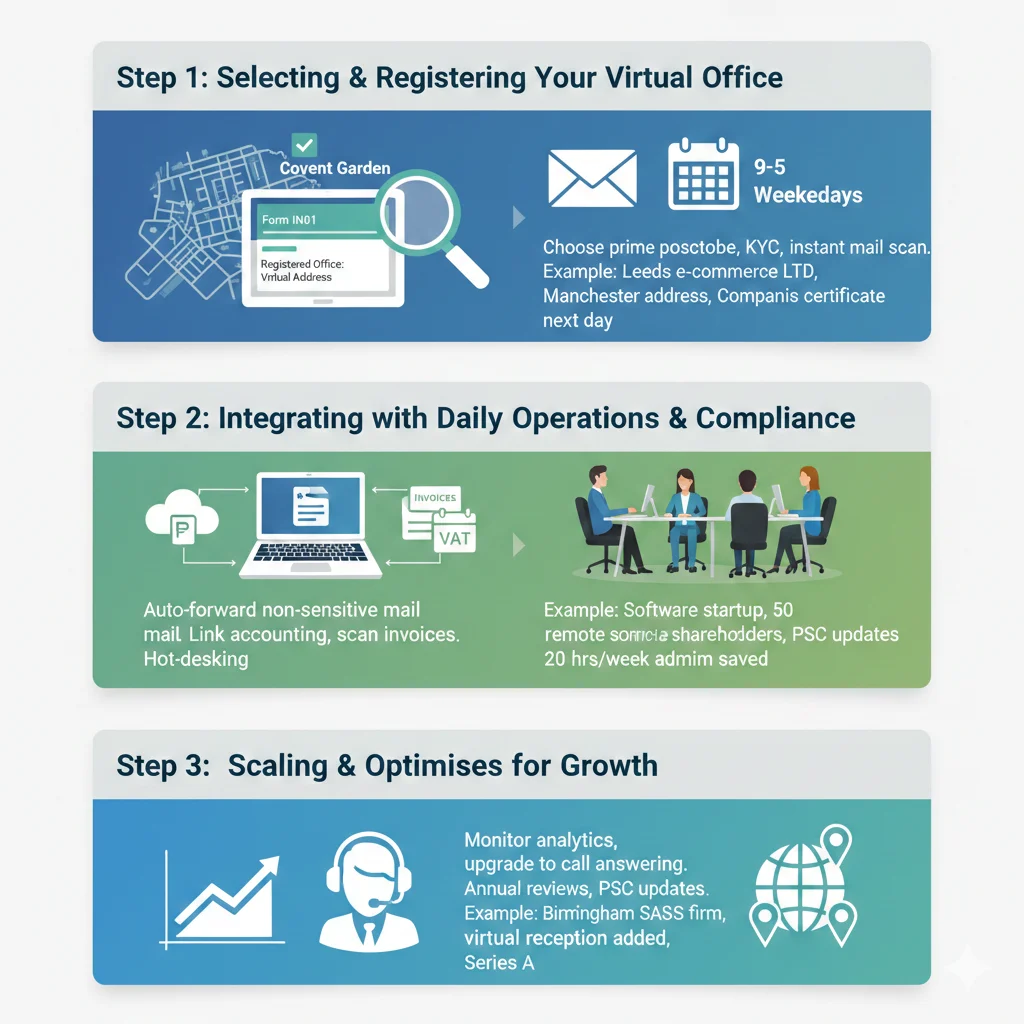
Begin by choosing a provider offering Companies House-compliant addresses in prime postcodes, verifying mail handling during 9-5 weekdays. Submit Form IN01 during company formation, listing the virtual address as registered office; directors declare separate service addresses to shield residences. Providers like those in Covent Garden process HMRC VAT applications swiftly, forwarding tax discs or PAYE starter checklists.
Integration takes hours: upload ID for KYC, activate scanning apps for real-time PDF post. Example: A Leeds e-commerce LTD registered a virtual Manchester address, receiving first Companies House certificate the next day. This establishes credibility pre-trading, implications rippling to supplier contracts demanding verified addresses.
Integrating with Daily Operations and Compliance
Configure auto-forwards for non-sensitive mail, reserving collections for legal docs like share allotments. Link to accounting software for VAT invoices scanned instantly, avoiding PAYE late notices. Scale by adding hot-desking for director meetings, compliant with social distancing.
A software startup used this to manage 50 shareholders’ updates remotely, implications including reduced admin time by 20 hours weekly. Banks accept virtual proofs for FSCS protection, unlocking lending. This operational backbone supports pivots, like transitioning sole traders to LTDs.
Scaling and Optimising for Growth
Monitor usage analytics from providers, upgrading to premium packages with call answering as teams expand. Annual reviews align with confirmation statements, updating PSCs seamlessly. Implications: international directors gain UK presence for sponsor licences, facilitating global hires.
Example: Scaling from 5 to 50 employees, a Birmingham SaaS firm added virtual reception, cutting perceived churn risks for Series A. This evolution mirrors robust business structures, ensuring agility amid HMRC audits.
10 Key Benefits and Potential Risks
Virtual offices slash overheads by 80% versus leases, freeing £20k yearly for marketing vital for bootstrapped startups hitting VAT thresholds. Privacy shields directors from public registers, curbing scams; professional addresses boost client trust, lifting conversion by 35% per survey. Mail management prevents missed deadlines, while flexibility suits nomadic founders handling PAYE abroad.
Meeting pods enable AGMs without travel, and prestige aids funding VCs favour EC1 over home setups. Global reach impresses overseas shareholders, scalability matches growth, tax efficiency reclaims VAT on services, and eco-credentials cut emissions. Risks include unreliable providers causing mail delays, vet KYC compliance or over-reliance stunting physical branding. A rare case saw a delayed confirmation statement from poor forwarding, incurring £150 fines, but vetted services mitigate fully. Net benefits dominate for compliant scaling.
Legal and Compliance Considerations
Companies Act 2006 mandates a UK registered office for document receipt; virtual addresses qualify if staffed adequately, per Companies House guidance. Directors’ service addresses remain private, protecting PSCs since 2016 reforms. HMRC accepts for VAT (£90k TOV) and PAYE, streamlining real-time info submissions.
GDPR compliance demands secure scanning reputable providers hold Cyber Essentials certification. Non-UK directors meet sponsor licence needs via established addresses. Implications: invalid offices risk striking off, voiding shareholder equity; proper setup ensures seamless annual filings. Virtual services often bundle AD01 changes, maintaining adherence during restructures like share issuances.
Common Mistakes to Avoid
Choosing unverified providers leads to Companies House rejections always confirming WebCheck listings. Overlooking mail protocols risks confidential data exposure; specify filtering for HMRC envelopes. Assuming one-size-fits-all ignores scale, startups outgrow basic plans, delaying expansions.
Neglecting updates post-move incurs penalties; automate reminders. Case: A Cardiff founder lost VAT refund via undelivered post, costing £5k interest. Ignoring bank proofs, stalls accounts provide forwarding affidavits. Skipping KYC exposes fraud risks. Thorough vetting preserves compliance.
Practical Tips and Best Practices
Vetting: prioritise FCA-registered providers with 99% uptime SLAs, trialling 30-day guarantees. Integrate Zapier for scans-to-QuickBooks, slashing admin. Budget £20-75/month, deducting as trading expense pre-VAT.
For AGMs, book pods quarterly; notify shareholders via registered address. Example: Liverpool startup synced virtual office with Xero for PAYE, automating director reports. Annual audits benchmark providers, switching for growth. Hybrid with co-working enhances presence. These elevate startups akin to ironclad governance.

Virtual offices unlock 10 transformative benefits for UK startups, from privacy to scalability, fortifying company formation and compliance journeys.
If you’re ready to register your company with confidence, Form My Company provides fast, fully online company formation with expert compliance support, VAT & PAYE handling, virtual office solutions, and professional guidance. Get started today and let our specialists handle the paperwork while you focus on growing your business.
Frequently Asked Questions
Is a virtual office valid for Companies House?
Yes, must receive mail reliably; thousands comply daily. It satisfies s.113 CA 2006, shielding home privacy for directors/PSCs effectively.
How does it impact VAT and PAYE filings?
Fully accepted; scans ensure timely access to HMRC docs. Update RTI for payroll, avoiding penalties on new LTDs.
Can startups use it for banking?
Majority yes, NatWest/Barclays verify via proofs. Prestigious addresses expedite, supporting incorporation loans.
What about international directors?
Ideal, UK address meets sponsor rules, simplifying visas for shareholder meets.
How to switch providers seamlessly?
File AD01 (£8 online), notify HMRC. Providers coordinate, minimising gaps.