Protecting your UK company from fraud starts with robust internal controls, staff training, and timely compliance with Companies House. Implementing these measures can reduce fraud risk by up to 70%, safeguarding directors, shareholders, and assets. Follow our expert tips to secure your business structures effectively.
Fraud poses a persistent threat to UK businesses, with over £200 billion lost annually according to official estimates from Action Fraud and HMRC. From invoice manipulation to phishing attacks targeting VAT and PAYE processes, fraudsters exploit weaknesses in company formation, governance, and compliance. Directors and shareholders must prioritise prevention, especially as the Economic Crime and Corporate Transparency Act 2024 mandates stricter identity verification for registered companies, highlighting vulnerabilities in director appointments and PSC registers.
For entrepreneurs managing startups or established firms, fraud disrupts cash flow, damages reputation, and invites legal scrutiny. Common scams involve fake supplier invoices diverting funds or bogus Companies House filings altering your registered office details. This guide equips business owners with actionable strategies rooted in UK regulations like the Companies Act 2006, ensuring compliance while fortifying defences. By integrating fraud prevention into daily operations from payroll oversight to shareholder communications you maintain trust with banks, investors, and regulators.
Step-by-Step Fraud Prevention Strategy
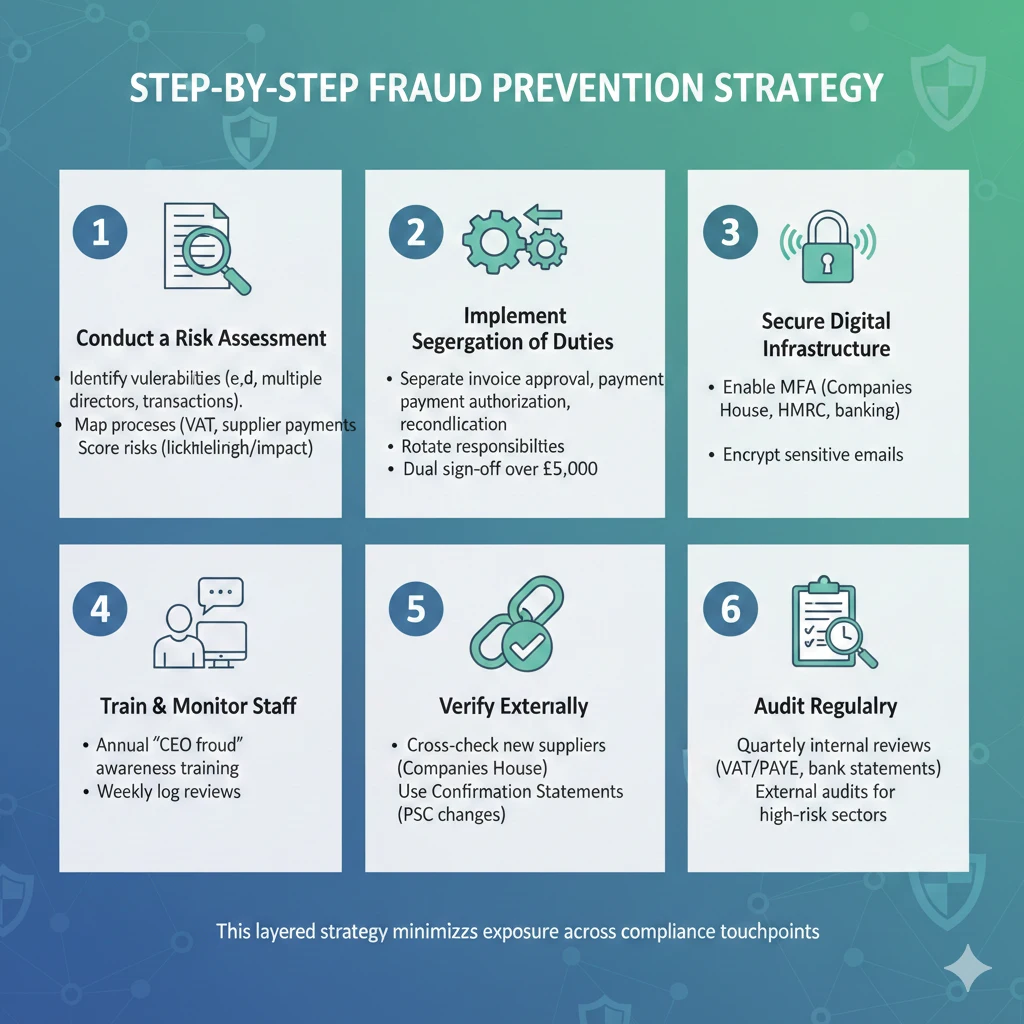
Building a comprehensive fraud prevention framework requires a systematic approach tailored to your business structure.
Conduct a risk assessment. Identify vulnerabilities specific to your operations, such as multiple directors handling PAYE or shareholders approving large transactions. Map processes like VAT returns and supplier payments, scoring risks based on likelihood and impact for instance, a sole trader with online banking faces higher phishing risks than a multi-director Ltd.
Implement segregation of duties. No single individual should control invoice approval, payment authorisation, and reconciliation. In a small company, rotate responsibilities among directors or use software thresholds requiring dual sign-off for sums over £5,000.
Secure digital infrastructure. Enable multi-factor authentication (MFA) for Companies House WebFiling, HMRC Gateway, and banking portals; encrypt emails containing sensitive PSC or director data.
Train and monitor staff. Roll out annual sessions on spotting CEO fraud where scammers impersonate directors requesting urgent wire transfers and review logs weekly.
Verify externally. Cross-check new suppliers against Companies House for legitimacy and use Confirmation Statements to flag unauthorised PSC changes. Step 6: Audit regularly. Quarterly internal reviews of VAT/PAYE filings and bank statements catch anomalies early, with external audits for high-risk sectors. This layered strategy minimises exposure across compliance touchpoints.
Benefits and Potential Risks of Fraud Prevention
Investing in fraud prevention yields substantial returns beyond immediate security. Strong controls enhance operational efficiency, as automated approval workflows reduce errors in PAYE submissions and VAT reconciliations, freeing directors to focus on growth. Banks view compliant firms with clean Companies House records favourably, easing access to overdrafts or investor funding—studies show fraud-resilient companies secure loans 30% faster. Reputationally, transparent shareholder structures and verified directors build stakeholder confidence, vital for scaling business structures.
Moreover, prevention aligns with insurance perks; many policies offer premium discounts for certified anti-fraud measures. A practical example: A Midlands manufacturer thwarted a £50,000 invoice scam through dual authorisation, preserving cash for expansion.
Yet, risks persist if measures lapse. Inadequate controls invite HMRC penalties for manipulated VAT claims, up to 100% of the tax due, while director negligence under the Companies Act can lead to personal fines or disqualification. Unchecked phishing compromises registered office details, disrupting mail and compliance notices. Worst-case, fraud triggers insolvency, with shareholders facing losses and directors liable for wrongful trading claims. Proactive defence mitigates these, ensuring long-term viability.
Legal and Compliance Considerations
UK fraud prevention is underpinned by stringent laws holding directors accountable. The Fraud Act 2006 criminalises false representation, with penalties up to 10 years’ imprisonment directly relevant to falsified invoices or Companies House manipulations. Under the Companies Act 2006, directors must exercise reasonable care in oversight, facing civil claims for breaches exposing the company to fraud. The 2024 Economic Crime Act mandates PSC and director identity verification via Companies House by 2026, with non-compliance risking strike-off.
Tie this to tax compliance: HMRC’s Making Tax Digital requires robust PAYE and VAT controls, where fraud flags trigger enquiries and 30-70% penalties. Bribery Act 2010 demands due diligence on suppliers, especially for firms with overseas shareholders. Data protection under UK GDPR obliges safeguarding personal data in statutory registers, with fines up to 4% of turnover for breaches via phishing.
Practical implications: During confirmation statements, verify no fraudulent filings altered your structure; report suspicions to Action Fraud within 30 days. For virtual office users, ensure providers comply with anti-money laundering checks. These obligations reinforce ethical governance, protecting all parties.
Common Mistakes to Avoid in Fraud Prevention
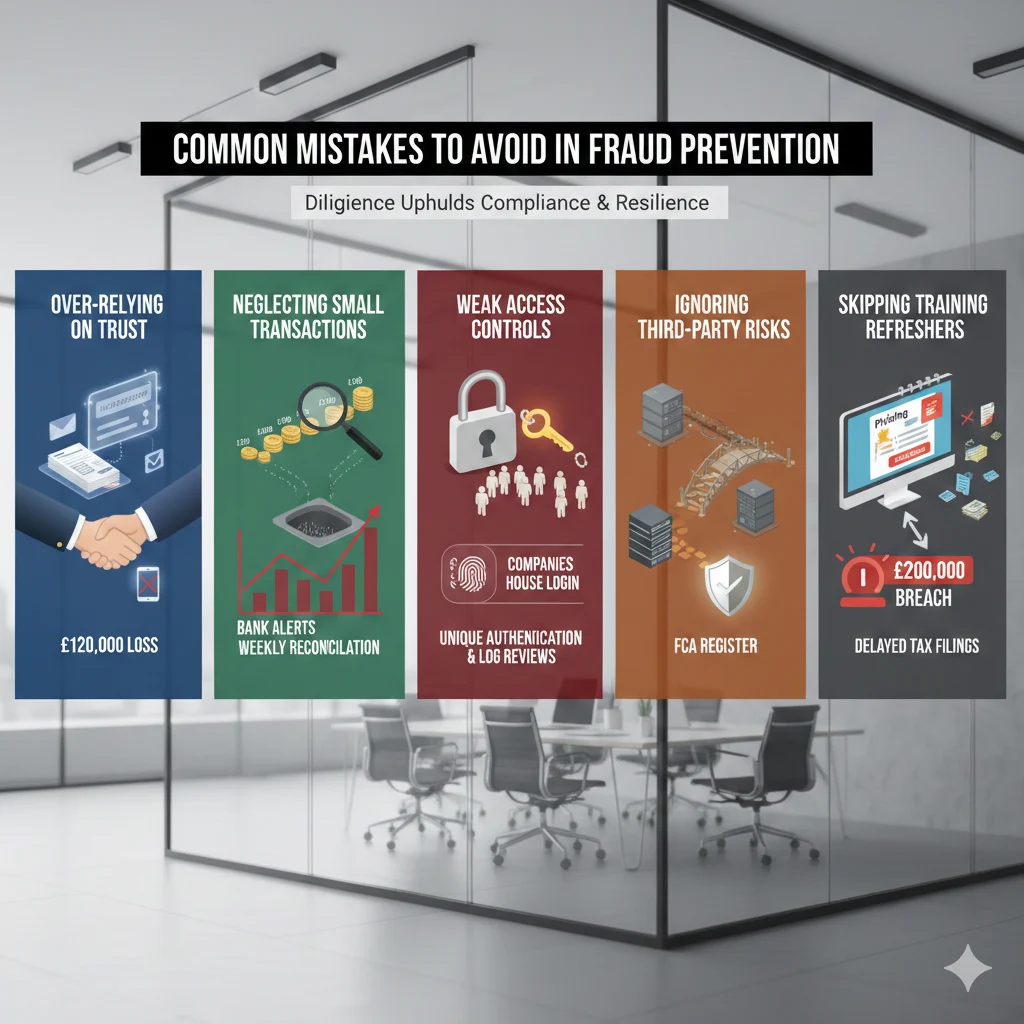
Even vigilant businesses falter on predictable errors; understanding these prevents costly oversights. First, over-relying on trust without verification. Accepting supplier invoices at face value, especially from ‘known’ contacts, ignores CEO fraud always call to confirm via independent numbers, as one retailer lost £120,000 to a spoofed director email.
Second, neglecting small transactions. Fraudsters test waters with £100 payments; set bank alerts for anomalies and reconcile weekly, avoiding cumulative drains. Third, weak access controls. Sharing Companies House logins among directors risks unauthorized PSC changes mandate unique authentications and log reviews.
Fourth, ignoring third-party risks. Failing to audit virtual office or PAYE providers exposes data; vet via FCA registers. Fifth, skipping training refreshers. Annual sessions lapse; simulate phishing quarterly to maintain vigilance. A tech firm bypassed these, suffering a £200,000 breach from an untrained employee’s clicked link, delaying VAT filings.
Correcting these through diligence upholds compliance and resilience.
Practical Tips and Best Practices
Embed fraud prevention seamlessly with these field-tested practices. Use banking apps with real-time transaction alerts and geofencing to block unusual logins, integrating with your registered office postcode for added security. Adopt positive pay systems where cheques match pre-approved details, crucial for B2B with multiple shareholders.
Implement ‘four-eyes’ principles for all VAT/PAYE submissions, documenting approvals in board minutes. Leverage Companies House alerts for filing changes, cross-referencing against internal PSC registers. For remote teams, deploy endpoint detection software scanning for malware targeting director laptops.
Partner with compliance services for annual health checks, simulating attacks on your structure. Best practice: Create a fraud response playbook outlining isolation steps, stakeholder notifications, and Action Fraud reporting within 24 hours. Track metrics like incident response time, aiming for under 48 hours. These habits, applied consistently, fortify startups to enterprises alike.
Effective fraud prevention safeguards your UK company’s assets, compliance, and future. From risk assessments to vigilant monitoring of Companies House records, these strategies ensure directors and shareholders thrive securely.
If you’re ready to fortify your business foundations, Form My Company provides fast, fully online company formation with expert compliance support, VAT & PAYE registrations, virtual office solutions, and professional fraud prevention guidance. Get started today and let our specialists handle the details while you focus on growing your business.
Frequently Asked Questions
How often should UK companies conduct fraud risk assessments?
Annually or after major changes like new directors or shareholders. High-risk sectors (e.g., finance) should do quarterly reviews, aligning with confirmation statements for comprehensive coverage.
What are the penalties for directors if fraud occurs due to negligence?
Fines, disqualification (2-15 years), or imprisonment under Fraud Act 2006. Personal liability for losses may apply, plus HMRC penalties on manipulated taxes.
Do small companies need advanced fraud software?
Not necessarily; start with free tools like MFA and bank alerts. Scale to software as turnover grows, prioritising PAYE/VAT security.
How does Companies House fit into fraud prevention?
Monitor for unauthorised filings altering directors/PSCs. Verify details during confirmation statements to detect tampering early.
What if we suspect fraud, what’s the first step?
Secure systems, notify banks to freeze accounts, then report to Action Fraud and police. Document everything for insurers and HMRC.