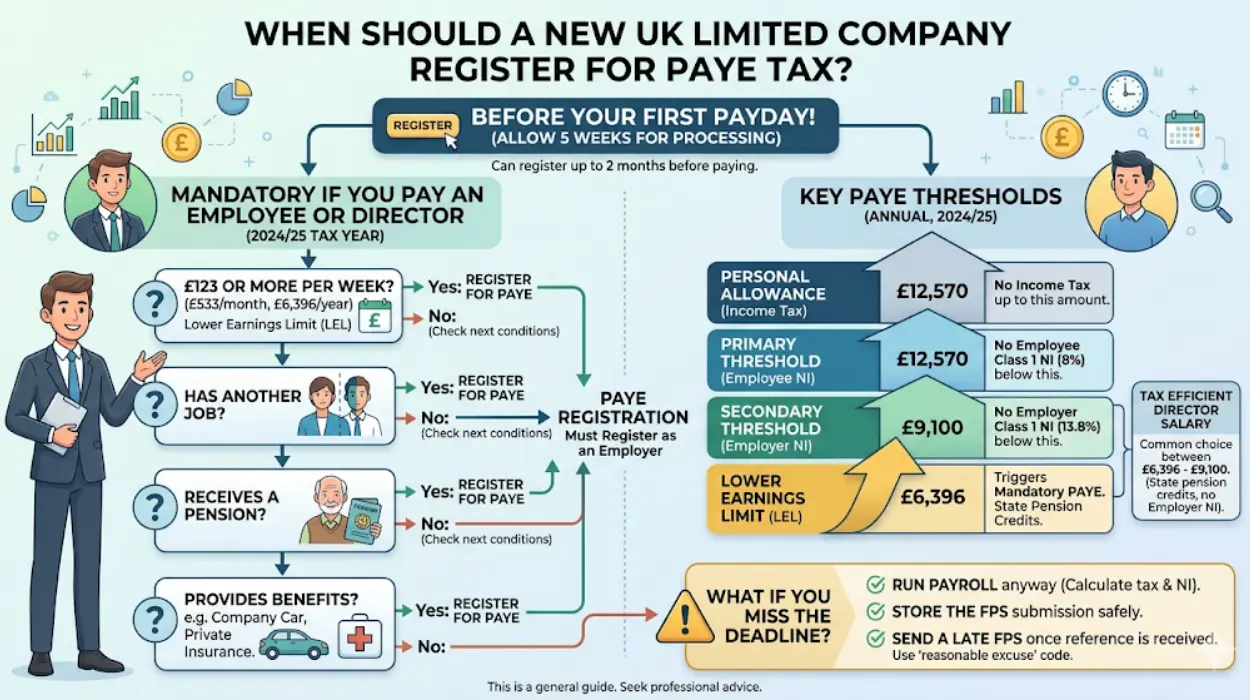
A new UK limited company should register for PAYE tax as soon as it hires its first employee even if that employee is a director before the first payday. Registration ensures you meet HMRC payroll requirements and avoid penalties for late setup or incorrect tax reporting.
Forming a limited company means you’re stepping into the world of regulated business operations, where compliance with HMRC obligations is key. One of the first and most important tax duties for employers is PAYE Pay As You Earn registration. But many new directors are unsure exactly when to register, especially when they haven’t started paying salaries yet. In this guide, Form My Company explains the timing, process, and practical implications of PAYE registration for new limited companies, helping you stay compliant from day one.
Understanding PAYE Tax and Its Purpose
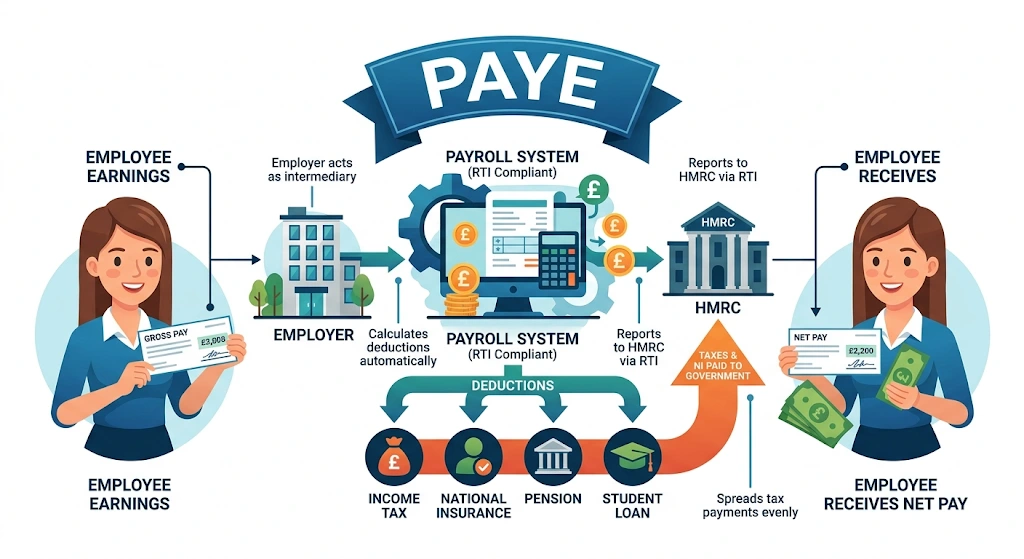
PAYE stands for “Pay As You Earn,” the UK’s system for collecting Income Tax and National Insurance (NI) from employment earnings. When a company pays wages or salaries, it acts as an intermediary for HMRC deducting the necessary taxes and contributions directly from gross pay.
Employers must also report these deductions every time they pay an employee through the Real Time Information (RTI) system. This applies not only to large corporations but to any limited company employing staff, including directors drawing a salary.
Essentially, PAYE is what turns your business from a simple legal entity into an active employer. It ensures that your tax, NI, and statutory payments (like pension or student loan deductions) are processed correctly and on schedule.
The Right Time to Register for PAYE
A limited company must register for PAYE tax before the first payday. You can do this up to two months in advance of paying staff, which gives HMRC time to approve your registration and issue your PAYE reference numbers.
There’s a common misconception that PAYE registration is optional until a business grows. However, even if the only person being paid is the company director, PAYE may still be required if:
- The director’s salary exceeds the National Insurance lower earnings limit.
- The company provides benefits such as company cars or health insurance.
- The employee (or director) has another job or pension.
Failing to register on time can lead to reporting delays, inaccurate payroll processing, or financial penalties from HMRC. It’s therefore best practice to register promptly once you know you’ll be paying anyone through company payroll.
PAYE and Directors’ Salaries
Many small business owners assume that taking dividends avoids the need for PAYE registration, but this is not always true. HMRC considers a company director an employee for PAYE purposes if they receive a regular salary or benefits.
For instance, if your director’s salary is set strategically below the personal allowance but above the NI threshold—to balance tax efficiency, PAYE registration is still required so that contributions and filings remain compliant. Even if no tax is due, payroll must be filed through RTI.
Form My Company often advises new directors to register early, as handling PAYE retroactively can complicate bookkeeping and attract avoidable penalties.
Step-by-Step: PAYE Registration Process
While registering for PAYE is free, accuracy and timing are vital. The process generally includes:
- Check eligibility – Confirm if at least one person will be paid above the PAYE or NI threshold.
- Register with HMRC – This is done online through your Government Gateway account.
- Receive details – HMRC will issue your PAYE reference and Accounts Office reference number, usually within 5–10 working days.
- Set up payroll software – Choose compliant software that integrates RTI reporting.
- Submit your first Full Payment Submission (FPS) – Send before or on the employee’s first payday.
Setting up PAYE correctly ensures that your employees’ tax and contributions are handled legally from the start. For companies seeking support, professional Paye Registration Assistance can streamline this process and reduce risk.
Why Timing Matters: Avoiding HMRC Penalties
HMRC’s digital systems automatically flag late or missing submissions. If your company pays salaries without PAYE registration, HMRC can impose fines or retroactive assessments. The longer the delay, the more serious the consequences, including interest on underpaid amounts.
A common pitfall occurs when directors pay themselves informally before setting up payroll, assuming it can be “regularised later.” Unfortunately, HMRC treats such payments as employment income from the date they’re made meaning PAYE should have been deducted at that point.
Timely registration eliminates these risks, ensuring each RTI submission is logged correctly and your tax reporting remains transparent.
PAYE Deadlines and Reporting Duties
Once registered, your payroll responsibilities extend beyond initial setup. Key ongoing requirements include:
- Submitting a Full Payment Submission (FPS) to HMRC on or before every payday.
- Sending Employer Payment Summaries (EPS) for adjustments, such as statutory pay recoveries.
- Paying due Income Tax and National Insurance to HMRC by the 22nd of each month (19th if paying by post).
Employers must also issue payslips, maintain payroll records for at least three years, and provide employees with annual P60s summarising their earnings and deductions. Missing or inconsistent reporting can trigger HMRC investigations, even for small or single-director companies.
PAYE for New Companies Without Employees
Even if your limited company has no paid employees yet, there are certain scenarios where PAYE registration might still apply:
- You intend to pay directors a regular wage in the coming months.
- You wish to operate payroll to record director pension or benefit contributions.
- You hire freelance contractors who later transition into employment roles.
Conversely, you do not need to register for PAYE if none of your employees earn above the Lower Earnings Limit, receive benefits, or have another job. However, staying prepared by understanding PAYE registration early can help your business scale efficiently.
Using Payroll Software and RTI Compliance
Modern payroll software simplifies PAYE submission, automatically calculating tax and NI while integrating with HMRC’s RTI framework. However, incorrect setup especially around start dates, tax codes, or reference numbers can cause misreporting.
When businesses use Paye Registration Assistance by Form My Company, they benefit from professional configuration of payroll software, RTI linking, and compliance checks. This ensures directors and employees are registered correctly from their first payday, saving time and avoiding administrative errors.
Building Good Payroll Habits from Day One
A new employer’s first payroll sets the tone for long-term compliance. Proper PAYE setup helps build credibility with HMRC, accountants, and even lenders evaluating company governance.
Here are three best practices from payroll professionals:
- Maintain accurate employee records (starter forms, NI numbers, tax codes).
- Test payroll submissions in advance to confirm RTI acceptance by HMRC.
- Keep PAYE reference numbers securely recorded for future correspondence.
Starting cleanly is far easier than fixing payroll records after multiple months of incorrect filings.
Professional Support vs DIY Registration
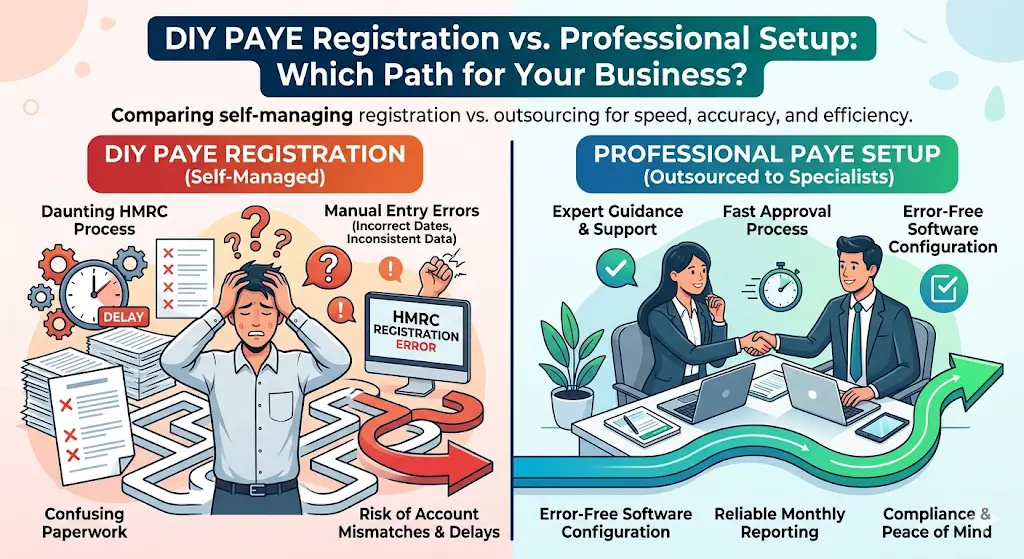
While PAYE registration is achievable for most small company owners, it can still be daunting if you’ve never interacted with HMRC before. Manual registration errors like incorrect start dates or inconsistent director data can delay the process and create mismatched payroll accounts.
Our related article, DIY PAYE Registration vs. Professional Setup: Cost & Time Savings, explores the practical differences between self-managing registration and outsourcing it to specialists.
For new limited companies, professional guidance often leads to faster approval, error-free software configuration, and reliable monthly reporting.
Strategic Advantages of Early PAYE Setup
Registering early for PAYE does more than fulfill a legal requirement it positions your company for operational and financial efficiency. Early registration enables:
- Smooth onboarding of employees as your business grows.
- Consistent tax and NI reporting that builds a reliable compliance record.
- Easier coordination with accountants or payroll bureaus.
- Access to employer benefits and pension schemes sooner.
By starting properly, your company strengthens its foundation for sustainable growth.
How Form My Company Supports PAYE Registration
Form My Company provides end-to-end assistance for UK limited companies navigating their employment and payroll obligations. Through its Paye Registration Assistance service, the firm handles HMRC applications, reference issuance tracking, and compliant payroll setup.
Once registered, clients can activate payroll operations knowing that PAYE, RTI, and tax filing standards are met from day one. This removes uncertainty and lets company directors focus on operations and staffing growth rather than administrative compliance.
As your company matures, you can also explore enhanced support options such as professional payroll management or accounting integrations. For companies preparing to make this step, the article Expert PAYE Registration Service: Set Up Your UK Payroll Correctly provides insight into the benefits of working with experienced payroll professionals.
Registering your new UK limited company for PAYE tax should be a top priority as soon as you plan to pay yourself or your team. Whether you employ one director or several staff members, the HMRC requirements apply equally and early action prevents costly administrative headaches.
With professional help from Form My Company, you can complete PAYE registration efficiently and operate payroll with confidence, accuracy, and compliance from your company’s very first payday.
When does a UK company need to register for PAYE?
A UK company must register for PAYE with HMRC as soon as it pays an employee or director a salary above the National Insurance threshold. PAYE registration ensures correct tax and NI deductions from wages under the Pay As You Earn system.
How long does PAYE registration take in the UK?
PAYE registration usually takes 5–10 working days after applying online. Once approved, HMRC issues the company’s PAYE reference and Accounts Office number, allowing payroll setup to begin.
Can a company director register for PAYE without employees?
Yes, company directors often need to register for PAYE even if they are the only employee. This applies when the director’s salary exceeds the lower earnings limit or they receive benefits or other taxable income.
What details are required for PAYE registration?
To register for PAYE, companies must provide employee or director details, the company registration number, and intended first payday. HMRC uses this data to issue the correct payroll and reporting references.
How can Paye Register Assistance help with PAYE setup?
Paye Register Assistance guides companies through HMRC registration, ensuring PAYE and payroll are correctly configured from the first payday. The service helps avoid HMRC errors and supports proper RTI payroll submissions.