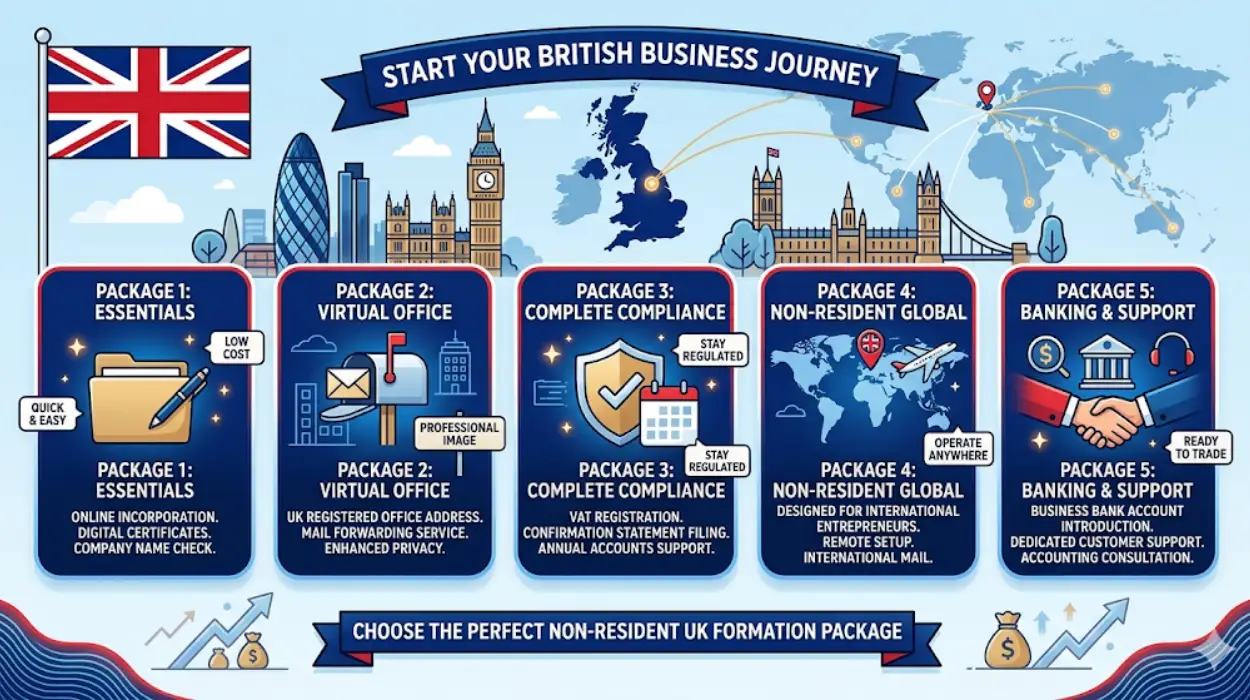
Starting a UK business as a non-resident is surprisingly simple the UK welcomes international entrepreneurs with transparent processes and online company formation services. With the right support package, you can register and manage your British company remotely while staying fully compliant with Companies House and HMRC requirements.
The United Kingdom remains one of the world’s most attractive destinations for business formation, thanks to its stable economy, pro-business legal framework, and globally respected reputation. For non-residents, the chance to register a company in the UK opens doors to European and international markets, removes trade barriers, and enhances corporate credibility. However, navigating UK company registration from abroad can seem overwhelming at first especially when it involves legal documentation, address requirements, and tax compliance.
This is where dedicated non-resident UK formation packages become crucial. These packages simplify every step of the process, providing registered office addresses, director and shareholder setup, VAT and PAYE registration, and ongoing compliance support. By choosing a trusted UK company formation agent such as Form My Company, entrepreneurs can legally establish and operate British businesses with ease, even from overseas.
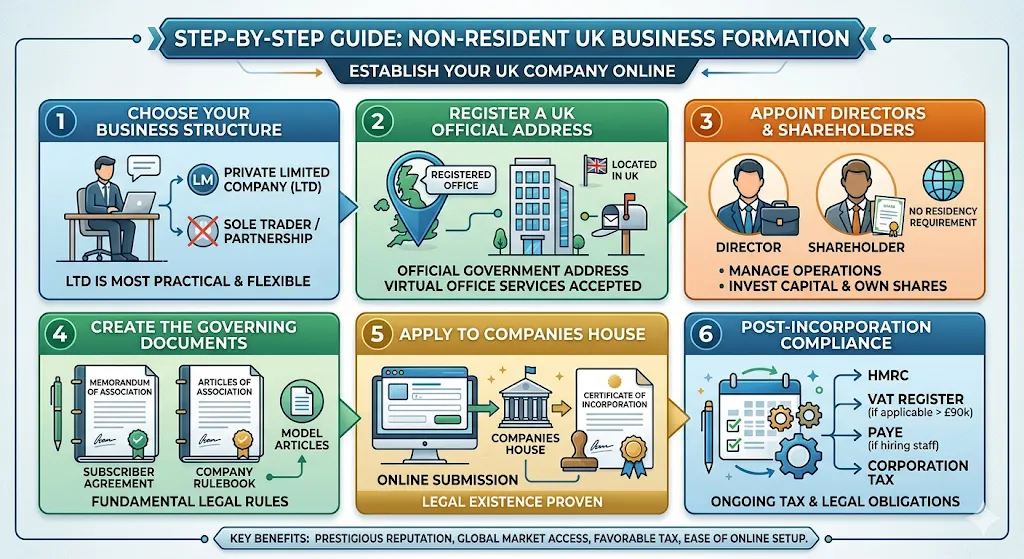
Step-by-Step Guide to Non-Resident UK Business Formation
Setting up a company in the UK as a non-resident involves several key stages. The entire process can be completed online within 24 hours, provided all information and documentation are correctly prepared.
Choose the Right Company Structure
Most non-residents opt for a Private Limited Company (Ltd) due to its legal protection and flexibility. It separates personal assets from business liabilities and offers a professional image to clients and partners. Alternatives include partnerships or sole proprietorships, but these are less suitable for overseas entrepreneurs wishing to build a scalable, compliant UK business.
The Ltd company structure requires at least one director and one shareholder, who may be the same individual. There is no requirement for either to live in the UK, which makes it ideal for non-residents.
Register an Official UK Address
Companies House requires every UK company to have a registered office address located within the United Kingdom. This is the official location for all government and legal correspondence. For non-residents, a virtual or registered office address service is included in most formation packages. Providers like Form My Company supply a prestigious UK address that fulfills legal obligations and enhances your professional image.
Prepare the Memorandum and Articles of Association
These documents define how your company will operate detailing founder information, share allocation, and internal management rules. For first-time business owners, using a professional formation agent ensures that these documents meet the latest regulatory standards and avoid unnecessary rejections from Companies House.
Submit Your Application to Companies House
Once all information is verified, the application is filed online. Company formation agents use secure e-filing systems to register your business within a few working hours. After approval, you’ll receive a Certificate of Incorporation, proving your company legally exists within the UK.
Register for Tax, VAT, and PAYE (if applicable)
After incorporation, your next step is registering with HMRC for Corporation Tax and if your turnover exceeds the VAT threshold (currently £90,000) or you plan to hire employees, you must also register for VAT and PAYE. Non-resident entrepreneurs often choose to include these services in comprehensive formation packages to ensure tax readiness and seamless compliance.
Benefits of Forming a UK Company as a Non-Resident
The UK’s business-friendly environment offers exceptional advantages for entrepreneurs around the world. Here’s why thousands of non-residents choose to incorporate their companies in Britain every year.
First, the short incorporation timeframe and low registration costs make the UK appealing compared to other jurisdictions. You can set up a company in as little as one business day, completely online. Second, UK businesses enjoy unmatched global credibility, which improves access to investors, partners, and suppliers.
Third, the tax environment remains competitive. Although companies must pay Corporation Tax, the clear rules and double taxation treaties with many countries help reduce overlap for non-resident owners. Additionally, having a UK company lets you open local bank accounts or business payment solutions, streamlining transactions with British and European clients.
Lastly, the UK’s regulatory transparency builds trust. Clients worldwide recognize that UK companies adhere to a high standard of compliance, making them ideal for international trade, consultancy services, e-commerce ventures, and import–export businesses.
Legal and Compliance Considerations
Establishing a UK company as a non-resident involves strict compliance obligations under Companies House and HMRC supervision. Failure to meet these standards can lead to penalties or company suspension, so it’s essential to understand your responsibilities before you start trading.
Directors and Shareholders: While there’s no requirement for UK residency, every company must have at least one natural person as director. You’ll need to provide proof of identity and address, in line with anti–money laundering (AML) checks.
Registered Office Laws: Your company’s registered address must remain valid within the UK for the life of the business. All statutory mail including reminders, official notices, or tax forms goes to this location, so professional registered office services are invaluable for remote owners.
Financial Records and Reporting: Directors are legally required to maintain accurate financial records, file annual accounts, and submit a confirmation statement each year. Failure to file on time incurs fines and might impact your business credit record. Many formation packages now include an option for compliance management, ensuring deadlines are never missed.
Tax and Accounting: Corporation Tax returns, VAT submissions, and PAYE payroll reports must adhere to HMRC’s strict timelines. Non-residents should partner with UK accountants familiar with international tax rules to ensure smooth compliance and avoid double taxation pitfalls.
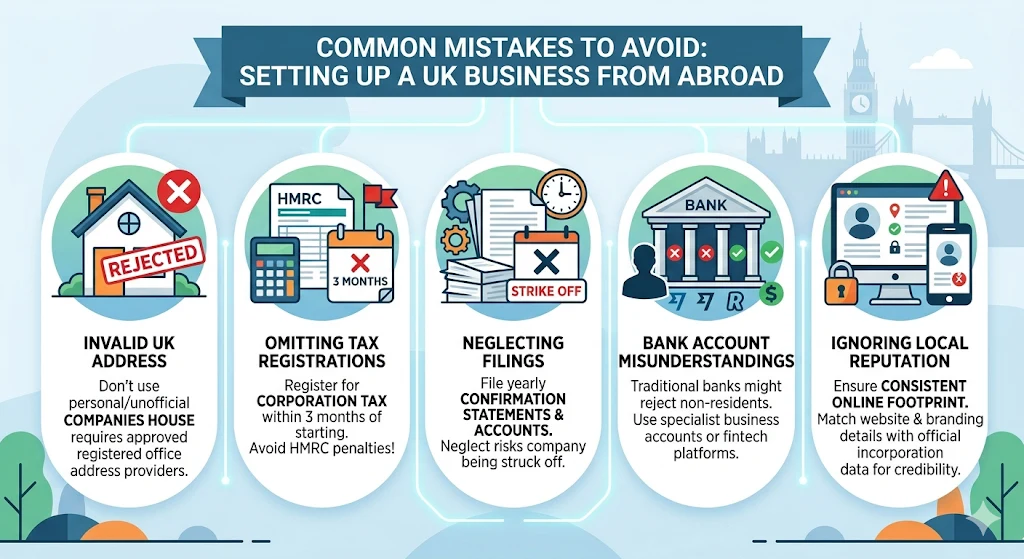
Common Mistakes to Avoid When Setting Up from Abroad
Many non-resident entrepreneurs underestimate the complexity of UK compliance rules or make costly assumptions when registering their business. Common mistakes include:
- Using an invalid UK address: Some use personal or unofficial addresses, which Companies House may reject. Always use an approved registered office address provider.
- Omitting Tax Registrations: Failing to register for Corporation Tax within three months of starting operations can trigger HMRC penalties.
- Neglecting confirmation statements and filings: These are mandatory yearly submissions. Defaulting can risk your company being struck off the register.
- Bank account misunderstandings: Not all UK banks accept non-resident clients. However, specialist business accounts and fintech platforms like Revolut Business or Wise Business offer suitable alternatives.
- Ignoring local reputation: Presenting a UK company with an inconsistent online footprint (e.g., mismatched address, unverified website) can weaken credibility. Ensure your business branding aligns with your incorporation details.
Avoiding these pitfalls ensures a strong start and sustainable growth for your UK venture.
Practical Tips and Best Practices for Non-Resident Entrepreneurs
Planning ahead makes all the difference when establishing a UK business remotely. Below are some best practices to help international founders remain compliant and efficient.
- Use a full-service formation provider. Packages that include address, compliance, tax registration, and filing support save time and prevent costly errors.
- Keep digital records from day one. All invoicing, receipts, and correspondence should be organized in electronic form to simplify accounting.
- Work with certified accountants familiar with international trade. They can help you claim business deductions and handle currency conversions effectively.
- Consider a UK-based domain and business email. This strengthens local credibility when dealing with British clients or institutions.
- Monitor filing deadlines. Set reminders for annual accounts, VAT returns, and confirmation statements. Providers like Form My Company offer compliance monitoring systems to help you stay on track.
By following these practices, even non-residents can manage their UK businesses as efficiently as domestic entrepreneurs.
Registering a UK company as a non-resident offers exceptional reach, trust, and legal protection. With the right structure, address, and professional support, your British business can trade worldwide under one of the most respected corporate frameworks in the world. The process may seem detailed, but modern formation packages simplify every step from paperwork handling to tax setup and compliance monitoring.
If you’re ready to register your company with confidence, Form My Company provides fast, fully online company formation with expert compliance support. From VAT and PAYE registration to virtual office addresses and annual filings, we handle the formalities so you can focus on growing your business. Get started today and make your British business journey seamless and secure.
Frequently Asked Questions
Can a foreigner register a company in the UK without living there?
The UK allows non-residents to own and manage companies without being physically present. You’ll need a UK-registered address and to meet Companies House identification requirements, typically handled through a formation agent.
Do I need a UK bank account to operate my company?
Not strictly. While traditional banks may require in-person verification, many non-resident owners use fintech business banking solutions like Wise, Revolut, or Tide to manage payments in pounds sterling.
What taxes apply to a non-resident UK company?
Registered UK companies must pay Corporation Tax on profits and potentially VAT if turnover exceeds the threshold. Non-residents should seek advice to ensure compliance under double taxation agreements.
How long does it take to form a company?
With an online formation agent, most applications are processed within 24 hours, provided all documents are approved by Companies House.
What ongoing filings are required?
Companies must file annual accounts, a confirmation statement, and pay Corporation Tax each year. Additional filings apply if the company is VAT-registered or employs staff under PAYE.