

UK company directors must maintain 10 key statutory records under Companies Act 2006 to ensure compliance, avoid fines up to £5,000, and protect against dissolution. These records include registers, accounts, and filings verified annually with Companies House.
Directors face strict penalties if records lapse. Maintain them correctly to comply with legal standards and support business operations.
What Is the Register of Members?
The register of members lists all shareholders, their contact details, and shareholdings. Directors update it within two months of share changes and keep it at the registered office.
This record tracks ownership. Companies House requires access during inspections. Update entries when shares transfer or new members join. Verify details against share certificates. Failure to maintain it triggers fines from £1,000.
Store the register securely. Digital formats count if backed up. Cross-check with annual returns. Inspectors verify accuracy during audits.
Why Does the Register of Directors Matter?
The register of directors records all current and past directors’ names, service addresses, dates of birth, and appointment dates. Update it within 14 days of changes via Companies House.
Directors list alternates here too. This public record enables transparency. Submit form AP01 for appointments and TM01 for resignations. Validate identities using official documents.
Keep physical or electronic copies. Annual confirmation statements reference this data. Non-compliance risks director disqualification.
What Details Go in the Register of Secretaries?
The register of secretaries includes the company secretary’s name, address, and appointment date if appointed. Single-director companies skip this; update within 14 days of changes.
Private companies often omit secretaries. Public companies mandate them. File changes with Companies House promptly. Authenticate details against ID proofs.
This record supports governance checks. Maintain it alongside director registers for completeness.
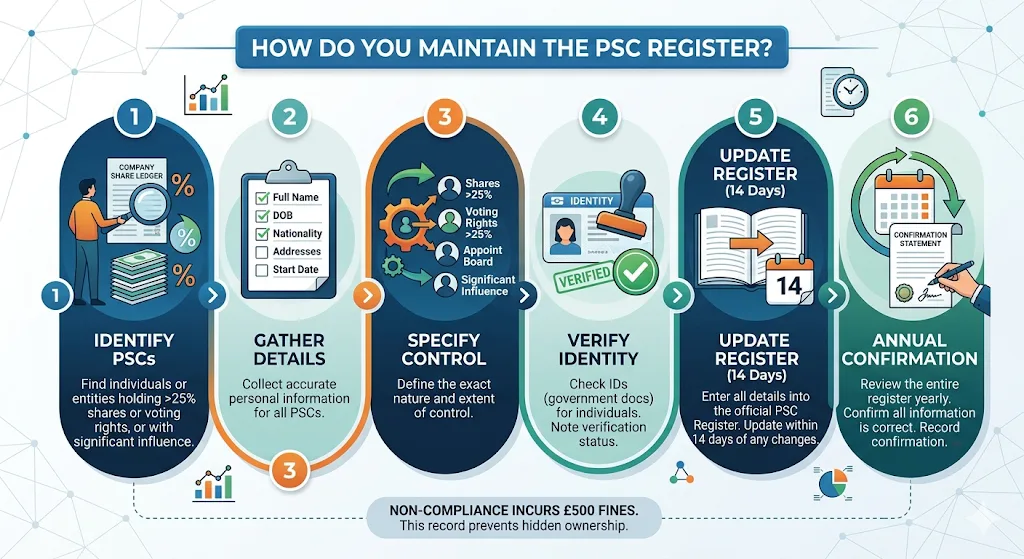
How Do You Maintain the Register of Persons with Significant Control (PSC)?
The PSC register lists individuals or entities controlling over 25% of shares or votes, including their nature of control and verification status. Update within 14 days and confirm annually.
Identify PSCs using share ledgers. Categorize control: voting rights, significant influence. Verify via ID checks and declarations. File PSC notifications with Companies House.
Non-compliance incurs £500 fines. Review yearly during confirmation statements. This record prevents hidden ownership.
What Makes Minutes of Board Meetings Essential?
Minutes document all board resolutions, decisions, and attendee details from meetings. Record them within one month and store indefinitely at the registered office.
Draft minutes immediately after meetings. Include dates, attendees, and voting outcomes. Sign them for validity. Virtual meetings require the same detail.
These prove decision-making processes. Auditors reference them during reviews. Destroying minutes violates retention rules.
Why Keep Copies of All Resolutions?
Retain copies of all written resolutions passed by directors or members without meetings. File special resolutions with Companies House within 15 days if they alter articles.
Ordinary resolutions stay internal. Special ones impact structure. Authenticate with signatures. Store chronologically.
This record validates major changes. Reference it for disputes or inspections.
What Statutory Books and Records Must Directors Retain?
Directors retain core statutory books: registers of members, directors, secretaries, PSCs, plus minute books and resolution copies. Inspect and update quarterly.
These form the company’s legal backbone. Digitize for efficiency but print for inspections. Secure against loss.
Cross-verify with Companies House filings. Neglect leads to strike-off risks.
How Do Annual Accounts Fit as Statutory Records?
Prepare and file annual accounts with Companies House within nine months of year-end for private companies. Include balance sheets, profit/loss statements, and director reports verified by signature.
Micro-entities file abridged versions. Validate figures against ledgers. Independent audits apply to larger firms.
Retain copies for six years. These records demonstrate solvency. Late filing penalties start at £150.
What Is the Annual Confirmation Statement?
The annual confirmation statement confirms registered details like addresses, directors, and PSCs are accurate. File once yearly within 14 days of the anniversary date.
Gather data from all registers. Submit online via Companies House portal. Pay £13 fee. Update any discrepancies first.
This snapshot prevents outdated records. 92% of compliant firms file on time, per 2025 data.
Why Track Dividends and Charges Registers?
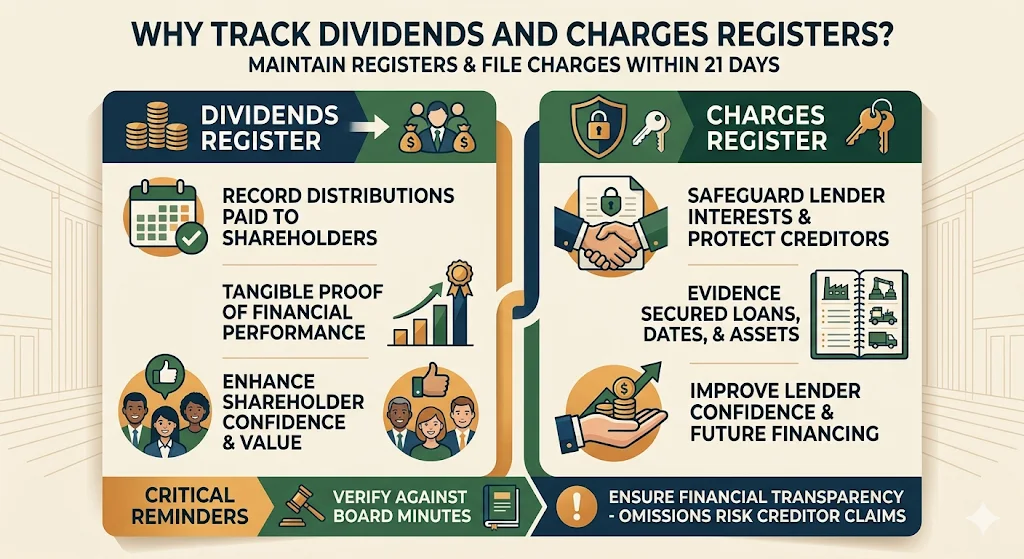
Maintain a register of dividends declared and a register of charges (debentures) detailing secured loans, dates, and assets. Update post-approval and file charges within 21 days.
Dividends record amounts paid to shareholders. Charges protect lenders. Verify against board minutes.
These ensure financial transparency. Omitting them risks creditor claims.
What Are the Risks of Failing to Maintain These Records?
Failure exposes directors to fines up to £5,000 per offense, personal liability, and company strike-off. In 2024, Companies House dissolved 120,000 non-compliant entities.
Inspectors audit randomly. Late filings compound penalties. Disqualified directors face 15-year bans.
Restore struck-off companies via court order, costing £1,000+. Proactive maintenance avoids this.
How Does Proper Record-Keeping Support Compliance?
Proper records enable accurate filings, withstand audits, and prove governance. Automate updates to match Companies House requirements.
Integrate software for real-time tracking. Train staff on protocols. Schedule quarterly reviews.
This builds audit-ready operations. Compliant firms report 30% fewer penalties.
For businesses evaluating options, explore how to choose the best company secretarial service provider for your business. Directors ready to act can order professional Company Secretarial service online for guaranteed Companies House compliance.
From My Company provides expert Company Secretarial support. Access reliable maintenance through their Company Secretarial Service. Their team verifies records and files confirmations accurately.
Maintain these 10 records diligently. Compliance safeguards your business long-term.
What is company secretarial service in the UK?
Company secretarial service handles statutory compliance for UK companies, including maintaining registers, filing annual confirmations, and updating Companies House records. From My Company provides this service to ensure directors meet Companies Act 2006 requirements without penalties. It covers PSC registers, board minutes, and annual accounts filings.
Why do UK companies need a company secretary?
UK companies require secretarial oversight to maintain statutory records like director registers and resolutions, avoiding fines up to £5,000. Company secretarial services verify compliance with Companies House deadlines. Larger firms appoint a secretary; smaller ones outsource to experts like From My Company.
What does a company secretarial service provider do?
Providers manage registers of members, directors, PSCs, and charges, plus file confirmation statements and accounts. From My Company’s Company Secretarial service authenticates documents and handles changes within legal timelines. This ensures audit-ready governance and prevents strike-offs.
How much does company secretarial service cost in the UK?
Costs range from £500–£2,000 annually based on company size and complexity, covering filings and record maintenance. From My Company offers transparent pricing for Company Secretarial tailored to SMEs. Factors include filing volume and dormant status.
How to choose a reliable company secretarial service?
Select providers with Companies House expertise, fast filing turnaround, and secure record storage. From My Company’s service includes compliance checks and annual reviews for UK businesses. Verify credentials through client testimonials and FCA oversight where applicable.