

Expanding your UK business overseas starts with strong market research and legally recognised documentation. The process involves understanding international regulations, securing compliant corporate credentials, and preparing apostilled documents to validate your company abroad.
International expansion is one of the most significant growth opportunities for UK-based companies. Yet it demands careful planning from choosing the right jurisdiction to ensuring your UK company documents are legally accepted overseas. This guide outlines the ten essential steps every business should follow to expand confidently, navigate compliance, and establish trust in new markets.
Understanding Global Expansion for UK Companies
Expanding internationally isn’t just about selling products or services to a foreign market it’s about legally representing your company in another jurisdiction. UK firms must align their operations, governance, and compliance with both domestic and international laws to operate successfully abroad.
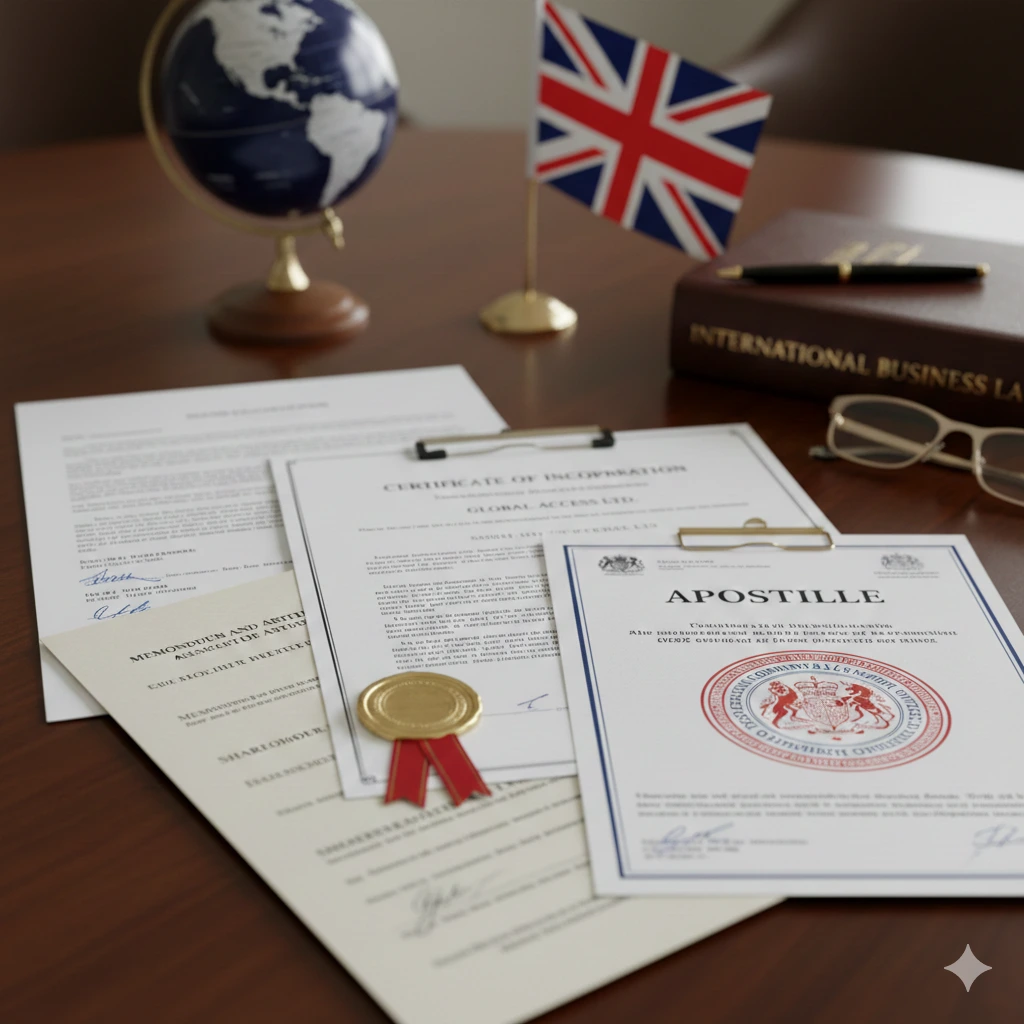
For most businesses, this means preparing documentation that proves the legitimacy of your company’s formation, directors, and financial integrity. Examples include the Certificate of Incorporation, Memorandum and Articles of Association, and shareholder resolutions. Before these can be recognised by foreign authorities, they often need to be legalised through an Apostille a crucial step verified by the Foreign, Commonwealth & Development Office (FCDO).
Conduct Thorough Market Research
Start by identifying the most promising markets for your products or services. Consider trade agreements, economic stability, language barriers, and regulatory frameworks. Tools like the UK Department for Business and Trade’s market analysis reports or the World Bank’s Ease of Doing Business Index can provide data‑driven insight.
By understanding demand, competition, pricing, and cultural nuances early, your expansion strategy becomes more sustainable and tailored to local expectations.
Choose the Right Business Structure Overseas
Decide whether you’ll open a branch office, incorporate a local subsidiary, or form a strategic partnership. Each option carries different compliance requirements:
- Branch: Operates as an extension of your UK company, maintaining reporting obligations in the UK.
- Subsidiary: Legally distinct, often providing tax or liability advantages.
- Partnership or Joint Venture: Enables market entry with local expertise but requires careful contractual structuring.
Selecting the right structure determines how authorities treat your UK company documents and influences what needs to be legalised or apostilled.
Ensure Legal Recognition of Documents Abroad
When a UK company wants to operate internationally, foreign governments and institutions typically require proof of authenticity for corporate and legal records. This is achieved through apostilled documents, which confirm that a UK-issued certificate or document is legally valid for use in countries that are part of the Hague Apostille Convention.
To understand this in detail, read Form My Company’s MOFU article, How to Legalise UK Company Documents for International Use, which explains the full process of verification before international submission.
Examples of documents often requiring apostilles include:
- Certificate of Incorporation
- Board resolutions for new overseas ventures
- Power of Attorney for foreign registration agents
Without proper legalisation, even well-prepared business documentation may be rejected or delayed by overseas regulators.
Secure Apostilled Documents Before Expansion
Before registering a new entity or signing overseas contracts, ensure your documents are properly authenticated. Form My Company offers a professional apostille document service that manages end‑to‑end legalisation through the FCDO.
By using a reliable provider, you reduce the risk of administrative delays or non-compliance issues with foreign authorities. You can find details of this offering at our apostilled documents service page, which supports international expansion steps efficiently and securely.
Align Tax and Financial Compliance
Each country has different tax obligations for foreign entities. Consult local advisors early to understand corporate tax rates, VAT registration processes, and reporting deadlines.
In some cases, you’ll need certified translations or apostilled financial statements to satisfy local regulators or investors. Establishing transparent accounting standards builds credibility and helps prevent costly errors later.
Adapt to Local Employment and Cultural Norms
Expanding your operations abroad also means managing people within new legal systems. From employment contracts to workplace practices, HR compliance differs widely.
Ensure your employment contracts reference appropriate local labour laws and obtain apostilled versions where required by overseas authorities or partners.
Integrating cultural understanding into your hiring and onboarding practices can enhance brand perception and reduce friction with local teams or clients.
Protect Your Intellectual Property (IP)
Your brand and intellectual assets must be protected internationally before entering new territories. Register trademarks, patents, and designs under relevant global frameworks such as the World Intellectual Property Organization (WIPO).
Where necessary, submit apostilled documents confirming your UK registrations or assignments of IP rights. This ensures local patent offices or courts accept your claims as legitimate.
Build Local Partnerships and Networks
Forming relationships with local suppliers, distributors, or consultants can enhance operational speed and reduce start‑up friction. However, due diligence is key.
Conduct background checks, verify registration, and formalise agreements through trusted legal channels. Ideally, contracts should be notarised and, if required, supported by apostilled corporate authorisations to be valid in the foreign jurisdiction.
Register With Relevant Local Authorities
After securing documentation, register your entity with the designated regulators. Depending on the market, this could involve chambers of commerce, tax authorities, or investment boards.
For instance, registering a subsidiary in the UAE requires submission of apostilled UK corporate documents, including the Certificate of Incorporation and shareholder details. Similar requirements exist across EU nations and Commonwealth jurisdictions.
Efficient document preparation avoids registration delays and confirms your business’s international credibility.
Establish Ongoing Compliance and Reporting
Once your business is operational overseas, maintain consistent compliance management. This means adhering to foreign financial filings, renewal deadlines, and periodic document legalisations.
Schedule regular document audits to ensure every certificate or authorisation remains valid internationally. Partnering with providers like Form My Company can make this a procedural, low‑risk process keeping your overseas operations fully aligned with UK and international standards.
For companies ready to act fast, you can explore Fast Apostille Document Services for UK Companies Form My Company to secure legal recognition within days.

Combining Legal, Strategic, and Operational Readiness
Effective international expansion is both a legal and strategic exercise. Document preparation, apostille verification, and compliance alignment ensure your company’s identity and authority are legally recognised abroad.
Neglecting these elements can lead to rejected registrations, suspended operations, or invalid contracts all avoidable with professional guidance.
Form My Company supports UK businesses through compliance‑ready document legalisation and consultancy for cross‑border incorporation. Our expertise helps simplify bureaucracy, allowing you to focus on market development and sustainable growth.
What are apostilled documents and why are they needed?
Apostilled documents are UK-issued certificates or records verified by the Foreign, Commonwealth & Development Office (FCDO) for international use. They confirm the document’s authenticity under the Hague Apostille Convention, allowing foreign authorities to legally accept them without further certification.
How can I get UK business documents apostilled through Form My Company?
Form My Company handles the full apostille process by verifying, submitting, and returning your certified documents. This ensures official recognition of incorporation papers, powers of attorney, and other company documents abroad.
Which UK company documents usually require an apostille?
Common business documents that need an apostille include the Certificate of Incorporation, Memorandum and Articles of Association, director resolutions, and company powers of attorney. These documents are typically required when registering or operating a UK business overseas.
How long does it take to get apostilled documents in the UK?
The standard FCDO process usually takes a few working days, depending on workload and courier times. Using a professional service like Form My Company can help streamline this and ensure your apostilled documents meet international deadlines.
Are apostilled documents accepted in all countries?
Apostilled documents are recognised in countries that are members of the Hague Apostille Convention. For nations outside the Convention, additional legalisation steps through an embassy or consulate may be required before use.