
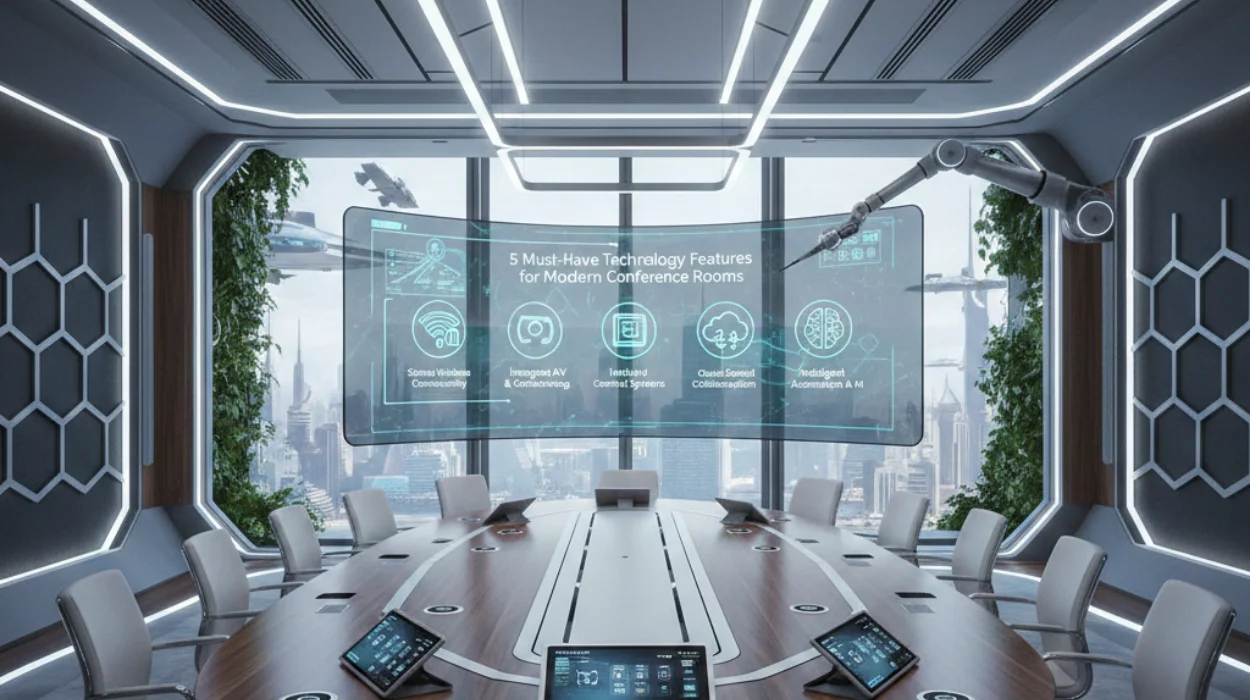
The five essential technology features every modern conference room needs are seamless connectivity, high-definition display systems, intelligent collaboration tools, reliable audio setups, and integrated smart room controls. Together, these improve communication, productivity, and professionalism across every meeting.
In today’s hybrid business world, conference room technology is no longer optional it defines how efficiently teams communicate, present, and collaborate. Whether hosting international video conferences or internal strategy sessions, the right tech setup creates an environment where ideas flow smoothly and decisions happen faster. For organisations upgrading their workspaces, understanding these features is key to designing conference rooms that reflect both modern professionalism and operational excellence.
The Role of Technology in Modern Conference Rooms
Conference Rooms Services provide professional spaces where companies conduct meetings, presentations, and virtual collaborations. Modern businesses expect these rooms to deliver a streamlined experience one that merges physical space with digital connectivity.
Without the right infrastructure, teams waste valuable time troubleshooting technical issues or dealing with poor audio-visual quality. According to industry reports, productivity losses from inadequate meeting technology can reach thousands of pounds per year per team, largely due to technical delays and communication breakdowns. That’s why forward-thinking businesses see conference room technology as a strategic investment, not just a facility upgrade.
To understand what makes a modern conference room truly efficient, let’s explore the five essential technology features that matter most.
Seamless Connectivity and Device Integration
Modern conference participants expect plug-and-play simplicity. The ability to connect any device laptop, tablet, or smartphone without delay sets the tone for a professional meeting experience.
Universal Connectivity Standards
Conference rooms must support both wired and wireless connectivity options. HDMI, USB-C, and DisplayPort inputs remain standard, while wireless casting (like AirPlay, Miracast, or ChromeCast) enables instant screen sharing. Effective conference room solutions should automatically detect incoming devices, eliminating the awkward moments spent searching for cables or adapters.
Robust Network Performance
Fast, secure Wi-Fi is a non-negotiable requirement. Enterprise-grade routers and dedicated bandwidth for meetings ensure reliable video conferencing and uninterrupted connections. Authentication protocols such as WPA3 and VLAN segmentation also help maintain security for corporate data transmitted during presentations.
Example: A marketing team sharing real-time campaign metrics from multiple laptops benefits immensely from stable, instant connectivity turning technology from a potential bottleneck into a productivity booster.
High-Definition Display and Visual Systems
Clear visuals translate directly into clarity of communication. High-definition displays help teams digest data quickly, engage more deeply, and present information with impact.
Display Technology Options
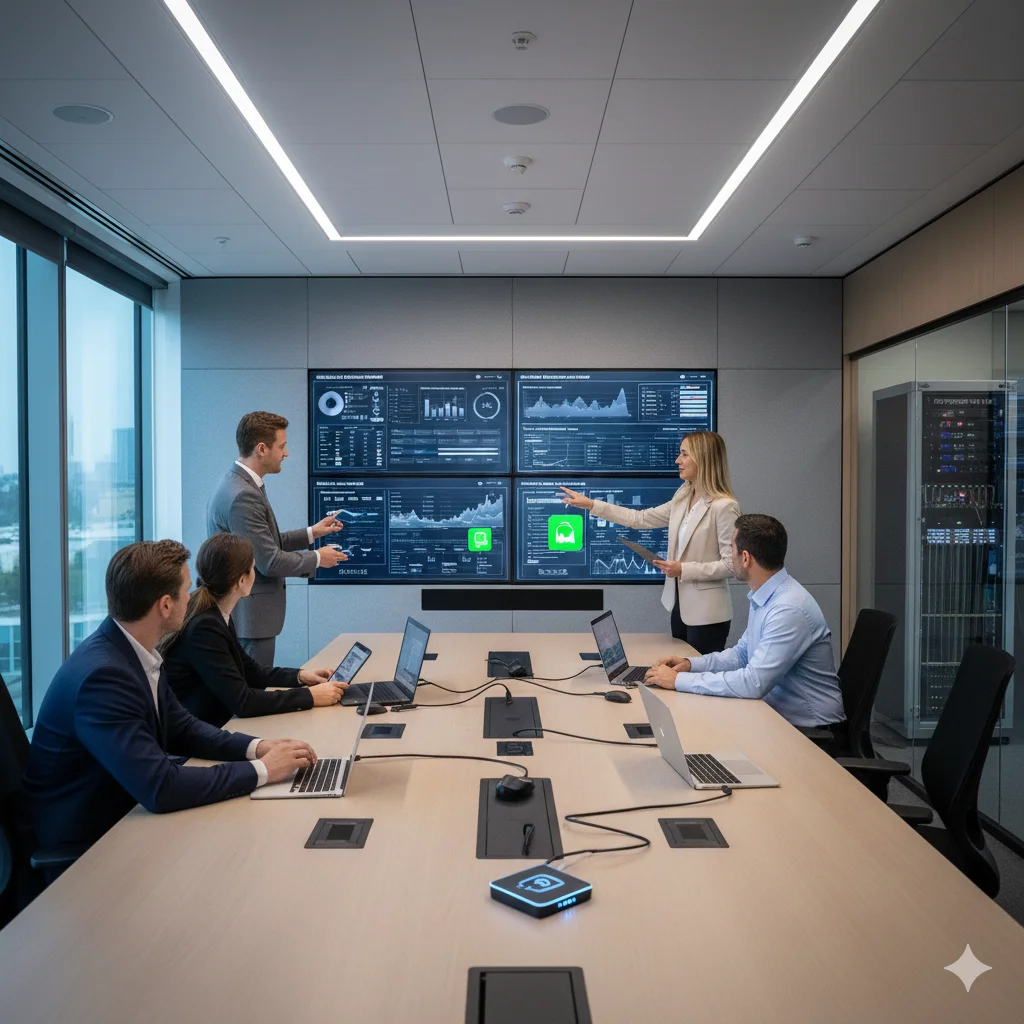
Conference rooms today often incorporate large-format LED or 4K monitors for small spaces and multiple projection panels for larger ones. Ultra-wide screens allow simultaneous display of slides, participant videos, and shared documents without clutter.
Some companies now install interactive touch panels, allowing presenters to annotate documents or brainstorm visually during a meeting creating collaboration that feels both tactile and digital.
Smart Visual Integration
The latest conference room designs also include automated brightness and color adjustments. These ensure optimal visibility in varying lighting conditions a crucial feature for boardrooms with natural light or variable ambient lighting.
According to visual ergonomics studies, clarity and contrast directly influence participant engagement. A well-calibrated display system isn’t just aesthetic it supports comprehension, reduces fatigue, and fosters focus during long sessions.
Advanced Audio Systems for Clarity and Comfort
Poor audio quality remains one of the biggest frustrations in virtual and hybrid meetings. A crisp, evenly distributed soundscape ensures every voice is heard clearly, preventing repetition or misunderstanding.
Microphone and Speaker Design
Modern conference rooms use ceiling-array or beamforming microphones that automatically locate and amplify active speakers. This eliminates the need to pass microphones around during meetings. Integrated echo cancellation and noise suppression features maintain clarity even in acoustically challenging rooms.
Acoustic Optimization
Room acoustics matter as much as the hardware itself. Soft paneling, carpeted surfaces, and strategic soundproofing reduce reverberation and external noise. Combined with high-quality speakers, the result is a balanced, natural sound experience.
Example: Imagine an international board meeting using multilingual participants on a video call. Advanced audio ensures each accent and tone remains intelligible, fostering inclusivity and reducing communication errors.
You can explore more about how foundational elements like audio and display setups influence meeting outcomes in the informational article Why Poor Audio-Visual Setup Can Ruin Your Corporate Presentation.
Intelligent Collaboration Tools
Beyond sound and visuals, true collaboration depends on how participants share, annotate, and co-create information. Intelligent systems make meetings dynamic, actionable, and inclusive.
Video Conferencing Platforms
Integrations with widely used platforms such as Zoom, Microsoft Teams, and Google Meet simplify the joining process and allow one-touch meeting setup from wall-mounted control panels. Advanced systems automatically adjust camera angles and focus on the active speaker, providing a natural conversational feel even across remote teams.
Digital Collaboration Features
Interactive whiteboards, live document co-editing, and integrated meeting notes blur the line between conference and co-working spaces. Smart conference systems often sync with project management or CRM platforms, allowing teams to turn meeting discussions directly into actionable next steps.
AI-Driven Enhancements
AI integration now adds features such as automatic transcription, real-time translation, and meeting summarization. These tools increase accessibility and allow participants to stay focused instead of taking manual notes. They also improve the retrievability of meeting content within company records a critical asset for knowledge-driven organizations.
Smart Room Control and Automation
The final must-have technology feature is intelligence that extends beyond presentation tools into the room itself. Smart room automation enhances comfort, energy efficiency, and convenience.
Centralized Environment Control
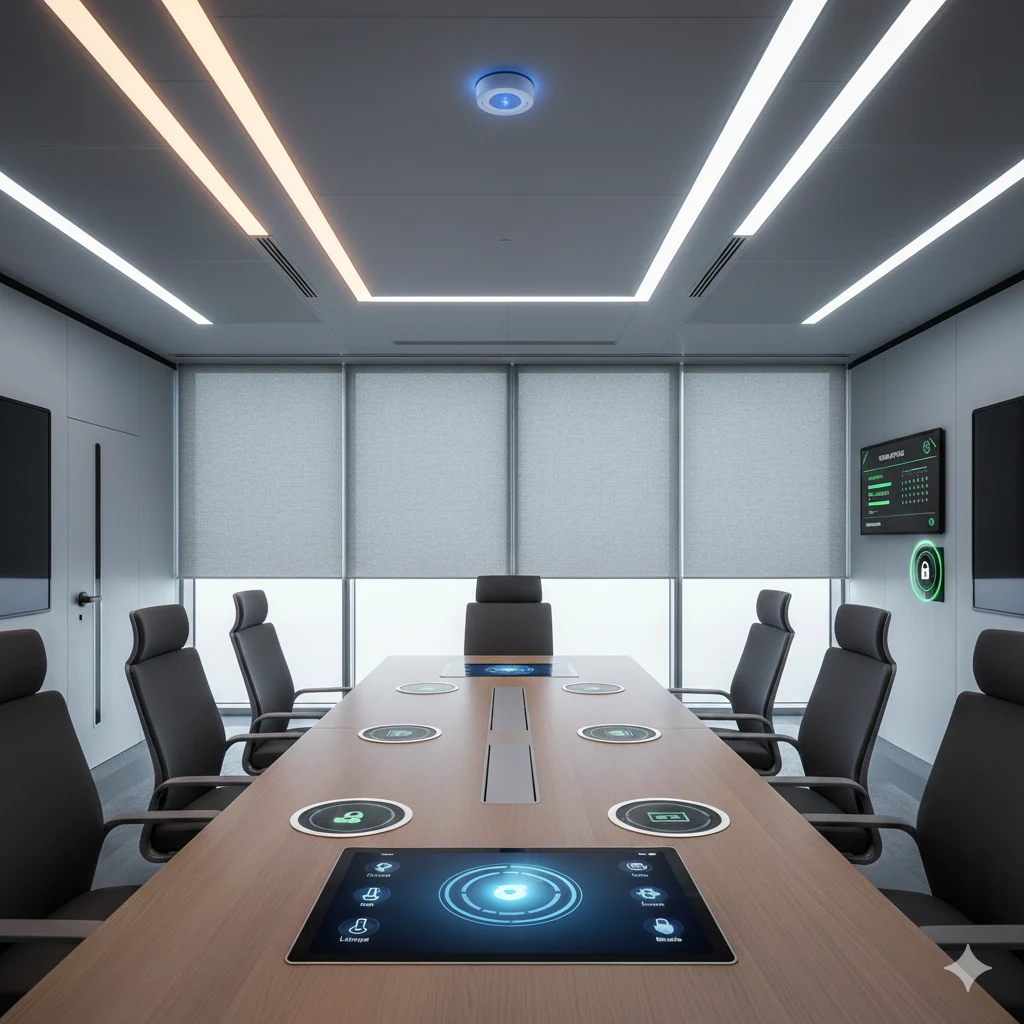
Modern systems allow one-touch control of lighting, temperature, and blinds directly from a tablet or wall panel. This streamlines setup before meetings, ensuring the right ambiance from the start.
Integration with Occupancy Sensors
Presence sensors detect when participants enter or leave, automatically adjusting lighting and power use. This not only saves energy but also ensures every meeting begins with the room ready to go. Large organizations, in particular, benefit from centralized dashboards showing room availability and usage metrics.
Security and Access Management
Smart building integrations ensure that confidential meetings remain secure. Access control systems can link with scheduling software to automatically unlock the room for authorized users during booked times protecting both privacy and intellectual property.
The Business Value of Tech-Enabled Conference Rooms
Investing in conference room technology is not a luxury it’s a measurable performance driver. Efficient communication saves time, enhances decision-making speed, and improves brand perception among clients and employees alike.
According to enterprise facility studies, companies upgrading to tech-enabled meeting spaces report up to a 40% reduction in setup delays and a 25% boost in meeting output quality. When every second counts in high-stakes business environments, that difference directly impacts growth.
Businesses that enhance their meeting technology also align themselves with hybrid work trends. Teams can move seamlessly between physical and virtual collaboration modes, making it easier to accommodate flexible schedules and global partnerships.
For organizations looking to modernize their workspaces, professional Conference Rooms Services from From My Company provide expertly designed, technology-ready spaces that adapt to evolving collaboration needs.
Designing for Human Experience, Not Just Hardware
Modern conference rooms succeed when technology enhances not distracts from the human experience. That’s why integration, simplicity, and user experience matter as much as specifications.
Successful design begins with an understanding of user behavior: how teams communicate, the frequency of hybrid calls, and the preferred presentation formats. From there, each technology layer from sensors to screens is arranged harmoniously to support flow and focus.
Businesses that treat their meeting environments as strategic assets strengthen internal collaboration and external credibility. A well-equipped room signals professionalism even before a presentation begins.
Those ready to take the next step toward full-scale modernization can explore Book High-Tech Conference Rooms with Form My Company Today for practical insights on deploying advanced setups with measurable ROI.
How From My Company Leads in Conference Room Innovation
From My Company provides customized conference room solutions that merge aesthetics, functionality, and digital performance. Every installation focuses on reliability, user-friendliness, and future readiness.
Their design process integrates smart connectivity, high-quality AV systems, and security-first automation, helping organizations achieve both day-to-day operational efficiency and long-term scalability.
By combining technology with ergonomic design, From My Company ensures every meeting environment contributes directly to improved communication, engagement, and brand professionalism.
What makes a modern conference room effective for business meetings?
A modern conference room is effective when it combines reliable audio-visual technology, fast connectivity, and ergonomic design to support productive communication. From My Company’s Conference Rooms include these features to ensure meetings run smoothly, whether in-person or hybrid.
How do technology upgrades improve conference room performance?
Upgrading conference rooms with high-definition displays, advanced microphones, and smart controls improves sound clarity, presentation quality, and meeting efficiency. From My Company integrates these systems to create professional, tech-enabled environments for seamless collaboration.
What size conference room is best for hybrid meetings?
The ideal conference room size for hybrid meetings allows optimal camera coverage and clear sound distribution. From My Company helps businesses design flexible Conference Rooms tailored to participant capacity, acoustics, and technology layout.
How can businesses make their conference rooms more energy-efficient?
Businesses can reduce energy use by installing automated lighting, motion sensors, and smart temperature control in their conference rooms. From My Company incorporates sustainable technology solutions to improve comfort and operational efficiency in professional meeting spaces.
Why is audio quality crucial in modern conference rooms?
Clear audio prevents misunderstandings, reduces fatigue, and enables equitable participation among remote and in-room attendees. From My Company’s Conference Rooms use acoustic optimization and AI-driven microphones to maintain sound clarity in every meeting.