
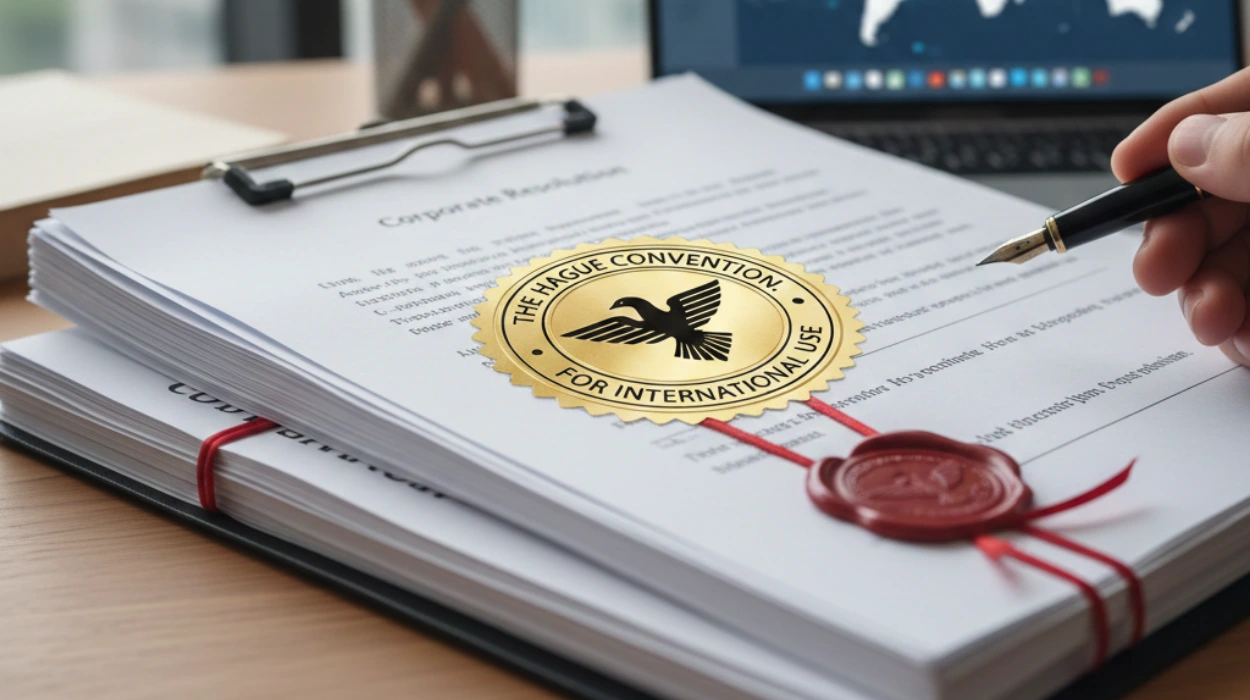
You can get your business documents apostilled by submitting them for official verification through the UK Foreign, Commonwealth & Development Office (FCDO). This process authenticates the documents for international use, making them legally valid for opening or managing bank accounts outside the UK.
An apostille is more than a stamp it’s an international certification that proves your business papers, such as certificates of incorporation or incumbency, are genuine. For companies expanding across borders, this step is essential for meeting the legal and compliance standards of international banks.
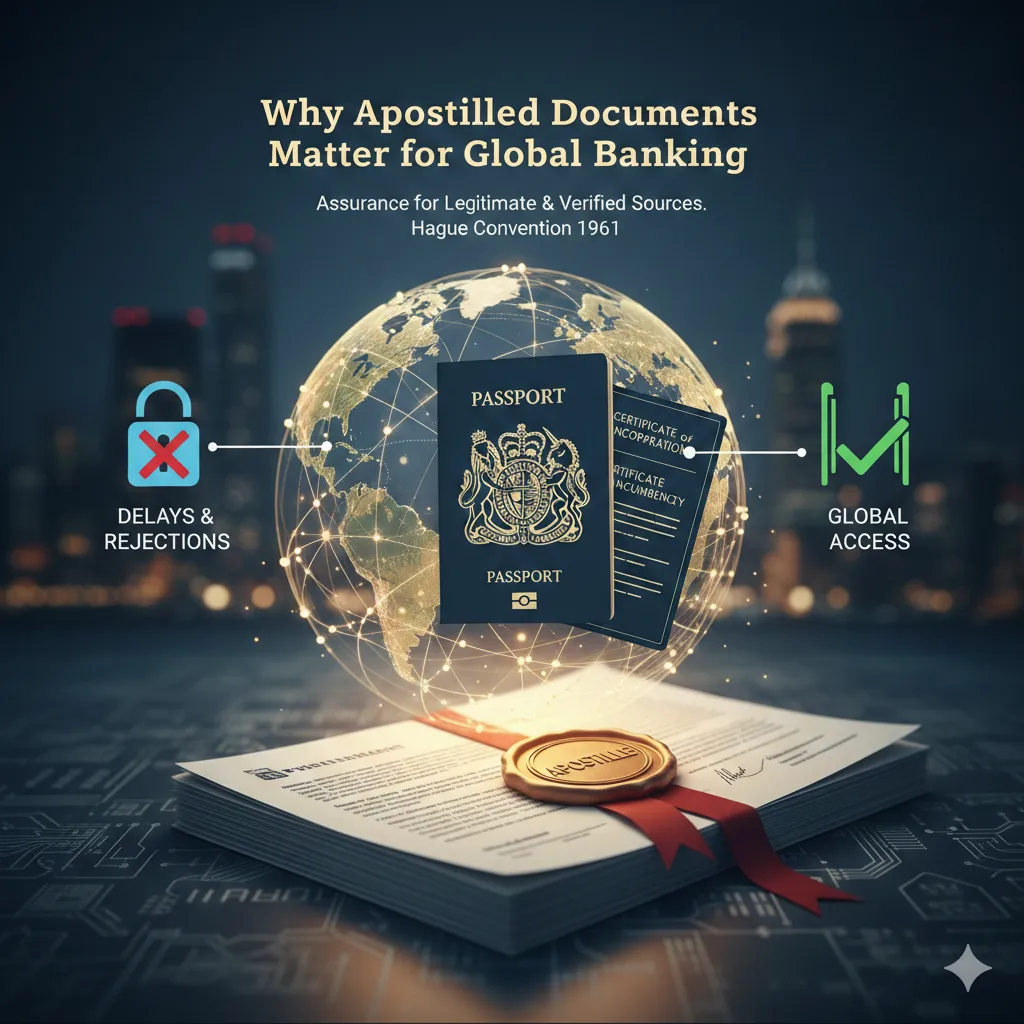
Why Apostilled Documents Matter for Global Banking
Global banks require full assurance that the documents they receive come from legitimate and verified sources. An apostille provides that assurance under the Hague Convention of 1961, which simplifies document authentication between member countries.
Without apostilled documentation, even well-established UK businesses may face delays or outright rejections when attempting to open a corporate account abroad. Banks typically verify:
- The business’s legal standing through a Certificate of Incorporation
- The authority of its directors through a Certificate of Incumbency
- Supporting documents such as shareholder lists or Articles of Association
Apostilling these materials ensures they are accepted internationally without further consular legalization.
Understanding Apostille Certification
An apostille verifies the authenticity of:
- The signature on the document
- The capacity in which the signatory has acted
- The identity of the official seal or stamp used
In the UK, the FCDO attaches a unique certificate verifying these details. Once apostilled, your documents carry international legal weight, allowing your company to satisfy overseas compliance checks.
For example, when a newly formed UK limited company seeks to open an account with a financial institution in Dubai or Luxembourg, the bank will request apostilled corporate documents to confirm the company’s legitimacy.
Which Business Documents Require an Apostille?
Several key business documents qualify for apostilling depending on your intended use abroad. Common examples include:
- Certificate of Incorporation – confirms company formation under UK law
- Certificate of Good Standing – verifies the business remains active and compliant
- Certificate of Incumbency – lists current directors and shareholders
- Memorandum and Articles of Association – outlines company structure and purpose
- Board Resolutions and Power of Attorney – document business authorization abroad
Each of these establishes a critical trust layer when engaging with international banking partners or regulatory agencies.
The Apostille Process in the UK
To obtain an apostille for business use:
- Prepare your original or certified documents. Ensure they are issued by a UK government department or an accredited notary public.
- Submit to the FCDO. The Foreign, Commonwealth & Development Office will verify and certify authenticity.
- Receive your apostilled documents. The FCDO attaches an apostille certificate, usually within a few business days.
Businesses can carry out this process directly or engage a professional intermediary such as Form My Company, which handles preparation, notarisation, and submission efficiently under its Apostilled Documents service.
Common Banking Requirements for Apostilled Documents
When setting up corporate accounts overseas, banks are meticulous about verifying company legitimacy. They may request:
- Apostilled Certificate of Incorporation to confirm legal existence
- Apostilled Certificate of Incumbency to verify company officers
- Apostilled Power of Attorney to authorize representatives for account management
Some financial jurisdictions, particularly in the EU, UAE, and Asia, also require notarised translations of apostilled papers if English is not an official banking language.
For a broader overview of international account requirements and document preparation, you can read How to Open a Corporate Bank Account Outside of the UK for a top-of-funnel view of the process.
Apostille vs Legalisation: What’s the Difference?
An apostille and a legalisation achieve similar outcomes both validate documents for foreign use but differ in scope and process.
- Apostille: Valid among Hague Convention countries, requiring only the FCDO certificate.
- Legalisation: Required for non-member countries (e.g., China, UAE), involving embassy certification in addition to the apostille.
Understanding your destination country’s policy prevents unnecessary rejections or document amendments at a later stage.
How Apostilled Documents Simplify International Banking Compliance
International banks operate under rigorous anti-money-laundering (AML) and Know Your Customer (KYC) rules. Apostilled documents ease compliance by serving as verifiable, government-certified proof of incorporation and authority.
For example, when a UK trading company expands into Singapore, presenting apostilled incorporation and incumbency certificates allows the local bank to authenticate the documentation instantly without additional consular verification.
This streamlined process supports quicker onboarding, accelerates corporate account activation, and demonstrates full transparency under international financial regulations.
Why International Banks Reject Unapostilled Papers
Even when submitted in English, non-apostilled business papers are often rejected because banks cannot verify the origin of the authority seal or signature.
Common reasons for rejection include:
- Missing official stamp or incorrect notarial form
- Outdated or expired corporate records
- Submissions from unverified notaries lacking UK authority
These setbacks can stall your financial operations abroad. Using a professional handling service ensures compliance with both UK and foreign documentation standards.
The Professional Route: Using an Apostille Service
Working with a seasoned document service like Form My Company minimises risk and time delays. The Apostilled Documents team coordinates directly with the FCDO, notaries, and, where necessary, the UK’s legalisation office for rapid turnaround.
Using a managed service provides:
- Document verification and formatting before submission
- Secure handling and delivery to prevent loss
- Single-point coordination for multiple documents
For businesses already assessing whether specific certificates require authentication, the mid-stage guide Why Your Certificate of Incumbency Needs an Apostille Stamp sheds light on key compliance triggers.
Best Practices for Submitting Business Documents for Apostille
- Prepare correctly certified originals. Apostilles only attach to officially issued or notarised copies.
- Ensure consistent business details. Mismatched names or addresses across documents cause verification delays.
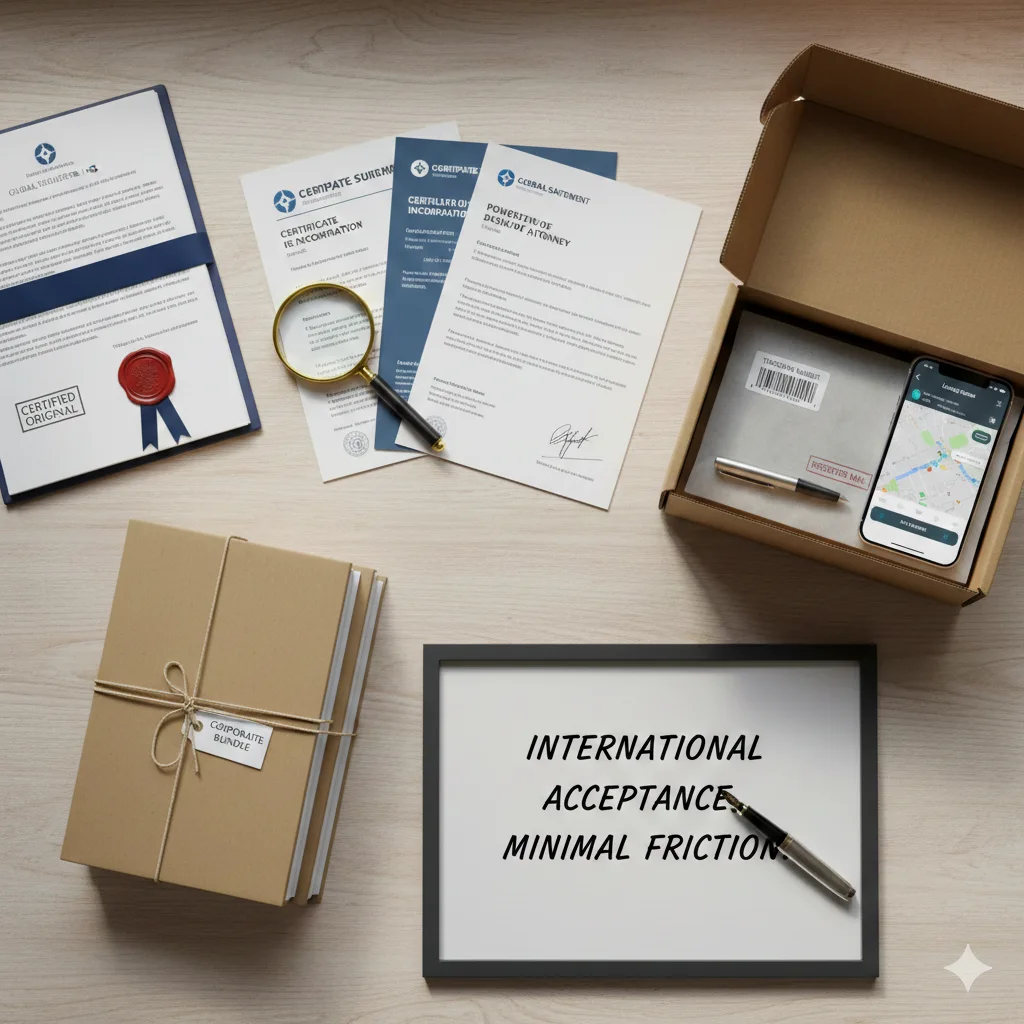
- Include supporting corporate documents. Banks often review entire corporate bundles, not single pages.
- Use tracked courier or registered service. Apostilled documents are irreplaceable originals.
Following these steps ensures international acceptance with minimal friction or legal barriers.
How Apostilled Documents Support Your Global Growth Strategy
For globally expanding enterprises, apostilled documentation facilitates cross-border recognition of legal identity and authority. Whether establishing an offshore subsidiary, acquiring overseas assets, or securing multinational banking facilities, verified paperwork underpins every major transaction.
An apostille provides instant acknowledgment across Hague Convention member states, allowing seamless interaction with regulators, banks, and counterparties who rely on verifiable credentials.
For instance, many EU and Middle Eastern jurisdictions now mandate apostilled supporting documents during company registration and banking due diligence, making the process an integral part of any expansion strategy.
Working with Form My Company for Apostilled Apostille Services
Form My Company delivers a streamlined approach to international documentation, ensuring your corporate papers meet all FCDO and notarial requirements. The firm’s Apostilled Documents service handles every step from preparation and notarisation to apostille certification saving businesses time and administrative effort.
Clients use this service to:
- Meet urgent overseas banking submission deadlines
- Authenticate corporate documents for multinational financial institutions
- Simplify compliance when opening or maintaining non-UK bank accounts
By ensuring that all forms, certificates, and authorisations are authenticated once and correctly, Form My Company enables business owners to focus on their operations rather than bureaucracy.
Choosing the Right Approach for International Compliance
When working across jurisdictions, documentation errors can cost both time and trust. Choosing professional oversight through a dedicated UK-based apostille agency ensures accurate representation of your corporate standing and a smooth onboarding process with international banks.
Apostilled documentation acts as a universal compliance passport. Once your paperwork carries the apostille seal, you demonstrate to banks, regulators, and partners that your company operates transparently and within legal frameworks recognised worldwide.
Getting your business documents apostilled for international banking isn’t merely a procedural step it’s a strategic foundation for global credibility.
By leveraging Form My Company’s Apostilled Documents service, UK businesses can authenticate essential certificates quickly, align with international compliance standards, and open the door to secure international financial relationships.
What are apostilled documents used for in international banking?
Apostilled documents verify the authenticity of company paperwork for use abroad, such as when opening or managing international bank accounts. They confirm that corporate certificates from the UK are valid under international law and accepted by foreign financial institutions.
How do I get business documents apostilled in the UK?
You can get UK business documents apostilled through the Foreign, Commonwealth & Development Office (FCDO) or a licensed intermediary such as From My Company. The apostille certifies the signature, seal, or stamp on official business documents for foreign use.
Which business documents typically need an apostille?
Common business documents requiring an apostille include a Certificate of Incorporation, Certificate of Incumbency, and Articles of Association. From My Company’s Apostilled Documents service ensures these papers meet the verification standards required by international banks and legal authorities.
How long does the UK apostille process take?
The FCDO typically processes apostille requests within a few working days, but timing can vary based on submission volume and document type. From My Company streamlines this process by preparing, notarising, and tracking documents for faster turnaround.
Is an apostille the same as legalisation for business documents?
No, apostille certification applies to countries in the Hague Convention, while legalisation is required for non-member countries. When preparing Apostilled Documents, From My Company advises businesses on whether their target country requires additional embassy legalisation after the apostille stage.