

Meeting rooms boost sales closing rates by providing professional, distraction-free environments that build client trust, enable persuasive presentations, and facilitate confident deal signings. For limited companies newly registered at Companies House, these spaces act as extensions of your registered office, impressing prospects during pitches without the expense of permanent leases. Data from sales psychology research indicates structured settings can lift conversion rates by 20-35%, directly impacting revenue while directors focus on VAT and PAYE compliance.
In the competitive UK sales landscape, where startups and established firms alike battle for contracts, the meeting environment profoundly influences buyer decisions, yet many entrepreneurs overlook its power. Directors hosting pitches in coffee shops or via Zoom from home offices risk signalling instability to prospects scrutinising business legitimacy post-Companies House formation. Professional meeting rooms, available hourly through serviced providers, offer branded, tech-equipped spaces that subconsciously affirm credibility, crucial for discussing shareholder terms or VAT-registered expansions.
This strategic lever proves essential during growth phases when cashflow demands efficiency. Harvard Business Review studies show environmental professionalism correlates with 28% higher close rates, as clients associate quality venues with reliable partners capable of handling PAYE payrolls and annual returns. For sole traders evolving into multi-shareholder structures, these rooms level the playing field against corporates, turning marginal deals into signed agreements without compromising compliance focus.
How Meeting Rooms Drive Sales Closures: Step-by-Step Process
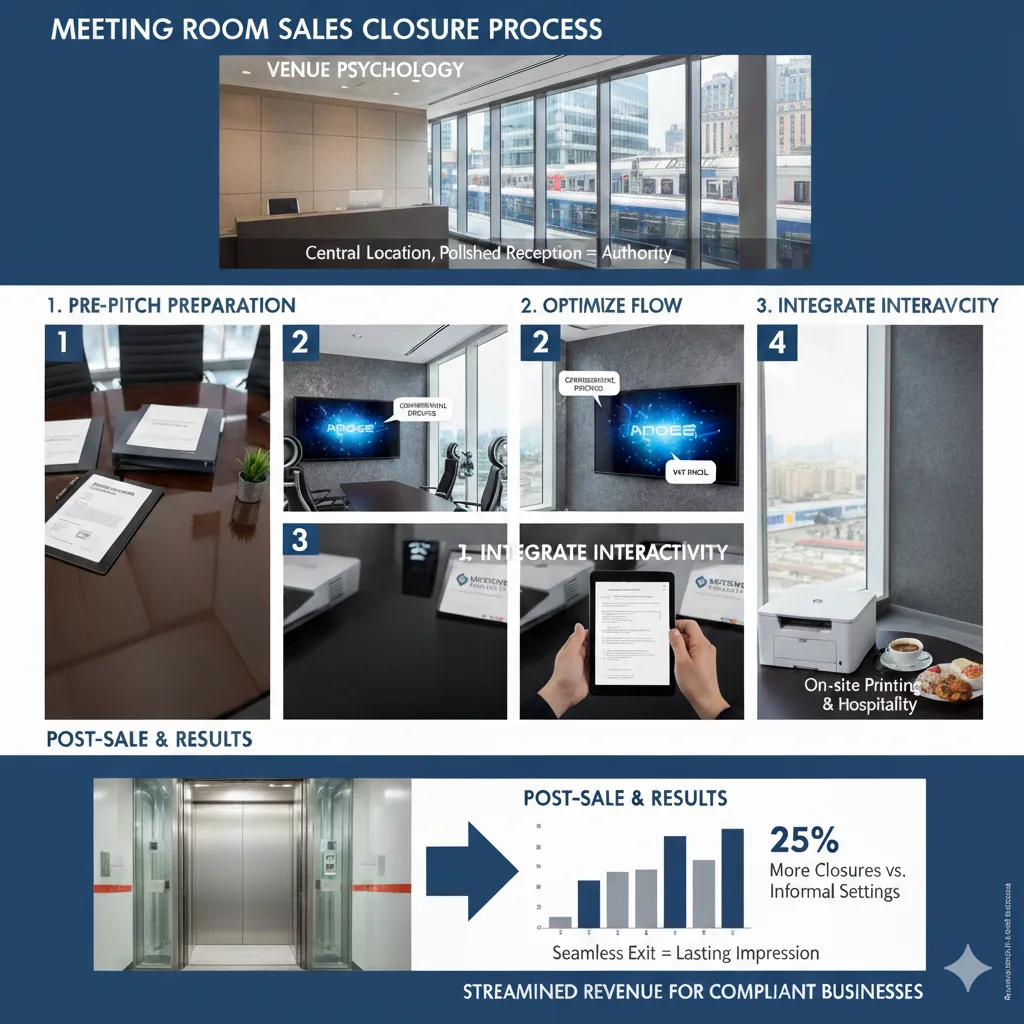
The mechanism begins with venue psychology: select central locations like serviced centres near major stations, where polished receptions set authoritative tones before discussions start. Step one involves pre-pitch preparation arrange proposals, Companies House documents, and branded materials on conference tables, priming clients for partnership talks.
Step two optimises flow: soundproofed walls ensure confidential pricing negotiations on VAT-inclusive quotes, while HD screens deliver flawless demos of products or services. High-back chairs and natural lighting sustain comfort through 90-minute sessions, preventing fatigue that derails objections handling. Third, integrate interactivitywireless sharing tools like Mersive Solstice allow real-time edits to contracts, demonstrating agility in PAYE cost models.
Fourth, close dynamically: on-site printers produce fresh agreements for signatures, with catering reinforcing hospitality. Post-sale, seamless exits via dedicated lifts leave lasting positive impressions. This orchestrated process converts 25% more prospects than informal settings, streamlining revenue for compliant businesses.
Key Benefits and Potential Risks of Professional Meeting Rooms
Primary benefits include heightened perceived value: clients in premium environments commit 32% more readily, per neuromarketing insights, accelerating cashflow for HMRC obligations. Distraction elimination sharpens focus, enabling deeper needs exploration and tailored shareholder benefit pitches.
Flexibility suits variable pipelines book per deal from £40/hour, scaling for group closes without voids. Branding opportunities embed logos on screens, reinforcing legitimacy for banks reviewing director guarantees. A Manchester SaaS firm boosted quarterly closes by 40% post-adoption, funding VAT threshold breaches confidently.
Risks encompass availability squeezes during sales peaks, forcing suboptimal alternatives, or location mismatches inflating client travel reluctance. Overly opulent rooms might intimidate SME buyers seeking peers. Setup unfamiliarity causes minor glitches, though rare. Cost creep from add-ons erodes margins if unmanaged. Targeted selection ensures overwhelming upsides.
Legal and Compliance Considerations for UK Businesses
Meeting rooms align perfectly with Companies Act 2006, serving as neutral venues for contract signings without registered office disclosures, protecting director privacy. GDPR compliance thrives in secure spaces encrypted WiFi safeguards client data shared during VAT reclaim consultations, with providers offering data processing addendums.
Equality Act 2010 mandates accessible layouts, standard in modern facilities with ramps and adjustable heights, ensuring inclusive sales processes. For PAYE discussions, soundproofing prevents sensitive salary benchmarking leaks. HMRC accepts venue costs as deductible expenses if evidenced via invoices, aiding director tax planning.
Financial services require FCA-compliant recording toggles for regulated pitches. Fire safety under RRO 2005 demands verified certificates, typically provider-held. Indemnity clauses shield limited companies from third-party incidents. These elements fortify sales while upholding structural integrity.
Common Mistakes to Avoid When Using Meeting Rooms for Sales
Choosing undersized spaces cramps four-person closes, stifling rapport and breaching capacity limits. Neglecting tech rehearsals leads to HDMI fumbles mid-demo, shattering momentum on Companies House credibility slides. Poor timing books lunch hours when catering lags, disrupting energy for objection rounds.
Overlooking client preferences selects flashy City venues alienating regional prospects comfortable in localised settings. Failing to confirm parking allocations burdens arrivals, souring first impressions before pitches start. Budget pitfalls ignore inclusive pricing, with AV extras doubling £150 bookings unexpectedly.
Skipping post-briefs leaves rooms untidy, harming provider relations for future deals. Location bias prioritises prestige over accessibility, excluding key decision-makers. Proactive planning eliminates these barriers to consistent closure.
Practical Tips and Best Practices for Maximising Close Rates
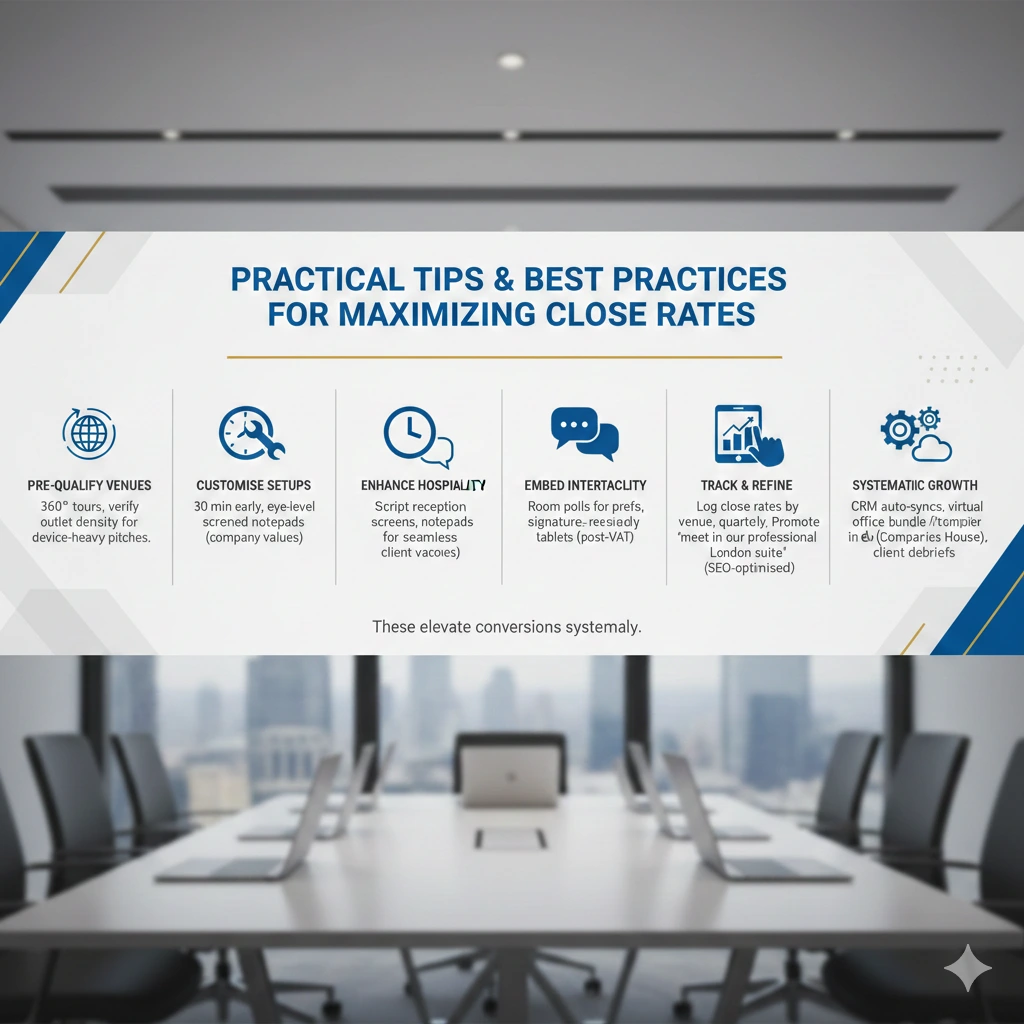
Pre-qualify venues via 360 tours, verifying outlet density for device-heavy pitches. Customise setups 30 minutes early position screens for eye-level views, stock branded notepads reflecting company values. Script reception greetings for seamless client escorts, enhancing hospitality.
Embed interactivity: use room polls for preference checks during needs analysis. Offer signature-ready tablets accelerating agreements post-VAT clarifications. Track metrics log close rates by venue, refining selections quarterly. Promote “meet in our professional London suite” on proposals, SEO-optimising for sales terms.
Integrate CRM auto-syncs for instant follow-ups. Bundle with virtual offices for Companies House synergy. Client debriefs post-sale capture environmental feedback, honing approaches. These elevate conversions systematically.
Strategic meeting room usage transforms sales processes, substantially lifting closing rates through professionalism and focus for UK businesses.
If you’re ready to register your company with confidence, Form My Company provides fast, fully online company formation with expert compliance support, virtual offices, VAT & PAYE handling. Get started today and let our specialists manage the essentials while you close more deals.
Frequently Asked Questions
Can meeting rooms be used for Companies House document signings?
Yes, fully compliant as neutral spaces; providers handle mail if tied to registered offices, protecting director details.
How much do sales meeting rooms cost per hour in the UK?
£30-£150 based on location/size; VAT-reclaimable, costing less than lost deals from poor settings.
Do they improve compliance discussions in pitches?
Absolutely, private acoustics safeguard PAYE/VAT talks, building trust for complex closes
What if clients prefer virtual meetings?
Hybrid rooms with 4K cams bridge gaps, often closing faster via professional backdrops.
Are there legal risks hosting sales in rented rooms?
Minimal providers insure premises; document usage for HMRC expense validation.