A registered office is the official UK address filed with Companies House for legal correspondence and public records, while a trading address is where your business conducts daily operations and interacts with customers. Choosing the right setup depends on your business structure, privacy needs, and operational model, with many UK companies using distinct addresses for each to balance compliance and professionalism.
Understanding Registered Office Basics
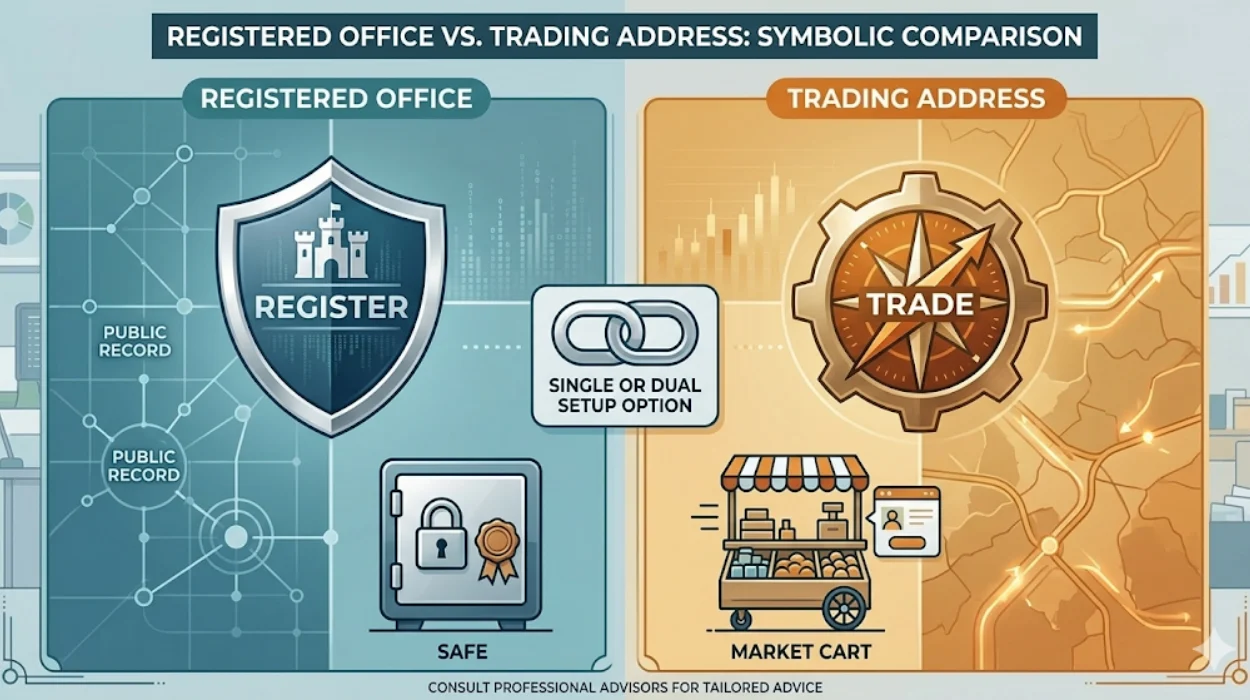
The registered office serves as the legal anchor for your limited company in the UK. It must be a physical address within the same jurisdiction as your incorporation England and Wales, Scotland, or Northern Ireland and it’s where Companies House and HMRC send statutory documents like annual returns or tax notices. This address appears on the public Companies House register, making it visible to anyone searching your company details, which raises privacy concerns for directors using home addresses.
Unlike operational locations, the registered office doesn’t need to be where work happens; it can be an accountant’s office, virtual office, or professional business address service. For instance, a tech startup might register its office at a London virtual provider while operating remotely, ensuring official mail reaches a secure, prestigious location. Failing to maintain an accurate registered office can lead to fines up to £5,000 or strike-off proceedings, underscoring its mandatory role in compliance.
Businesses often overlook how this setup impacts credibility. A central London registered office signals stability to investors and partners, even if your team works from co-working spaces elsewhere. Form My Company’s Business Address service offers a compliant solution, providing a professional registered office that safeguards privacy without operational disruption.
Defining the Trading Address Role
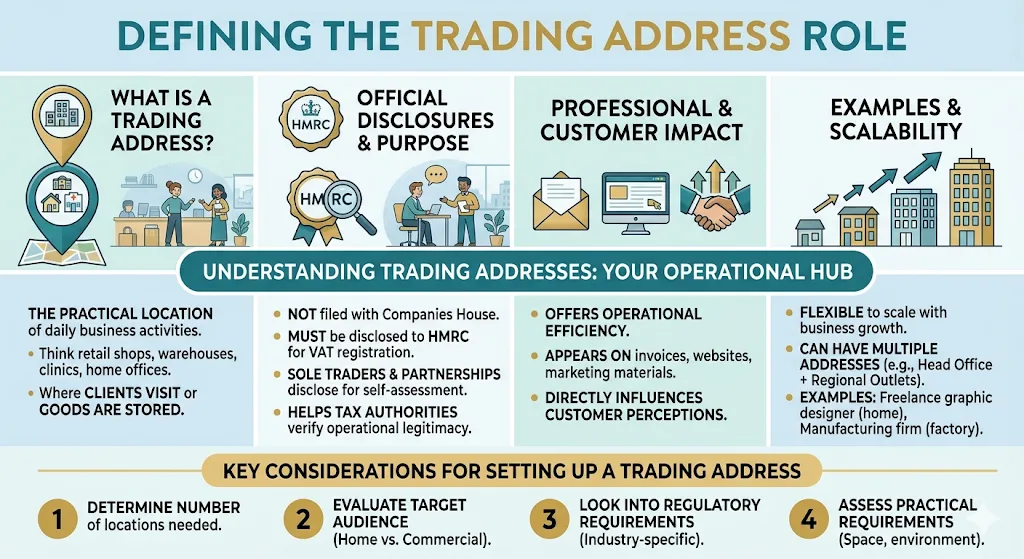
A trading address, by contrast, is the practical hub of your business activities think retail shops, warehouses, clinics, or home offices where clients visit or goods are stored. It’s not filed with Companies House but must be disclosed to HMRC for VAT registration or self-assessment if you’re a sole trader or partnership, helping tax authorities verify operational legitimacy. This address often appears on invoices, websites, and marketing materials, directly influencing customer perceptions.
For example, a freelance graphic designer might use their home as a trading address for client meetings, while a manufacturing firm lists its factory. Unlike the registered office, you can have multiple trading addresses if your business spans locations, such as a head office plus regional outlets. However, using a residential trading address risks blurring personal and professional boundaries, potentially deterring corporate clients who prefer established premises.
The flexibility here allows scalability; e-commerce sellers might start with a home trading address and upgrade to a commercial unit as orders grow. This distinction ensures operational efficiency without legal entanglements tied to public disclosure.
Key Differences at a Glance
To clarify the divide, consider these core contrasts in purpose, visibility, and requirements.
| Aspect | Registered Office | Trading Address |
|---|---|---|
| Legal Filing | Mandatory with Companies House | Not filed publicly; HMRC for tax/VAT |
| Public Visibility | Fully public on register | Private, used on business docs |
| Purpose | Official mail and compliance | Daily operations and client interactions |
| Location Rules | Same UK jurisdiction as incorporation | Any suitable operational site |
| Change Frequency | Updates via Companies House (24 hours) | Informal, notify HMRC if relevant |
These differences highlight why conflating them creates risks using a trading address as registered exposes operations to public scrutiny, while a mismatched registered office delays critical mail.
Legal Requirements and Compliance
UK law mandates a registered office for all limited companies from incorporation, as per the Companies Act 2006, ensuring authorities can contact directors reliably. It must accept mail during business hours and display your company name outside, though PO Boxes are prohibited. Trading addresses lack such formalities but require accuracy for HMRC compliance, especially if VAT-registered, where discrepancies can trigger audits.
Non-compliance with registered office updates incurs penalties, as seen in cases where delayed notices led to dissolved statuses. For trading addresses, sole traders report them on self-assessment forms, but limited companies only if operations differ significantly from the registered site. Learn more about shielding personal details in our guide, How to Keep Your Home Address Off the Companies House Register.
Both setups demand vigilance: annual confirmations for registered offices and periodic HMRC reviews for trading ones. Virtual solutions bridge gaps, offering compliant addresses without physical presence.
Privacy and Professionalism Impacts
Public registered offices expose director addresses if using homes, inviting unwanted scrutiny from competitors or mail theft. Trading addresses, kept private, protect operational details but may undermine professionalism if residential clients hesitate contacting suburban homes over city offices. A dual setup mitigates this: a prestigious registered office enhances brand image while a discreet trading address maintains focus.
Consider a consultancy firm; its Mayfair registered office impresses stakeholders, while a quiet suburban trading address suits client visits. This separation fosters trust and scalability, crucial for MOFU-stage businesses evaluating growth options.
When to Use Separate Addresses
Opt for separation when home-based operations risk privacy or image startups, e-commerce, or service firms benefit most. A single address suits micro-businesses with minimal client contact, but scaling demands distinction. For international expansion, keep the registered office UK-based while trading addresses adapt locally.
Hybrid models thrive: remote teams use virtual registered offices paired with co-working trading spaces. If privacy drives decisions, explore premium options like Buy a Prestigious London Business Address to Protect Privacy for elevated professionalism.
Operational Scenarios and Choices
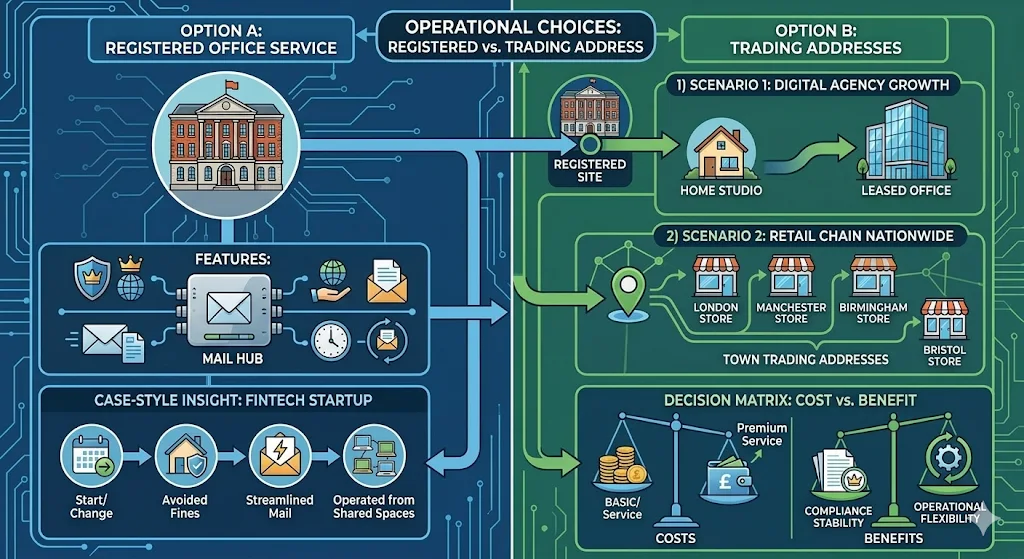
Imagine launching a digital agency: register at Form My Company’s Business Address for compliance, trading from a home studio initially. As clients grow, shift trading to a leased office without altering the registered site. A retail chain might centralize registration in London for prestige, with nationwide trading addresses for stores.
Case-style insight: A fintech startup avoided fines by switching from a home registered office to a virtual one, streamlining HMRC mail while trading from shared spaces. These choices align costs virtual registered offices start affordably against benefits like 24/7 mail handling and scan-to-email services.
Cost and Scalability Considerations
Registered offices via virtual providers cost £10-50 monthly, far below leases, scaling effortlessly as teams grow. Trading addresses vary: home-free, commercial leases £500+. Evaluate ROI professional addresses boost conversions 20-30% via perceived legitimacy.
Form My Company streamlines this, offering scalable Business Address plans that evolve with your needs.
Choosing Your Ideal Setup
Assess structure (limited vs. sole trader), privacy tolerance, and client expectations. Home setups work short-term; professional separations suit ambitions. Test via short-term virtual trials.
Form My Company provides tailored Business Address solutions, ensuring compliant, prestigious setups that protect privacy and elevate your operations.
What is a business address service from From My Company?
A business address service from From My Company provides a professional UK street address for company registration, mail handling, and business correspondence without needing a physical office. It supports registered office needs with Companies House while offering options like mail scanning and forwarding for operational use. This setup enhances credibility and protects personal privacy for UK businesses.
Can I use From My Company’s Business Address as my registered office?
Yes, From My Company’s Business Address can serve as your official registered office address with Companies House, meeting all legal requirements for UK limited companies. The service ensures mail is received and managed securely during business hours, with updates filed promptly to avoid compliance issues. It must be a physical UK address in the same jurisdiction as your incorporation.
What’s the difference between a registered office and a trading address using From My Company’s Business Address?
A registered office, which From My Company’s Business Address fulfills, is the public address filed with Companies House for legal documents, while a trading address is your operational location for customer interactions not publicly registered. Businesses often use the Business Address service for registration to maintain privacy and professionalism, keeping trading details separate for HMRC reporting. This separation balances compliance and operational flexibility.
Does From My Company’s Business Address protect my home address privacy?
From My Company’s Business Address keeps your home address off public records by providing a professional alternative for Companies House filings and official mail. Directors avoid personal exposure on the public register, reducing risks like unwanted contact or mail theft. It’s a compliant solution for sole traders, LLCs, and limited companies seeking privacy without sacrificing legitimacy.
How does mail handling work with From My Company’s Business Address service?
From My Company’s Business Address receives your mail at a secure location and offers options like forwarding, scanning to email, or collection by arrangement. All correspondence from HMRC, Companies House, or clients is managed professionally during standard hours, with your company name displayed as required. This ensures reliable access without daily office overheads.