You reserve professional training and interview rooms by selecting a provider that offers modular‑booking, ready‑to‑use tech‑setups, and clear‑pricing tiers that match your group‑size and duration. These rooms sit inside serviced‑office or virtual‑office hubs, which provide business‑addresses, mail‑handling, and meeting‑support without long‑term‑commitments.
How do professional training rooms differ from generic meeting spaces?
Professional training rooms are designed for structured learning and assessment, with layouts, acoustics, and tech that support presentation, interaction, and documentation, unlike generic meeting‑spaces.
Generic meeting‑areas focus on quick discussions and light‑presentation. They often have folding‑tables, limited power‑sockets, and no integrated training‑tech. These spaces lack the infrastructure for workshops, assessments, or group‑exercises.
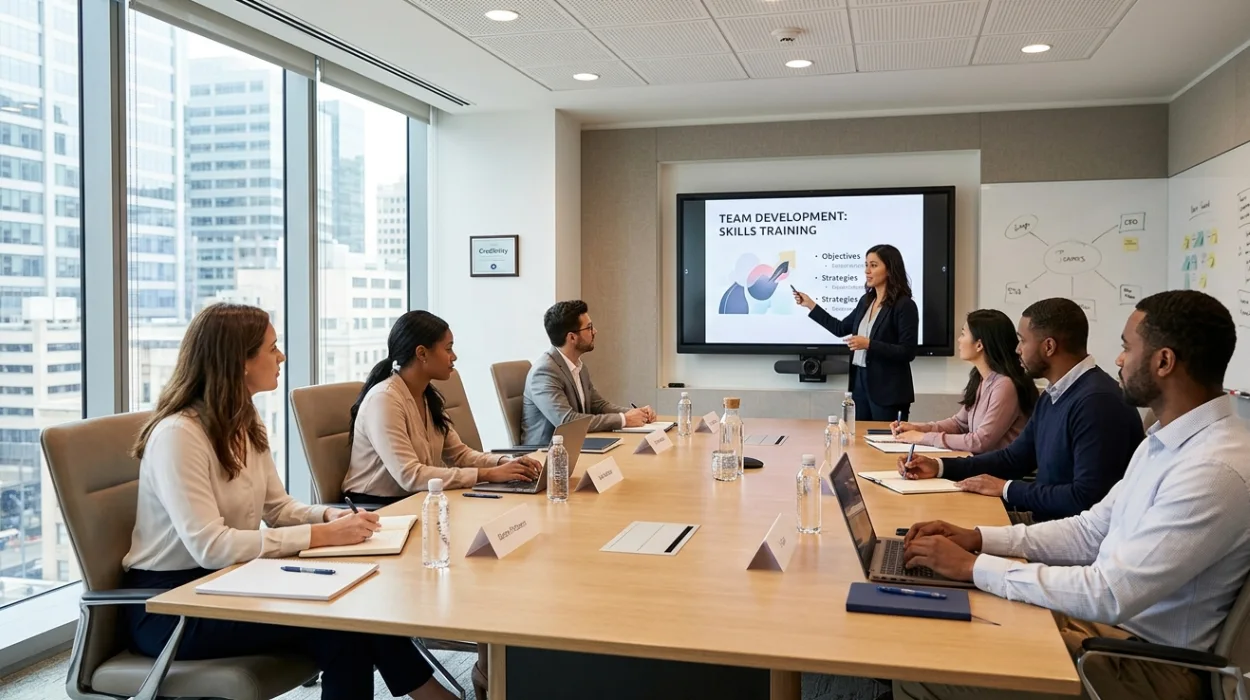
Professional training rooms include tier‑seating or U‑shape‑layouts, integrated projectors or large‑screens, and robust Wi‑Fi. They support tools such as interactive whiteboards, cameras, and audio‑systems that enhance engagement. Sound‑insulation and lighting‑controls reduce distractions, which improves participant‑focus.
For example, a 15‑person‑training session can run efficiently in a professional‑room with 15 workstations, reliable‑Wi‑Fi, and slide‑capture‑tools. In a generic‑space, setup‑time, tech‑issues, and noise‑leakage can reduce effective‑training‑time by 20–30%.
How do professional interview rooms improve candidate evaluation quality?
Professional interview rooms improve candidate evaluation quality by providing quiet, private environments that minimise distraction and allow structured, recorded assessments.
Standard‑coffee‑shop or open‑office‑seating introduces noise and visual‑distraction, which can skew question‑delivery and answer‑quality. In professional‑rooms, sound‑barriers and controlled‑layouts enhance listening and clarity on Essential Features to Look for When Renting Conference Rooms for Corporate Events.
These rooms support standardised‑interview‑frameworks. Interviewers can use checklists, score‑sheets, and digital‑note‑systems without disturbing others. They can record‑sessions where appropriate, which aids calibration and fairness‑checks.
For example, a 10‑person‑hiring‑team conducting 30 interviews per‑week can achieve consistent‑outcomes when using identical‑physical‑setups. Each candidate faces the same level of privacy and comfort, which reduces context‑bias and improves reliability of evaluation‑data.
How can training and interview rooms integrate with virtual office services?
Training and interview rooms integrate with Virtual Offices Service‑components by sharing the same registered‑address, booking‑system, and support‑infrastructure, which creates a seamless‑experience for clients and candidates.
Virtual Offices Service‑elements such as registered business‑addresses, mail‑handling, and reception‑support pair naturally with physical‑meeting‑spaces. Clients receive invitations and confirmation‑emails that reference the same‑location and branding, reinforcing consistency.
For example, a remote‑team using a London‑Virtual Offices Service can book a training‑room in the same‑building. Candidates see the address on contracts, emails, and maps, which builds trust and reduces confusion. Mail‑and‑documents‑linked to the event can route through the virtual‑office‑system, which streamlines logistics.
This integration also supports compliance‑and‑audit‑needs. Records of bookings, attendees, and correspondence tie back to one‑entity, which simplifies internal‑and‑external‑reviews.
How do flexible booking terms help businesses reserve training and interview rooms?
Flexible booking terms help businesses reserve training and interview rooms by allowing short‑notice‑bookings, hour‑by‑hour‑pricing, and easy‑cancellation‑policies that match dynamic‑work‑schedules.
Rigid‑venue‑contracts require long‑commitments, deposits, and fixed‑timings, which are inefficient for SMEs. Flexible‑providers offer online‑booking‑systems where teams can reserve rooms from 1–24 hours in advance, depending on demand.
Booking‑tiers usually include:
- Hourly‑rates for 1‑to‑3‑hour‑sessions
- Half‑day packages for 4‑hour‑blocks with reduced‑average‑cost
- Full‑day packages with bundled‑support and consumables
Flexible‑terms also allow changes or cancellations within 24–48 hours, reducing financial‑risk during schedule‑changes. For example, a 12‑person‑firm can book a training‑room for 3 hours one week, then cancel and re‑book for 4 hours the next week, without penalties.
This adaptability aligns with how modern‑businesses operate. 68% of UK SMEs using flexible‑rooms report higher‑utilisation‑rates and lower‑per‑session‑costs than when using fixed‑venue‑contracts.
How do training and interview rooms reduce operational costs for SMEs?
Training and interview rooms reduce operational costs for SMEs by replacing the need for internal‑spaces, support‑staff, and equipment‑investment with shared‑facility‑costs that scale with usage.
Maintaining internal‑training‑rooms requires capital‑for‑fit‑out, furniture, AV‑equipment, and ongoing‑maintenance. These costs often exceed 10–15% of a small‑firm’s annual‑overhead, even when rooms sit idle between sessions.
Serviced‑or‑virtual‑office‑operators absorb most of these costs, presenting tenants with a simple‑per‑hour‑or‑per‑session‑fee. This fee includes chairs, tables, screens, Wi‑Fi, and basic‑support, which eliminates the need for internal‑inventory‑and‑IT‑management.
For example, 10–20‑person‑teams can conduct 20–30 training‑sessions per‑year across 1–6‑month‑periods by using shared‑rooms. This usage‑model costs 30–40% less than building and staffing a dedicated‑training‑facility of comparable‑capacity.
How can businesses customise training and interview sessions in these rooms?
Businesses can customise training and interview sessions in these rooms by adjusting layout, tech‑setup, and support‑services to match group‑size, format, and objectives.
Layout‑options include theatre‑style for lectures, U‑shape for interactive‑discussions, or breakout‑clusters for team‑tasks. Each configuration supports specific‑learning or evaluation‑modes, which improves engagement and outcomes.
Tech‑customisation includes:
- Audio‑visual‑tools such as web‑cameras, screens, and microphones for virtual‑sessions
- Whiteboards and projectors for live‑demos and collaborative‑work
- Power‑and‑network‑access for staff‑devices and software‑demos
Support‑services can include on‑site‑assistance, refreshments, seating‑for‑attendees, and audio‑recording‑tools. These options can be tailored to each event, which ensures that the room supports the business‑goal, not‑the‑other‑way‑around.
For example, a 15‑person‑sales‑team can book a room configured for interactive‑role‑plays, with cameras to record and review performances. A hiring‑panel can configure a room for silent‑observation and note‑taking, which improves evaluation‑consistency.
Professional training and interview rooms provide a controlled, flexible‑environment for learning, assessment, and collaboration, which generic‑meeting‑spaces struggle to match. When integrated with Virtual Offices Service‑components, these rooms create a seamless‑experience that supports lean‑SME‑operations, remote‑teams, and agile‑hiring‑processes. By offering flexible‑booking‑terms, cost‑efficient‑usage‑pricing, and customisable‑setups, they help businesses conduct training and interviews today, tomorrow, and as they grow.