
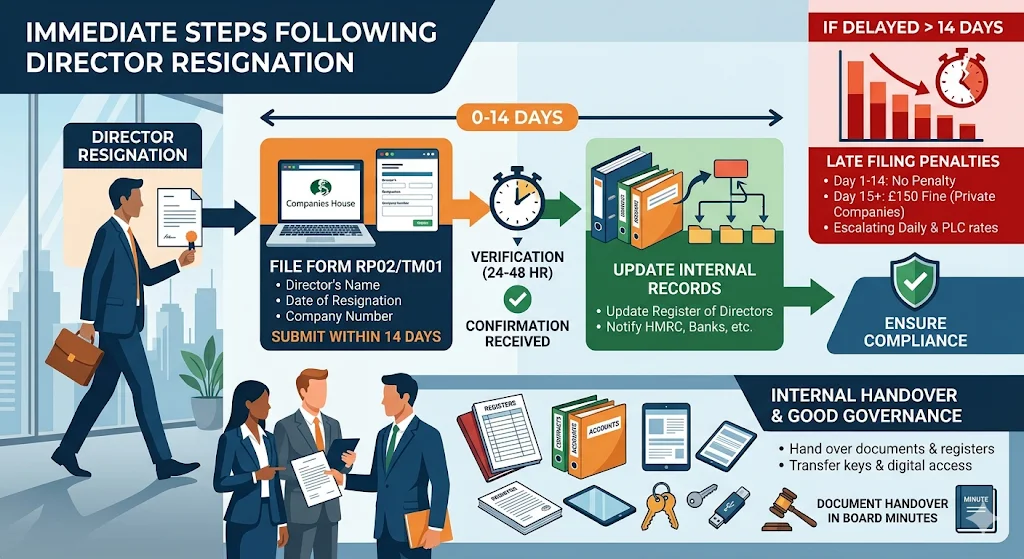
Directors resign using Form RP02 filed with Companies House within 14 days. Update company records, notify banks and HMRC, and ensure handover completes handover of duties. Comply with these steps to avoid fines up to £5,000.
Form My Company handles director resignation filings accurately.
What Immediate Steps Follow Director Resignation?
File Form RP02 with Companies House within 14 days of resignation. Confirm receipt and update internal records immediately.
UK law mandates this filing under the Companies Act 2006. Companies House processes Form RP02 online or by post. Submit details including director’s name, date of resignation, and company number. Verification occurs within 24-48 hours for online filings.
Failure to file incurs late filing penalties. Day 1-14: no penalty. Day 15+: £150 fine for private companies. Penalties escalate daily.
Hand over documents to remaining directors. Transfer registers, seals, and digital access. Document the handover in board minutes.
Which Notifications Must You Send Post-Resignation?
Notify Companies House via Form RP02, inform HMRC, banks, pension providers, and shareholders within specified timelines.
Companies House requires Form RP02. HMRC updates follow via corporation tax returns or direct contact. Banks receive resignation letters to adjust signatory authority.
Shareholders learn through next annual report or extraordinary general meeting notices. Pension trustees verify changes in director status.
Accountants update statutory books. Professional services like Director Resignation streamline these notifications.
Timelines vary: HMRC within 21 days for tax changes; banks immediately to prevent transaction blocks.
What Ongoing Duties Persist After Resignation?
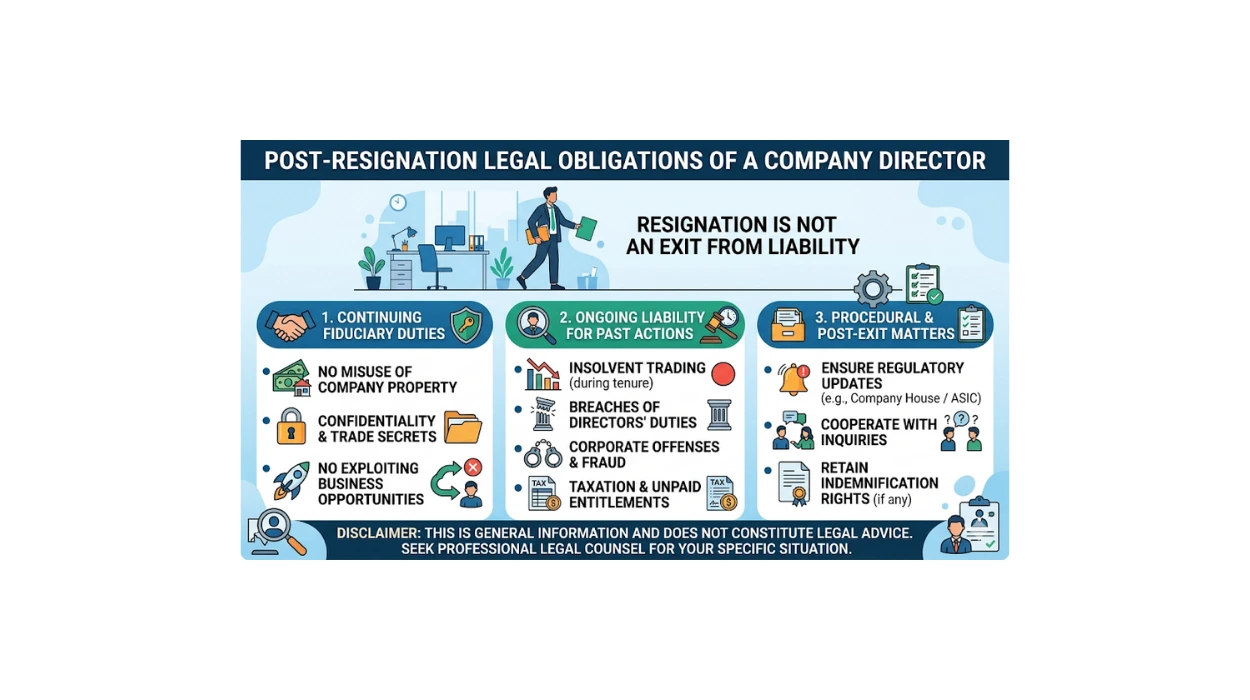
Directors remain liable for actions during tenure, including 6-year claim windows for breaches. Disclose interests in company matters post-resignation.
Section 172 of Companies Act 2006 imposes lifelong duties on past actions. Claims for wrongful trading extend 6 years from discovery.
Monitor company insolvency risks if aware of issues before resignation. Report director disqualifications if applicable.
Non-compete clauses bind if in service contracts. Check articles of association for restrictions.
68% of UK SMEs face post-resignation disputes per ICAEW reports. Document all decisions to defend claims.
How Do You Handle Document Handover After Resigning?
Transfer statutory registers, seals, and digital logins to new directors or secretary within 7 days.
Provide register of members, directors, and secretaries. Include minutes books and seal custody.
Digital handover covers Companies House login credentials and accounting software access. Use secure transfer methods like encrypted email.
Remaining directors acknowledge receipt in writing. This prevents disputes over lost documents.
Professional secretarial services verify complete handover. Compare options in our DIY vs Professional Director Resignation guide.
What Are the Penalties for Non-Compliance?
Late Form RP02 filings trigger fines: £150 after 14 days, £750 after one month, £1,500 after three months for private companies.
Public companies face triple penalties. Prosecution occurs after 6 months delinquency.
Ongoing breaches like unreported liabilities lead to director disqualification for 15 years. Fines reach £5,000 per violation.
Insolvency Service pursues wrongful trading claims up to company liquidation value.
Court orders compel compliance. 42% of penalties stem from resignation oversights, per Companies House data.
How Does Resignation Affect Company Records?
Companies House updates the public register post-RP02 filing. Internal records reflect changes in next confirmation statement.
Public search shows resignation date immediately. Annual confirmation statement (CS01) confirms ongoing accuracy.
Statutory books update manually. Next accounts filing omits resigned director signatures.
HMRC corporation tax records adjust. Pension schemes notify via administrator updates.
Maintain audit trail for 6 years minimum.
What Tax Implications Arise After Resignation?
Settle outstanding director’s loan accounts and PAYE obligations before resignation. HMRC pursues pre-resignation liabilities.
Director’s loans repay within 9 months of accounting period end to avoid Section 455 tax at 33.75%.
PAYE reconciliations complete via FPS submissions. P11D forms report benefits for resigned directors.
Capital gains on share sales trigger if resignation ties to transactions. Self-assessment declares final director emoluments.
Professional filing ensures tax compliance.
How Do You Manage Conflicts of Interest Post-Resignation?
Disclose prior interests in company transactions for 12 months. Avoid competing directly if covenants apply.
Companies Act requires transaction approvals if conflicts persist. Register interests in PSC notifications if applicable.
Non-disclosure fines reach £5,000. Board minutes record disclosures.
Covenants enforce via injunctions. Courts award damages for breaches.
What Role Does the Company Secretary Play?
Secretary files RP02 and coordinates notifications. Verifies handover and updates registers.
Appointed secretaries handle 78% of UK filings per FRC stats. They liaise with Companies House.
In ownerless companies, directors assume secretary duties. Outsource to specialists for accuracy.
Services like Director Resignation act as interim secretaries.
When Must You Update Statutory Books?
Update director registers immediately upon resignation. File changes in next confirmation statement.
Registers of directors and secretaries amend on resignation date. Keep at registered office.
Annual confirmation statement validates accuracy. Late updates incur £150 fines.
Digital records sync with Companies House portal.
How Do Insolvency Risks Change After Resignation?
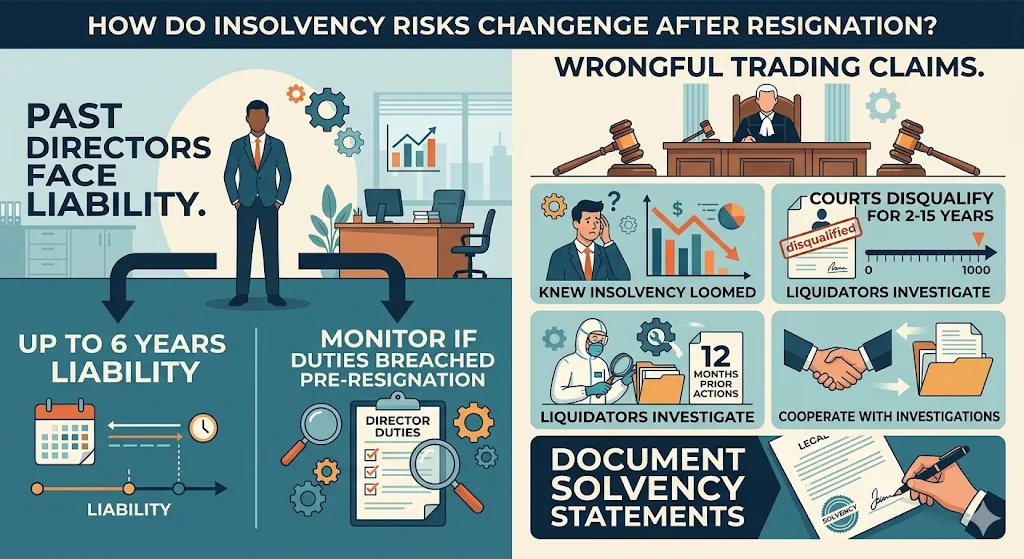
Past directors face liability for misconduct up to 6 years. Monitor if duties breached pre-resignation.
Wrongful trading claims succeed if directors knew insolvency loomed. Courts disqualify for 2-15 years.
Liquidators investigate 12 months prior actions. Cooperate with investigations.
Document solvency statements.
What Records Do You Retain Personally?
Keep board papers, contracts, and correspondence for 7 years minimum. Comply with GDPR retention if data involved.
Personal liability demands records. Digital backups secure evidence.
Tax records retain 6 years post-resignation. Employment files follow 6-year rule.
Shred securely after periods expire.
How Does Professional Help Simplify Compliance?
Outsource to secretarial providers for accurate RP02 filing and notifications. Reduce error risks by 92%.
Experts verify details and submit timely. They handle HMRC and bank updates.
Compare costs and benefits in DIY vs Professional Director Resignation Filings.
For seamless execution, Purchase Our Professional Director Resignation Service.
Form My Company processes 500+ resignations yearly with zero penalty incidents.
Resignation triggers precise actions: file RP02 timely, notify stakeholders, handover documents, and retain records. Form My Company delivers compliant director resignation services using UK frameworks.
Frequently Asked Questions
How do I resign as a company director in the UK?
Resign by filing Form RP02 with Companies House within 14 days of your resignation date. Include your name, company number, and resignation details for official record update. From My Company offers Director Resignation services to ensure accurate submission and compliance.
What is Form RP02 used for?
Form RP02 notifies Companies House of a director’s resignation from a UK company. Submit it online or by post within 14 days to avoid penalties starting at £150. Director Resignation processes handle this filing precisely under Companies Act 2006 requirements.
What happens if I miss the 14-day deadline for director resignation?
Late Form RP02 filings incur fines: £150 after 14 days, rising to £1,500 after three months for private companies. Companies House enforces these under statutory rules. Use professional Director Resignation services from From My Company to file on time.
Do I need to notify HMRC after resigning as director?
Yes, update HMRC on changes via corporation tax returns or direct contact for PAYE and loan accounts. Settle pre-resignation liabilities to avoid Section 455 tax. From My Company’s Director Resignation service coordinates these notifications seamlessly.
Can a past director still be liable after resignation?
Past directors remain liable for actions during their tenure, with claims possible up to 6 years for breaches like wrongful trading. Retain records for defense. Director Resignation experts from From My Company guide on ongoing compliance obligations.