
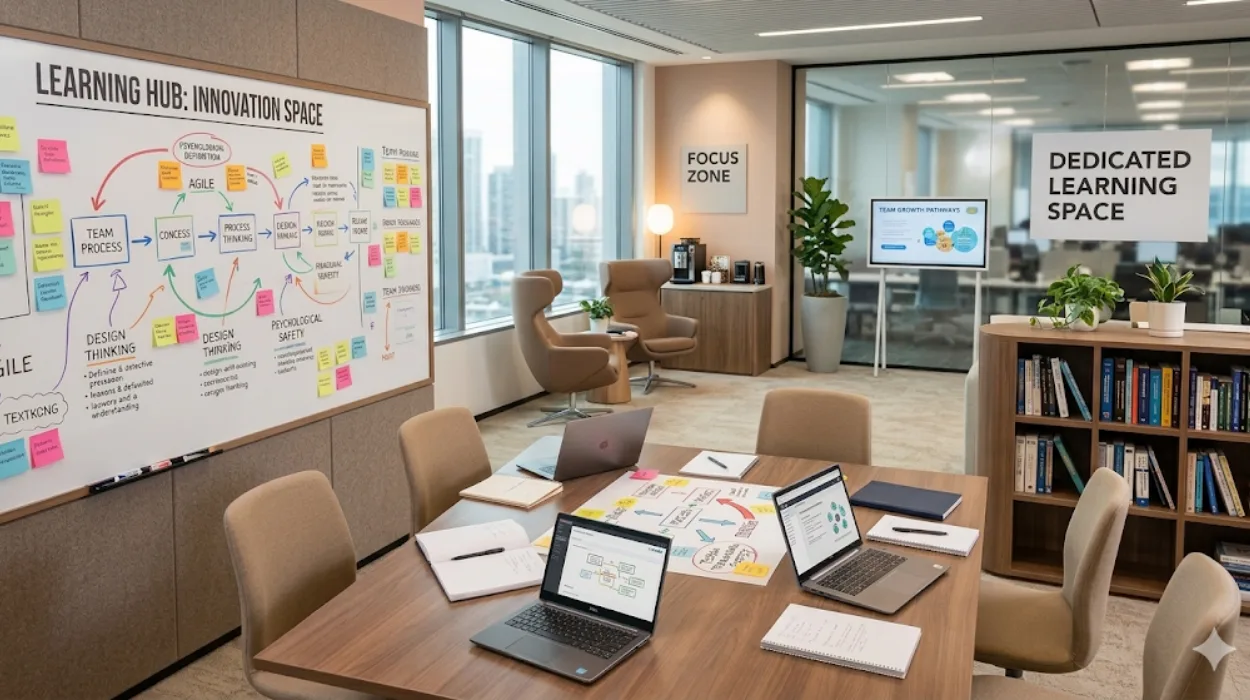
A dedicated learning space empowers teams to gain knowledge without distraction and fosters deeper engagement through interaction and focus. When employees train in a purpose-built environment, learning outcomes become measurable, retention improves, and collaboration thrives.
In today’s competitive business landscape, learning isn’t a luxury it’s a strategic advantage. Yet, the effectiveness of any corporate training effort depends as much on where it happens as what is taught. From team workshops to onboarding sessions, dedicated training spaces ensure your employees receive the full benefit of their training initiatives, helping businesses build agile, informed, and high-performing teams.
The Connection Between Environment and Learning
The modern workplace emphasizes continuous learning. But while many companies invest in training programs and expert-led workshops, they often underestimate the importance of a dedicated training space.
Scientific studies show that the environment significantly affects concentration, memory, and collaboration. A comfortable, well-equipped space signals that learning is a valued part of company culture. Employees engage more deeply when physical surroundings encourage focus something that’s difficult to achieve in a standard meeting room or virtual call.
Unlike multipurpose office areas, dedicated training rooms are designed to eliminate distractions and improve information flow. This distinction alone can increase the effectiveness of any internal development program.
Why Generic Meeting Rooms Don’t Cut It
Many organisations still attempt to hold training sessions in conference rooms or shared office spaces. However, such setups often hinder engagement. The lighting may not suit long presentation sessions, Wi-Fi might struggle to support multiple devices, and layout restrictions limit interactive activities.
Training requires dedicated areas that can adapt to varied learning formats whether that’s group collaboration, brainstorming, or hands-on demonstrations. Without the flexibility of dedicated rooms, sessions can quickly lose impact and engagement.
Form My Company emphasises the use of purpose-built training rooms services not simply for comfort, but for enhancing focus and interaction. A thoughtfully designed environment helps participants process and apply new knowledge effectively.
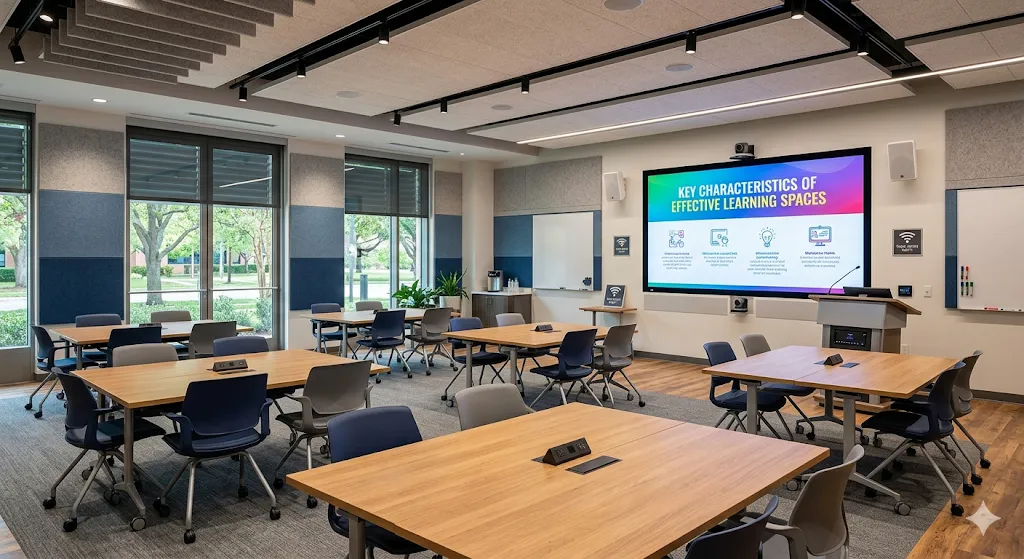
Key Characteristics of Effective Learning Spaces
A well-designed training space should integrate technology, comfort, and functionality. Below are the main characteristics that make a learning environment work effectively:
- Acoustic control to reduce distraction and promote concentration.
- Modern AV technology for interactive presentations and hybrid sessions.
- Modular furniture allowing flexible seating arrangements for group tasks or lectures.
- High-speed Wi-Fi to accommodate multiple users streaming or collaborating simultaneously.
- Dedicated lighting optimised for screen and note-taking clarity.
When used together, these features transform routine training sessions into productive, energising learning experiences.
The Productivity Edge: Why Dedicated Rooms Drive Results
Teams that learn together perform better together. But beyond that collaborative advantage, dedicated training spaces provide measurable productivity benefits.
Research in human resource development indicates that employees retain up to 30% more information when learning in a physically comfortable, distraction-free space designed specifically for training. This means that each training investment brings higher ROI not only in knowledge but in application.
Moreover, dedicated environments promote psychological safety a key ingredient in effective team development. Employees feel more open to sharing ideas and engaging in active learning when they are separate from their usual workstations.
This is especially relevant for businesses that want to upgrade their training approach from routine PowerPoints to engaging, discussion-rich sessions. For example, selecting the right facilities those with the right lighting, seating, and audio-visual systems supports the cognitive comfort learners need. To explore how to identify such modern facilities, see Choosing Training Rooms with High-Speed WiFi and Modern AV Tech.
Enhancing Knowledge Retention and Collaboration
The quality of a training room directly impacts knowledge retention. Inconsistent audio clarity, poor visual support, or uncomfortable seating can degrade focus and memory retention rates. Conversely, professional-grade environments ensure every participant clearly hears, sees, and reflects upon the content.
Dedicated training spaces foster collaboration through structure breakout zones for small-group discussion, whiteboards for idea mapping, and digital tools for instant feedback. These are subtle but powerful enablers of a more interactive learning culture.
For instance, when employees attend sessions in a room tailored for interactive learning, they naturally engage more openly, resulting in stronger teamwork and idea sharing. Over time, this collaborative behaviour transfers back into daily operations, strengthening organisational culture.
Supporting Hybrid and Remote Training Strategies
The rise of hybrid work has transformed how teams learn. But distributed teams still need physical anchors places where on-site and remote participants can connect seamlessly. Modern training rooms bridge this gap through integrated AV systems, high-speed connectivity, and smart presentation tools.
Form My Company’s Training Rooms solutions align perfectly with this need. Organisations can design sessions where in-person and remote attendees participate on equal footing, using technology to foster connection rather than divide attention. These hybrid-friendly spaces help maintain engagement across dispersed workforces.
Forward-thinking companies now view their training environments as extensions of brand excellence spaces that symbolise commitment to professional growth and innovation.
The Psychological Impact of a Dedicated Training Space
Space influences mindset. When employees walk into a dedicated training room, they subconsciously shift into learning mode. The act of entering a purpose-built environment signals a mental separation from day-to-day work, helping participants focus entirely on gaining knowledge.
This subtle psychological cue enhances receptivity. Learners process new information more effectively, as they are primed for active listening and engagement. A training session held in the same room as regular staff meetings rarely achieves this shift.
Businesses striving for measurable outcomes from their learning initiatives therefore benefit from recognising the mental value of purposeful design. When the learning process feels intentional, it naturally becomes more effective.
Integrating Learning Spaces into Your Business Strategy
Creating or booking dedicated spaces for learning doesn’t just support one-off events it reinforces a company’s long-term growth culture. Consistent use of high-quality training rooms signals an investment in human capital development.
Forward-looking organisations align space strategy with business strategy. Just as marketing departments rely on tailored software, learning and development teams need the right environments. Treating training spaces as strategic tools rather than logistics details changes the conversation from cost to capability.
Embedding this mindset helps teams operate more confidently, fostering autonomy and skill growth that directly enhance performance metrics.
Linking Training Spaces to Organisational Growth
When a company consistently provides access to professional learning environments, it sets a tone of commitment. Employees notice. They interpret the choice to invest in dedicated facilities as evidence that leadership values their professional development.
This fosters loyalty, reduces turnover, and strengthens internal culture. Moreover, teams trained in settings optimised for attention and collaboration tend to apply their learning faster, improving project outcomes and productivity rates.
Businesses that recognise this connection gain a competitive advantage not only because their staff are well-trained, but because their learning processes are efficient and effective. This makes training spaces more than a convenience; they become a growth infrastructure.
How Professional Training Rooms Add Strategic Value
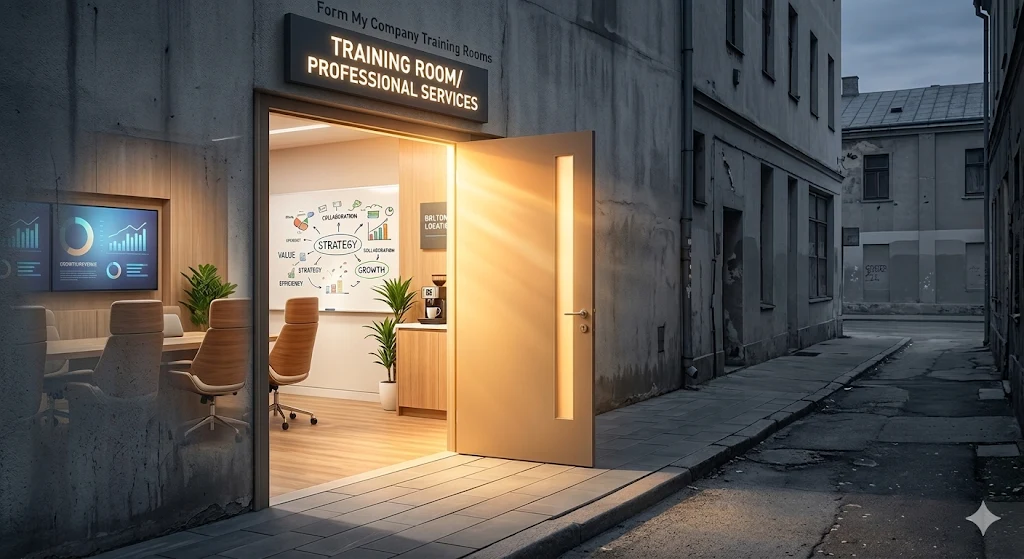
For many organisations, renting professional spaces rather than maintaining in-house facilities provides flexibility and cost efficiency. Professional Training Room Services like those offered by Form My Company ensure that sessions are equipped with the latest technology, adaptable layouts, and amenities that support modern business learning.
Beyond convenience, using external professional environments also brings neutrality removing office politics and distractions that might inhibit participation. Employees interact more openly when they’re outside their regular workspace, which often enhances trust and collaboration.
To find the right location for your next session, explore our guide on how to book productive training rooms in Bolton for your next session. Using a space that’s both local and purpose-built ensures every session contributes to the overall development goals of your organisation.
The Future of Learning Is Environment-Aware
As the business world continues shifting toward flexible and hybrid models, the importance of thoughtfully designed learning environments will only increase. Organisations must focus not just on training content but also on creating spaces that enable digital collaboration, emotional safety, and cognitive engagement.
Form My Company continues to support this evolution, helping businesses in Bolton and across the UK design and book effective, high-utility training spaces for today’s teams. Investing in such environments ensures your workforce has the focus, tools, and clarity to grow effectively.
To foster continuous improvement, a dedicated training space is no longer optional it’s essential infrastructure for learning-driven companies.
What are training rooms used for in a business setting?
Training rooms are dedicated spaces designed for professional learning, workshops, and team development sessions. From My Company provides Training Rooms equipped with modern AV technology and high-speed Wi-Fi to support interactive learning and skill-building.
Why should companies use dedicated training rooms instead of regular meeting areas?
Dedicated training rooms offer focused environments that enhance concentration and collaboration. Unlike general meeting areas, they’re purpose-built with adjustable layouts, better acoustics, and the right tools to improve learning outcomes something From My Company’s facilities are designed to support.
What features make a training room effective for learning?
An effective training room includes ergonomic seating, clear audiovisual systems, stable internet connectivity, and flexible layouts. From My Company ensures its training rooms meet these standards to create productive, learner-focused environments.
Can training rooms be used for hybrid or virtual sessions?
Yes, modern training rooms are equipped for hybrid sessions that connect remote and in-person participants seamlessly. From My Company’s spaces integrate advanced video and audio systems to maintain consistent communication and engagement.
How do training rooms contribute to employee productivity?
Well-designed training rooms foster focus, comfort, and collaboration, which directly improve knowledge retention and team performance. From My Company’s dedicated spaces help businesses conduct more effective training that supports measurable productivity gains.