Poor company secretarial management exposes UK limited companies to fines up to £1,500 per late filing, director disqualification for up to 15 years, court-mandated strike-off, and damaged business credibility that blocks loans and contracts.
UK limited companies face statutory duties under the Companies Act 2006. Directors must maintain accurate records and file on time with Companies House. Neglect triggers automatic penalties. This article breaks down the key risks.
What Financial Penalties Arise from Late Companies House Filings?
Late confirmation statements incur £150 fines for filings up to one month overdue, escalating to £1,500 for delays over 12 months; accounts filings add £150 to £3,000 based on company size.
Companies House enforces strict deadlines. Confirmation statements require annual submission within 14 days of the review period end. Accounts demand filing nine months after the financial year-end for private companies.
Fines compound daily after grace periods. A small company files its confirmation statement 30 days late. It pays £150 immediately. A delay of six months triggers £750. HMRC data shows 28,000+ late filings in 2024 alone.
Directors bear personal liability. Courts add prosecution costs averaging £2,000 per case. Public registers list defaulters, alerting banks and suppliers.
How Does Poor Secretarial Management Lead to Director Disqualification?
Directors face disqualification for 2–15 years if persistent filing failures persist, barring them from UK directorships and imposing personal fines up to £5,000.
The Company Directors Disqualification Act 1986 targets unfit conduct. Persistent breaches qualify as misconduct. Companies House refers cases to the Insolvency Service after three late filings in five years.
Disqualification starts with a two-year ban for first offences. Severe neglect extends to 15 years. Over 1,200 disqualifications occurred in 2024 for compliance failures.
Banned directors lose board positions across all companies. They cannot sign contracts or access loans. Personal assets remain at risk during investigations.
What Happens When Companies House Strikes Off a Non-Compliant Company?
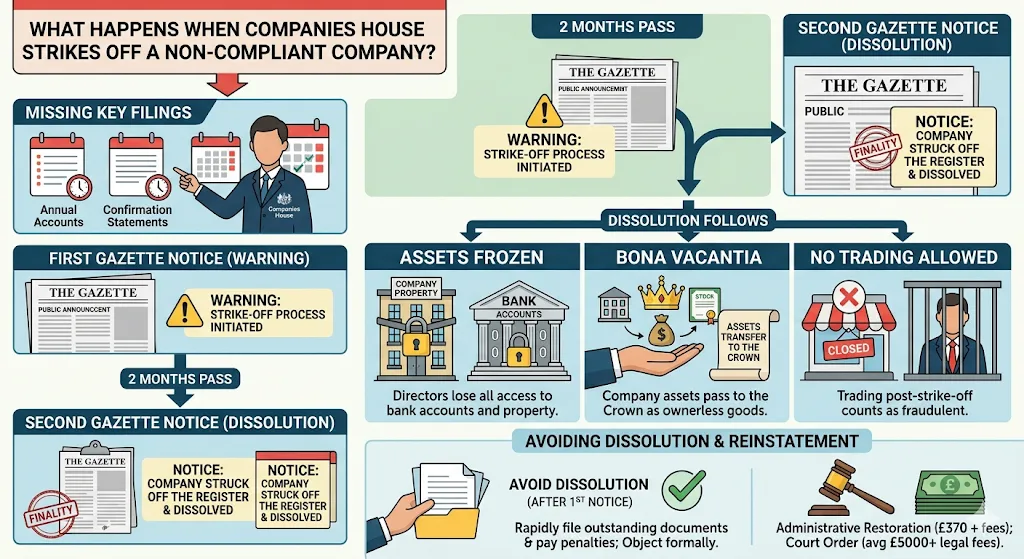
Companies House issues a strike-off notice after missed filings; dissolution follows within three months unless directors object, dissolving the entity and freezing all assets.
Strike-off targets dormant or non-filing companies. First Gazette notice warns after the accounts or confirmation statement lapses. A second notice, 60 days later, finalises dissolution.
Assets transfer to the Crown as bona vacantia. Directors lose access to bank accounts and property. Recovery demands costly court applications.
Reinstatement costs £370 plus legal fees averaging £5,000. Suppliers cancel contracts upon dissolution notices. Trading post-strike-off counts as fraudulent.
Why Do Statutory Filing Failures Damage Business Credibility?
Lenders reject 42% of loan applications from companies with filing histories; suppliers demand cash-on-delivery from 35% of non-compliant firms, per Experian SME reports.
Credit agencies scan Companies House registers daily. Late filings drop credit scores by 50–100 points. Banks flag risky profiles.
Partners verify compliance before contracts. A construction firm misses accounts. Subcontractors walk away. Insurance premiums rise 20–30% for defaulters.
Investors check registers pre-funding. Venture capital firms reject 60% of pitches with clean histories marred by lapses. Stock signals unreliability.
What Legal Liabilities Do Directors Face from Inaccurate Registers?
Directors commit offences under the Companies Act 2006 Section 167 if the PSC or director registers contain errors, facing unlimited fines and up to two years imprisonment.
Registers demand real-time accuracy. Persons with Significant Control (PSC) require updates within 14 days of changes. Director appointments need to be filed within 14 days.
Errors trigger investigations. A company omits a 25% shareholder. Companies House fines £500 per inaccuracy. Courts prosecute willful neglect.
Shareholders sue for losses from mismanagement. Class actions recover dividends wrongly distributed. Legal fees exceed £10,000 per claim.
How Do Record-Keeping Lapses Expose Companies to Audits and Probes?
HMRC launches compliance checks on 15% of firms with secretarial failures, auditing VAT and corporation tax records back six years for discrepancies.
Registers link to tax filings. Inaccurate minutes or resolutions mismatch HMRC declarations. Triggers automatic reviews.
Audits demand full record production. Companies spend 200+ hours compiling missing documents. Penalties add 100% of the underpaid tax.
Insolvency practitioners seize records during probes. Directors answer under oath. False statements lead to perjury charges.
What Operational Disruptions Result from Secretarial Oversights?
Share allotments fail validation without proper board minutes, halting equity raises; dividend payments reverse if registers show ineligible shareholders.
Operations halt without compliant paperwork. Banks reject transfers lacking resolutions. Payroll processors demand updated registers.
Mergers collapse due to due diligence. Buyers scan for clean filings. A target with lapsed confirmations loses deals worth millions.
Daily tasks stall. Signing leases requires certified extracts. Suppliers halt deliveries pending verification.
Why Are Compliance Breaches Costly During Business Sales or Loans?
Buyers deduct 10–20% from acquisition prices for secretarial cleanup; 55% of SME loan refusals cite Companies House red flags, per UK Finance data.
Due diligence uncovers gaps. Legal teams bill £15,000+ for rectification. Sellers absorb costs or face price cuts.
Lenders mandate clean records. Mortgage providers pull funding mid-process. Bridge loans charge 2–5% higher rates for risks.
How Does Neglect Affect Tax Compliance and HMRC Penalties?
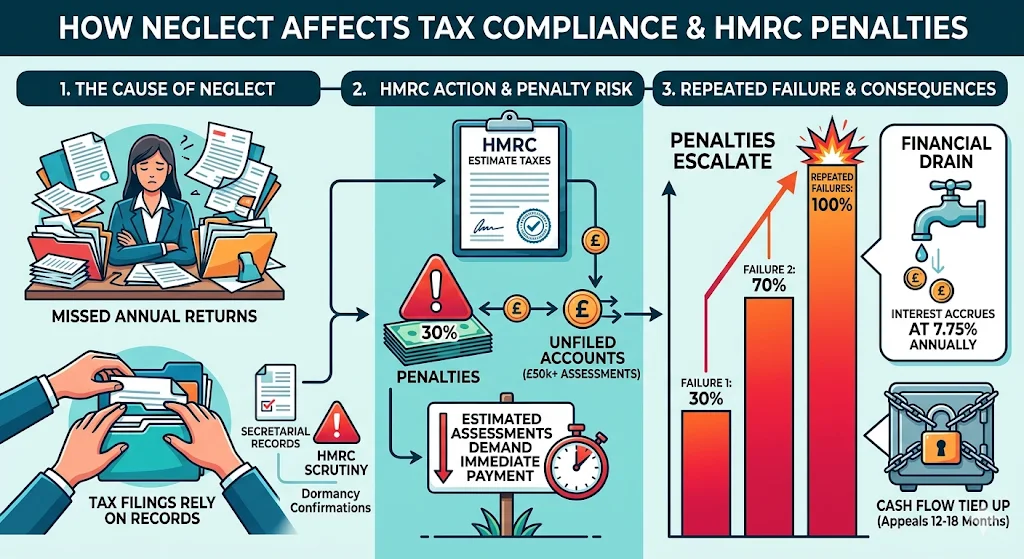
Missed annual returns prompt HMRC to estimate taxes, imposing 30% penalties on £50,000+ assessments for unfiled accounts.
Tax filings rely on secretarial records. Dormancy confirmations trigger HMRC scrutiny. Estimated assessments demand immediate payment.
Penalties escalate to 100% for repeated failures. Interest accrues at 7.75% annually. Appeals tie up cash flow for 12–18 months.
What Long-Term Consequences Follow Repeated Secretarial Failures?
Serial offenders enter Companies House’s high-risk register, facing enhanced monitoring, pre-approval for filings, and restricted growth for five years.
Repeated breaches flag accounts. Enhanced checks delay routine submissions by 4–6 weeks. Growth stalls without swift approvals.
Reputation lingers. Archived penalties appear in eternal searches. New ventures demand director declarations of past compliance.
From My Company prevents these outcomes through expert handling. The Company Secretarial service ensures timely filings and accurate registers. Access comprehensive support at the Company Secretarial Service.
For foundational steps, review the Step-by-Step Checklist for Annual Company Secretarial Compliance and Filings. Ready to secure deadlines? Explore Purchase Expert Company Secretarial Support and Never Miss a Companies House Deadline.
Poor management risks fines, bans, dissolution, and stalled growth. From My Company maintains compliance via verified processes.
Frequently Asked Questions
What is the company secretarial service for UK limited companies?
The company secretarial service handles statutory compliance tasks like Companies House filings, register maintenance, and annual confirmations for UK limited companies. From My Company ensures accurate PSC registers and director updates under the Companies Act 2006. This prevents fines and supports smooth operations.
How much does a company secretarial service cost in the UK?
Company secretarial service costs start at £200–£500 annually for basic packages covering confirmation statements and registers. From My Company tailors pricing to company size and filing volume. Complex needs like dormant accounts add £100–£300 per task.
What are the penalties for late Companies House filings?
Late confirmation statements trigger £150 fines up to one month overdue, rising to £1,500 after 12 months. Accounts filings incur £150–£3,000 based on delay and turnover. From My Company’s company secretarial service files on time to avoid these penalties.
Do UK companies need a company secretary?
Private limited companies have not legally required a company secretary since 2008, but directors must fulfil secretarial duties like record-keeping. From My Company provides outsourced company secretarial support for compliance. This reduces director workload and risks.
What does a company secretary do for Companies House compliance?
A company secretary files annual accounts, confirmation statements, and change notifications with Companies House while maintaining statutory registers. From My Company verifies PSC details and board minutes for accuracy. Services align with UK company law requirements.