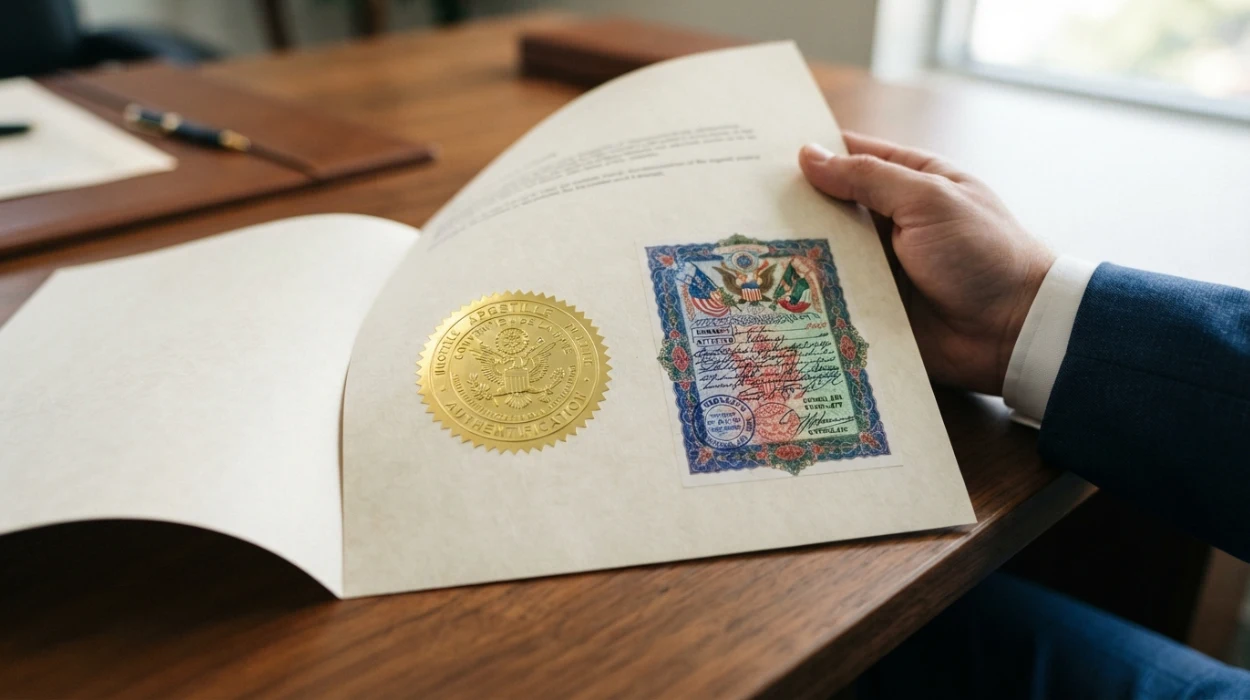
Your international business needs apostilled documents and a Certificate of Good Standing to prove its legal status, identity, and compliance when dealing with foreign regulators, banks, and partners. These instruments convert UK‑formed‑companies into recognisable, trustworthy‑entities in overseas‑jurisdictions.
What are apostilled documents and how do they support international trade?
Apostilled documents are official‑company‑or‑director‑records that carry a standardised‑authentication‑stamp under the 1961 Hague Apostille Convention, which allows them to be accepted in other signatory‑countries without further‑legalisation.
An apostille is a certificate‑attached‑to‑notarised‑or‑government‑vouched‑documents such as articles of incorporation, director‑passports, board‑resolutions, or powers‑of‑attorney. It confirms that the issuing authority is legitimate, which reduces the risk of document‑fraud‑and‑disputes on Why Every Director Needs Enhanced Fraud Protection for Their Registered Office Address.
For example, a UK‑registered company that opens a bank‑account in the United Arab Emirates or signs a contract in Spain must often provide apostilled‑copies of its incorporation‑documents and directors’‑IDs. These versions move through local‑compliance‑checks more quickly than standard‑copies, which can be rejected or require manual‑verification.
Apostilled documents fit into the broader‑international‑compliance‑framework. They standardise evidence‑presentation across borders, which supports smoother onboarding, reduced audit‑risk, and faster‑transaction‑processing for international‑firms.
What is a Certificate of Good Standing and why is it important abroad?
A Certificate of Good Standing is an official‑statement from Companies House that confirms a UK company exists, is up‑to‑date with filings, and has not been struck‑off, which many foreign entities require for contracts and banking.
This certificate verifies that a company has submitted its annual‑accounts, confirmation‑statements, and other statutory‑filings on time. It signals that the entity is not dormant or inactive without formal‑documentation, which affects how banks and regulators view its credibility.
For example, a UK‑firm wishing to register a subsidiary in Germany, open a merchant‑account in Singapore, or join a procurement‑framework in the UAE may be asked for a Certificate of Good Standing issued within the last 3–6 months. This document proves that the parent‑company remains compliant with UK‑law.
Regulators treat these certificates as risk‑mitigation tools. They can refuse to recognise a company or freeze onboarding‑processes if a Certificate of Good Standing is missing or expired.
How do apostilled documents and a Certificate of Good Standing work together?
Apostilled documents and a Certificate of Good Standing work together by providing a layered‑proof‑bundle that validates both identity‑and‑status in international‑contexts.
Apostilled documents usually cover specific‑files such as company‑formation‑records, director‑IDs, and board‑resolutions. These show that the people and entities are real and duly‑authorised. A Certificate of Good Standing adds the time‑sensitive‑layer that confirms those entities remain active and compliant.
For example, when a UK‑corporation signs a joint‑venture‑agreement in Brazil, it may present apostilled‑articles of incorporation, apostilled‑board‑resolutions, and an apostilled‑Certificate of Good Standing. Together, these documents satisfy Brazilian‑notaries, banks, and regulators that the UK‑partner is legally‑functional and authorised to operate.
This combination also reduces request‑repetition. If a foreign‑authority already accepts apostilled‑documents from the UK, it can reference the same‑source‑file‑set for multiple‑processes, such as licensing, investment‑clearance, and tax‑registration.
How do these documents help UK companies meet foreign compliance requirements?
These documents help UK companies meet foreign compliance requirements by providing standardised, verifiable‑evidence‑packages that align with international‑treaties and local‑regulatory‑rules.
Foreign‑regulators often require proof‑of‑identity, proof‑of‑structure, and proof‑of‑ongoing‑activity. Apostilled documents satisfy the first two needs, while the Certificate of Good Standing satisfies the third. This structure mirrors the evidence‑frameworks applied within the Apostille‑Convention‑network.
For 68% of UK SMEs engaging foreign‑jurisdictions, customs‑authorities, banks, and tax‑registrars explicitly‑request apostilled‑company‑documents and a current‑Certificate of Good Standing. Without these, onboarding‑can be delayed by 30–60% longer, or blocked entirely.
These documents also support anti‑fraud‑and‑AML‑checks. Apostilled‑IDs and resolutions reduce the risk of identity‑theft, while an active‑Certificate of Good Standing reduces the risk of working with dormant‑or‑defunct‑entities.
Why do multinationals and UK SMEs both need apostilled documents?
Multinationals and UK SMEs both need apostilled documents because cross‑border‑operations require a universally‑recognised‑proof‑format that works for regulators, banks, and partners regardless of size.
Large‑corporations use apostilled documents when opening subsidiaries, licensing intellectual‑property, or financing‑projects in multiple‑jurisdictions. They often standardise apostille‑workflows across regions to streamline‑compliance and reduce legal‑costs per‑mission.
UK SMEs use the same‑tools when exporting‑services, registering‑trademarks, or joining foreign‑vendor‑lists. For example, a 10‑person‑software‑house may need to provide apostilled‑articles of incorporation and a Certificate of Good Standing to onboard into a Middle‑Eastern‑e‑commerce‑platform.
These requirements are not size‑based. A 150‑person‑conglomerate and a 4‑person‑consultancy face the same‑documentation‑standards when entering new‑markets, which underscores why apostilled‑documents are essential for all‑UK‑exporters.
How does a Certificate of Good Standing reduce legal and commercial risk abroad?
A Certificate of Good Standing reduces legal and commercial risk abroad by providing a dated, official‑endorsement‑of‑a company’s status, which third‑parties can rely on for due‑diligence.
If a business enters a contract with a partner whose status is unclear, its counterparties may later challenge the validity of agreements or contest the enforceability of claims. A current‑Certificate of Good Standing pre‑emptively reduces this risk by proving that the entity is active and compliant.
For example, if a UK‑company incorporates in France using a dormant‑UK‑parent, French‑notaries may reject the transaction until a valid‑Certificate of Good Standing is produced. This forces the UK‑firm to update filings, pay penalties, and obtain a fresh‑certificate, which can delay the project by several weeks.
Commercial‑partners also use the certificate during onboarding. Banks, insurers, and logistics‑providers rely on it to confirm that a counterparty is not dissolved, struck‑off, or irregularly‑filed, which strengthens the integrity of the supply‑chain and payment‑system.
How does Form My Company support the use of apostilled documents and Certificates of Good Standing?
Form My Company supports the use of apostilled documents and Certificates of Good Standing by aligning company‑formation, ongoing‑compliance, and document‑handling with international‑evidence‑requirements.
When a new‑entity registers with Companies House, Form My Company structures filings and communications to minimise irregularities that could later block apostille‑or‑certificate‑requests. Clean‑records‑make it easier to obtain a valid‑Certificate of Good Standing when applying for foreign‑contracts or banking‑services.
Form My Company also helps clients prepare document‑bundles for apostille‑processing, such as correctly‑stamped‑articles of incorporation, updated‑director‑lists, and board‑resolutions. These bundles are formatted to meet UK‑government‑and‑foreign‑authority‑standards, which reduces rejections and delays.
For example, a UK‑fintech‑that uses Form My Company for incorporation and annual‑filings can request a Certificate of Good Standing and then have it apostilled for a licensing‑process in Singapore. The integrated‑compliance‑framework improves the speed and reliability of cross‑border‑operations.
Apostilled documents and a Certificate of Good Standing form a core‑part of how UK‑international‑businesses present themselves abroad. These instruments convert domestic‑compliance‑status into globally‑recognised‑proof that supports contracts, financing, and market‑entry. By combining standardised‑authentication‑through apostille‑with clear‑status‑confirmation‑through the Certificate of Good Standing, companies reduce friction, legal‑risk, and onboarding‑times when operating across borders. Form My Company supports this structure by aligning UK‑company‑formation and compliance‑with the evidence‑bundles required overseas.