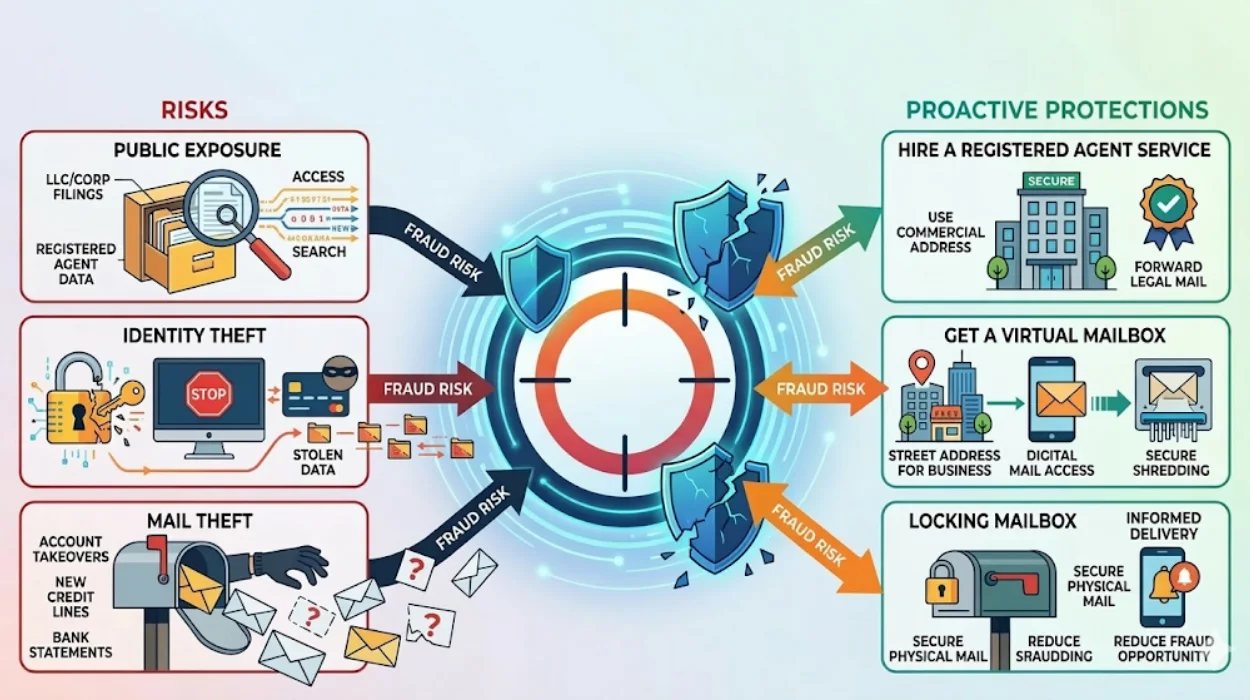
Using your home address for business registration makes personal details publicly accessible, exposing you to identity theft, unwanted visitors, and fraudsters impersonating your company. This vulnerability arises because business records are often public, turning your private residence into a target for malicious actors.
Privacy Exposure in Public Records
When you register a business with your home address, it becomes part of public Companies House records in the UK, searchable by anyone online. This disclosure links your personal life directly to your business, inviting spam mail, cold callers, and worse stalkers or disgruntled individuals who can pinpoint your exact location. For instance, a simple lookup reveals not just the address but also associates it with your company name, enabling harassers to show up unannounced or use the information for doxxing campaigns common in today’s digital landscape.
Beyond immediate intrusions, this exposure lingers indefinitely. Even if you later change the address, historical data persists on data aggregators and third-party sites, amplifying long-term risks. Homeowners often overlook how standard policies exclude business-related liabilities, leaving families unprotected if incidents spill over from commercial activities conducted at home.
Identity Theft and Business Impersonation
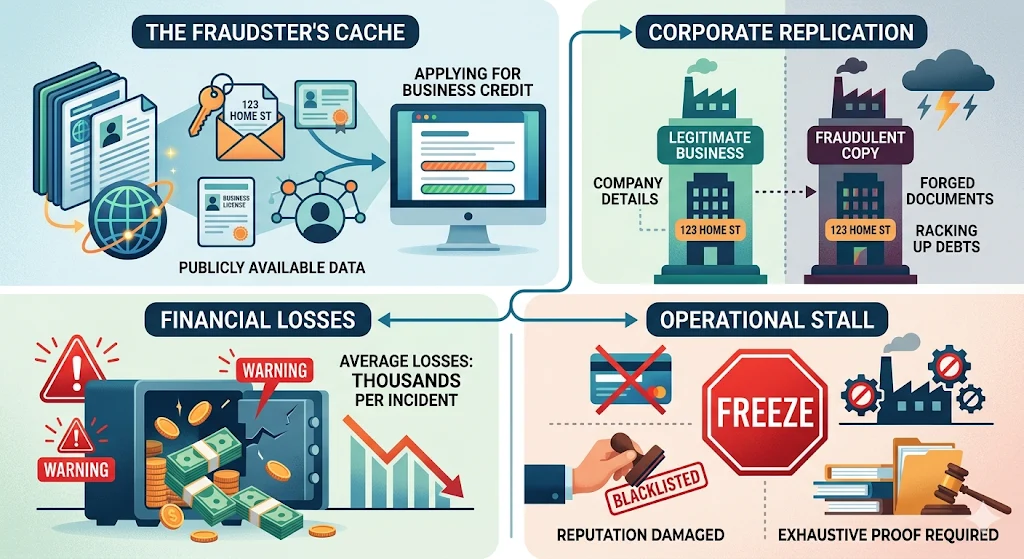
Fraudsters thrive on publicly available home addresses tied to businesses, using them to perpetrate identity theft on a corporate scale. Criminals can replicate your company details, complete with your home address, to apply for credit lines, open accounts, or order goods in your business’s name, racking up debts you must later dispute. A real-world parallel involves scammers harvesting addresses from public registries to forge documents, leading to financial losses that average thousands per incident for small businesses.
This form of business identity theft damages reputations swiftly. Suppliers or banks, seeing fraudulent activity linked to your legitimate address, may freeze accounts or blacklist your company, stalling operations. Without separation between personal and professional spheres, resolving these issues requires exhaustive proof of innocence, often involving legal fees and credit repair efforts.
Financial Fraud Vulnerabilities
Home addresses in business filings create fertile ground for financial scams, as fraudsters exploit the legitimacy of registered details. They might pose as your business to secure loans or trade credit, with your address serving as the verifiable anchor that convinces lenders of authenticity. Victims frequently discover unauthorized charges or depleted business accounts only after significant harm, compounded by the challenge of severing the fraud from their personal credit history.
Moreover, mail fraud becomes rampant when business correspondence floods a residential mailbox. Overloaded deliveries mix personal and commercial items, making it easier for thieves to intercept checks, statements, or packages containing sensitive data like VAT numbers or supplier invoices. This not only risks direct theft but also feeds into broader schemes where stolen mail provides piecemeal information for sophisticated phishing or account takeovers.
Physical Security Threats
Listing a home address publicly elevates physical risks, from opportunistic burglaries to targeted harassment. Unwanted visitors angry customers mistaking home for office, aggressive salespeople, or even criminals casing the property can disrupt daily life and compromise family safety. Insurers note that homeowner policies cap business-related claims at minimal amounts, like £2,000 for equipment, offering no shield against liability if a visitor injures themselves on your premises during a business-related visit.
Zoning conflicts exacerbate these dangers. Local councils may flag residential addresses for commercial use, leading to fines or forced closures, while neighbors report nuisances from increased traffic or signage. In one illustrative case, a home-based entrepreneur faced repeated vandalism after business disputes became public knowledge via the address link, highlighting how fraud risks intertwine with everyday security breaches.
Professional Credibility and Growth Barriers
Beyond direct fraud, using a home address undermines business professionalism, signaling to clients and partners a lack of established operations. Prospects researching your company may hesitate, associating residential listings with startups too fledgling for serious engagements. This perception hampers growth, as enterprises seeking suppliers or collaborators prefer credible, detached addresses that convey stability.
Operational inefficiencies compound the issue. Managing business mail at home blurs boundaries, leading to overlooked deadlines or lost opportunities amid household chaos. As your venture scales, updating scattered records from HMRC filings to domain registrations becomes a bureaucratic nightmare, prone to errors that fraudsters exploit.

Legal and Insurance Gaps
Legally, home addresses in business setups invite piercing the corporate veil, where courts disregard limited liability protections if personal and business assets mingle too closely. Lawsuits targeting your company could then reach personal savings or property, especially if records show operations run from home. Fraud protection becomes illusory without proper separation, as insurers deny claims deeming incidents “business activities” outside policy scopes.
Tax implications add complexity. While home office deductions offer short-term savings, audits scrutinize blurred expenses, potentially disallowing claims and triggering penalties. Fraud risks intensify during these reviews, as exposed personal data aids scammers in fabricating complementary schemes like fake refunds.
Mitigating Risks with Professional Solutions
Business owners can counter these threats by adopting a registered office address, which keeps home details private while fulfilling legal requirements. This simple shift acts as your first line of fraud defense, filtering mail and shielding personal security from public scrutiny. For deeper protection, explore fraud protection services from Form My Company, designed to monitor and block suspicious activities tied to your business identity.
Delve further into defensive strategies with our guide on how a registered office address acts as your first fraud defense.
Those ready to implement robust safeguards should consider securing your business with Form My Company’s address and fraud protection plan.
Form My Company specializes in Fraud Protection services that provide virtual barriers against these vulnerabilities, ensuring compliance and peace of mind. By leveraging professional addresses and monitoring tools, entrepreneurs maintain separation, professionalism, and security in an era of rising cyber and physical threats.
What is fraud protection for businesses?
Fraud protection for businesses involves monitoring and preventive measures to detect unauthorized activities like identity theft or fake transactions linked to your company. Services from Form My Company scan public records and business filings for suspicious patterns, alerting you to potential threats early. This helps maintain financial security and business continuity without constant manual oversight.
Why do UK companies need fraud protection?
UK companies face rising fraud risks from public Companies House records exposing director details and addresses to scammers. Fraud Protection from Form My Company acts as a safeguard by providing real-time alerts and verification tools against impersonation or data misuse. It ensures compliance while protecting assets in a digital-first business environment.
How does using a home address increase fraud risk?
Registering a business with a home address makes personal details publicly searchable, enabling fraudsters to impersonate your company or steal identities. Form My Company’s Fraud Protection includes address shielding and monitoring to separate personal and business data. This reduces vulnerabilities like mail theft or unauthorized credit applications.
What are common types of business fraud to protect against?
Common business fraud includes identity theft, invoice scams, and phishing attacks exploiting public business data. Fraud Protection services from Form My Company use automated checks on registries and transactions to flag anomalies quickly. Proactive defence minimizes losses and simplifies recovery through documented evidence.
How can Form My Company help prevent company fraud?
Form My Company offers Fraud Protection that combines registered address services with ongoing surveillance of business records for irregularities. It provides tools for secure mail handling and fraud alerts tailored to UK regulations. Businesses gain peace of mind knowing their operations remain protected from evolving threats.