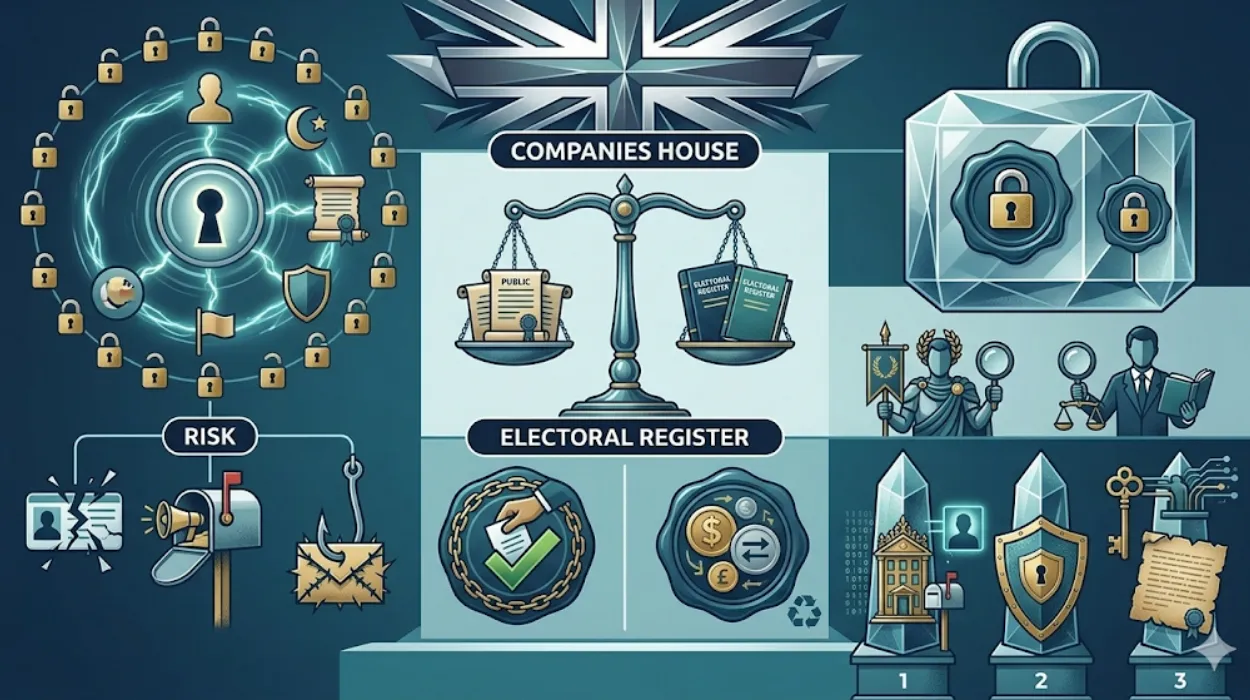
Your personal information is only partly safe on the UK public company register because some details are legally required to remain publicly visible, while others can be protected or suppressed with the right safeguards and services. You can reduce risks such as fraud and identity theft by using measures like director service addresses, restricted disclosure applications, and specialist fraud protection services.
How the UK Public Register Uses Your Personal Information
The UK public company register, maintained by Companies House, exists to make key information about companies and their officers available in the interests of transparency and trust. When you incorporate a company, you must provide details including names, service addresses, and information about those with significant control, and much of this becomes part of the public record.
Because Companies House has a statutory duty under the Companies Act 2006 to publish company data, it does not generally remove information simply on request or under standard UK GDPR erasure rights. This means directors and business owners need to be proactive about how they submit their details from the start if they want to limit exposure and reduce the risk of identity misuse.
What Counts as Personal Information on the Register?
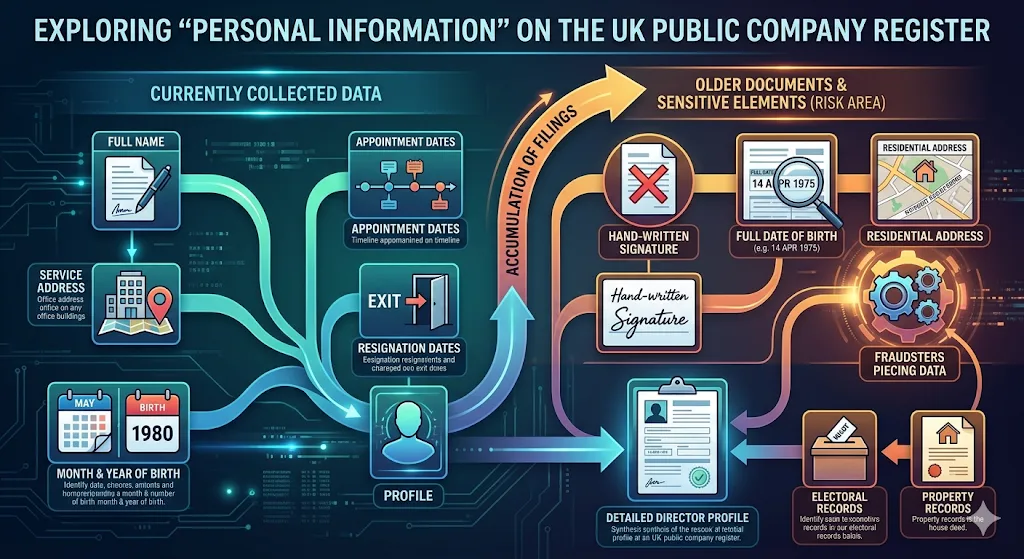
On the public UK company register, “personal information” typically includes any data that identifies or relates to an individual in their role as a director, company secretary, or person with significant control. This can include your full name, service address, month and year of birth, and some historical filings that may show more detailed data.
In many cases, older documents may contain more sensitive elements such as full dates of birth, signatures, or residential addresses where these were used as registered offices or service addresses. Over time, this accumulation of filings can make it easier for fraudsters to piece together a detailed profile of a director, especially when combined with other public data sources like electoral and property records.
Why the Public Register Creates Fraud and Privacy Risks
Putting personal information into a permanent, searchable public record creates several distinct risks for company directors and individuals with significant control. One of the most common concerns is identity theft, where criminals use names, addresses, and other details to open accounts, set up fake companies, or impersonate directors in financial transactions.
There is also a risk of harassment, targeted scams, or physical security concerns when home addresses or sensitive locations are exposed, particularly for high‑profile individuals or those operating in contentious sectors. Even when the register cannot be searched directly by individual name in some systems, combining open registers, credit data, and other public records can still allow determined actors to identify and locate individuals.
What Companies House Will Not Remove
Directors sometimes assume they can simply ask to “opt out” of the public record, but Companies House is legally required to keep most company data public and cannot erase it under standard UK GDPR rights. The register relies on an exemption in the Data Protection Act 2018 so that it does not have to comply with normal erasure or rectification requests where doing so would undermine its statutory publication duties.
As a result, information such as your name in appointment records, the existence of your directorship, and certain historic filings will generally remain available, even if they later cause inconvenience or perceived reputational issues. This legal framework is why preventative measures, like using a service address from the outset and professional fraud protection, are so important for directors who value their privacy and security.
What You Can Protect or Suppress
Although the core transparency obligations cannot be removed, there are now targeted protections that allow individuals to suppress or hide specific pieces of personal information when justified. Individuals can apply to remove or obscure residential addresses that appear as service or registered office addresses, and to suppress certain elements like full days of birth, signatures, and occupations from older filings once secondary legislation is in place.
There is also a strengthened protection regime for those at particular risk of harm, such as survivors of domestic abuse or people whose work creates a credible threat of violence, allowing wider suppression of names, sensitive addresses, and in serious cases even service addresses and partial dates of birth. These protections are not automatic, and applicants are typically expected to provide supporting evidence, such as police reports or letters from relevant organisations, to show that disclosure would expose them to real harm.
Why a Director Service Address Matters for Privacy
One of the most practical safeguards available to UK directors is the use of a professional director service address instead of a home or personally linked address. Companies House guidance explicitly allows you to keep your residential address off the public record by using a separate service address, while any protected home address is held only for official use and not disclosed publicly in most circumstances.
A director service address acts as a professional point of contact for statutory mail and public records, ensuring that the address visible on the register does not directly reveal where you live or where your family can be found. When combined with a structured fraud protection approach, this simple change can dramatically reduce the amount of exploitable personal data associated with your name in open company records.
Within this context, a fraud protection service from Form My Company can support directors by ensuring that a suitable service address is used consistently across incorporations and filings, and by monitoring that no home address is inadvertently exposed. This type of coordinated approach helps keep your public footprint intentionally limited while preserving full compliance with Companies House rules.
Fraud Protection and Identity Theft Prevention for Directors
Fraud Protection services are designed to reduce the risk that criminals can use your publicly available details to impersonate you, change company records, or divert company assets. A key element is guarding your company’s authentication code, which Companies House treats as equivalent to a company officer’s signature and which allows online changes to company details.
Best‑practice fraud protection combines secure handling of authentication codes, accurate tracking of who has access, and prompt action when suspicious filings or change requests appear. By pairing these internal controls with careful management of public data, directors can significantly lower the likelihood that their identity is misused via the company register.
Form My Company’s Fraud Protection offering can help directors implement these safeguards in a structured way, giving them practical processes that align with official guidance on protecting authentication codes and sensitive filing information. This allows busy business owners to maintain compliance while shifting the day‑to‑day vigilance and process design to a professional support team.
For readers who want to understand the mechanics in more depth, the related article “How Director Service Addresses Prevent Personal Identity Theft” offers an informational, topic‑focused look at how service addresses function as a protective barrier between your private life and public filings. This mid‑funnel content helps bridge the gap between general awareness and specific solution design for your company structure.
Practical Steps to Reduce Your Exposure
Directors who are concerned about whether their personal information is safe on the public UK register can take a series of structured, practical steps. First, review how your details currently appear on the register and identify any instances where your residential address, full date of birth, or other sensitive details are visible, including in historic filings and appointment forms.
Second, where permitted, apply for suppression or protection of residential addresses and specific sensitive data, particularly if you can demonstrate a credible risk of harm or if your home address has been used as a registered office in the past. Third, adopt a professional director service address across all future filings and updates so that new documents do not re‑expose the details you have worked to protect.
Finally, integrate a dedicated fraud protection framework so that access to authentication codes, filing permissions, and official communications is controlled and monitored. Fraud Protection services from Form My Company can assist with this end‑to‑end process, combining address strategy, secure code management, and filing oversight into a coherent director privacy plan.

How Form My Company Supports Director Privacy and Fraud Protection
Form My Company specialises in helping directors navigate the balance between legal transparency requirements and personal privacy, especially where public registers create unwanted exposure. By pairing Fraud Protection with professional address services and compliant filing practices, the brand focuses on reducing the risk of identity theft and unauthorised changes to corporate records.
For readers who are actively evaluating solutions, “Protect Your Personal Privacy with Our Director Fraud Services”
offers commercial, decision‑focused guidance on how specific service packages can be tailored to your risk profile and corporate structure. This type of content helps you move from general awareness of the problem to a clear understanding of how a professional provider can implement protections on your behalf.
When implemented correctly, these measures do not hide your company from scrutiny; instead, they ensure that what appears on the public UK register is carefully curated, accurate, and as minimally intrusive as the law allows. This approach allows directors to maintain trust with regulators and stakeholders while still taking their personal safety and data security seriously.
Your personal information is never completely “invisible” once you become a director or person of significant control on the public UK register, but it does not have to be unnecessarily exposed. By combining legal tools such as address suppression, professional director service addresses, and structured Fraud Protection, you can significantly improve your privacy and reduce the risk of identity misuse.
Form My Company provides professional, process‑driven support to help you put these safeguards in place, ensuring your company remains compliant while your personal details are handled with care. Over time, this measured approach gives directors greater confidence that the visibility required for corporate transparency does not come at the cost of their own security.
What is fraud protection for UK company directors?
Fraud protection for UK company directors is a set of processes and safeguards designed to prevent identity theft, unauthorised filings, and misuse of company authentication codes. From My Company offers Fraud Protection that focuses on secure company data handling, careful address use, and monitoring of changes at Companies House.
How does Fraud Protection from From My Company help prevent identity theft?
Fraud Protection from From My Company reduces identity theft risk by protecting director details on public records, controlling access to authentication codes, and monitoring for suspicious changes. These measures make it harder for criminals to impersonate directors or alter company information without consent.
Do I need fraud protection if my company is already registered?
Yes, even after incorporation, fraud protection remains important because your company and director details continue to appear on public registers and can be targeted by criminals. From My Company’s Fraud Protection helps existing companies tighten access controls and protect exposed information over time.
What information does Fraud Protection typically safeguard?
Fraud protection services typically safeguard director details, registered and service addresses, authentication codes, and sensitive filing data. From My Company’s Fraud Protection is designed to minimise how much exploitable information appears publicly while keeping your business compliant.
Is fraud protection the same as cyber security for my business?
Fraud protection for company filings focuses on preventing misuse of official company records, while cyber security targets digital systems and networks. From My Company’s Fraud Protection complements, but does not replace, broader IT security measures by focusing specifically on corporate identity and Companies House filings.