Failing to file dormant company accounts triggers automatic late filing penalties, Companies House compliance issues, and possible strike-off action. Repeated non-filing also weakens a company’s legal standing and can expose directors to avoidable administrative problems.
What happens when dormant accounts are not filed?
Companies House treats non-filing as a compliance failure, even for dormant entities. Penalties start immediately after the deadline, and repeated defaults can lead to escalation, strike-off procedures, and a permanently damaged filing record.
Dormant company accounts still have a legal filing requirement in the UK. A company remains on the register until it is dissolved or struck off. Dormant status does not remove the obligation to submit accounts to Companies House.
The filing deadline depends on the company’s accounting reference date. If the deadline passes without submission, Companies House issues an automatic late filing penalty. The penalty amount increases with the delay. For private limited companies, the fine starts at £150 and rises to £1,500 for very late filing.
Non-filing also creates a public record of poor compliance. That record is visible on the company’s filing history. Lenders, investors, and service providers often review that history before accepting work or extending credit.
For companies that remain inactive, this creates an avoidable problem. The filing is simple, but the consequences are not. Businesses that want to maintain dormant status often use File Accounts for Dormant Companies to keep filings accurate and on time.
Why do dormant companies still have filing duties?
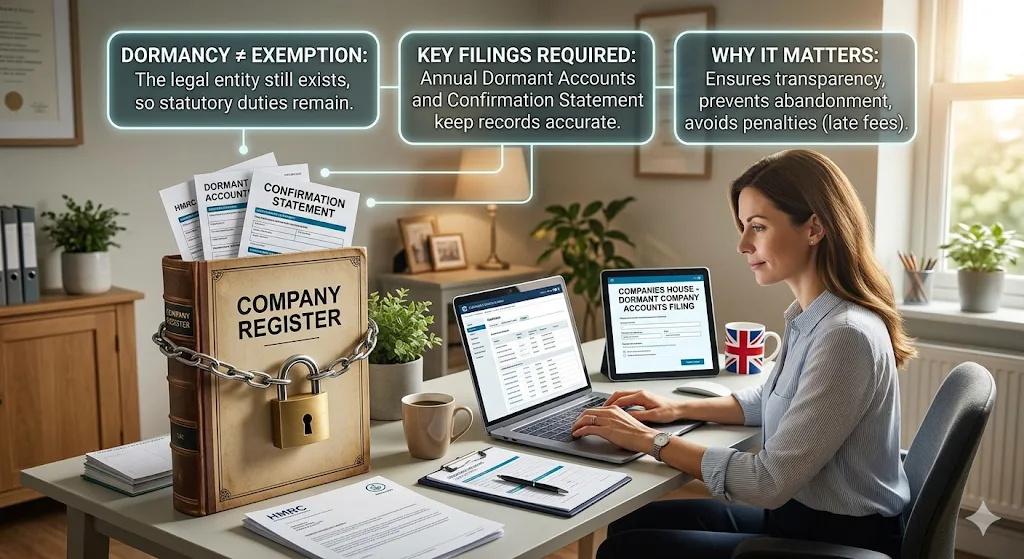
Dormant companies remain registered legal entities, so Companies House still expects annual confirmation of their status through accounts and related filings. Dormancy removes trading activity, not statutory compliance obligations.
A dormant company is a company with no significant accounting transactions during the financial year. That definition does not cancel the filing duty. It only changes the type of accounts submitted.
Companies House uses dormant accounts to confirm that the company has stayed inactive. HMRC also expects tax-related compliance to match the dormant position. If the company changes its activity, the filing position changes too.
This rule protects the register. It helps authorities distinguish between active companies and entities that remain on file only for future use or group structure purposes. It also stops dormant companies from being left unmanaged for years.
The compliance point is simple. A company that remains registered must file. A company that fails to file becomes visible as non-compliant, even if it has no business activity.
What penalties apply for late filing?
Late filing triggers fixed penalties that increase with delay. The longer the accounts remain outstanding, the higher the fine, and the penalty applies even where the company is dormant and inactive.
The penalty structure is set by filing delay. For private companies, the standard late filing fines are:
- File up to 1 month late, £150.
- File 1 to 3 months late, £375.
- File 3 to 6 months late, £750.
- File more than 6 months late, £1,500.
Public companies face higher fines. The penalty range starts at £750 and rises to £7,500 for the longest delays.
These amounts matter because dormant companies often stay unnoticed until a deadline has already passed. Once the overdue notice arrives, the penalty clock is already active. Filing the accounts late does not remove the fine.
Repeated late filing can also lead to harsher treatment in future periods. Companies House keeps the compliance record. That record affects how the company is viewed across the register.
If the company has a director or agent handling filings, delay usually comes from missed deadlines, poor monitoring, or failed access to the submission system. That is why many businesses review
Why Expert Help is Necessary for Navigating Complex Companies House
WebFiling Systems before the deadline becomes urgent.
Can Companies House strike off a dormant company?
Yes. Companies House can begin strike-off action if a dormant company repeatedly fails to comply. Strike-off removes the entity from the register and can create legal and administrative complications.
Strike-off is one of the most serious outcomes of non-filing. It usually begins after ongoing failure to meet filing obligations or respond to compliance correspondence. Companies House can issue warning notices before removal.
For dormant companies, a strike-off may seem harmless at first. That view is misleading. Once a company is struck off, its legal existence ends. Any remaining assets pass to the Crown as bona vacantia unless restored.
If the company still holds bank balances, intellectual property, or contractual rights, those assets become a problem. Restoration is possible in some cases, but the process adds time, cost, and legal administration.
Strike-off also damages the company’s history. A record of removal from the register can affect future incorporation plans, group restructuring, or backdated compliance checks.
A dormant company exists for a reason. If the owners intend to keep it available for later use, staying on top of filing deadlines protects that option.
What risks do directors face?
Directors face compliance scrutiny, administrative disruption, and reputational damage when dormant accounts are not filed. Persistent failure also creates evidence of weak governance across the company’s records.
Directors remain responsible for statutory compliance even when the company is dormant. They sign off the accounts and confirm the company’s status. That responsibility does not disappear because trading has stopped.
If accounts are missed, the company record shows a failure to comply. This matters in future due diligence checks. Other directors, lenders, or counterparties often review the filing history as part of basic risk assessment.
Non-filing also creates avoidable workload. Directors then have to respond to notices, correct records, and manage penalties. If the company has several years of missing filings, the process becomes more complex.
For companies using third-party support, filing delays often happen during handover or because the submission route is unclear. A managed filing service reduces that risk by handling the deadline, document preparation, and submission process in one workflow. That is the purpose of
signing up for Our Managed Dormant Company Service to Avoid Late Penalties.
How do missed filings affect future compliance?
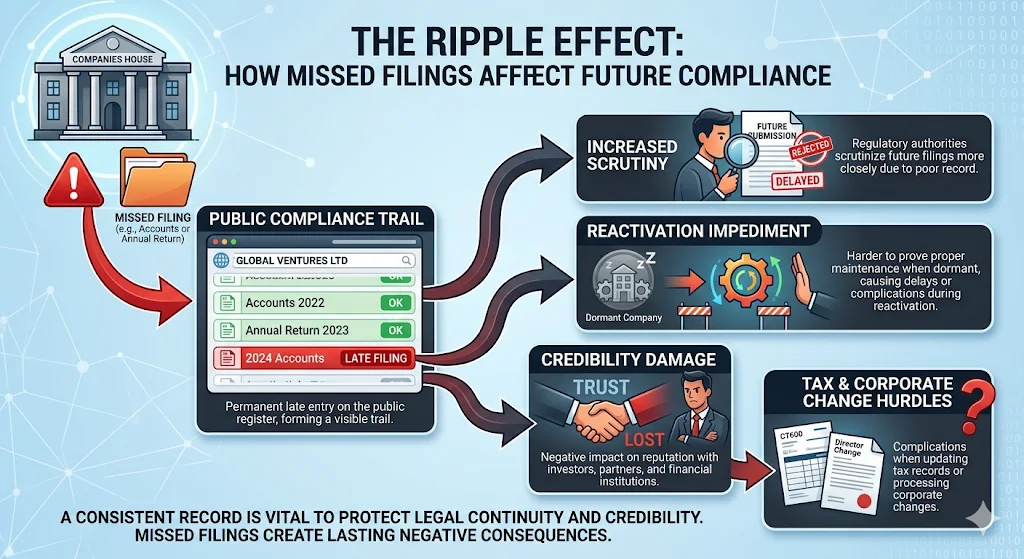
Missed filings create a compliance trail that remains visible on the public register. That trail affects future submissions, company credibility, and the ease of maintaining dormant status over time.
Companies House keeps the filing history permanently accessible. A missed dormant accounts filing does not vanish after the accounts are eventually submitted. The late filing entry remains part of the company record.
That history matters when the company later becomes active again. A company with a weak compliance record faces more scrutiny during future filings, tax updates, and corporate changes. It also becomes harder to demonstrate that the company has been properly maintained.
For businesses holding dormant companies as part of a long-term structure, consistency is essential. Annual compliance protects the company’s legal continuity and reduces the chance of reactivation problems later.
This is also where process quality matters. A clear filing system prevents missed deadlines, keeps records current, and avoids confusion when the company changes status.
How does proper filing protect a dormant company?
Proper filing preserves the company’s legal status, avoids penalties, and keeps the entity ready for future use. It also maintains a clean compliance record that supports better governance.
Dormant accounts serve as proof that the company remains inactive. They confirm that the entity is still being monitored and legally maintained. That is important for companies that exist for future trading, brand protection, or restructuring.
Timely filing also avoids automatic penalties. For a dormant company, the cost of inaction often exceeds the effort required to file. The submission itself is usually straightforward once the records are organised.
A clean filing record also supports continuity. If the company later begins trading, the directors already have an established compliance pattern. That reduces friction during future filings and related updates.
For businesses that want direct filing support, File Accounts for Dormant Companies offers a practical route to keep the entity compliant without unnecessary delay.
Also explore,
How to Determine if Your Limited Company is Legally Classified as Dormant
Everything You Need to Know About Keeping Your Inactive UK Company Compliant
What is the practical takeaway for dormant business owners?
Dormant status does not remove filing duties. Missing accounts leads to penalties, compliance warnings, and possible strike-off, while timely filing keeps the company legally intact and ready for future use.
The practical rule is simple. A dormant company still files. If the deadline passes, the penalty follows. If the non-filing continues, Companies House can escalate enforcement.
Business owners who keep dormant entities on the register benefit from structured compliance. That means tracking deadlines, confirming the dormancy position, and submitting accounts on time. It also means using expert support when the filing process or portal access becomes difficult.
From My Company helps businesses stay compliant through File Accounts for Dormant Companies. The service supports accurate submission, deadline control, and a cleaner compliance record for dormant entities.
Frequently Asked Questions
What happens if a dormant company does not file accounts?
If a dormant company does not file accounts, Companies House usually applies a late filing penalty. From My company notes that repeated non-filing can also lead to strike-off action and a poor compliance record.
Do dormant companies still have to file with Companies House?
Yes, dormant companies still have to file dormant accounts with Companies House each year. The filing confirms the company has remained inactive and keeps the legal entity compliant.
How much is the late filing penalty for dormant company accounts?
The penalty depends on how late the accounts are filed. For private limited companies, the fine starts at and increases to if the delay is more than 6 months.
Can Companies House strike off a dormant company for non-filing?
Yes, Companies House can begin strike-off action if a dormant company repeatedly fails to file accounts or respond to notices. This removes the company from the register and can create extra legal and administrative work.
How does From My company help with dormant company filings?
From My company helps businesses File Accounts for Dormant Companies correctly and on time. This reduces the risk of missed deadlines, late penalties, and compliance issues with Companies House.