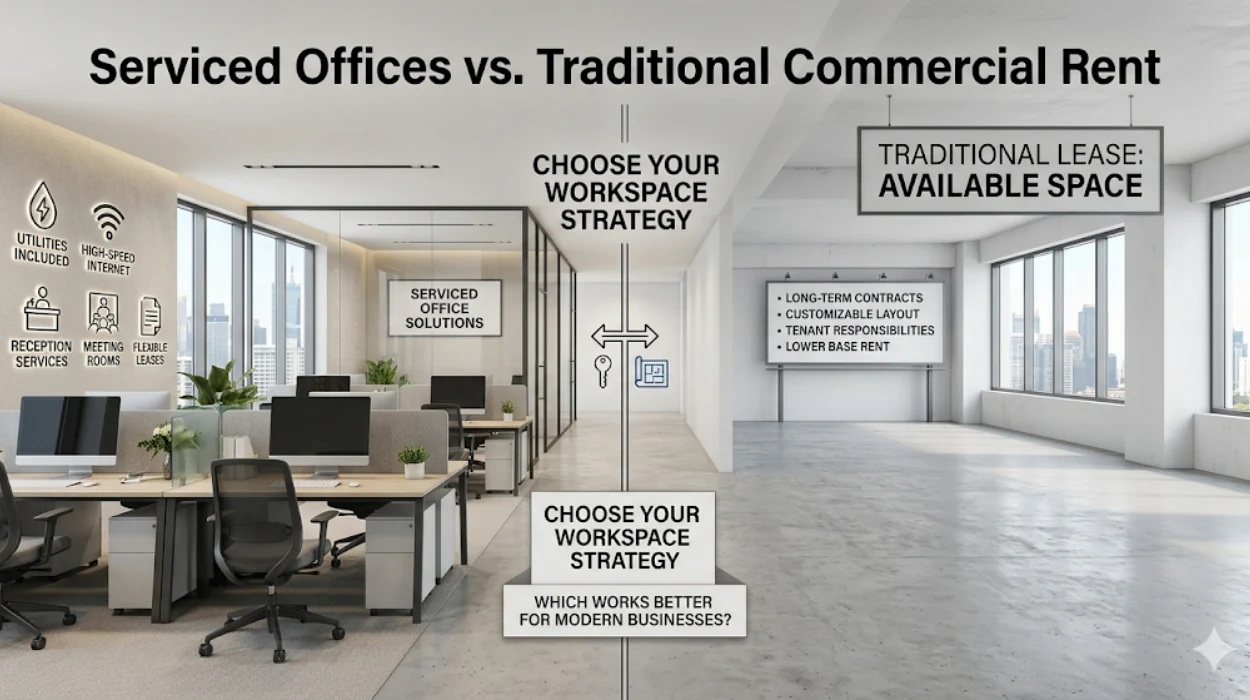
Serviced offices provide flexibility, speed, and ready-to-use professionalism, while traditional commercial rents offer long-term control and space customization. The best choice depends on your business size, growth rate, and operational strategy.
Understanding the Two Office Models
What Are Serviced Offices?
Serviced offices are fully managed workspaces available for immediate use, often on short-term contracts ranging from one month to one year. They come fully furnished, include utilities, and provide access to amenities such as meeting rooms, reception services, and high-speed internet — all managed by a specialised provider.
For example, Form My Company’s Serviced Offices give businesses fully equipped workspaces with flexible terms that align with evolving business goals. Instead of managing rent, repairs, and overheads independently, tenants focus on productivity while the provider handles infrastructure.
What Is Traditional Commercial Rent?
Traditional commercial rent refers to long-term leasing of unfurnished or semi-finished office space, where the tenant manages fit-outs, furnishings, maintenance, and service contracts. Typical leases span multiple years and involve legal commitments, deposits, and administrative overhead.
Businesses choosing this model often seek stability, control over layout, and the ability to create a branded environment. However, the upfront investment and long-term liability can pose challenges for startups or scaling firms seeking agility.
Comparing Key Factors
Cost Structure and Budget Planning
When comparing costs, the serviced office model offers transparency and consolidated expenses. A single monthly payment covers rent, internet, cleaning, security, and maintenance. This is particularly helpful for SMEs and startups that need predictable budgeting and zero hidden charges.
By contrast, traditional commercial leasing involves multiple cost layers rent, service charges, utilities, insurance, and upkeep. These separate expenses make financial forecasting more complex, especially for young businesses with fluctuating cash flow.
Example: A company taking a serviced office in Bolton pays a fixed monthly fee that includes all operational needs. In a conventional lease, the same company would face varying electricity bills, facility maintenance costs, and repair contracts, often managed through different vendors.
Flexibility of Contract Terms
Flexibility defines the spirit of serviced offices. Contracts can adjust to changes in team size or location needs with ease. This model particularly appeals to project-based, remote-first, or fast-growing businesses seeking scalability without relocation stress.
Traditional leasing, however, typically binds tenants to multi-year terms. Early termination can involve penalties, and resizing the workspace often requires renegotiation or subleasing.
If your firm emphasises adaptability and cost control, you can explore Form My Company’s service-focused office solutions that combine flexibility with full management support. Serviced Offices by Form My Company are particularly structured for this kind of operational agility.
Operational and Logistical Differences
Setup and Downtime
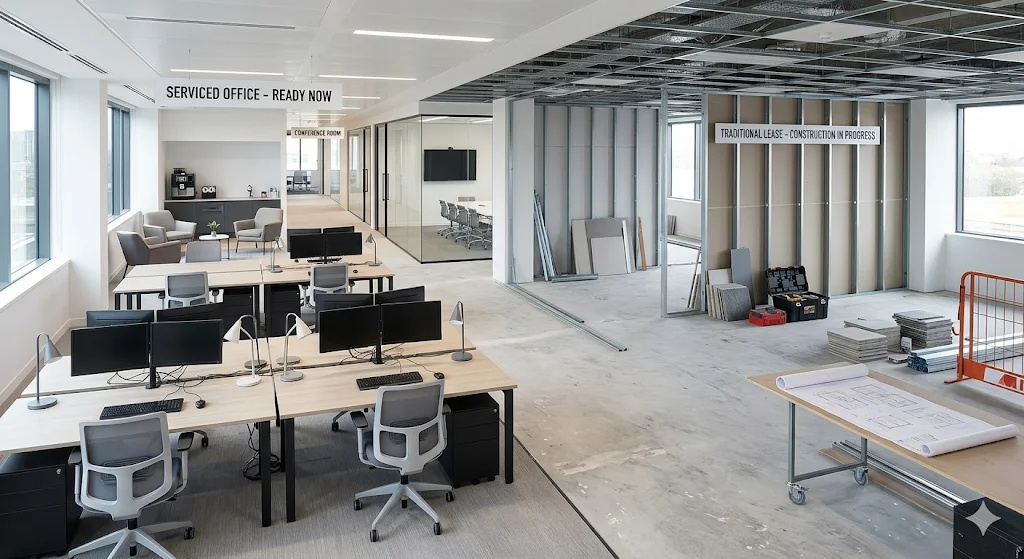
Serviced offices are “plug-and-play.” Businesses can start work within days the desks, chairs, IT setup, and meeting rooms are ready upon entry. Minimal setup time ensures quick transition and zero downtime.
In contrast, traditional leases require time investment: planning fit-outs, ordering equipment, setting up utilities, and ensuring compliance with fire and safety codes. These steps can delay occupancy by several weeks or even months.
Facilities and Support Services
A typical serviced office contract includes shared access to professional resources such as printing areas, kitchens, postal handling, and reception management. Many providers also provide conference room services for client meetings and presentations offering a corporate-grade atmosphere without capital expense.
For businesses renting traditional office space, such amenities need to be sourced and maintained independently. This adds recurring costs and administrative load, as IT, janitorial, and reception services must be hired and coordinated internally.
Location Strategy and Brand Perception
Prime Business Addresses
Serviced office providers usually maintain offices in prominent commercial districts city centres, financial hubs, and tech corridors. Leasing such prime locations independently could be cost-prohibitive under commercial rent.
This makes serviced offices appealing for startups or consultants who wish to maintain a credible business presence without paying premium market rent. For example, a company can access a professional Bolton address while maintaining flexibility through a short-term serviced office subscription.
Customisation and Brand Control
Here is where traditional leases hold their advantage. While serviced office interiors are predesigned for general corporate appeal, conventional leases allow tenants to design, brand, and furnish the space from scratch ideal for large enterprises that value exclusivity and brand identity over convenience.
The choice depends on company culture. A design firm might prefer visual control over space, while a tech startup may prioritise speed, digital access, and contract mobility.
Scalability and Growth Potential
Adapting to Business Changes
Serviced offices accommodate change efficiently. You can expand or reduce workspace according to headcount or project size with minimal friction. Providers simply allocate additional desks or private offices as needed.
Under a traditional rent model, expansion usually requires leasing additional premises or renegotiating an existing contract, often involving extensive legal coordination and moving costs.
This adaptive design of serviced offices makes them ideal for scale-up environments and hybrid teams organisations that need physical presence without geographic restrictions.
Tenant Experience and Community
Another overlooked benefit of serviced offices is the collaborative environment. Businesses share facilities with other tenants, enabling informal networking, partnerships, and knowledge exchange. This co-working dynamic fosters innovation and professional community.
Traditional spaces, being independent, don’t naturally offer exposure to such peer-led opportunities but instead ensure privacy and focus for teams that prefer closed operations.
Legal, Compliance, and Risk Considerations
Commercial lease contracts involve complex legal documentation, including long-term obligations, break clauses, maintenance responsibilities, and liability arrangements. Such contracts typically require legal consultation and ongoing compliance management.
Serviced office agreements, however, simplify this process dramatically. The service provider retains property management duties and handles health and safety compliance. The tenant only manages internal business activities, reducing exposure to operational and legal risks.
This streamlined approach appeals to founders and small business owners who want to minimise legal complexity and focus on core work priorities.
Sustainability and Modern Infrastructure
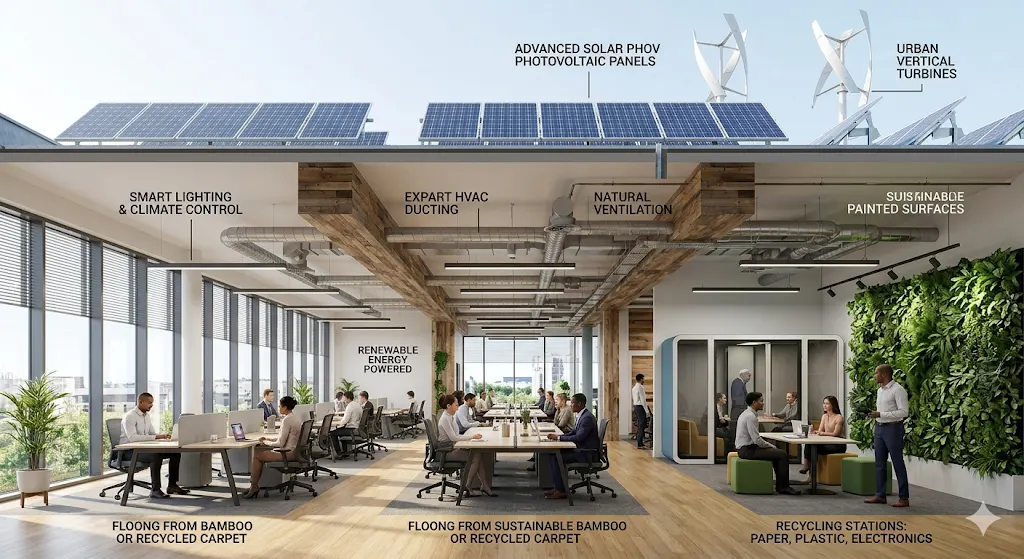
Modern serviced offices are built with sustainability in mind: energy-efficient systems, smart lighting, waste reduction policies, and renewable energy usage are common standards. Shared resource usage also reduces environmental impact, as utilities serve multiple tenants rather than individual operations.
By contrast, traditional offices depend on tenant-driven policies. Companies must invest independently in sustainability measures like insulation upgrades, recycling systems, or efficient HVAC installations.
This isn’t inherently negative but increases upfront capital requirements for businesses that aim to adopt green operations quickly.
Which Option Is Better for You?
If you are a startup, consultant, or growing business prioritising speed, low overhead, and location reputation serviced offices deliver the highest value with minimal hassle. For larger or mature companies seeking long-term control, brand customisation, and exclusivity, traditional rent remains relevant, provided budgets allow for setup and management.
For a wider understanding of how market trends are transforming workspace decisions, see our related article on why modern UK startups are swapping long leases for flexibility a look at why agility has become a strategic priority in today’s work culture.
Making an Informed Mid-Funnel Decision
At this MOFU stage, businesses typically narrow options by weighing cost predictability, operational control, and future expansion.
Choosing the right path requires understanding your long-term strategy:
- Serviced Offices suit dynamic businesses seeking immediate readiness, scalability, and shared infrastructure.
- Traditional Commercial Rent supports enterprises needing stability, brand differentiation, and policy autonomy.
For entrepreneurs ready to act, consider how Furnished Office Solutions from Form My Company combine flexibility with full-service management. These decision-focused workspace packages simplify operations and reduce time-to-market ideal for scaling companies. Learn more through our article Rent Fully Furnished Serviced Offices in Bolton with No Fees for a practical next step.
Both serviced offices and traditional commercial rent have distinct strengths shaped by financial structure, flexibility, and company culture. Serviced offices increasingly dominate modern business planning in the UK because they deliver immediate usability, predictable costs, and central locations three essentials for post-pandemic agility.
Form My Company helps businesses navigate this workspace evolution by providing Serviced Offices built for adaptability, professionalism, and simplicity. Whether you’re grounded locally or planning national expansion, flexible occupancy solutions let your operations remain lean, scalable, and focused on growth.
What is included in serviced offices from Form My Company?
Serviced offices from Form My Company include fully furnished workspaces with utilities, internet, cleaning, and administrative support. Businesses also gain access to shared amenities like meeting rooms, reception services, and secure mail handling, all managed under one flexible contract.
How do serviced offices differ from traditional office leases?
Serviced offices provide ready-to-use spaces on short-term agreements, while traditional offices require long leases and separate management of facilities. The serviced model reduces setup time and overhead costs, making it ideal for growing or mobile teams.
Are serviced offices suitable for startups or small businesses?
Yes, serviced offices are especially beneficial for startups because they eliminate high setup costs and long-term lease commitments. Form My Company’s serviced offices allow businesses to operate in professional environments without managing separate utilities or building maintenance.
Can a business scale up easily in a serviced office?
Serviced offices are designed for scalability businesses can expand or reduce workspace quickly based on team size and project demands. Form My Company provides flexible office solutions that adapt to growth without relocation or contract penalties.
Do serviced offices include meeting and conference room access?
Most serviced office providers, including Form My Company, offer access to professional meeting and conference rooms as part of the package. This allows businesses to host client meetings in fully equipped spaces without investing in permanent infrastructure.