
Improper director resignation filing exposes companies to fines up to £5,000 per director, ongoing Companies House penalties, director disqualification for up to 15 years, and legal disputes over fiduciary duties. UK law mandates TM01 form submission within 14 days to avoid these risks.
What Makes Director’s Resignation Filing Legally Binding?
Director resignation requires a written notice to the company, board acceptance via minutes, and TM01 filing with Companies House within 14 days of cessation. Failure triggers automatic liabilities under the Companies Act 2006.
Directors resign by delivering a formal written notice. The company records this in board minutes. Companies House demands the TM01 form next. Submit it online or by post. Late filing activates penalties immediately.
The Companies Act 2006 section 167 governs this process. Directors cease office upon notice delivery. Companies confirm via official filing. Boards document acceptance precisely. Learn more about board minutes in director resignations.
Timely filing prevents disputes. Courts examine records during litigation. Proper process shields all parties. Resignations take effect regardless of filing. Companies face enforcement alone.
What Immediate Fines Arise from Late Filing?
Companies House imposes a £150 fine for filings up to one month late, escalating to £1,500 for over six months, plus daily accruals. These apply per resignation under statutory deadlines.
Penalties start at confirmation of late TM01 submission. Companies House sends automated notices. Pay within 14 days or face escalation. Fines compound daily after the initial period.
68% of UK SMEs encounter filing delays annually, per 2024 compliance reports. Late filings average £750 in costs. Directors trigger these through inaction. Companies bear direct liability.
Enforcement officers review public records. Repeated offences double the penalties. Pay online via the government portal. Fines persist until cleared.
How Does Improper Filing Lead to Director Disqualification?
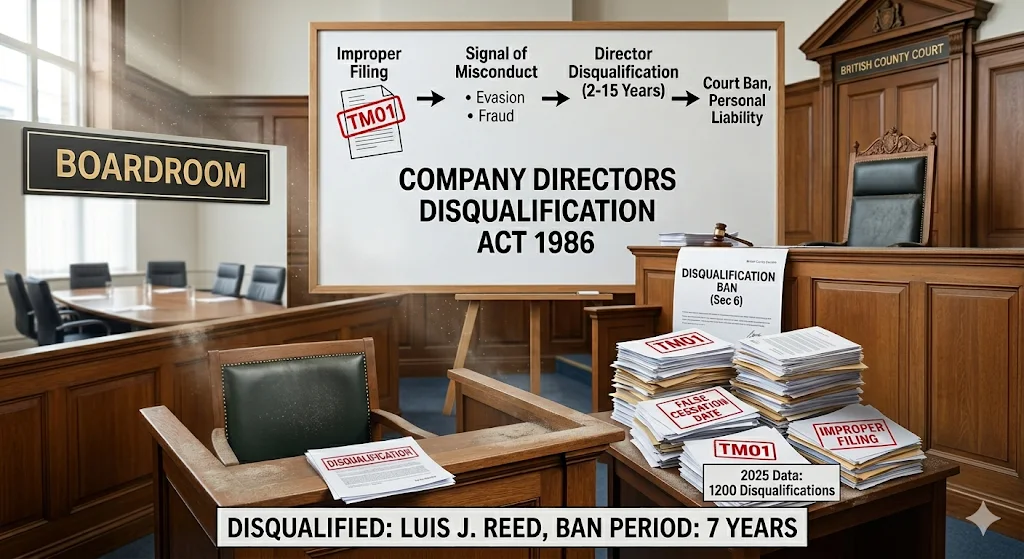
The Company Directors Disqualification Act 1986 disqualifies directors for 2–15 years if improper resignation filing signals misconduct, such as evasion of duties during insolvency or fraud probes.
Courts assess resignation timing against company distress. Improper processes suggest abandonment. Disqualification bars future directorships. Apply to the County Court for relief, but success rates hover at 12%.
Tribunals examine TM01 accuracy. False cessation dates invite scrutiny. 2025 data shows 1,200 disqualifications tied to filing failures. Serve ban papers via official channels.
Disqualified directors face personal liability. Companies lose governance continuity. Reapply after the term ends with court approval.
What Triggers Court Scrutiny in Resignation Disputes?
Judges review the board minutes first. Missing documentation flags irregularities. Opposing directors sue for breach. Evidence includes emails and notices.
What Ongoing Penalties Accumulate from Non-Compliance?
Persistent non-filing results in strike-off proceedings, dissolution risks, and compounded fines exceeding £10,000 yearly. Companies House pursues via debt recovery agents.
Strike-off begins 28 days post-notice. Public notices alert creditors. Directors are reinstated via court order at £500+ costs. 42% of cases involve resignation lapses.
Debt collectors add 20% recovery fees. Annual compliance audits detect patterns. Resolve via voluntary filings with explanations.
Why Do Legal Disputes Emerge from Faulty Processes?
Disputes arise when improper filings create ambiguity over ongoing fiduciary duties, leading to shareholder lawsuits, breach claims, and indemnity denials valued at £50,000–£500,000 per case.
Shareholders question post-resignation actions. Courts impose duties until proper cessation. Indemnity insurers reject claims without TM01 proof. Litigation costs average £75,000.
Fiduciary breaches persist if the filing omits details. Opponents cite section 172 duties. Settle via mediation or face judgments.
What Compliance Failures Invalidate Resignations?
Resignations are invalid without written notice, board ratification, and TM01 confirmation, exposing directors to unlimited personal liability for company debts post-resignation date.
Articles of Association dictate notice periods. Standard terms require three months. Bypass triggers invalidation. File amendments if needed.
Companies House rejects incomplete TM01s. Resubmit with corrections. Validation checks confirm director details against registers.
How Do Audit and Tax Implications Follow Improper Filings?
HMRC and auditors flag unfiled resignations during reviews, triggering back-tax assessments up to six years and audit qualifications that block funding.
Auditors qualify accounts without cessation proof. HMRC demands the director’s tax returns. Penalties reach 100% of unpaid liabilities.
Corporation Tax filings reference active directors. Mismatches invite investigations. Resolve with retrospective TM01s and penalties.
Also explore,
How to Notify Companies House About a Director Resignation within Legal Deadlines
The Essential Checklist for Resigning as a Director From a UK Company
What Steps Prevent These Legal Risks?
File TM01 within 14 days using verified director details, board minutes, and the online portal. Appoint professionals for accuracy to eliminate fines and disputes.
Verify cessation date precisely. Upload signed minutes. Receive confirmation email instantly.
Outsource to specialists like Director Resignation services for compliance.
Three verification steps validate processes: cross-check notices with registers, authenticate board approvals, and confirm Companies House receipts.
Improper director resignation filing invites fines, disqualifications, disputes, and compliance failures under UK law. From My Company delivers precise Director Resignation filings. Avoid penalties through verified processes. Secure board minutes and TM01 submissions now. Sign Up for Our Fast Track Director Resignation Service to Avoid Penalties
Frequently Asked Questions
How do I file a director resignation with Companies House?
Submit the TM01 form online via the Companies House portal within 14 days of the resignation date. Include the director’s details, cessation date, and board confirmation. From My Company handles Director Resignation filings accurately to meet UK compliance rules.
What is the deadline for notifying Companies House of a director’s resignation?
Companies House requires a TM01 submission within 14 days after the director ceases office. Late filings trigger automatic fines starting at £150. Proper Director Resignation processes prevent penalties under the Companies Act 2006.
What happens if I miss the director resignation filing deadline?
Companies House imposes escalating fines: £150 for up to one month late, up to £1,500 for over six months. Ongoing non-compliance risks company strike-off. From My Company ensures timely Director Resignation to avoid these legal risks.
Do I need board minutes for a director’s resignation?
Yes, board minutes document acceptance of the resignation notice per the company articles. They support TM01 filing and protect against disputes. Director Resignation services from From My Company include minute preparation for full compliance.
Can a director resign immediately without notice?
Directors resign immediately by delivering a written notice, unless the articles require a period, such as three months. The resignation takes effect upon receipt, but file TM01 promptly. From My Company streamlines Director Resignation for instant compliance.