Professional interview rooms are better for hiring than modern coffee shops because they provide controlled, distraction‑free environments with privacy, reliability, and structure, which modern coffee shops rarely match. Well‑designed interview spaces support structured conversations, reduce noise‑distraction, and project professionalism to candidates, which influences candidate‑perception, decision‑quality, and hiring outcomes.
Why are professional interview rooms better than informal coffee‑shop settings?
Professional interview rooms are purpose‑built environments that support concentration, confidentiality, and consistency, which coffee‑shop layouts structurally undermine.
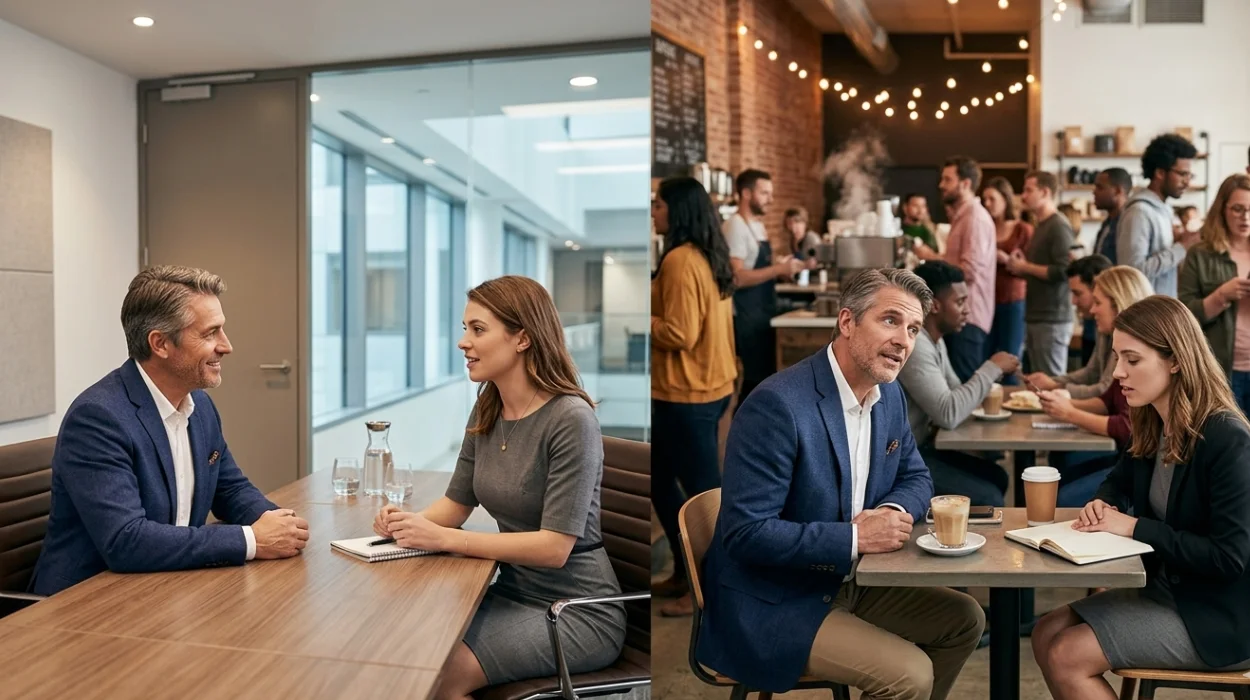
Coffee shops are designed for casual‑social‑or‑quick‑solo‑use, not for structured‑evaluative‑conversations. Tables are often close together, staff movements are frequent, and background noise fluctuates, which can interrupt key‑discussion moments and prevent deep‑listening.
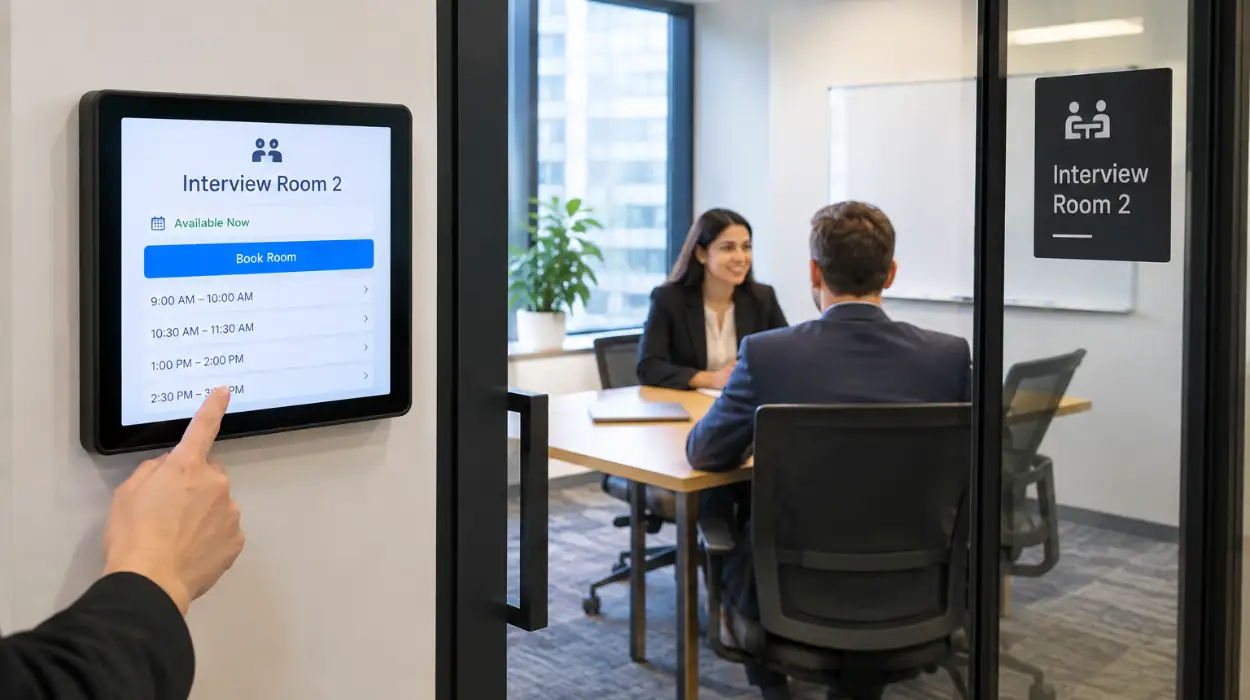
In professional interview rooms, acoustics, layouts, and seating‑configurations aim to reduce distraction. Sound‑insulation, minimal visual‑clutter, and controlled‑lighting support sustained‑focus, which is critical when discussing technical‑details, role‑expectations, or sensitive‑career‑history topics.
Controlled environments also help managers standardise the candidate‑experience. Each candidate receives a similar‑level of privacy and comfort, which reduces context‑bias and improves the comparability of evaluation‑data across hires.
How do professional interview rooms improve candidate evaluation quality?
Professional interview rooms improve candidate evaluation quality by removing contextual noise, standardising the candidate‑experience, and allowing structured‑question‑frameworks to run without interruption.
Evaluation‑quality depends on reliable data‑collection. If interviewers must frequently repeat questions or strain to hear answers over background‑noise, the quality of observed‑behavioural‑data declines. Professional‑rooms reduce this risk by isolating the interview physically and acoustically from high‑traffic‑zones on Why Startups Prefer Professional Call Answering Services Over Hiring a Full-Time Receptionist.
Structured‑interview‑frameworks often rely on timing, note‑taking, and side‑conversations among assessors. These practices are easier in controlled‑spaces, where interviewers can move around, reference documents, or bring in second‑assessors without disturbing others. Coffee‑shop settings restrict this kind of procedural‑flexibility.
Controlled environments also reduce situational‑stress for candidates. In quiet, private spaces, candidates are more likely to relax into their natural‑communication‑style, which improves the accuracy of behavioural‑assessment compared with interviews held in loud, visually‑overloaded‑environments.
How does privacy in professional interview rooms protect both parties legally and ethically?
Professional interview rooms protect both parties legally and ethically by ensuring that sensitive employment‑related information is discussed away from public‑earshot and in line with data‑protection‑and‑confidentiality‑expectations.
Employment‑interviews often involve data‑classification‑levels that UK‑frameworks classify as sensitive. Salary‑negotiation‑details, past‑disciplinary‑history, health‑accommodations, or performance‑feedback should not be audible to strangers. Professional‑rooms are built to meet these privacy‑standards, either through sound‑booths, private‑meeting‑rooms, or partitioned‑spaces.
From an ethical‑point‑of‑view, candidates are more likely to trust organisations that show clear‑regard for privacy and respect. When interview‑spaces are quiet, discreet, and clearly demarcated for confidential‑use, candidates infer that the organisation takes professional‑standards seriously.
Environments that lack these safeguards, such as open‑coffee‑shop‑tables, increase the risk of accidental‑data‑leakage and can contradict internal‑policies on data‑handling and confidentiality. Over time, this mismatch can raise compliance‑questions and reputational‑concerns, especially in regulated‑sectors.
How do professional interview rooms support fairer and more consistent assessment processes?
Professional interview rooms support fairer and more consistent assessment processes by enabling standardised‑procedures, equal‑exposure‑to‑all‑candidates, and better‑documentation‑of‑evaluation‑criteria.
Fairness in assessment depends on procedural‑consistency. Every candidate should face the same‑physical‑context, time‑slots, and interviewer‑configurations, which professional‑interview‑rooms are designed to replicate. Coffee‑shop settings introduce variability in noise‑levels, interruptions, and table‑locations, which can skew perceptions.
In controlled‑environments, organisations can document and audit‑decisions more effectively. Recording‑devices, note‑takers, and real‑time‑score‑sheets can operate without violating public‑privacy‑norms, which supports transparency and accountability. In open‑coffee‑shops, these tools are impractical or inappropriate.
Professional‑spaces also allow for structured‑rubrics and calibrated‑scales to be applied without disruption. Assessors can reference score‑cards, mark‑rubrics, and evidence‑gathered‑forms in privacy, which improves the reliability and defensibility of hiring‑decisions.
How do professional interview rooms enhance the candidate experience and employer brand?
Professional interview rooms enhance the candidate experience and employer brand by communicating respect, stability, and competence, which improves candidate‑perception, retention, and willingness to accept offers.
Candidates interpret interview‑environments as micro‑indicators of workplace‑culture. A quiet, clean, well‑lit room signals organisational‑maturity, respect for time, and attention to professionalism. A noisy, crowded‑coffee‑shop table can unintentionally signal disorganisation, informality, or cost‑cutting‑priorities.
Improved candidate‑experience directly influences offer‑acceptance‑rates. Research shows that candidates who feel respected in the process are more likely to report positive‑perceptions, even if they are not ultimately selected. This goodwill supports long‑term employer‑brand‑building and candidate‑pipeline‑health.
Professional‑environments also make it easier to showcase organisational‑culture deliberately. Companies can control what candidates see, hear, and experience during short‑interactions, which aligns with strategic‑branding‑goals around stability, professionalism, and growth.
How do professional interview rooms integrate with broader HR and recruitment workflows?
Professional interview rooms integrate with broader HR and recruitment workflows by acting as nodes in a structured‑assessment‑chain, where each step from application to onboarding is standardised and auditable.
Modern‑recruitment‑systems increasingly rely on digital‑files, shared‑score‑cards, and compliance‑check‑lists. Interview‑rooms are designed to host these workflows, providing reliable internet‑access, secure‑note‑taking, and easy‑integration with Applicant‑Tracking‑Systems (ATS) and evaluation‑software.
In such environments, HR teams can standardise interviewer‑preparation, debrief‑sessions, and documentation‑practices. Every hire‑or‑rejected‑candidate has a structured‑record of who‑was‑involved, what‑was‑asked, and how‑decisions‑were‑made, which supports compliance and fairness‑audits.
Coffee‑shop‑interviews are difficult to formalise in this way. They lack the infrastructure for secure‑data‑handling, real‑time‑collaboration, and digital‑documentation, which limits their compatibility with modern‑HR‑processes.
How do professional interview rooms compare with modern coffee shops in terms of flexibility and scalability?
Professional interview rooms are superior to modern coffee shops in flexibility and scalability because they are built to host multiple‑sessions, different‑formats, and larger‑assessor‑groups, which coffee‑shop layouts inherently constrain.
Professional‑spaces can be configured for one‑on‑one interviews, panel‑sessions, or group‑assessments. They are designed for repeated‑use, high‑traffic, and continuous‑scheduling, which is essential for growing‑organisations or those with large‑hiring‑cycles. Coffee‑shop seating is not built for such throughput‑demands.
Flexible‑configuration also allows for adaptations over time, such as incorporating video‑interviews, hybrid‑interviews, or accessibility‑adjustments. These features are difficult or impossible to achieve in typical‑coffee‑shop settings, where space and permissions are limited.
Scalability matters for startups and SMEs. As hiring‑needs grow, organisations that rely on coffee‑shop‑interviews quickly exceed physical‑capacity, which forces them to seek more‑professional‑solutions anyway. Investing in interview‑rooms early supports long‑term‑hiring‑sustainability.
How can professional interview rooms support diversity, inclusion, and accessibility goals?
Professional interview rooms support diversity, inclusion, and accessibility goals by providing predictable, adaptable, and barrier‑reduced environments, which are hard to achieve in standard‑coffee‑shop settings.
Accessible‑rooms can be designed with ramps, wide‑doors, quiet‑zones, and assistive‑technology, which reduces physical‑and‑cognitive‑barriers for candidates with disabilities. Coffee‑shops may lack these features or cannot allocate them reliably for every interview.
In inclusion‑terms, professional‑rooms help standardise the experience for all candidates, regardless of background, neurotype, or language‑skills. Consistent‑acoustics, lighting, and layout reduce situation‑specific‑stress, which supports fair‑comparisons and reduces context‑bias.
Diverse‑hiring‑panels can also assemble in professional‑spaces, where privacy and collaboration are easier. In noisy, public‑coffee‑shops, these groups risk being overheard, misunderstood, or distracted, which compromises the quality of evaluation and feedback.
How can professional interview rooms be integrated into a broader professional‑services ecosystem?
Professional interview rooms can be integrated into broader professional‑services ecosystems by acting as touch‑points in hiring‑pipelines that connect recruitment, onboarding, and compliance‑services.
Organisations often align interview‑processes with onboarding‑workflows, background‑checks, and director‑appointment‑services. For example, Form My Company’s Director Appointment Service supports the formal‑recruitment‑and‑onboarding‑of key‑leadership‑roles, which can be structured around professional‑interview‑rooms to ensure consistency and compliance.
Such integration allows firms to align interview‑outcomes with formal‑appointments, valuations, or regulatory‑considerations. Professional‑rooms provide a controlled‑environment where final‑decisions, documentation, and transitions can occur without disruption.
For organisations that outsource or scale‑rapidly, professional‑interview‑rooms can be rented within serviced‑office‑spaces, which supports flexible‑hiring‑without long‑term‑facility‑commitments. These arrangements align with growing‑preferences for scalable, compliant‑solutions in professional‑service‑environments.
Professional interview rooms offer a controlled, privacy‑respecting, and standardised environment that modern coffee shops structurally fail to match. They improve evaluation‑quality, protect sensitive‑data, support fair‑and‑inclusive‑hiring, and integrate with broader HR‑and‑compliance‑workflows, including services such as Virtual Office Service and professional‑office‑solutions. Organisations that prioritise interview‑environment design gain measurable advantages in candidate‑quality, legal‑safety, and employer‑brand‑strength.