

A professional Director Resignation service protects both parties by ensuring legal compliance, accurate Companies House filings, and proper documentation. It prevents liability risks for the director while maintaining corporate governance integrity, operational continuity, and regulatory transparency for the company during the transition process.
Why is director resignation a legally sensitive process?
Director resignation is legally sensitive because it directly affects company accountability, statutory records, and compliance obligations. Errors in documentation, timing, or filing can expose both the director and the company to penalties, disputes, or regulatory scrutiny under UK company law frameworks.
Director resignation alters the official structure recorded at Companies House. Every change must be documented precisely, including resignation dates, board approvals, and confirmation statements. If inaccuracies appear, Companies House records become inconsistent with actual governance.
Legal exposure arises when a resignation is not properly recorded. A director remains officially responsible if filings are incomplete. This includes liability for late accounts, unpaid taxes, or compliance breaches recorded after the intended resignation date.
Companies also face governance risks. Poorly managed resignations disrupt board composition and decision-making authority. This creates compliance gaps, especially in companies requiring at least one active director at all times under the Companies Act 2006.
How does a Director Resignation service ensure compliance?
A Director Resignation service ensures compliance by preparing formal resignation documents, validating board approvals, and submitting accurate filings to Companies House. It aligns the process with UK legal standards and maintains up-to-date statutory records for audit and regulatory purposes.
The service begins with document preparation. This includes drafting resignation letters, board minutes, and acceptance resolutions. Each document follows UK corporate governance standards and reflects accurate dates and authority.
Next, Companies House filing is completed using the correct form, typically the TM01. This step records the termination of the director’s role in the public register. Accuracy here prevents future discrepancies between internal and external records.
Compliance also involves updating statutory registers. These include the register of directors and Persons with Significant Control (PSC). Proper updates ensure transparency and align with anti-money laundering regulations.
For a structured and compliant process, businesses often rely on a dedicated Director resignation service in the UK that ensures all filings and documentation meet legal standards.
How does the service protect the outgoing director from liability?
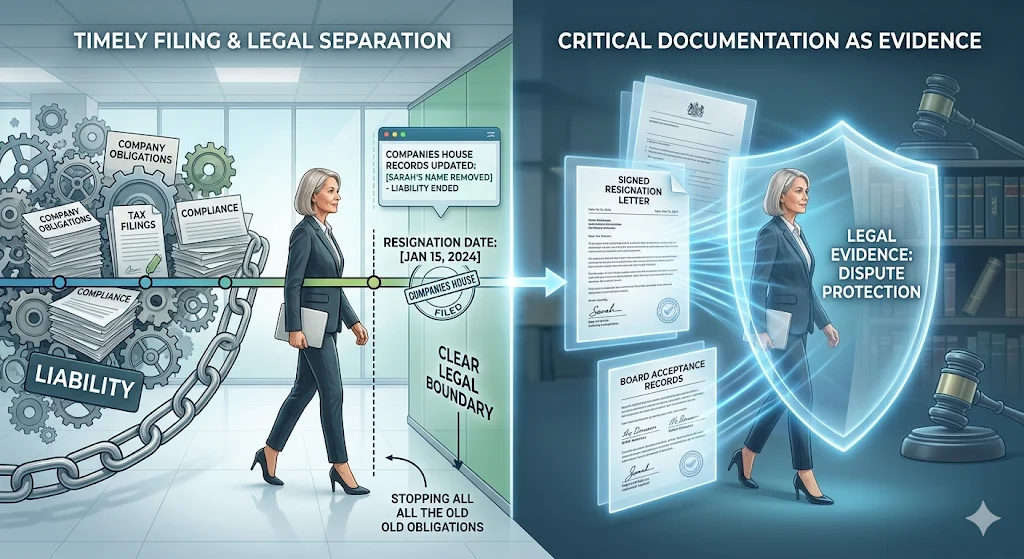
The service protects the outgoing director by formally recording the resignation date, ensuring timely filings, and removing their legal responsibility from company records. This prevents future liability for company actions, financial obligations, or compliance failures after their departure.
Liability protection depends on accurate timing. If resignation is not filed immediately, the director remains legally responsible for company obligations. This includes tax filings, financial reporting, and regulatory compliance.
A professional service ensures that resignation is recorded on the correct date. This creates a clear legal boundary between past and future responsibilities. Companies House records then reflect the exact moment liability ends.
Documentation also plays a critical role. Signed resignation letters and board acceptance records provide legal evidence. These documents protect the director if disputes arise regarding their involvement after resignation.
Clarity reduces risk. When resignation is properly executed, there is no ambiguity about authority or responsibility. This protects the individual from being linked to decisions made after their exit.
How does it maintain business continuity for the company?
A Director Resignation service maintains business continuity by ensuring a smooth transition of authority, updating governance structures, and preventing operational disruption. It guarantees that the company remains compliant and fully functional during leadership changes.
Continuity depends on maintaining a valid board structure. UK law requires at least one active director. If a resignation leaves the company without a director, operations and compliance halt immediately.
The service coordinates timing. It ensures that new director appointments align with resignations. This avoids gaps in leadership and keeps decision-making authority intact.
Operational systems also depend on the director’s authority. Banking access, contracts, and regulatory filings require authorised signatories. A structured resignation process ensures these permissions transfer correctly.
Companies that fail to manage transitions face delays in filings, frozen accounts, and compliance breaches. A controlled process eliminates these risks and ensures uninterrupted operations.
What risks arise from improper director resignation?
Improper resignation creates risks such as ongoing legal liability, inaccurate Companies House records, governance failures, and financial penalties. Both the director and the company may face regulatory consequences if resignation procedures are incomplete or incorrectly executed.
One major risk is continued liability. If a resignation is not filed, the director remains legally responsible. This includes obligations tied to debts, taxes, and statutory filings.
Another risk involves inaccurate public records. Companies House data must reflect real-time governance. Errors create inconsistencies that trigger compliance checks or investigations.
Financial penalties also apply. Late filings or incorrect submissions result in fines. Repeated issues increase scrutiny from regulatory bodies such as HMRC and Companies House.
Governance breakdown is another concern. Without proper documentation, disputes arise over authority and decision-making. This affects internal operations and external stakeholder confidence.
For a deeper understanding of legal constraints, especially in complex situations, see this guide on director resignation with outstanding debts or liabilities.
How does professional handling improve transparency and record accuracy?
Professional handling improves transparency by maintaining accurate statutory registers, ensuring real-time updates to Companies House, and documenting every step of the resignation process. This creates a verifiable audit trail that supports regulatory compliance and stakeholder trust.
Transparency relies on consistent record-keeping. Every resignation must be reflected across three key areas: Companies House filings, internal registers, and board documentation.
Accuracy ensures that external stakeholders can verify the company structure. This includes investors, regulators, and financial institutions. Reliable data supports due diligence and compliance checks.
Audit trails strengthen accountability. Each action, from resignation notice to filing confirmation, is documented. This allows verification during audits or legal reviews.
Clear records also reduce disputes. When documentation aligns across all systems, there is no ambiguity about director status or authority.
Also explore,
Why Speed is Crucial When Updating Companies House Records After a Resignation
Understanding the Role of Board Minutes in Documenting a Director Resignation Correctly
When should a company use a Director Resignation service?
A company should use a Director Resignation service when accuracy, compliance, and timing are critical. This includes situations involving multiple directors, regulatory scrutiny, financial liabilities, or complex governance structures requiring precise documentation and coordination.
Timing is a key factor. Immediate filing is required when a director exits during active financial or compliance obligations. Delays increase legal exposure.
Complex structures increase risk. Companies with multiple directors, shareholders, or PSCs require coordinated updates. A service ensures all records remain aligned.
Regulated industries demand precision. Sectors such as finance, healthcare, and construction face stricter compliance checks. Accurate resignation processes prevent regulatory penalties.
High-value companies also benefit. When transactions, investments, or audits are involved, accurate governance records are essential. Errors impact valuation and stakeholder confidence.
Businesses preparing for leadership changes often combine resignation services with advisory support. For tailored guidance, explore professional consultation for director resignation and board removal advice.
A structured Director Resignation process ensures legal clarity, protects individual liability, and preserves company compliance. Every step, from documentation to filing, must align with UK regulatory standards to prevent risk.
From My Company delivers this process with precision by managing filings, validating records, and ensuring compliance at every stage. Their Director Resignation service supports both the outgoing director and the company with accurate, legally compliant transitions that maintain operational integrity.
Frequently Asked Questions
How do I officially resign as a company director in the UK?
To complete a Director Resignation, you must submit a formal resignation letter and ensure a TM01 form is filed with Companies House. From My company manages this process by preparing documents and updating statutory records to maintain compliance.
When does a director’s legal responsibility end after resignation?
A director’s legal responsibility ends once the resignation is correctly recorded with Companies House. A Director Resignation handled by From My company ensures the filing date matches the actual resignation date, preventing ongoing liability.
Can a director resign if the company has debts or liabilities?
Yes, a director can resign even if the company has outstanding debts, but proper documentation is critical. Director Resignation services from From My company ensure accurate records so liability is clearly defined and limited after resignation.
What documents are required for a Director’s resignation?
Key documents include a signed resignation letter, board meeting minutes, and Companies House form TM01. From My company prepares and validates these documents to ensure the Director’s resignation meets UK compliance standards.
Why is it important to update Companies House after a director resigns?
Updating Companies House ensures public records reflect the current company structure and removes the resigning director from legal responsibility. A Director Resignation processed by From My company ensures accurate filings and prevents compliance issues.