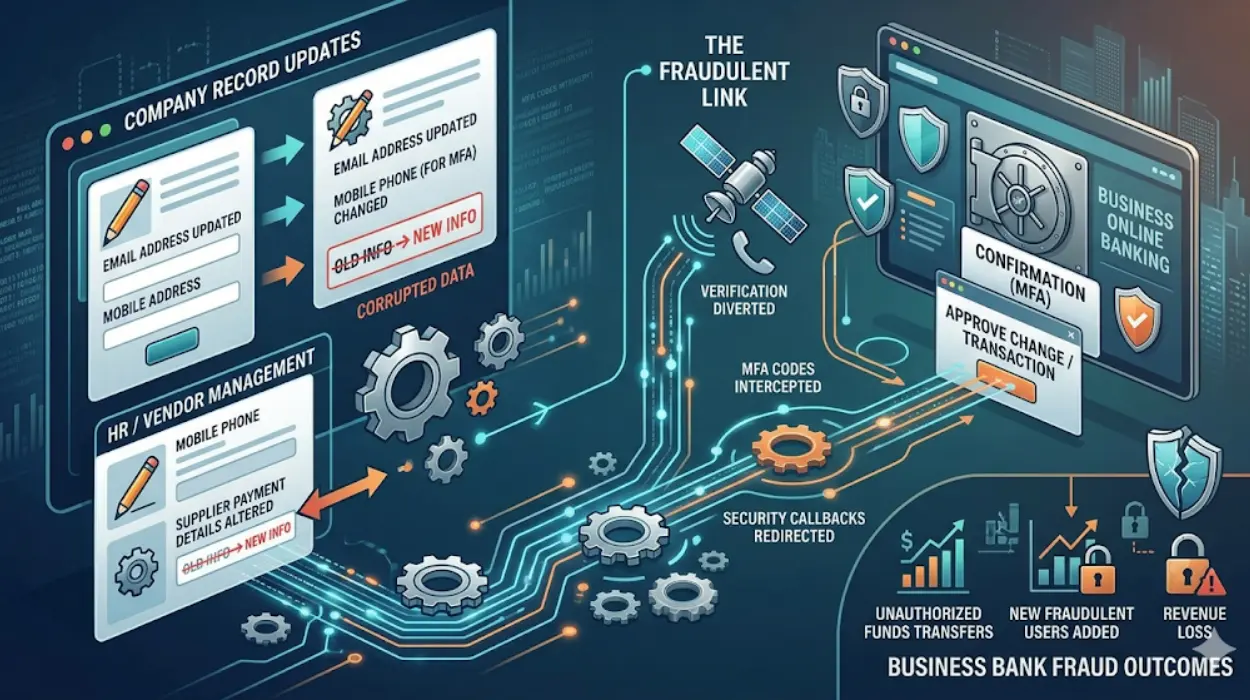
Company record changes, such as alterations to director details or registered addresses at Companies House, often serve as a critical early warning sign for business bank fraud. Fraudsters exploit these updates to hijack company identities, enabling unauthorized access to bank accounts and financial diversion.
Understanding Company Record Changes
Company record changes involve official updates to a business’s public profile, typically filed with government registries like Companies House in the UK. These modifications can include appointing or removing directors, shifting registered office addresses, or amending share structures, all of which are publicly accessible and verifiable. Such changes are routine for legitimate operations but become risky when unauthorized, as they allow criminals to impersonate legitimate entities without immediate detection.
In practice, a fraudster might file a falsified change to insert themselves as a director, gaining apparent authority to deal with banks. Banks often cross-reference Companies House data during account verifications, so a tampered record can bypass initial checks, leading directly to fraudulent transactions like wire transfers or loan applications. This link underscores why monitoring these records is foundational to fraud protection strategies.
How Fraudsters Exploit Record Alterations
Fraudsters target company records because they provide a veneer of legitimacy for downstream crimes, particularly business bank fraud. By submitting forged documents such as fake ID proofs or powers of attorney they trigger approvals that ripple into banking systems. For instance, a changed director detail might enable the criminal to reset online banking credentials, mimicking internal authorization.
This exploitation thrives in the gap between filing and verification; Companies House processes changes swiftly, often within 24 hours, while banks may not re-verify until a transaction flags suspicion. Consider a scenario where a small trading firm notices its address updated overnight to a distant location this could precede fraudulent invoices redirected to mule accounts. Semantic keywords like “unauthorised Companies House filings” highlight how these tactics align with broader identity theft patterns in corporate fraud.
Real-time monitoring bridges this vulnerability, alerting owners to discrepancies before bank impacts escalate. Without it, manipulated records facilitate account takeovers, where criminals drain funds or launder money through the business’s established credit lines.
The Mechanics of Business Bank Fraud
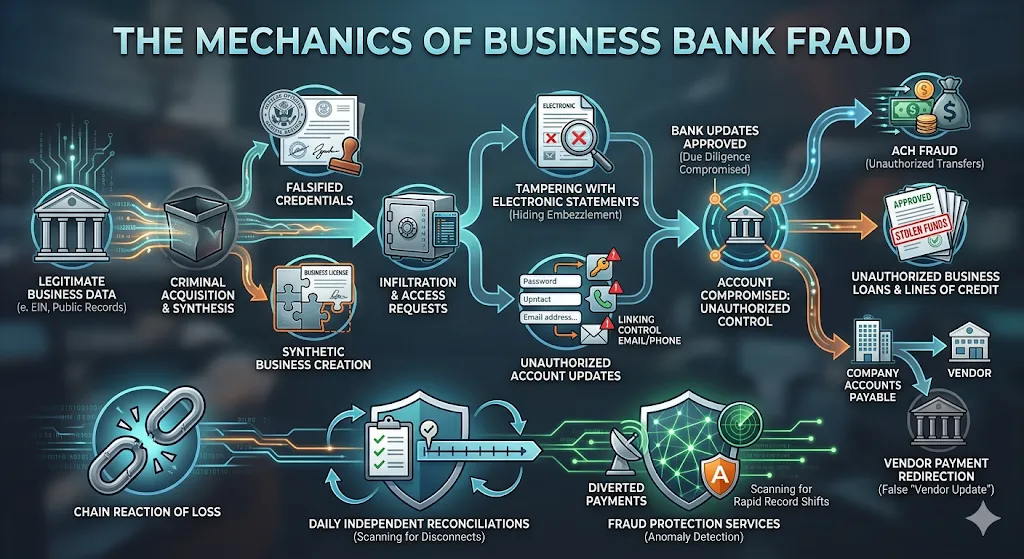
Business bank fraud manifests when criminals, armed with falsified company credentials, infiltrate financial accounts to siphon funds or issue bogus payments. Common vectors include electronic statement tampering, where PDFs are edited to hide embezzlement, or synthetic business creation using piecemeal real data.
Once records are altered, fraudsters request bank updates matching the new details, such as linking a control email or phone number. Banks, relying on public records for due diligence, may approve, opening doors to ACH fraud or unauthorized loans. A case-study-style example: a logistics company suffers a director change, followed by a “vendor update” diverting supplier payments losses mount until reconciliation reveals the disconnect.
This chain reaction emphasizes prevention through layered defenses, including daily reconciliations outside the payment chain. Fraud protection services integrate these checks, scanning for anomalies like rapid record shifts tied to banking activity.
Red Flags in Record Changes Tied to Fraud
Spotting the link requires vigilance for patterns like sudden director additions from unrelated regions or address changes to high-risk jurisdictions. Inconsistent business information across registries such as mismatched filings signals synthetic fraud, where fabricated entities seek credit lines.
Unusual timing amplifies risks; changes filed post-weekend or during holidays evade scrutiny. Banks report spikes in fraud after such updates, with criminals exploiting the 24-hour reporting window for reversals. Proactive measures, like fraud protection that automates record audits, catch these early, safeguarding against bank infiltrations.
Why Real-Time Monitoring Matters
Delve deeper into why real-time alerts are critical for business bank security to grasp preventive power. Instant notifications on Companies House updates allow immediate challenges, halting fraud propagation to banks.Form My Company leverages this for clients, ensuring deviations trigger human-reviewed responses.
In mergers or expansions, vulnerability peaks as records flux naturally yet fraudsters mimic these, inflating revenues or concealing liabilities. Structured monitoring decouples legitimate evolution from malice, preserving financial integrity.
Proactive Steps to Sever the Link
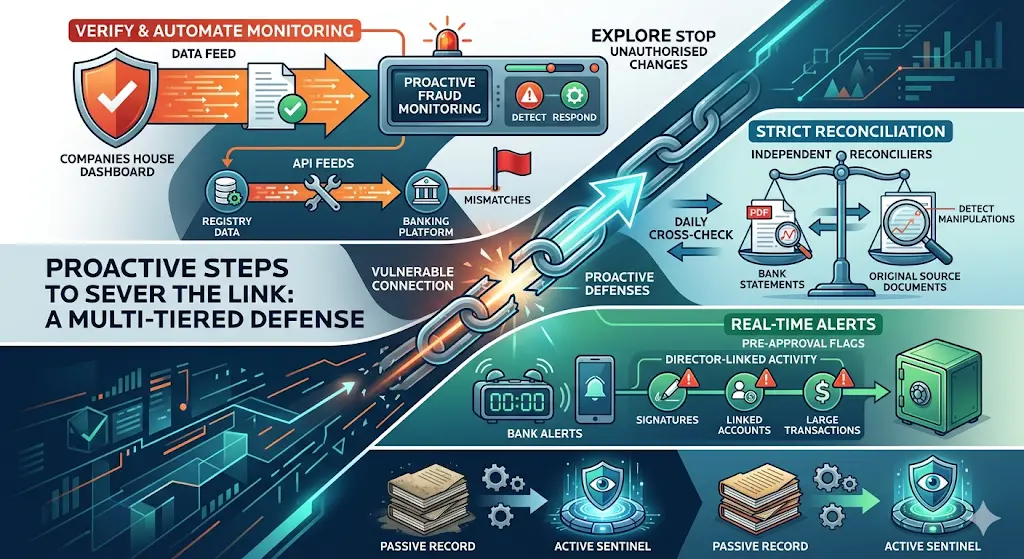
Businesses must adopt multi-tiered defenses: verify all filings personally via Companies House dashboards and enable bank alerts for director-linked activity. Assign independent reconcilers daily, cross-checking statements against originals to detect PDF manipulations.
For comprehensive shielding, explore stop unauthorised changes with our proactive fraud monitoring, which automates detection and response. Integrate API feeds from registries to banking platforms, flagging mismatches pre-approval. These steps transform passive records into active sentinels against fraud.
Legal and Regulatory Context
UK regulations mandate accurate Companies House filings under the Companies Act 2006, with penalties for inaccuracies but enforcement lags behind fraud speed. The Economic Crime and Corporate Transparency Act 2023 bolsters verification, requiring ID for directors, yet gaps persist for swift changes.
Banks adhere to PSR regulations for reimbursement, but only if reported timely underscoring record vigilance. Fraud protection from providers like Form My Company aligns with these, offering compliant tools for TOFU awareness in fraud defense.
Impact on Small and Medium Enterprises
SMEs face heightened exposure, lacking resources for constant oversight; a single record tweak can cripple cash flow via frozen accounts or drained reserves. Statistics show account takeovers cost UK firms millions annually, often tracing to registry exploits.
Yet, affordable services democratize protection Form My Company’s fraud protection delivers enterprise-grade monitoring, empowering SMEs to compete securely. Narrative shifts from victimhood to resilience through informed, proactive governance.
Technological Solutions for Fraud Detection
Advanced tools parse public data against proprietary profiles, using AI to score change risks. Blockchain-ledgered records promise tamper-proofing, though adoption trails. Currently, hybrid services human expertise plus automation excel, as in Form My Company’s offerings.
Scenario: a retailer detects an address swap via alerts, contests it within hours, averting a £50,000 wire fraud. Such interventions quantify ROI, blending tech with strategy for robust defense.
Building a Fraud-Resilient Culture
Train teams on phishing lures mimicking registry notices, fostering dual authorization for changes. Culture embeds fraud as a shared priority, from boardrooms to accounts payable.
Form My Company supports this ethos, providing tailored fraud protection that educates alongside secures. Businesses adopting these thrive amid threats, turning vulnerabilities into fortified strengths.
Form My Company delivers professional fraud protection solutions, empowering businesses to monitor record changes and thwart bank fraud effectively.
What is business fraud protection from Form My Company?
Fraud protection from Form My Company involves monitoring Companies House records for unauthorized changes like director details or addresses that could lead to bank account takeovers. It provides real-time alerts to help businesses detect and challenge suspicious filings quickly. This service safeguards financial assets by bridging the gap between registry updates and potential banking fraud.
How does company record changes link to bank fraud?
Fraudsters alter company records at Companies House, such as adding fake directors, to gain apparent legitimacy for accessing business bank accounts. These changes enable unauthorized transactions like wire transfers or loan applications before owners notice. Proactive monitoring of such updates prevents the escalation to full-scale bank fraud.
Why are real-time alerts important for fraud protection?
Real-time alerts notify business owners instantly of Companies House changes, allowing immediate verification and reversal to stop fraud in its tracks. Without them, delays can lead to account compromises and financial losses. Form My Company’s fraud protection uses these alerts as a core defense against rapid fraud tactics.
Can Form My Company stop unauthorized Companies House filings?
Form My Company’s fraud protection service tracks filings in real-time and assists with swift challenges to unauthorized changes. It combines automated monitoring with expert guidance to restore accurate records and secure bank accounts. This approach minimizes risks from fraudulent director or address updates.
What are common signs of fraud in business bank accounts?
Common signs include sudden Companies House changes mismatched with internal records, unexpected bank login attempts, or altered payment instructions. Fraud protection from Form My Company helps identify these early through record audits and alerts. Addressing them promptly prevents fund diversion or account takeovers.