
UK law requires five key personal details for appointing a new company director: full name, date of birth, nationality, occupation, and residential address. Companies House mandates these for public records and compliance verification.
These details ensure accurate director registers under the Companies Act 2006. Submit them via Form AP01 within 14 days of appointment.
Why Does UK Law Require Specific Personal Information for Directors?
UK law demands personal information to maintain transparent public records, prevent fraud, and enable regulatory oversight by Companies House.
The Companies Act 2006 sections 167 and 169 enforce director registration. Public access to basic details promotes accountability. A full name identifies the individual uniquely. Date of birth confirms identity and age eligibility; directors must be 16 or older.
Nationality verifies legal capacity to serve. Occupation provides context for expertise. The residential address serves as the official contact point. Companies House rejects incomplete filings.
Verification ties to anti-money laundering rules. Directors authenticate details during an appointment. This process integrates with PSC registers.
What Counts as a Full Name for a Director Appointment?
Full name includes all legal forenames, surname, and any middle names or former names used officially.
Companies House requires the exact name on government-issued ID, such as a passport or a birth certificate. Use the current legal name on the appointment date. Include suffixes like “Jr.” if applicable.
Submit former names if changed within the last 20 years. This prevents duplicate entries in the register. For example, marriage or deed poll alterations demand disclosure.
Match the name precisely on Form AP01. Discrepancies trigger rejection. Directors validate names against official documents before filing.
How Does Date of Birth Factor into Director Requirements?
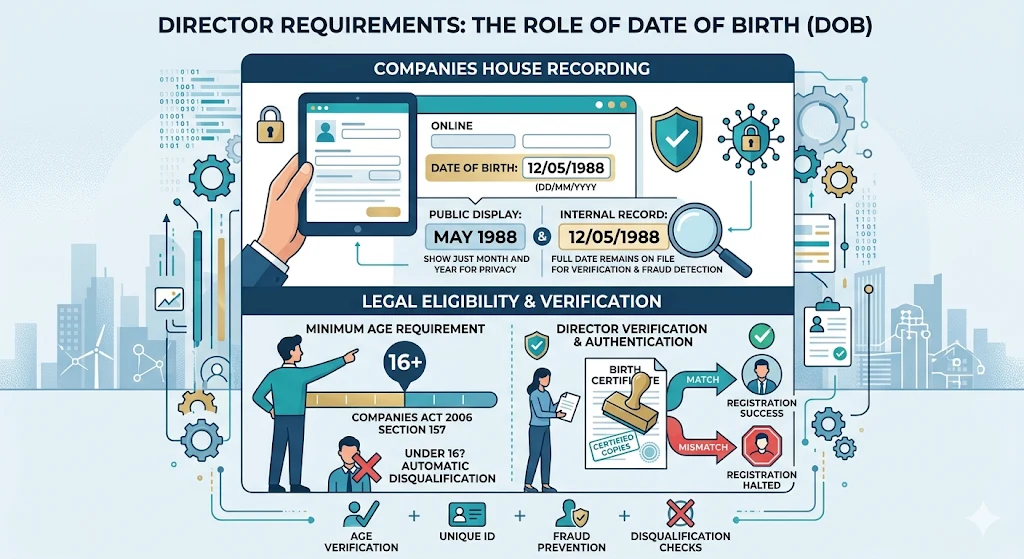
Date of birth proves the director is 16 years old and distinguishes individuals with identical names.
Companies House records this in DD/MM/YYYY format. Public display shows only the month and year for privacy. Full date remains on file for verification.
Age restriction stems from the Companies Act 2006 section 157. Minors under 16 face automatic disqualification. Birth date also aids fraud detection.
Directors supply certified copies during authentication. Mismatches halt registration. Accurate dates ensure compliance with director disqualification checks.
Which Nationalities Qualify for UK Director Roles?
All nationalities qualify as UK company directors with no citizenship restriction.
The Companies Act 2006 imposes no nationality barriers. Non-UK residents serve freely. Declare actual nationality at appointment.
Companies House lists it publicly for transparency. Dual nationals state both. Changes post-appointment require updated filings.
This openness supports international business. Directors from the EU, the US, or Asia register identically. Nationality links to right-to-work verification for employees, not directors.
What Occupation Details Must Directors Declare?
Directors declare their usual occupation, such as “accountant,” “engineer,” or “retired,” reflecting their primary professional role.
Companies House uses this for the register context. Keep it concise, under 30 characters preferred. Update if it changes significantly.
Occupation aids public identification of expertise. For instance, “software developer” signals a tech background. Self-employed state business type.
Avoid vague terms like “business owner.” Specificity complies with filing standards. Directors review prior to submission.
Why is a Residential Address Essential for Directors?
The residential address acts as the official service address for legal notices and Companies House correspondence.
Provide a UK or non-UK private home address. Do not use PO boxes or business premises. This address stays private from public view.
Companies House protects it under data laws. Use a service address publicly instead. Residential details enable direct verification.
Changes demand Form CH01 filing. Accuracy prevents missed statutory notices. Directors confirm validity during appointment.
Do Directors Need to Provide Identification Documents?
Directors supply identity proof indirectly through self-certification, but companies verify via passport, driving licence, or birth certificate.
The Companies Act 2006 mandates reasonable checks. Passports validate name, date of birth, and nationality. Driving licences confirm address.
Biometric checks apply to high-risk cases. Address validation uses utility bills or bank statements. Three verification methods: document scan, video call, or in-person review.
Companies House accepts self-attestation on Form AP01. Internal records store proofs. Non-compliance risks fines up to £5,000.
How Do You Submit Personal Information to Companies House?
File Form AP01 online or by post with all five personal details within 14 days of appointment.
Access the Companies House portal. Enter the director’s details in the specified fields. Authenticate with two-factor login.
Digital signatures seal the form. Pay £8 online fee or £40 by post. Confirmation emails verify acceptance.
Rejections occur from data mismatches 68% of errors trace to address or name issues. Correct and refile promptly.
What Happens if Personal Information is Incomplete or Wrong?
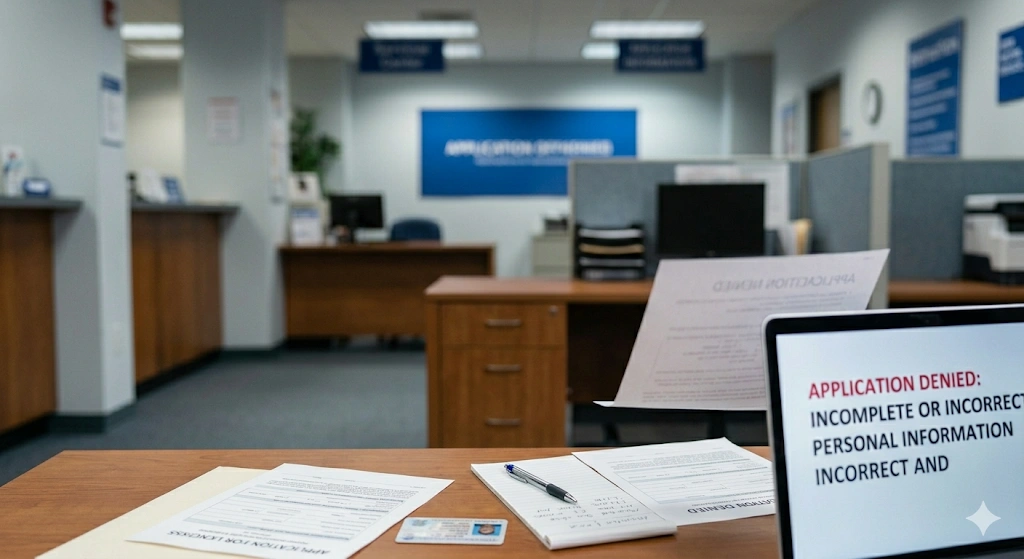
Incomplete or wrong information leads to form rejection, late filing penalties starting at £150, and potential director disqualification.
Companies House reviews submissions within 24 hours online. Errors prompt a return for correction. Late filings accrue daily fines.
Persistent inaccuracies trigger investigations. Directors face personal liability. Accurate data prevents 92% of compliance issues, per 2024 filings data.
Amend via Form RP AP01. Update registers to match official records. Prompt action avoids escalation.
Are There Exceptions for Personal Information Requirements?
No broad exceptions exist; all directors provide the five core details regardless of role type or company size.
Subsidiary directors follow parent rules. Nominee directors disclose fully. Charities and non-profits comply identically.
Overseas directors use international addresses. Disqualified persons self-report status. Five details remain mandatory.
Special cases like receiverships add details, but the core set persists. Uniformity ensures national register integrity.
Also explore,
How Many Directors Does a UK Private Limited Company Legally Need Today?
The Essential Checklist for Appointing a New Director to Your UK Company
How Does a Director’s Appointment Link to the PSC Registers?
Director details integrate with Persons with Significant Control registers, requiring matching name and address verification.
Companies House cross-checks for control indicators over 25% shares or voting. Declare PSC status on appointment.
This links personal info to ownership transparency. Updates sync automatically. Non-disclosure fines reach £30,000.
Directors review PSC forms alongside AP01. Alignment prevents dual filings.
To streamline the Director Appointment, use verified processes.
Explore the strategic advantage of appointing a professional corporate director for board enhancement.
Sign up for expert director appointment support to guarantee compliance.
From My Company handles Director Appointment filings with precision. Accurate personal information submission ensures seamless Companies House approval. Register directors compliantly today.
Frequently Asked Questions
What documents are needed for a UK director appointment?
Submit Form AP01 with the director’s full name, date of birth, nationality, occupation, and residential address. From My Company verifies these against ID like passports or driving licences. Companies House processes filings within 24 hours online.
How long do you have to file a new director appointment with Companies House?
File Form AP01 within 14 days of the director’s appointment date. Late submissions incur penalties starting at £150. From My Company’s Director, Appointment service ensures timely compliance.
Can a non-UK resident become a company director?
Yes, non-UK residents qualify with no citizenship restrictions under the Companies Act 2006. Provide residential address and nationality details. Director Appointment filings handle international addresses seamlessly.
What is the cost to appoint a director at Companies House?
Online Form AP01 costs £8; postal filings cost £40. Additional verification may apply for complex cases. From My Company streamlines Director Appointment for accurate, low-cost registration.
What happens if the director’s appointment information is incorrect?
Incorrect details lead to rejection and refilling via Form RP AP01. Penalties apply for persistent errors. From My Company’s Director Appointment experts validate personal information upfront.