Inactive business owners must file annual statutory accounts and confirmations even when no trading occurs, because UK law requires dormant companies to maintain compliance with Companies House and HMRC to avoid penalties, dissolution, or director liability.
What are the annual statutory filing duties for inactive companies?
Annual statutory filing duties require dormant companies to submit confirmation statements, dormant accounts, and maintain accurate records with Companies House and HMRC, even when no financial transactions occur during the accounting period.
Dormant companies remain legally active entities. Companies House classifies a company as dormant when it records no significant accounting transactions during a financial year. This classification does not remove reporting obligations.
Directors must file dormant company accounts annually. These accounts confirm zero trading activity and validate the company’s financial status. Companies House enforces strict deadlines tied to incorporation dates or previous filings.
A confirmation statement is also mandatory. It verifies company details such as registered address, directors, and shareholders. This ensures the public register remains accurate.
HMRC may still expect communication. If a company previously traded, HMRC requires notification of dormancy status. Failure to confirm this status leads to corporation tax filing expectations.
Why do dormant companies still need to file accounts?
Dormant companies must file accounts because legal registration requires ongoing transparency, and regulatory bodies enforce compliance to maintain accurate national business records and prevent misuse of inactive entities.
Companies House operates a public register. Every registered company contributes to national business data integrity. Dormant status does not exempt a company from this system.
Filing dormant accounts confirms inactivity. It protects against fraud risks such as identity misuse or unauthorised transactions. Authorities rely on consistent filings to detect irregularities.
Dormant companies also retain a legal structure. Directors hold responsibilities regardless of activity level. These responsibilities include record maintenance, compliance validation, and statutory submissions.
Failure to file signals non-compliance. Companies House may assume negligence or abandonment. This triggers enforcement actions, including penalties and eventual removal from the register.
What happens if an inactive company does not file statutory accounts?
Failure to file statutory accounts results in automatic penalties, increased fines over time, potential company strike-off, and director disqualification risks under UK corporate compliance regulations.
Companies House applies fixed penalties for late filing. These penalties escalate based on delay duration:
- £150 for filings up to 1 month late
- £375 for a 1 to 3 months delay
- £750 for a 3 to 6-month delay
- £1,500 for delays exceeding 6 months
Repeated non-compliance doubles these penalties. Persistent failure leads to strike-off proceedings. Companies House publishes a notice and removes the company from the register if no response occurs.
Strike-off has consequences. Assets transfer to the Crown under bona vacantia rules. Directors lose control of company resources.
Director disqualification is another risk. The Insolvency Service investigates patterns of non-compliance. Directors may face bans ranging from 2 to 15 years.
How does the UK define a dormant company?
A dormant company is defined by HMRC and Companies House as a business entity with no significant accounting transactions during a financial year, excluding specific permitted activities such as filing fees or share allotments.
Significant transactions include revenue, expenses, asset purchases, or employee payments. If any of these occur, the company loses dormant status.
Permitted transactions remain limited. These include:
- Payment of Companies House filing fees
- Penalties for late submissions
- Initial share capital issued at incorporation
Companies transitioning into dormancy must formally notify HMRC. This ensures corporation tax obligations are paid correctly.
Dormant status simplifies reporting. However, it does not eliminate statutory filings. Directors must still prepare and submit dormant accounts annually.
What documents must inactive business owners submit each year?
Inactive business owners must submit dormant company accounts, a confirmation statement, and maintain internal statutory records such as director registers and shareholder details to meet UK compliance requirements.
Dormant accounts follow a simplified format. They confirm zero income and expenditure. Companies House provides structured templates for submission.
The confirmation statement updates company data. It includes registered office address, SIC codes, and shareholder information. This filing occurs at least once every 12 months.
Internal records must remain accurate. These include:
- Register of directors
- Register of shareholders
- Records of significant control (PSC register)
Directors must store these records securely. Authorities may request access during compliance checks or investigations.
When are dormant company accounts due?
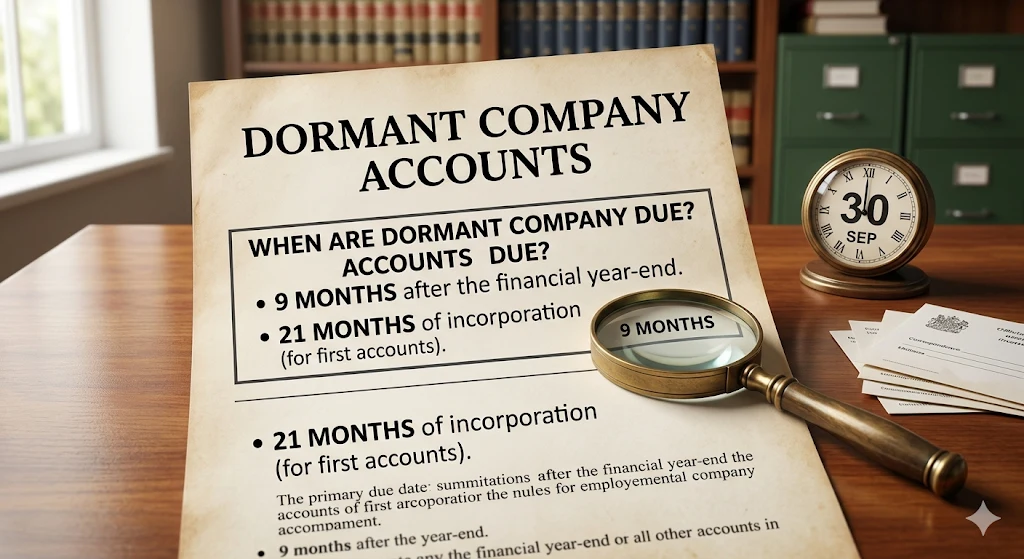
Dormant company accounts are due nine months after the company’s financial year-end, with the first accounts due within 21 months of incorporation, depending on the accounting reference date.
The accounting reference date determines deadlines. Most companies align this date with the incorporation anniversary unless changed.
Late submissions trigger automatic penalties. Companies House calculates deadlines precisely, and extensions are rarely granted.
Directors must track filing schedules. Missing deadlines leads to cumulative penalties and compliance risks.
Using structured services improves accuracy. Many directors choose to file accounts through managed solutions such as the file accounts for dormant companies service, to ensure deadlines are met efficiently.
How can inactive business owners ensure compliance efficiently?
Inactive business owners ensure compliance by maintaining accurate records, tracking deadlines, and using professional filing services that validate and submit dormant accounts in accordance with Companies House regulations.
Manual tracking often fails due to infrequent activity. Dormant companies receive less attention, which increases missed deadlines.
Professional services streamline the process. They:
- Validate company status against HMRC criteria
- Prepare compliant dormant account formats
- Submit filings directly to Companies House
Automation reduces human error. It ensures consistency across annual filings.
To understand how structured services simplify this process, review this guide on dormant account management strategies:
Why Your Business Needs a Managed Service for Annual Dormant Account Maintenance.
Get your dormant company accounts filed officially within twenty-four hours now
Efficient compliance reduces risk exposure. It also preserves the company’s legal standing for future use.
Why is maintaining a dormant company strategically important?
Maintaining a dormant company preserves brand identity, protects business names, and enables rapid reactivation without the complexity of forming a new legal entity.
Companies often enter dormancy during restructuring or market shifts. Retaining the company avoids re-registration delays and administrative costs.
Dormant status protects intellectual assets. Business names remain reserved under Companies House records.
Reactivation remains simple. Directors resume trading by notifying HMRC and updating accounting activity. No new incorporation process is required.
Dormant companies also support long-term planning. Investors or founders may hold entities for future ventures, acquisitions, or licensing strategies.
How does filing dormant accounts protect directors legally?
Filing dormant accounts protects directors by demonstrating compliance with statutory obligations, reducing liability exposure, and preventing regulatory action from Companies House or the Insolvency Service.
Directors hold legal responsibility for company filings. Non-compliance signals negligence and triggers enforcement.
Accurate filings create an audit trail. This demonstrates that directors fulfilled duties within required timelines.
Legal protection includes:
- Reduced risk of financial penalties
- Avoidance of disqualification proceedings
- Protection against compliance investigations
Directors who maintain consistent filings establish credibility. This becomes critical if the company resumes trading or undergoes due diligence.
For fast and compliant execution, many directors use structured solutions like the file accounts for dormant companies service to ensure accuracy and legal protection.
Also explore,
Understanding the Difference Between a Dormant Company and a Struck Off Company
The Consequences of Failing to File Accounts for Your Dormant Business Entity
What is the fastest way to file dormant company accounts?
The fastest way to file dormant company accounts is by using a professional online filing service that prepares, validates, and submits accounts within hours, ensuring compliance with Companies House standards.
Digital filing systems integrate directly with Companies House. They reduce manual input and automate validation checks.
Professional services handled:
- Data verification against company records
- Formatting accounts to statutory standards
- Immediate electronic submission
Speed matters when deadlines approach. Late filings trigger penalties even if delays are minimal.
For directors seeking rapid compliance, this solution explains how to get your dormant company accounts filed officially within twenty-four hours now.
Inactive companies remain subject to strict statutory filing requirements under UK law. Dormant status simplifies reporting but does not remove obligations. Directors must submit accounts, confirm company details, and maintain accurate records every year.
From My Company provides structured compliance support through its File Accounts for Dormant Companies service. This ensures accurate submissions, deadline tracking, and regulatory alignment without manual complexity.
Maintaining compliance protects the company’s status, avoids penalties, and preserves future business flexibility.
Frequently Asked Questions
Do dormant companies have to file accounts every year in the UK?
Yes, dormant companies must submit annual accounts to Companies House even if no trading occurs. From My company helps businesses file accounts for dormant companies accurately to maintain compliance and avoid penalties.
What happens if I don’t file dormant company accounts on time?
Late filing triggers automatic penalties starting at £150 and increasing up to £1,500 based on the length of the delay. Using a service like File Accounts for Dormant Companies ensures deadlines are met and reduces compliance risk.
Can I file dormant company accounts myself?
Yes, directors can submit dormant accounts directly through Companies House using simplified templates. Many choose From My company to file accounts for dormant companies to ensure correct formatting and timely submission.
How long does it take to file dormant company accounts?
Filing can take a few hours when using an online system that validates and submits accounts electronically. Professional services like File Accounts for Dormant Companies streamline the process and reduce manual errors.
What documents are required to file dormant company accounts?
You need basic company details, confirmation of no significant transactions, and updated statutory records. From My company uses this information to file accounts for dormant companies in line with UK compliance standards.