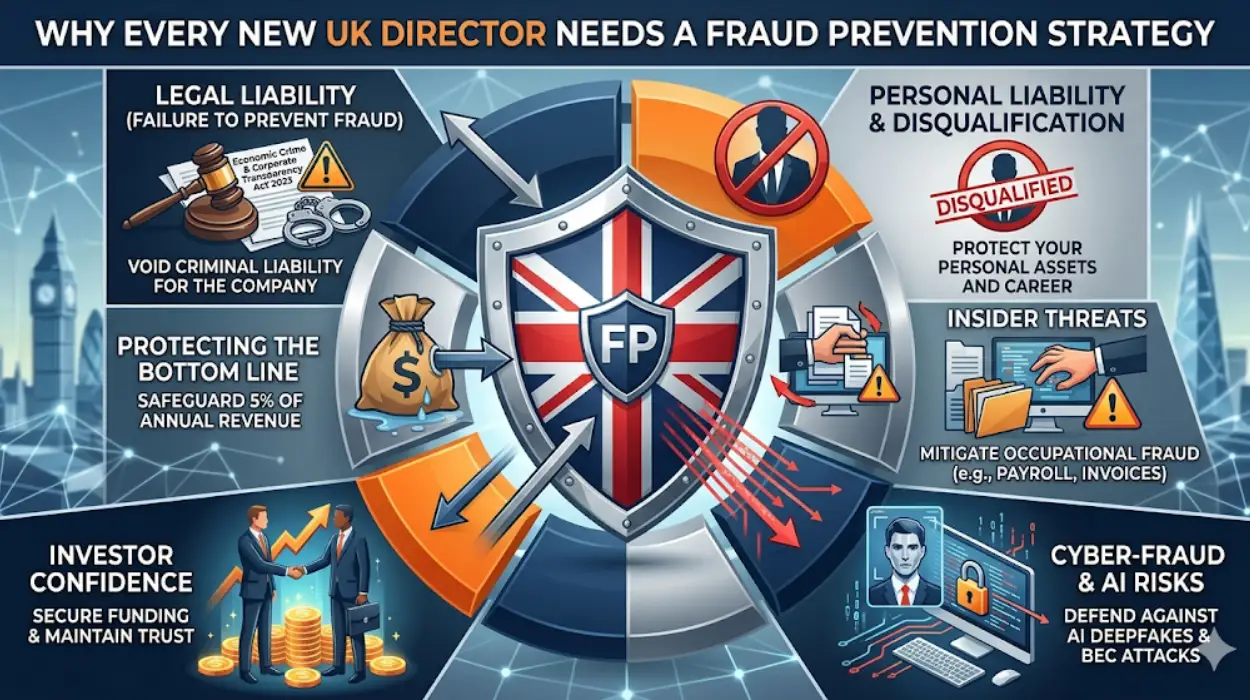
Every new UK director needs a fraud prevention strategy to protect their company from financial losses, legal liabilities, and reputational damage that fraud can cause. Implementing robust measures early ensures compliance with UK regulations like the Companies Act 2006 and safeguards the business from rising cyber threats.
The Growing Fraud Threat to UK Businesses
Fraud poses a significant risk to new UK companies, with the latest statistics showing over £200 billion lost annually to fraud across the economy. New directors, often inexperienced in governance, face heightened vulnerability as fraudsters target startups with weak internal controls. For instance, business email compromise schemes have surged, tricking directors into authorising fraudulent payments that drain company funds within hours.
This vulnerability stems from rapid company formation under Companies House, where basic filings leave gaps exploitable by identity thieves or insider threats. Directors appointed under the Companies Act bear personal liability for failing to prevent fraud, including fines or disqualification. A fraud prevention strategy addresses these risks head-on by embedding checks like transaction verification and access controls from day one.
Legal Duties of UK Directors Under Fraud Laws
UK directors have statutory duties under the Companies Act 2006 to promote company success and exercise reasonable care, skill, and diligence. Section 172 requires directors to consider long-term consequences, including fraud risks that could jeopardise stakeholders. Failure to implement fraud controls can lead to personal liability, as seen in cases where directors were held accountable for inadequate oversight.
The Economic Crime and Corporate Transparency Act 2023 further mandates directors to assess and mitigate fraud risks, with Companies House gaining powers to scrutinise suspicious activities. New directors must integrate these obligations into board practices, such as regular risk assessments and audit trails. Without a dedicated fraud prevention strategy, even honest directors risk breaching these duties amid sophisticated scams like invoice fraud or phishing attacks targeting director approvals.
Common Fraud Types Targeting New Directors
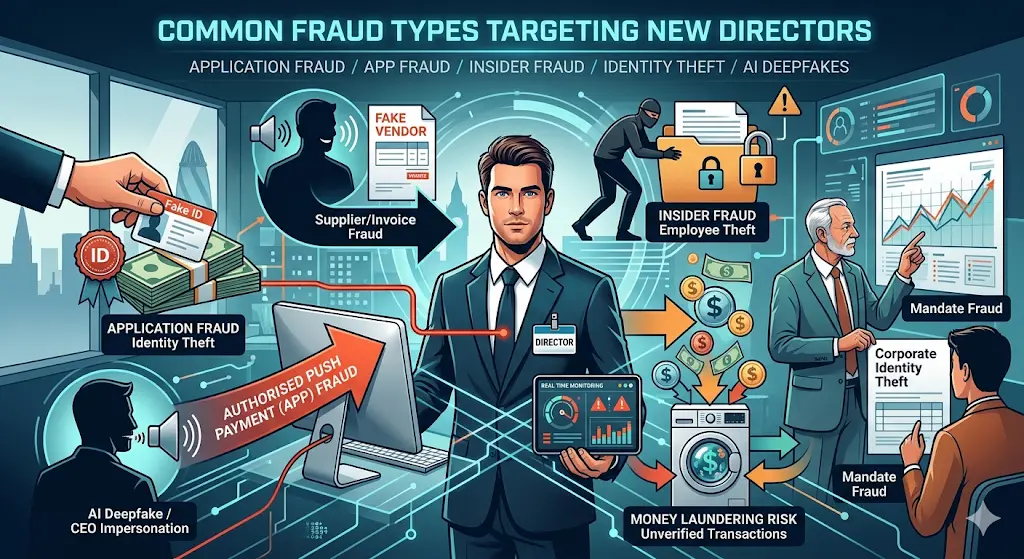
New UK directors encounter various fraud schemes, starting with application fraud during company setup, where fake identities secure loans or grants. Authorised push payment fraud tricks directors into transferring funds to scammers posing as legitimate vendors, costing UK firms £485 million in 2024 alone. Director-level impersonation, using spoofed emails, has become rampant with AI-generated deepfakes mimicking voices or signatures.
Insider fraud from early employees or suppliers exploits lax onboarding, while money laundering risks arise from unverified transactions. These threats compound for startups in fintech or e-commerce, where high transaction volumes amplify exposure. A comprehensive fraud prevention strategy categorises these risks, prioritising real-time monitoring to detect anomalies before losses occur.
Building a Proactive Fraud Prevention Framework
A strong fraud prevention strategy begins with risk assessment, mapping vulnerabilities specific to the business model, such as supplier dependencies or digital payment systems. Directors should establish multi-layered defences, including segregation of duties where no single person approves high-value transactions. Regular training equips staff to spot red flags like urgent payment requests or unfamiliar vendors.
Technology plays a pivotal role, with tools for automated verification integrated into daily operations. For example, dual-authorisation protocols for transfers above £5,000 prevent hasty errors. Documentation of all decisions creates an audit trail, essential for regulatory defence. This framework evolves with business growth, incorporating annual reviews to address emerging threats like quantum computing risks to encryption.
Integrating Technology for Fraud Detection
Modern fraud prevention relies on AI-driven tools that analyse patterns in real-time, flagging unusual behaviours such as logins from new locations. UK startups benefit from solutions offering device fingerprinting and behavioural biometrics, which detect anomalies without disrupting legitimate users. These systems reduce false positives through machine learning, adapting to the company’s transaction history.
For new directors, cloud-based platforms provide scalable protection, integrating with accounting software like Xero or QuickBooks. Features like geolocation checks block overseas IP attempts mimicking UK vendors. When evaluating options, consider compliance with GDPR and PSD2, ensuring data protection alongside fraud defence. Form My Company‘s Fraud Protection service delivers these advanced safeguards, helping directors secure operations effortlessly.
Compliance and Reporting Obligations
UK law demands prompt fraud reporting to Action Fraud and the board, with directors notifying insurers immediately to activate coverage. The Fraud Act 2006 criminalises false representation for gain, holding directors accountable for systemic failures. A prevention strategy includes incident response plans, outlining steps from detection to forensic review.
Annual confirmation statements to Companies House must reflect robust controls, avoiding scrutiny flags. For regulated sectors, alignment with Financial Conduct Authority guidelines adds layers like transaction monitoring. Proactive compliance not only averts penalties but builds investor confidence, as fraud-free records signal governance strength.
Case Study: Lessons from a Startup Breach
Consider a hypothetical London tech startup where a new director overlooked email verification, leading to a £50,000 fraudulent wire transfer disguised as a supplier invoice. The scam exploited a free email domain mimicking the vendor’s, bypassing basic checks. Post-incident, implementing IP whitelisting and vendor validation protocols halted further attempts, recovering partial funds via swift bank reversal.
This scenario underscores the need for ongoing vigilance; the director’s subsequent strategy included quarterly simulations and AI alerts, slashing risk exposure. Such practical insights guide new UK directors toward resilient setups, blending human oversight with tech defences for comprehensive protection.
Training and Culture for Fraud Awareness
Fostering a fraud-aware culture starts at the top, with directors modelling scepticism toward unsolicited requests. Mandatory onboarding sessions cover phishing simulations, teaching recognition of urgency tactics or mismatched details. Regular workshops reinforce policies, using real UK cases like the 2024 Barclays impersonation wave.
Metrics track training efficacy, such as reduced click rates on test phishing emails. This human layer complements tech tools, as even advanced systems falter against social engineering. New directors embedding awareness early create a defensive mindset, turning employees into the first line of fraud defence.
Evaluating Fraud Protection Solutions
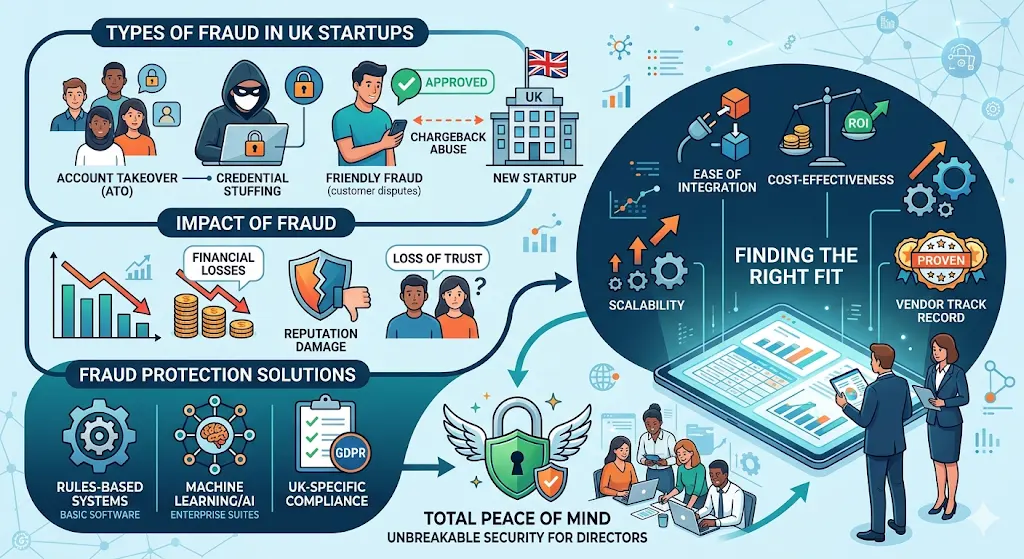
New directors must weigh tools for ease of integration and cost-effectiveness, especially at TOFU stages. Dive deeper into options by evaluating the best fraud protection tools for new UK startups in our detailed guide, which compares features and ROI. Solutions vary from basic software to enterprise suites, prioritising those with UK-specific compliance.
Budget-conscious startups favour modular services scaling with revenue, avoiding overkill. Prioritise vendors with proven track records in reducing chargebacks and manual reviews. For decision-makers ready to act, explore why you should buy fraud protection today for total peace of mind as a director, ensuring unbreakable security.
Partnering with Experts for Tailored Protection
Professional services streamline implementation, offering bespoke strategies aligned with UK regulations. Form My Company specialises in Fraud Protection, providing end-to-end setup from risk audits to monitoring dashboards. Their expertise empowers directors to focus on growth, not threats.
This partnership delivers peace of mind, with 24/7 support and custom reporting. As fraud evolves, expert updates keep strategies current, safeguarding long-term viability.
In summary, Form My Company offers professional Fraud Protection solutions that equip new UK directors with reliable defences against fraud. By prioritising prevention, businesses thrive securely in a high-risk landscape.
What is fraud protection for UK businesses?
Fraud protection for UK businesses involves tools and strategies to detect, prevent, and respond to scams like phishing, invoice fraud, and authorised push payments. Services such as Form My Company’s Fraud Protection monitor transactions in real-time, verify identities, and ensure compliance with regulations like the Companies Act 2006. This safeguards directors from personal liability and financial losses.
Why do new UK company directors need fraud protection?
New UK company directors need fraud protection to meet legal duties under the Economic Crime and Corporate Transparency Act 2023, which requires assessing fraud risks. Form My Company’s Fraud Protection provides essential controls like multi-factor approvals and anomaly detection, protecting startups from common threats such as business email compromise. It helps avoid fines, reputational damage, and disqualification.
How does Form My Company’s Fraud Protection service work?
Form My Company’s Fraud Protection service integrates AI-driven monitoring with your accounting systems to flag suspicious activities, such as unusual payment requests or IP mismatches. It includes automated alerts, audit trails, and employee training modules tailored for UK compliance. Directors gain dashboards for oversight, reducing manual reviews by up to 70%.
What are common types of fraud targeting UK startups?
Common fraud types targeting UK startups include authorised push payment scams, CEO fraud via deepfake impersonations, and application fraud during company setup. Form My Company’s Fraud Protection counters these with device fingerprinting, geolocation checks, and vendor validation protocols. Proactive measures like these minimise losses reported at £485 million annually by UK Finance.
How much does fraud protection cost for small UK businesses?
Fraud protection costs for small UK businesses typically range from £50–£200 monthly, depending on transaction volume and features like real-time AI analysis. Form My Company’s Fraud Protection offers scalable plans starting affordably, with ROI from prevented losses far exceeding fees. Custom quotes ensure alignment with budget while covering essential compliance needs.