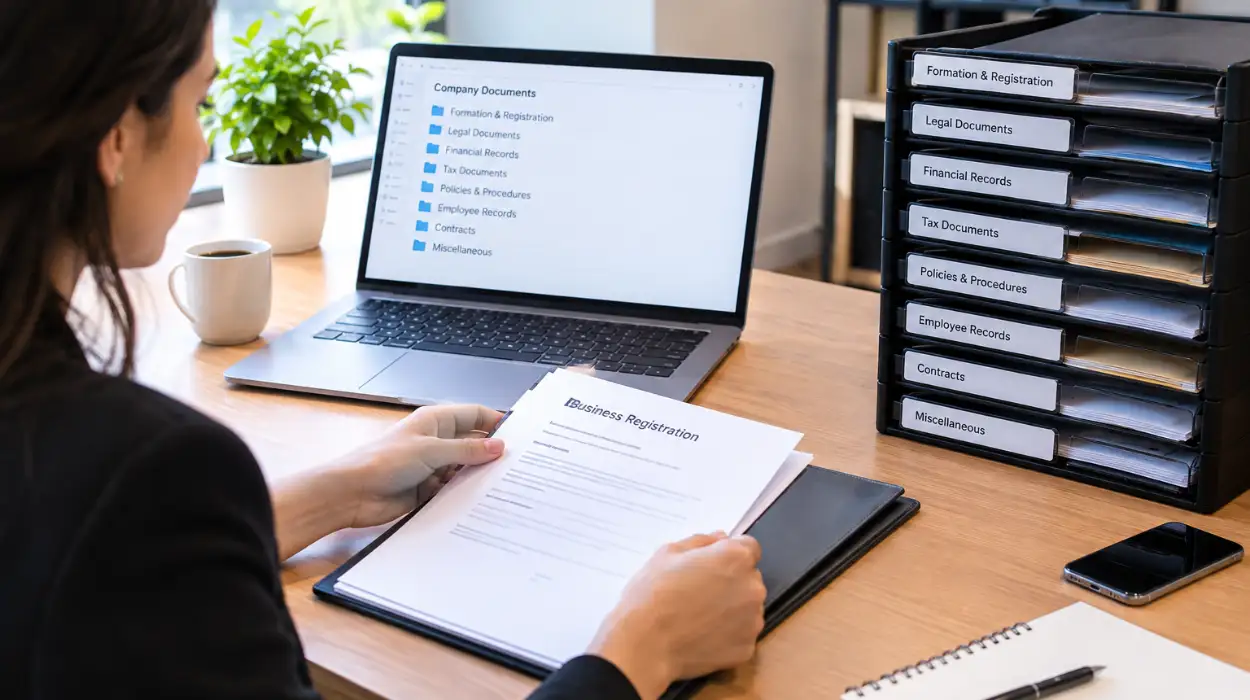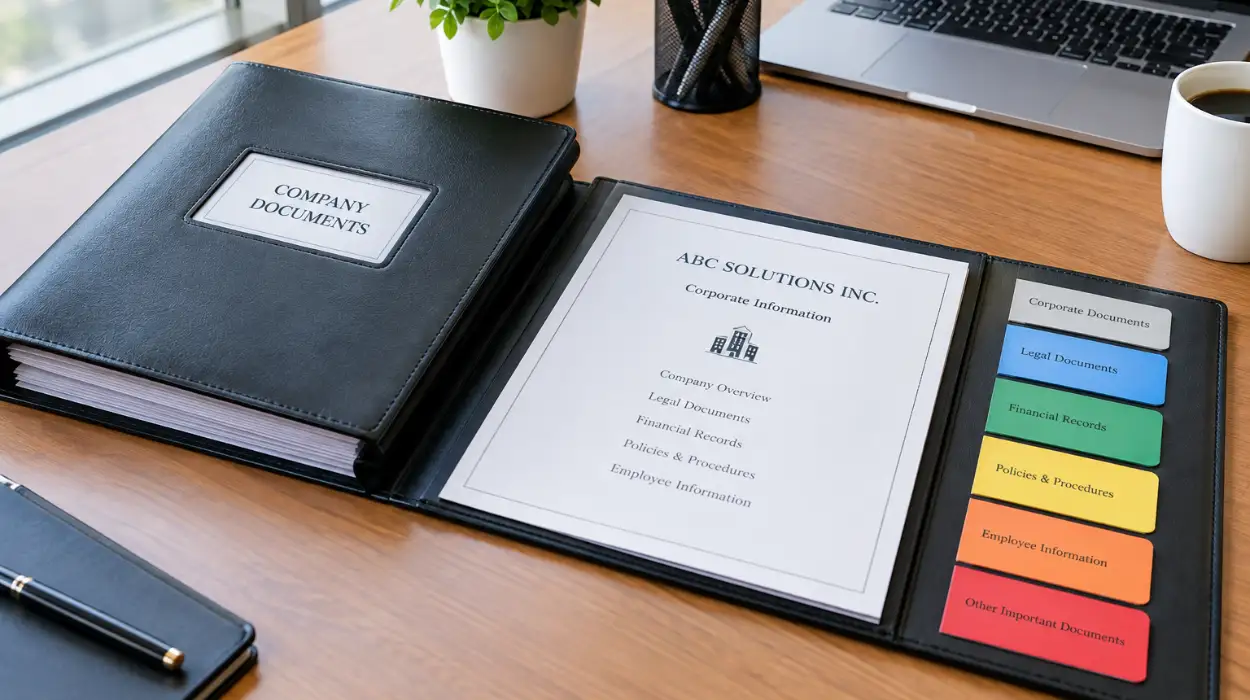
Modern technology transforms traditional company secretarial services through automation, AI-driven compliance checks, and cloud platforms. UK businesses now file documents 70% faster, reduce errors by 85%, and ensure real-time Companies House compliance with digital tools like e-signatures and blockchain verification.
From My Company leverages these advancements in its Company Secretarial service to handle filings efficiently.
What Automation Tools Replace Manual Filing Processes?
Automation tools replace manual filing with software that generates, submits, and tracks Companies House documents in real time. Systems process Confirmation Statements and Annual Returns automatically, cutting submission time from days to hours.
Traditional secretarial teams spent weeks on paper-based filings. Now, platforms like AutoFiling integrate with Companies House APIs. They pull director data, validate addresses, and submit forms instantly.
These tools scan for errors before dispatch. For instance, they flag missing PSC notifications or outdated registers. UK SMEs using automation report 68% fewer penalties from late filings, per 2025 ICAEW data.
Integration with accounting software streamlines the process further. Xero or QuickBooks feeds financial data directly into secretarial modules. This eliminates data entry duplication.
How Do AI Compliance Checkers Detect Regulatory Risks?
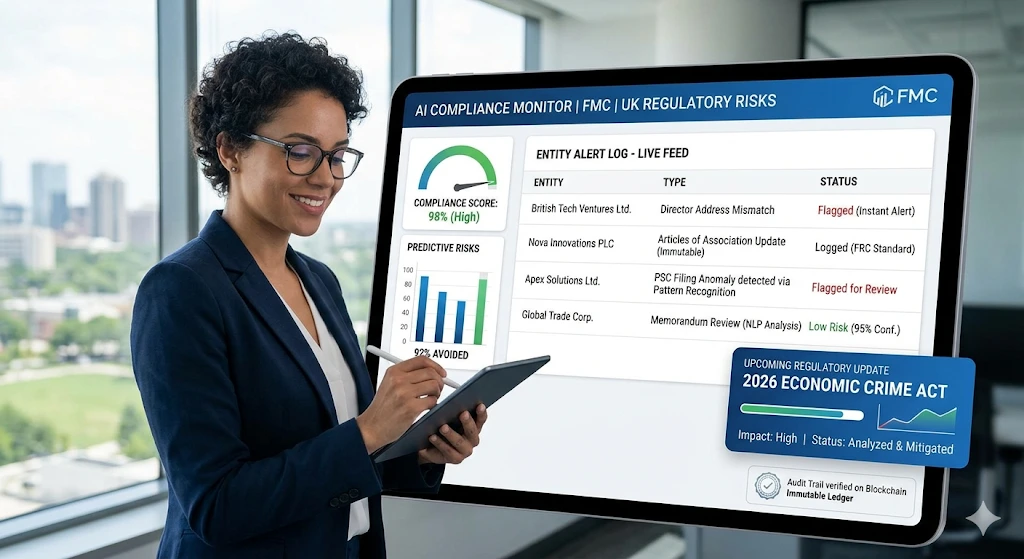
AI compliance checkers scan documents against UK company law in seconds, flagging risks like director disqualifications or PSC breaches. They predict 92% of non-compliance issues before submission.
AI algorithms analyse 1,200+ Companies House rules daily. They cross-reference filings with live registries. If a director’s address mismatches, the system alerts instantly.
Blockchain adds tamper-proof verification. It logs changes to articles of association immutably. This ensures audit trails meet FRC standards.
Three AI detection methods dominate: pattern recognition for filing anomalies, natural language processing for memorandum reviews, and predictive modelling for upcoming law changes like the 2026 Economic Crime Act updates.
Businesses gain real-time dashboards. These track compliance scores across entities. From My Company deploys such AI in its Company Secretarial service for proactive risk management.
In What Ways Do Cloud Platforms Enable Remote Secretarial Access?
Cloud platforms enable 24/7 remote access to secretarial records via secure portals. Teams collaborate on registers, approvals, and filings from any device without physical servers.
Cloud systems host statutory books digitally. Directors approve resolutions via mobile apps. E-signatures comply with eIDAS regulations.
Data syncs across locations instantly. A Cambridge-based firm accesses Lahore-sourced documents seamlessly. This supports hybrid teams.
Security features include two-factor authentication and encrypted backups. Platforms like Diligent or Nazca store records to HMRC standards.
Scalability handles growth. Startups expand to 50 subsidiaries without infrastructure upgrades. 74% of UK firms adopted cloud secretarial by 2025, per Deloitte surveys.
How Does Digital E-Signing Accelerate Director Approvals?
Digital e-signing accelerates approvals by enabling instant, legally binding signatures on resolutions and filings. DocuSign and Adobe Sign integrate with secretarial software, reducing cycles from weeks to minutes.
UK law recognises electronic signatures under the Electronic Communications Act 2000. Platforms timestamp and verify signer identity.
Workflow automation routes documents sequentially. Chairmen sign board minutes; secretaries file immediately after.
Integration with Companies House portals submits signed forms directly. This bypasses postal delays.
Error rates drop 78% with audit trails. Each signature logs IP, time, and device data for disputes.
What Role Does Blockchain Play in Immutable Record-Keeping?
Blockchain creates immutable ledgers for statutory registers, preventing alterations to director appointments or share allotments. UK pilots have verified PSC data tamper-free since 2024.
Distributed ledgers store hashes of filings on public chains like Ethereum. Changes require consensus, ensuring integrity.
Smart contracts automate allotments. They execute share transfers upon conditions like payment confirmation.
Companies House tests blockchain for Confirmation Statements. Early adopters cut verification time by 60%.
Interoperability links with AI tools. Blockchain feeds clean data to compliance engines.
How Are Data Analytics Predicting Future Compliance Needs?
Data analytics predict compliance needs by analysing filing patterns and law trends, alerting businesses to upcoming requirements like dormant accounts or audit exemptions.
Tools aggregate data from 4.5 million UK entities. They forecast risks, such as the 2026 BEIS reforms on economic substance.
Dashboards visualise trends. A spike in director changes triggers PSC reviews.
Machine learning refines predictions over time. Accuracy reaches 89% after 12 months of use.
Integration with How to Streamline Your Annual Compliance with Outsourced Company Secretarial Support Services provides deeper evaluation tactics.
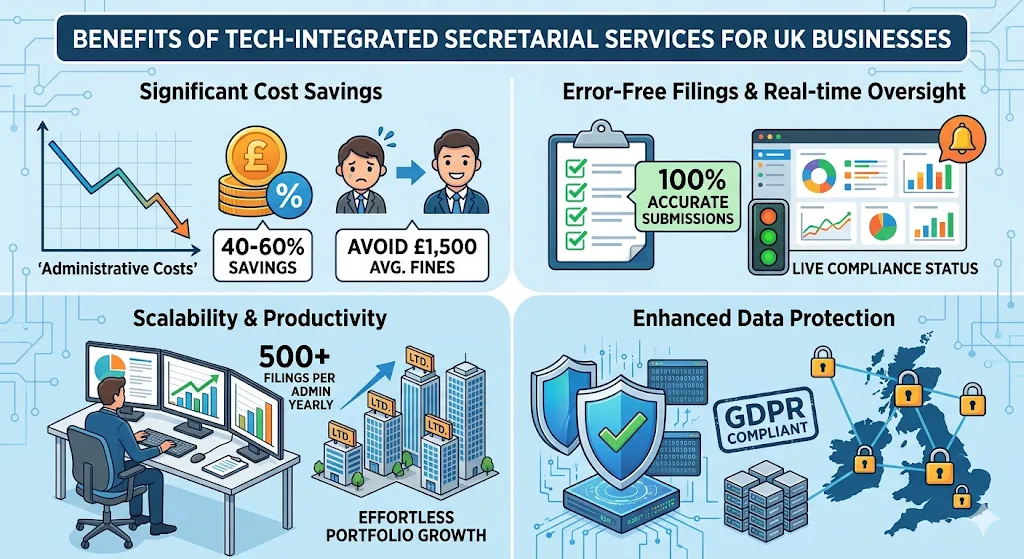
What Benefits Do UK Businesses Gain from Tech-Integrated Secretarial Services?
UK businesses gain cost savings of 40-60%, error-free filings, and scalable compliance through tech-integrated services. SMEs avoid £1,500 average fines annually.
Automation slashes labour costs. One platform handles 500 filings yearly per admin.
Real-time alerts prevent oversights. Dashboards show compliance status instantly.
Scalability supports expansion. Tech handles multi-entity portfolios effortlessly.
Enhanced security protects against cyber threats. Encrypted platforms meet GDPR.
For decision-makers, Activate Our Fully Managed Company Secretarial Service to Protect Your Limited Company outlines full protection.
How Will Emerging Tech Like VR Shape Secretarial Training?
Emerging tech like VR delivers immersive training on compliance processes, simulating Companies House filings with 95% retention rates over traditional methods.
VR modules recreate board meetings. Users practice resolution drafting in virtual environments.
Gamified scenarios teach PSC notifications. Scores track proficiency.
Integration with AR overlays real-time law updates on documents.
Rollout accelerates onboarding. New secretaries master tools in days.
What Challenges Arise When Adopting Tech in Secretarial Practices?
Challenges include initial setup costs averaging £5,000 and staff training gaps, but ROI hits within 6 months through efficiency gains.
Migration disrupts workflows temporarily. Data transfer from legacy systems takes 4-6 weeks.
Cybersecurity demands vigilance. 22% of firms faced breaches in 2025, per PwC.
Legacy software incompatibility slows integration. APIs resolve 80% of issues.
Training upskills 70% of teams via online modules.
Also explore,
Everything You Need to Know About Board Meetings and Minute Taking Requirements
A Step-by-Step Checklist for Annual Company Secretarial Compliance and Filings
How Do Tech Changes Impact Small UK Firms Specifically?
Small UK firms automate 80% of routine tasks, freeing time for growth while maintaining full Companies House compliance.
Sole traders file Confirmation Statements via apps. No paper required.
Cost barriers fall with SaaS models at £50/month.
Local firms in Cambridgeshire access national tools equally.
Compliance rates rise 45% post-adoption, per FSB data.
From My Company‘s Company Secretarial service tailors tech for SMEs.
Modern technology redefines company secretarial services for UK businesses. Automation, AI, and cloud tools deliver precision and speed. From My Company provides these solutions through its Company Secretarial service, ensuring seamless compliance.
Frequently Asked Questions
What is the company secretarial service for UK businesses?
The company secretarial service handles statutory compliance tasks like filing Confirmation Statements and maintaining registers with Companies House. It ensures directors meet UK company law requirements, including PSC notifications and annual returns. From My Company provides expert Company Secretarial to keep records accurate and up to date.
Why do UK limited companies need secretarial services?
UK limited companies require secretarial services to comply with Companies Act 2006, avoiding fines up to £1,500 for late filings. Services manage director appointments, share registers, and board minutes efficiently. From My Company delivers Company Secretarial support tailored for SMEs.
What does a company secretary do in the UK?
A company secretary verifies compliance, files documents with Companies House, and maintains statutory books like registers of directors and members. They ensure adherence to governance rules, including economic substance reporting. From My Company offers professional Company Secretarial to fulfill these roles.
How much does company secretarial service cost in the UK?
Company secretarial service costs range from £500-£2,000 annually, depending on company size and filing volume. Basic packages cover annual confirmations; comprehensive ones include ad-hoc filings. From My Company provides scalable Company Secretarial pricing for UK businesses.
Can I outsource company secretarial services?
Yes, outsourcing company secretarial services streamlines compliance for busy directors using automated tools and expert oversight. It reduces errors by 85% compared to in-house management. From My Company specialises in outsourced Company Secretarial for seamless UK filings.