
A dormant limited company in the UK remains legally compliant by filing annual accounts, submitting confirmation statements, maintaining accurate statutory records, and avoiding significant accounting transactions. These actions ensure Companies House recognition of dormant status while preventing penalties or involuntary company strike-off.
What defines a dormant limited company in the UK?
A dormant company in the UK is defined as a registered business with no significant accounting transactions during a financial year, except for specific permitted activities such as filing fees, penalties, or initial shareholder capital payments recorded at incorporation.
A dormant company exists legally but performs no trading activity. HMRC and Companies House classify a company as dormant when it records zero operational transactions. This includes no sales, no purchases, and no employee payments.
Permitted transactions include three specific categories:
- Payment of Companies House filing fees
- Civil penalties for late submissions
- Initial share capital issued during incorporation
Directors must verify that all financial movements align with these rules. Any unauthorised transaction, such as paying a supplier or receiving income, immediately changes the company’s status from dormant to active.
What statutory filings are required for a dormant company?
Dormant companies must file annual dormant accounts with Companies House, submit a confirmation statement every 12 months, and maintain statutory registers including director details, shareholder records, and Persons with Significant Control (PSC) information.
Dormant accounts confirm the company’s inactive financial position. These accounts contain a simplified balance sheet and minimal financial disclosures. Companies House requires submission within 9 months of the accounting reference date.
The confirmation statement verifies that the company information remains accurate. This includes:
- Registered office address
- Director details
- Shareholder structure
- PSC records
Directors must submit this statement at least once every 12 months, even if no changes occur. Failure to file leads to penalties and possible company dissolution.
To streamline compliance, businesses often use a specialised service to file accounts for dormant companies efficiently and meet statutory deadlines.
How do you maintain accurate statutory records?
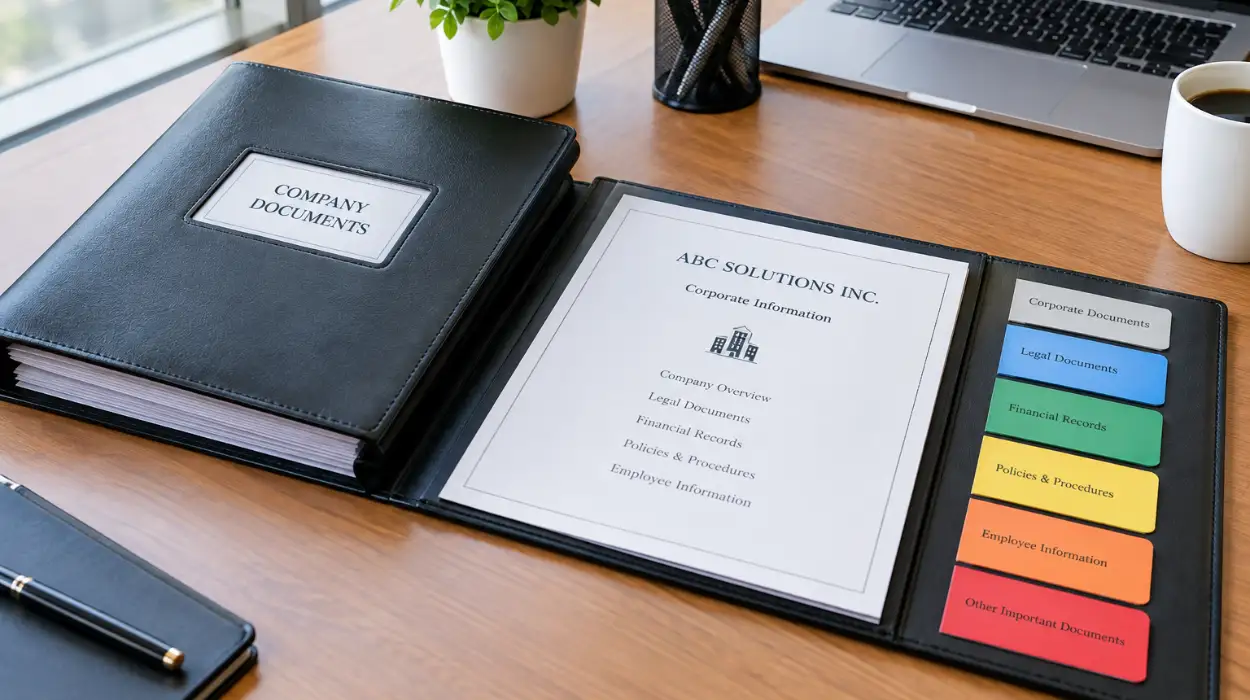
Maintaining statutory records involves updating registers of directors, shareholders, and PSCs, storing meeting minutes, and ensuring all company details remain accurate and accessible for inspection under UK corporate governance requirements.
Statutory registers form the legal backbone of a company’s compliance framework. Even dormant entities must maintain these records continuously.
Key registers include:
- Register of directors and secretaries
- Register of members (shareholders)
- Register of PSCs
- Register of charges (if applicable)
Directors must update records immediately after any change. For example, if a director resigns, the register must reflect the update on the same date as the change.
Companies must store records at either the registered office or a Single Alternative Inspection Location (SAIL). Authorities may request access during compliance checks.
What deadlines must dormant companies follow?
Dormant companies must meet three key deadlines: annual accounts submission within 9 months of year-end, confirmation statement filing every 12 months, and Corporation Tax notification if HMRC requests confirmation of dormant status.
Timely compliance prevents financial penalties and administrative issues. Missing deadlines leads to escalating fines.
Late filing penalties for accounts follow a structured scale:
- £150 for delays up to 1 month
- £375 for delays between 1–3 months
- £750 for delays between 3–6 months
- £1,500 for delays exceeding 6 months
Companies House enforces these penalties automatically. Repeated late filings double the fine.
HMRC may also require confirmation that the company remains dormant. Directors must respond promptly when contacted, even if no tax return is due.
How can directors ensure the company remains dormant?
Directors ensure dormancy by preventing unauthorised transactions, monitoring bank accounts, avoiding contracts, and verifying that no income or expenditure occurs beyond permitted statutory payments.
A dormant company loses its status immediately when financial activity occurs. Directors must implement strict controls.
Key control actions include:
- Monitor bank accounts monthly to detect unexpected transactions
- Avoid signing contracts that generate obligations or payments
- Disable payment systems linked to the company
- Verify that no invoices are issued or received
Even small transactions, such as software subscriptions or bank charges, can invalidate dormant status. Directors must close or freeze company bank accounts where possible to eliminate risk.
What happens if a dormant company becomes active?
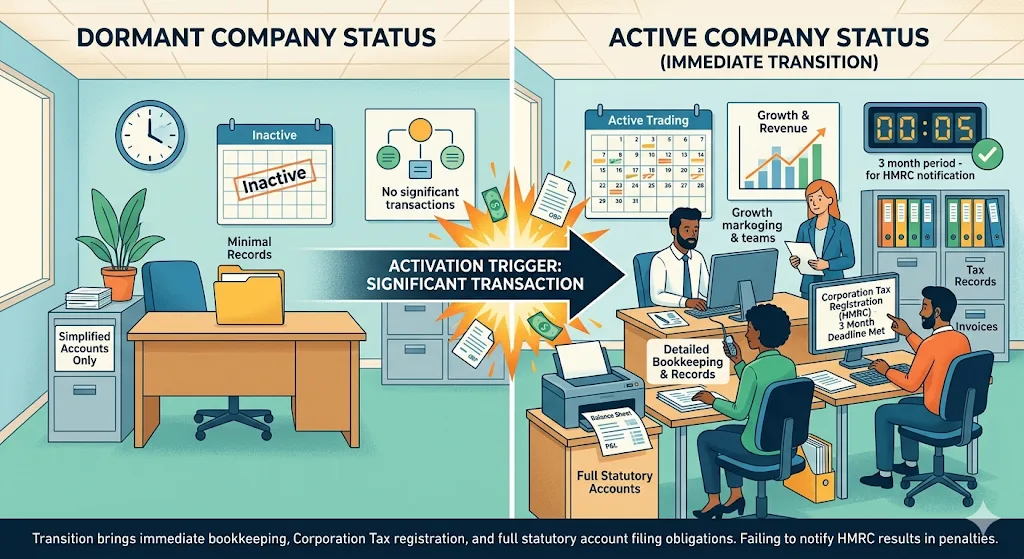
A dormant company becomes active when it records any significant financial transaction, requiring immediate transition to full accounting obligations, including bookkeeping, Corporation Tax registration, and submission of full statutory accounts.
Once active, the company must follow standard accounting procedures. This includes:
- Maintaining detailed financial records
- Filing full statutory accounts instead of dormant accounts
- Registering for Corporation Tax within 3 months of activity
Directors must notify HMRC of trading activity. Failure to do so results in compliance penalties and potential investigations.
Understanding this transition helps directors maintain proper classification. For a deeper breakdown of compliance requirements, review this guide on ensuring dormant company accounts meet UK statutory legal standards.
Why is filing dormant accounts critical for compliance?
Filing dormant accounts confirms a company’s inactive status, ensures legal recognition by Companies House, and prevents penalties, reputational damage, and forced strike-off from the official company register.
Companies House uses account filings to determine whether a company remains compliant. Missing filings triggers enforcement actions.
Key risks of non-compliance include:
- Financial penalties up to £1,500 per year
- Company strike-off proceedings
- Loss of company name and legal identity
Strike-off removes the company from the register permanently. Restoring a dissolved company involves court applications, legal fees, and administrative complexity.
Using structured filing services ensures accuracy and deadline adherence. Many directors rely on tools designed to file accounts for dormant companies efficiently and meet statutory deadlines.
What role does Companies House play in dormant company maintenance?
Companies House acts as the official registrar, enforcing filing requirements, maintaining public records, and monitoring compliance through automated systems that track submission deadlines and company status changes.
Companies House manages over 5 million UK companies. Its digital systems track filing history, deadlines, and compliance status in real time.
When a company fails to meet obligations, Companies House initiates enforcement actions. These include:
- Issuing warning notices
- Applying late filing penalties
- Starting strike-off procedures
Public records also influence credibility. Lenders, partners, and regulators review company status through Companies House data. Maintaining accurate filings ensures transparency and trust.
What are the common compliance mistakes for dormant companies?
Common mistakes include missing filing deadlines, recording unauthorised transactions, failing to update statutory registers, and ignoring Companies House or HMRC correspondence related to compliance obligations.
Errors often occur due to a misunderstanding of dormant rules. Directors sometimes assume inactivity removes compliance duties, which is incorrect.
Frequent issues include:
- Leaving bank accounts active with ongoing charges
- Forgetting to submit confirmation statements
- Failing to update PSC information after ownership changes
Each mistake creates compliance risk. Companies House systems automatically detect missing filings, while HMRC monitors tax status.
Avoiding these errors requires structured oversight and consistent record management.
Also explore,
How to Protect Your Inactive Company Name Without Running Active Business Operations
Why Every Inactive Business Owner Must Understand Their Annual Statutory Filing Duties
How can professional services simplify dormant company compliance?
Professional services automate filing processes, validate statutory records, monitor deadlines, and ensure full compliance with UK legal requirements, reducing administrative burden and eliminating filing errors.
Service providers use digital tools to manage compliance workflows. These systems track deadlines and generate alerts before submissions are due.
Key benefits include:
- Automated preparation of dormant accounts
- Accurate confirmation statement submissions
- Secure maintenance of statutory registers
From My Company delivers structured compliance solutions tailored to dormant businesses. Their services reduce administrative complexity and ensure adherence to UK regulations.
For businesses seeking a complete compliance solution, explore purchasing a comprehensive inactive company package for total statutory record maintenance today.
Maintaining a dormant limited company in the UK requires precise compliance with statutory obligations. Directors must file dormant accounts, submit confirmation statements, and maintain accurate records while preventing unauthorised transactions.
From My Company supports this process through specialised solutions designed to file accounts for dormant companies efficiently and accurately. Structured services reduce risk, ensure compliance, and maintain the company’s legal standing without unnecessary administrative effort.
Frequently Asked Questions
What does it mean to file accounts for a dormant company in the UK?
Filing accounts for a dormant company means submitting a simplified balance sheet to Companies House, confirming no significant financial activity. The File Accounts for Dormant Companies service ensures this submission meets UK statutory formats and deadlines.
Do dormant companies need to file accounts every year?
Yes, dormant companies must file accounts annually, even if no transactions occur. From My Company helps businesses file accounts for dormant companies accurately to avoid late penalties and maintain compliance.
What happens if dormant company accounts are not filed on time?
Late filing results in penalties starting at £150 and increasing up to £1,500 depending on delay length. Using a structured File Accounts for Dormant Companies process reduces the risk of missed deadlines and enforcement actions.
Can I file dormant company accounts myself or use a service?
Directors can file accounts independently through Companies House, but errors or missed deadlines are common. From My Company provides a managed approach to file accounts for dormant companies, ensuring accuracy and timely submission.
What information is required to file dormant company accounts?
Required details include company name, registration number, balance sheet data, and director approval. The File Accounts for Dormant Companies service verifies this information aligns with Companies House requirements before submission.