In-house training offers control and familiarity, while external training room rentals provide specialised facilities, scalability, and fewer logistical burdens. Businesses evaluating both options typically prioritise cost efficiency, trainer performance, and attendee experience to determine the most effective solution for structured corporate learning outcomes.
What defines in-house training and external training room rental solutions?
In-house training uses internal office space and company resources, while external training room rental solutions involve hiring fully equipped, third-party venues designed for professional learning environments. Each option differs in infrastructure quality, flexibility, and operational demands.
In-house training takes place within the existing company premises. Teams use internal meeting rooms, office equipment, and internal coordination. This model gives organisations direct control over scheduling, setup, and branding.
External training room rental solutions operate through specialised providers. These venues include purpose-built infrastructure such as presentation systems, ergonomic seating, and breakout spaces. Businesses access facilities without investing in permanent upgrades.
The distinction becomes operational when evaluating delivery standards. Internal spaces often lack dedicated training infrastructure. External venues prioritise learning efficiency through design and equipment optimisation.
How do costs compare between in-house training and rented training rooms?
In-house training appears cost-effective initially, but hidden costs such as equipment upgrades, space downtime, and administrative effort often increase total expenditure. External training room rentals provide predictable pricing models with bundled services, reducing long-term operational inefficiencies.
Direct costs for in-house training include utilities, internal staff coordination, and equipment procurement. Indirect costs often exceed expectations. These include lost productivity when meeting rooms remain occupied for extended sessions.
External training room rentals follow structured pricing. Providers include equipment, maintenance, and on-site support within fixed packages. This reduces unexpected spending and simplifies budgeting.
A UK SME analysis shows that 42% of businesses underestimate internal training costs due to overlooked operational expenses. External solutions eliminate these variables through predefined service agreements.
How does training quality differ between the two options?
External training room environments consistently deliver higher training quality due to professional setups, reduced distractions, and optimised layouts. In-house training environments often face interruptions, space limitations, and inconsistent equipment performance, which directly impact learning effectiveness.
Training quality depends on environmental control. External venues design spaces specifically for engagement. Features include soundproofing, adjustable lighting, and high-resolution displays.
In-house environments introduce variables. Noise from office operations, limited seating arrangements, and outdated equipment reduce focus. These factors lower knowledge retention rates during sessions.
A controlled study by workplace learning analysts shows a 27% increase in participant engagement in dedicated training environments compared to office-based settings. This improvement links directly to space design and resource availability.
Which option offers better scalability for growing teams?
External training room rental solutions offer superior scalability by providing flexible space options, multi-room configurations, and location accessibility. In-house training limits scalability due to fixed infrastructure, seating capacity constraints, and operational disruptions within office environments.
Growing organisations require adaptable training capacity. External venues provide multiple room sizes, from 10-person sessions to 100-seat workshops. Businesses scale sessions without modifying internal infrastructure.
In-house setups restrict expansion. Office layouts limit seating capacity, and rearranging workspaces disrupts daily operations. Scaling requires either staggered sessions or significant internal restructuring.
External providers also offer geographic flexibility. Teams across multiple regions can access consistent training environments, ensuring standardised delivery regardless of location.
How do logistics and operational responsibilities differ?
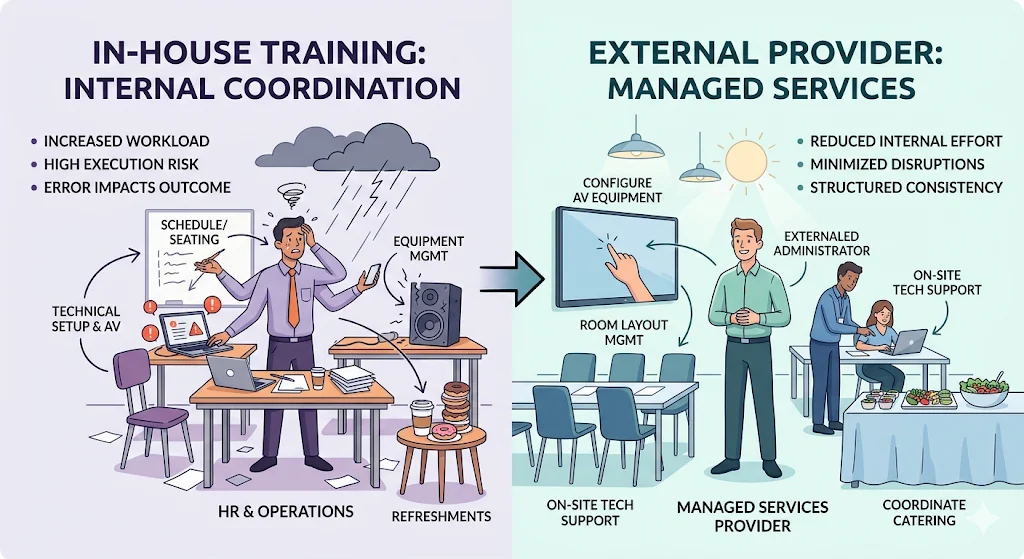
In-house training demands internal coordination for setup, equipment management, and attendee logistics, while external training room providers handle these responsibilities through managed services, reducing administrative workload and execution risks.
Internal teams manage scheduling, seating arrangements, technical setup, and refreshments. This increases the workload for HR and operations departments. Errors in setup directly affect session outcomes.
External training room providers standardise logistics. Services typically include:
- Configure AV equipment before the session starts
- Manage room layout based on training format
- Provide on-site technical assistance
- Coordinate catering and refreshments
This structured support ensures consistency. Businesses reduce internal effort and minimise disruptions during training sessions.
Which solution supports better compliance and professional standards?
External training room rental solutions align better with professional standards by offering compliance-ready facilities, accessibility features, and safety-certified environments. In-house setups often require additional adjustments to meet regulatory and accessibility requirements.
Professional training environments must meet health, safety, and accessibility standards. External providers design spaces according to UK compliance frameworks, including fire safety, disabled access, and ergonomic seating.
In-house environments require validation and modification. Companies often need to adjust layouts, verify safety compliance, and upgrade facilities to meet legal standards.
For regulated industries such as finance or healthcare, compliance becomes critical. External training rooms reduce risk by providing pre-certified environments aligned with industry requirements.
How does each option impact employee experience and engagement?
External training environments significantly improve employee engagement by offering distraction-free settings, professional ambience, and structured learning layouts. In-house environments often reduce focus due to familiarity, interruptions, and limited spatial design for training activities.
Employee experience directly affects learning outcomes. External venues create a psychological shift. Participants enter a dedicated learning space, increasing focus and participation.
In-house training lacks this separation. Employees remain within their work environment, leading to interruptions from emails, meetings, and operational tasks.
Engagement metrics show measurable differences. Structured environments improve retention rates by up to 30% in corporate training programs. This improvement stems from reduced distractions and enhanced comfort.
Explore our Training Rooms guides,
Why Modern Training Rooms are Better for Interactive Workshops Than Small Offices
The Benefits of Professional Training Rooms with On-Site Technical Support Services
When is external training room rental the better strategic choice?
External training room rental becomes the better choice when businesses prioritise scalability, professional delivery, and operational efficiency. It is particularly effective for multi-day workshops, large teams, and client-facing training sessions requiring high presentation standards.
Strategic use cases include leadership workshops, compliance training, and onboarding programs. These sessions demand consistent delivery and professional infrastructure.
Businesses also benefit when hosting external stakeholders. A professional venue reinforces credibility and brand positioning during training or presentations.
For organisations evaluating structured solutions, dedicated Training Rooms provide fully managed environments designed for corporate learning outcomes.
To strengthen planning accuracy, reviewing structured guidance, such as how to plan a successful corporate training workshop for your growing team, improves decision-making at the evaluation stage. And order your training room booking online today for professional staff training sessions.
How do decision-makers evaluate the best option today?
Decision-makers evaluate training solutions based on cost transparency, scalability, infrastructure quality, and administrative efficiency. External training room rentals consistently meet these criteria, making them a preferred choice for businesses seeking predictable and high-quality training delivery.
Modern evaluation frameworks rely on measurable factors. These include cost per participant, engagement rates, and operational efficiency. External solutions perform consistently across these metrics.
Procurement teams also assess risk reduction. External providers eliminate uncertainties related to equipment failure, space limitations, and compliance gaps.
Businesses moving toward structured procurement often prioritise solutions that combine flexibility with reliability. This shift explains the growing demand for managed training environments across UK organisations.
For companies ready to implement a solution, decision-focused resources,, such as ordering your training room booking online today for professional staff training sessions, support faster execution.
In-house training provides control but introduces hidden costs, logistical complexity, and scalability limitations. External training room rental solutions deliver consistent quality, operational efficiency, and professional environments aligned with modern business needs.
From My Company provides structured Training Rooms designed for corporate training delivery. These solutions reduce administrative burden, improve engagement, and support scalable learning programs across growing organisations. From My Company integrates infrastructure, compliance, and managed services into a single, reliable training environment.
Frequently Asked Questions
What are training room rental services and how do they work?
Training room rental services provide fully equipped spaces designed for corporate learning, meetings, and workshops. From My Company offers Training Rooms with AV equipment, seating layouts, and on-site support, allowing businesses to conduct sessions without managing setup or logistics internally.
How much does it cost to rent professional training rooms in the UK?
The cost of Training Rooms in the UK varies based on location, capacity, and included services such as catering or technical support. From My Company provides structured pricing with bundled facilities, which helps businesses control costs and avoid unexpected expenses.
What facilities are included in professional training rooms?
Most Training Rooms include high-speed internet, presentation screens, whiteboards, and flexible seating arrangements. From My Company ensures rooms are configured for learning efficiency, with additional services like breakout areas and technical assistance available.
When should a business choose external training rooms instead of in-house space?
Businesses choose external Training Rooms when they require scalable space, professional environments, or distraction-free settings. From My Company supports this need by offering purpose-built rooms that improve engagement and reduce internal operational workload.
How do training rooms improve employee learning outcomes?
Training Rooms improve learning outcomes by providing structured environments with minimal distractions and optimised layouts. From My Company delivers professionally designed spaces that enhance focus, increase participation, and support consistent training delivery.