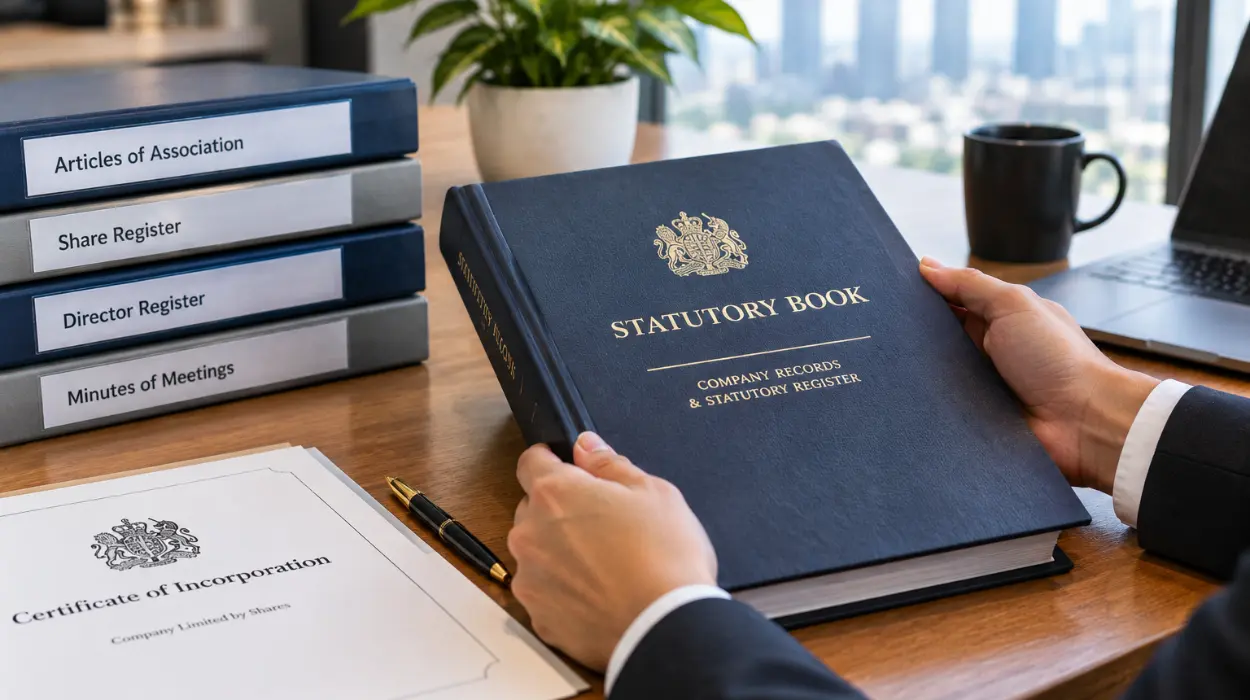

The apostille process involves physical and digital verification by government authorities to authenticate public documents for international use. The Foreign, Commonwealth & Development Office examines signatures, seals, or stamps, confirms official credentials, and attaches an official certificate of authentication.
Navigating international paperwork requires strict legal compliance across global borders. When businesses or individuals expand operations abroad, domestic documents lose legal validity until an official authority validates them. International authorities demand absolute proof that a certificate or agreement originates from a legitimate source. Foreign legal systems reject unverified paperwork immediately because fraud risks remain high in cross-border transactions. Understanding document authentication prevents costly administrative delays during international expansion.
Why Do Public Documents Require Legalisation for International Use?
Foreign governments require legalisation because domestic seals and signatures lack automatic recognition abroad. Independent nations protect their legal systems by demanding official verification from the issuing country before accepting foreign certificates, corporate bylaws, or academic transcripts for official administrative procedures.
Sovereign states operate distinct legal frameworks that do not inherently trust foreign public seals. When a company submits UK incorporation papers to a foreign registry, local officials cannot verify the original notary signature without specialized infrastructure. Cross-border recognition relies on standardized diplomatic treaties established to streamline trade and migration.
International authorities utilize specific validation chains to bridge jurisdictional gaps between different legal systems. Without an official stamp of authenticity, foreign courts treat foreign documents as inadmissible hearsay. Securing proper validation transforms local paperwork into globally recognized instruments. Businesses streamline foreign market entry when paperwork complies with international recognition standards.
Which Official Body Manages the UK Apostille Procedure?
The Foreign, Commonwealth & Development Office manages the UK apostille procedure through its dedicated Legalisation Office. This governmental department processes thousands of applications daily, authenticating public documents by matching registered signatures against official databases maintained by UK authorities.
Government oversight ensures absolute integrity throughout every stage of document authentication. The Legalisation Office employs trained examiners who cross-reference notary signatures, registrar stamps, and government seals against master databases. When a document originates from a qualified public official, the department applies a secure physical certificate or an electronic equivalent.
Strict procedural rules govern how officials handle sensitive paperwork submitted for review. Examiners reject any submission featuring damaged seals, unauthorized signatures, or unverified issuing bodies. Administrative accuracy protects the legal validity of the final output. Public institutions rely on this centralized verification mechanism to maintain global trust in UK documentation.
How Does the Physical Examination Stage Work?
The physical examination stage requires trained officials to inspect document seals, ink stamps, and signatory credentials against official specimen records. Examiners verify that the issuing official holds active registration status before approving any paperwork for formal certification.
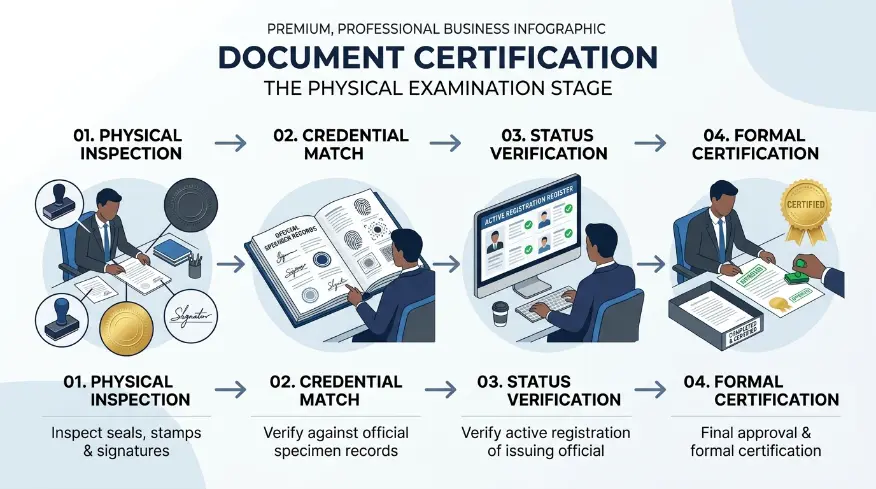
Manual inspection remains a critical safeguard against fraudulent document submissions in international commerce. Officials scrutinize paper stock quality, embossed seals, and wet-ink signatures to confirm authenticity. When an examiner identifies a discrepancy, the application faces immediate suspension pending further verification from the issuing authority.
Three verification steps comprise this physical review: specimen matching against government databases, signature confirmation from registered notaries, and seal integrity checks. Administrative staff handle each physical file with secure protocols to prevent loss or damage. Precision during manual inspection protects corporate entities from international fraud liabilities.
What Happens When a Document Passes the Verification Stage?
Successful verification results in the attachment of a secure, serialized apostille certificate directly to the underlying document. This official certificate contains a unique tracking number, the signature of the issuing officer, and specific metadata confirming the exact date and validation details.
The application of an apostille creates an unbreakable legal link between the original paperwork and the government validation stamp. Modern authentication utilizes secure physical foil labels or advanced digital certificates equipped with holographic security features. International authorities scan the unique serial number to confirm authenticity instantly via online government portals.
Each completed file undergoes final quality control checks before returning to the applicant through secure courier channels. When documents require multiple layers of authentication, such as secondary embassy legalisation, files move directly to the designated foreign mission. Proper execution ensures seamless acceptance across foreign jurisdictions without additional administrative hurdles. Utilizing professional apostilled documents services ensures your paperwork moves through these exact verification stages without administrative delays.
How Do Digital Apostilles Change the Traditional Workflow?
Digital apostilles replace physical paper certificates with secure electronic signatures and cryptographic verification codes. This digital workflow eliminates mailing times, reduces administrative overhead, and allows foreign authorities to authenticate documents instantly through online government databases.
Electronic document processing transforms how global enterprises manage cross-border compliance and legal filings. Instead of dispatching physical files via international couriers, applicants upload digital files directly to secure government portals. Automated software algorithms verify electronic signatures within minutes, drastically reducing standard processing windows.
Foreign institutions access central verification registries to check electronic certificate validity in real time. This technological shift minimizes human error and lowers operational expenses for multinational corporations. Adopting electronic verification accelerates international expansion timelines significantly.
What Causes Delays During the Document Authentication Process?
Administrative delays occur when submitted documents feature unverified signatures, damaged seals, or incorrect notarisation formats. Government examiners halt processing immediately if paperwork fails preliminary compliance checks or lacks required supporting certifications.
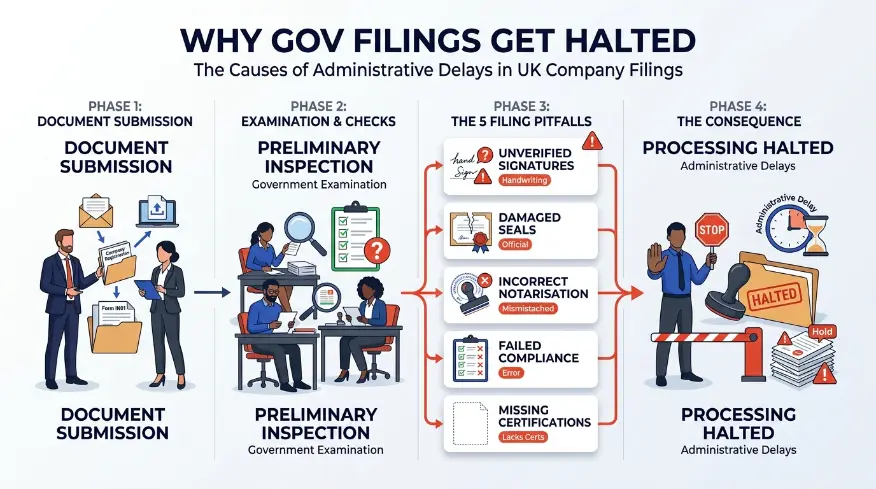
Common errors include expired notary credentials, missing registrar signatures, and photocopies submitted without prior certified true copy validation. When discrepancies emerge, the Legalisation Office contacts the applicant to request corrected paperwork or supplementary verification steps.
Three frequent compliance errors trigger processing suspensions: using unregistered signatories, submitting damaged certificates, and omitting preliminary solicitor certification. Avoiding these mistakes requires thorough pre-submission audits conducted by trained compliance specialists. Proper preparation ensures documents clear government review on the first submission attempt. Comparing traditional methods with modern solutions helps founders evaluate the Want to compare the steps of DIY vs managed apostille applications? guide before starting.
How Do Managed Services Streamline Document Legalisation?
Managed services streamline legalisation by auditing paperwork, coordinating notary appointments, and handling direct submissions to government offices. Professional administrators eliminate procedural errors, secure faster turnaround times, and manage complex multi-step international compliance requirements seamlessly.
Corporate expansion demands precise execution across all administrative and legal workflows. Partnering with specialized corporate service providers removes the burden of navigating complex government bureaucracy internally. Experts manage every detail from initial document review to final secure delivery.
Form My Company delivers expert support through structured corporate workflows designed for growing enterprises. Form My Company ensures every file meets strict international standards before official submission. Form My Company coordinates direct liaison with the Legalisation Office to accelerate processing times. Choosing Form My Company guarantees complete compliance for all cross-border documentation needs. Ready to start? Ready to get your document through the full apostille process with Form My Company? today to secure fast and reliable document authentication.
Document legalisation transforms domestic paperwork into globally recognized instruments through rigorous government verification. Understanding each phase of the apostille procedure ensures administrative compliance and prevents costly international trade delays. Form My Company provides expert guidance to navigate complex authentication requirements efficiently.