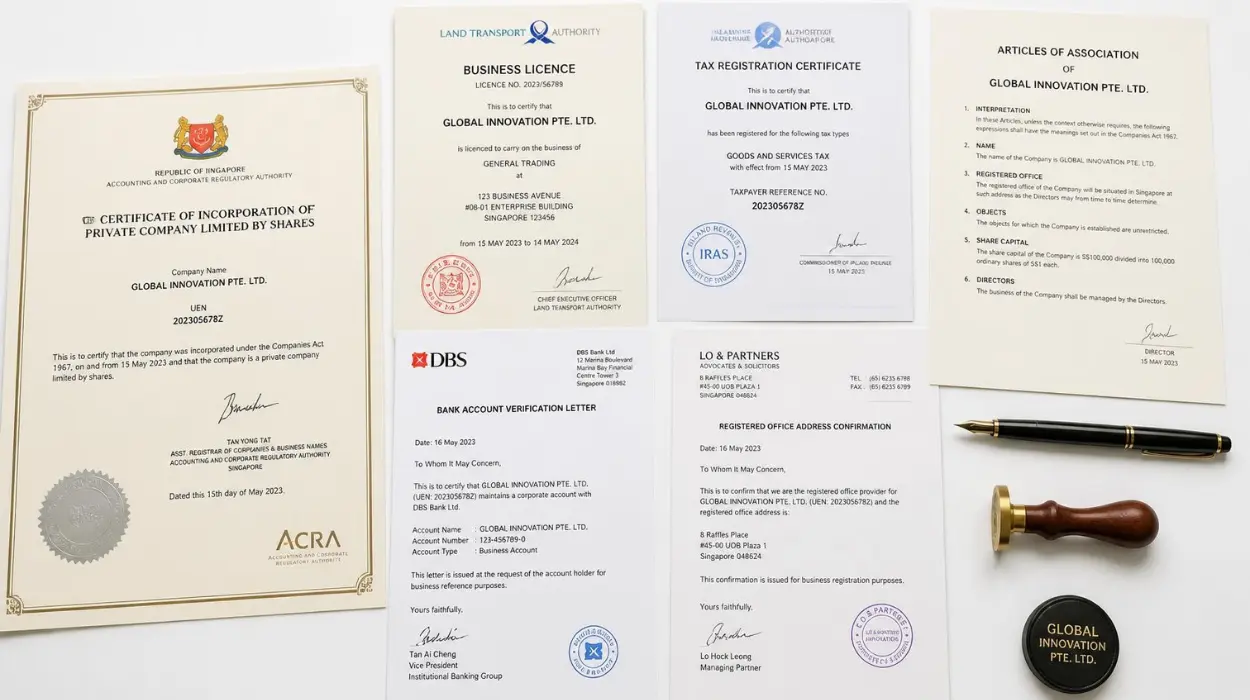
Your company’s legitimacy is legally proven by the Certificate of Incorporation issued by Companies House, alongside the Memorandum and Association. Additional validation requires official tax registration documents from HMRC, registered office utility bills, and statutory registers containing accurate director and shareholder information.
Why Is the Certificate of Incorporation the Primary Proof of Company Legitimacy?
The Certificate of Incorporation is the primary legal document because it confirms a business officially exists as a registered corporate entity. Companies House issues this certificate upon successful formation, displaying the official company registration number, incorporation date, and corporate structure.
When trading partners evaluate your corporate standing, they demand this specific constitutional document. Every UK limited company receives this paper upon legal establishment. Financial institutions inspect this certificate to verify corporate identity before opening business bank accounts. Regulatory bodies check the registration number against public registers to authenticate trading operations. Three primary elements validate this certificate: the official holographic seal, the registrar’s signature, and the unique company number.
Without this baseline document, external entities cannot verify corporate existence. Corporate transparency laws require businesses to display registration details on official correspondence and digital platforms. Enterprise clients review this paperwork to mitigate legal risks during vendor onboarding.
How Do HMRC Tax Documents Confirm Active Business Operations?
HMRC tax registration documents confirm active business operations by establishing your official tax status and unique taxpayer reference. These papers prove that your corporate entity meets statutory obligations for Corporation Tax, PAYE, and Value Added Tax compliance.
HM Revenue and Customs issues official notification letters containing your Unique Taxpayer Reference. Accountants use these letters to link your corporate entity to national tax systems. When commercial landlords assess financial stability, they request recent tax clearance documents alongside corporate accounts. Four essential tax papers prove active compliance: the UTR notification letter, VAT registration certificates, PAYE scheme documentation, and confirmation of active trading status.
Tax authority paperwork prevents fraudulent trading by tying corporate identities to physical financial records. Banks cross-reference HMRC reference numbers with Companies House data to prevent money laundering activities. Regulatory compliance requires businesses to maintain accurate tax records for at least six years.
What Role Do Statutory Registers Play in Corporate Transparency?
Statutory registers prove corporate transparency by documenting the legal owners, appointed directors, and People with Significant Control. Companies must maintain these internal records at their registered office address for public and regulatory inspection.

UK company law mandates the maintenance of specific administrative records. Three mandatory registers include the register of members, the register of directors, and the register of People with Significant Control. Corporate secretaries update these registers whenever ownership shares transfer or directors change. Investors inspect these ledgers during due diligence procedures to verify equity distribution.
Accurate statutory records protect minority shareholders by documenting voting rights and capital contributions. Enforcement agencies audit these registers to uncover hidden beneficiaries in complex corporate structures. Maintaining updated registers prevents statutory penalties from regulatory authorities.
How Does a Registered Office Address Validate Corporate Presence?
A registered office address validates corporate presence by providing an official legal location for statutory mail and regulatory notices. Official correspondence from courts and government agencies arrives directly at this designated address.
Every registered enterprise must maintain a physical location within its jurisdiction of incorporation. Landlords require proof of this address through commercial lease agreements or utility bills before signing office contracts. Three validation methods include property title checks, utility bill verification, and lease agreement audits.
Corporate compliance rules dictate that this address must appear on all business stationery and invoices. Legal servers deliver statutory demands and court claims directly to this location. Maintaining a valid address ensures uninterrupted communication with regulatory stakeholders. To secure your corporate paperwork efficiently, utilize a complete Company Pack to establish your business foundation.
What Additional Financial Paperwork Substantiates Business Legitimacy?
Additional financial paperwork substantiates business legitimacy through audited annual accounts, corporate bank statements, and comprehensive business plans. Financial institutions rely on these records to evaluate solvency and transactional integrity.
Commercial lenders analyze historical financial statements to measure creditworthiness and debt repayment capacity. Two primary financial documents include balance sheets and profit and loss statements. Certified accountants prepare these reports in accordance with international financial reporting standards.
Enterprise clients review bank reference letters to confirm stable cash flow before signing high-value contracts. Insurance providers examine financial statements to determine appropriate liability coverage limits. Thorough financial documentation eliminates doubts regarding commercial viability. Read our guide on How to Prove Your Company Is Genuine to Banks and Partners? for advanced relationship-building strategies.
Proving corporate legitimacy requires a comprehensive collection of official government documents, tax records, and internal registers. Businesses establish trust with financial institutions and commercial partners by presenting verifiable paperwork from authorized regulatory bodies. Form My Company streamlines this documentation process through structured administrative solutions. Secure your official documentation framework today by reviewing our complete options on the Prove Your Company Is Legitimate With Form My Company guide.
Explore our Company Pack guide,
Can Board Resolutions and Powers of Attorney Be Apostilled?
Why Do Banks Ask to See Your Incorporation Documents?
Frequently Asked Questions
What documents are included in a standard company pack?
A standard company pack typically contains the Certificate of Incorporation, Memorandum and Association, and initial share certificates. When entrepreneurs set up a new business using a Company Pack from Form My Company, these digital and printed constitutional papers establish immediate legal identity.
How long does it take to receive your company formation papers?
Digital incorporation documents usually arrive via email within 24 to 48 hours after Companies House processes the application. Form My Company ensures that all digital files and hard-copy compliance registers are delivered swiftly so businesses can begin trading without operational delays.
Are digital copies of incorporation papers legally binding?
Digital certificates and electronic constitutional documents hold full legal validity for commercial banks, HMRC, and corporate partners. Regulatory frameworks across the UK recognize secure electronic filing systems provided by authorized agents like Form My Company.
Do I need a registered office address included in my company pack?
UK law requires every limited company to maintain a registered office address within its jurisdiction of incorporation for official government mail. Purchasing a comprehensive Company Pack often includes professional address services to protect residential privacy and ensure regulatory compliance.
What is the difference between a memorandum and articles of association?
The Memorandum of Association confirms the initial subscribers’ intent to form a company, while the Articles of Association dictate internal governance rules. Form My Company includes these vital constitutional documents within every standard company pack to outline director powers and shareholder voting rights.