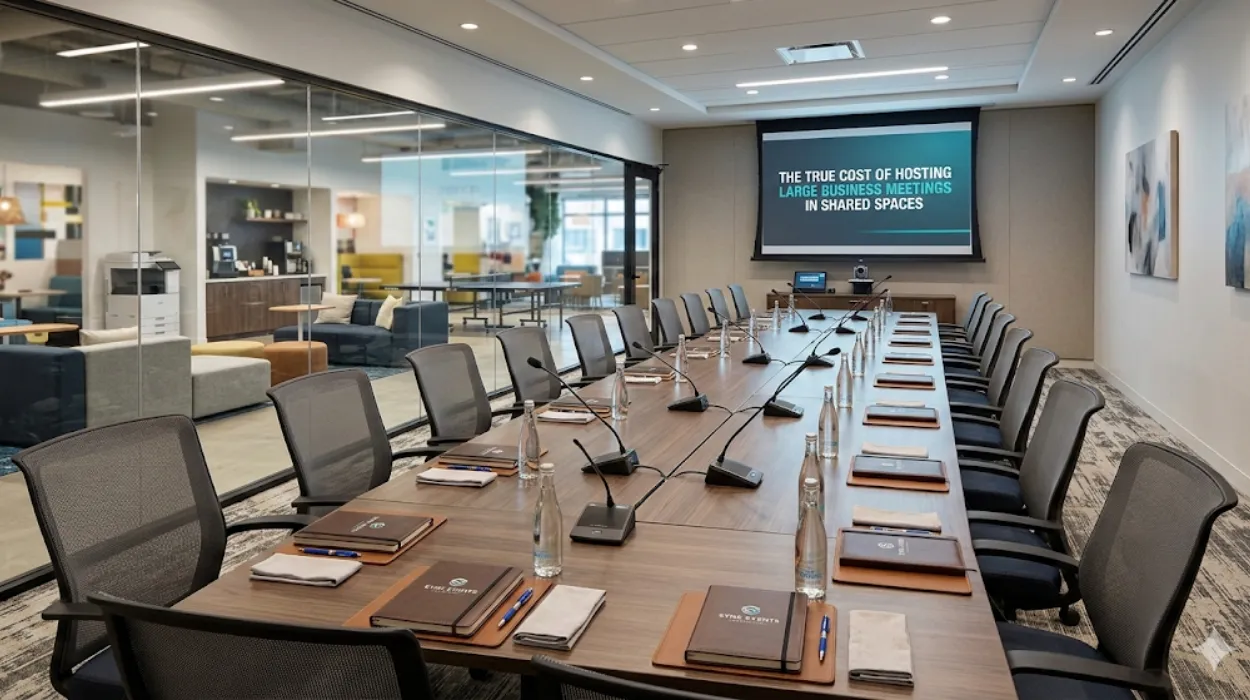
Hosting large business meetings in shared spaces often exceeds initial expectations, with total costs ranging from £500 to £2,500+ per event due to room hire, catering, AV equipment, and hidden fees. These expenses can quickly escalate in high-demand areas like London or Manchester, making dedicated conference rooms a more predictable alternative.
Hidden Expenses Beyond Room Rental
Shared spaces, such as coworking hubs or community venues, advertise attractive base rates for conference room hire, typically starting at £50-£150 per hour for groups of 10-20 people. However, the true cost emerges from add-ons that are rarely included upfront. For instance, audio-visual setups like projectors, microphones, and high-speed Wi-Fi can add £100-£300 per session, as many shared venues charge separately for these essentials to accommodate large meetings.
Catering represents another major outlay, with basic coffee and snacks costing £5-£10 per head, scaling to £20-£40 for full meals in a group of 50 attendees that’s £1,000+ just for refreshments. Providers in urban centers often partner with external vendors, introducing minimum order fees and service charges that inflate the bill by 20-30%. Without careful planning, these elements turn a seemingly affordable booking into a budget strain.
Location-Driven Price Variations Across the UK
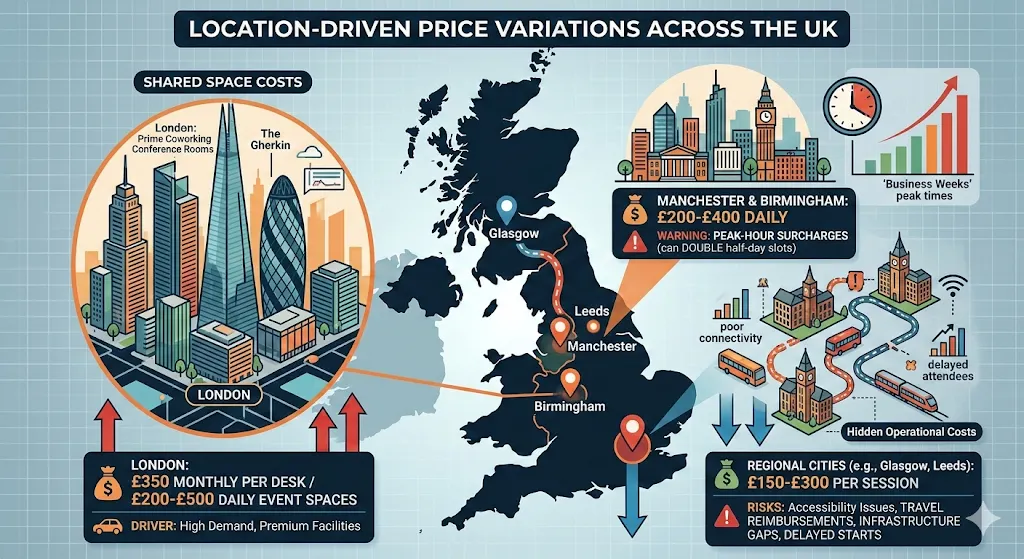
Geographic location dramatically influences shared space costs for large business meetings. In London, prime coworking conference rooms average £350 monthly for desks but spike to £200-£500 daily for event spaces accommodating dozens, driven by high demand and premium facilities. Manchester and Birmingham offer slightly lower rates at £200-£400 per day, yet peak-hour surcharges during business weeks can double these figures for half-day slots.
Regional differences extend to outer cities like Glasgow or Leeds, where costs dip to £150-£300 per session, but accessibility issues may require additional travel reimbursements for attendees. Shared spaces in these areas often lack the robust infrastructure of city centers, leading to indirect costs like delayed starts from poor public transport links. Businesses hosting frequent large meetings must weigh these variances against their operational hubs.
Capacity and Duration Impact on Budgets
Large business meetings demand sizable conference rooms, yet shared spaces frequently upcharge for capacity. A standard room for 20 fits smaller teams at £100/hour, but scaling to 50+ triggers “premium” rates of £200-£400/hour due to limited availability and setup demands. Overruns beyond booked times incur overtime fees at 1.5x the hourly rate, common when discussions run long in high-stakes strategy sessions.
Duration plays a pivotal role; half-day hires (4 hours) might total £800 including setup, while full days exceed £1,500 with breaks. Shared venues prioritize flexibility for multiple users, so large bookings face premium pricing or rescheduling risks, disrupting schedules and adding opportunity costs. For recurring needs, these patterns erode cost savings over time.
Additional Fees That Accumulate Quickly
Beyond core rentals, shared spaces layer on fees that surprise organizers. Cleaning surcharges of £50-£150 apply post-event, especially if catering leaves residues, while security deposits (£100-£500) are standard for large groups to cover potential damages. Parking, often unmentioned, adds £10-£30 per vehicle in urban lots, multiplying for 20+ cars.
Technical support and IT provisions further bloat expenses dedicated technicians cost £50/hour, and bandwidth upgrades for video conferencing run £100+. Cancellation policies are stringent, with 48-hour notices retaining 50% fees, penalizing last-minute changes. These cumulative extras can double the quoted price, underscoring the need for comprehensive quoting.
Comparing Shared Spaces to Dedicated Options
Shared conference rooms appeal for one-off events but falter under frequent large meeting demands. While hourly flexibility suits sporadic use, the per-event economics reveal inefficiencies: a 6-hour meeting for 40 people might hit £1,200 in a WeWork-style space, excluding extras. Dedicated providers streamline costs with inclusive packages, avoiding nickel-and-diming.
For businesses evaluating flexibility, consider comparing day rates vs. hourly hire for UK conference spaces, which highlights long-term savings in structured environments. Shared setups also risk privacy breaches, as adjacent users overhear sensitive discussions, potentially incurring intangible costs like compromised deals. Transitioning to professional conference rooms services mitigates these while capping unpredictability.
Operational Disruptions and Productivity Losses
The true cost of shared spaces extends to non-monetary impacts on large business meetings. Noise from co-tenants phone calls, events, or foot traffic disrupts focus, extending sessions by 30-60 minutes and inflating effective costs. Unreliable Wi-Fi or power outages, reported in 20% of reviews for popular chains, force tech contingencies, wasting executive time valued at £100+/hour.
Logistical hurdles compound this: coordinating multiple bookings for breakouts or catering delivery in crowded lobbies delays starts. Attendees report frustration with inconsistent amenities, like uncomfortable seating or dim lighting, reducing engagement in critical pitches or trainings. Over time, these erode team morale and meeting efficacy, far outweighing initial savings.
Catering and Refreshment Realities
Catering in shared conference rooms demands scrutiny, as venues rarely provide in-house options. For a 30-person lunch, external suppliers quote £15-£25/head, totaling £600+, plus delivery fees and VAT. Dietary accommodations add complexity, with gluten-free or vegan upgrades hiking prices 20-50%, and minimum spends ensuring profitability for providers.
Large meetings amplify waste unused leftovers incur disposal fees, while rushed setups compromise quality. Professional conference rooms services often bundle catering at fixed rates, simplifying planning and controlling costs. Organizers must forecast attendance accurately, as no-show adjustments rarely yield refunds in shared models.
Technology and Equipment Considerations
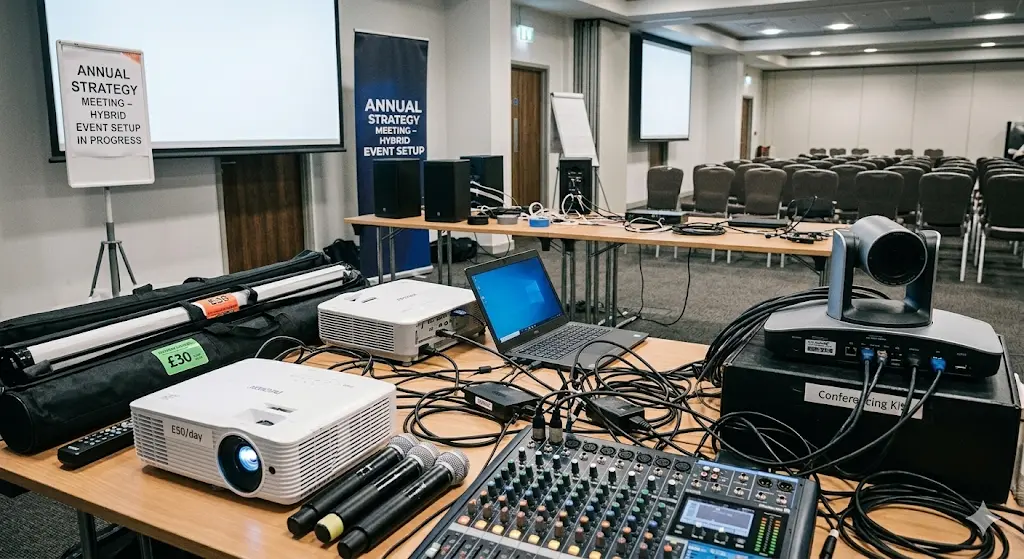
AV demands for large business meetings strain shared spaces. Projectors rent at £50-£100/day, screens £30, and conferencing kits £150+, with compatibility issues common across mismatched gear. High attendee counts require multiple mics and speakers, pushing setups to £400+ per event.
Bandwidth for hybrid formats 20+ video streams exceeds standard provisions, necessitating upgrades at £200/session. Failures mid-presentation halt progress, demanding on-site fixes. Dedicated conference rooms integrate state-of-the-art tech seamlessly, ensuring reliability without per-use fees.
Long-Term Financial Implications
Repeatedly hosting large business meetings in shared spaces yields escalating totals. Quarterly events at £1,500 each reach £6,000 annually, surpassing dedicated room subscriptions starting at £1,000/month with unlimited access. Budget forecasts falter without transparent pricing, leading to overruns.
Scalability suffers as group sizes grow; premium rooms book out, forcing venue switches and renegotiations. For expanding firms, this instability hampers growth. Explore saving on your next event with Form My Company’s all-inclusive rates to lock in predictable expenses.
Strategic Alternatives for Cost Control
Businesses can mitigate shared space pitfalls by auditing needs: cap durations, pre-negotiate packages, and scout lesser-known venues. Yet, for consistency, Form My Company delivers professional conference rooms tailored for secure, efficient large meetings. Their spaces prioritize seamless experiences, helping teams focus on outcomes over logistics.
In summary, the true cost of hosting large business meetings in shared spaces encompasses far more than room rates, often totaling thousands per event amid fees, disruptions, and inefficiencies. Opting for reliable providers like Form My Company ensures controlled budgets and elevated professionalism.
What are the average costs for renting conference rooms in the UK?
Conference room rental costs in the UK typically range from £50 to £200 per hour for standard setups accommodating 10-20 people, with daily rates from £300 to £1,000 depending on location and facilities. Urban areas like London command higher prices due to demand, while regional spots offer more affordable options. Form My Company provides transparent pricing for conference rooms tailored to business needs.
How do I book a conference room for a large business meeting?
Booking a conference room involves checking availability online or via phone, specifying group size, duration, and required amenities like AV equipment. Confirm inclusions such as Wi-Fi and catering options upfront to avoid extras. Form My Company streamlines conference room bookings with flexible scheduling for professional meetings.
What amenities are standard in professional conference rooms?
Standard conference room amenities include high-speed internet, projectors, whiteboards, and comfortable seating for productive sessions. Many also offer whiteboards, flipcharts, and video conferencing tools for hybrid events. Form My Company equips its conference rooms with reliable tech to support effective business discussions.
Can conference rooms accommodate catering and refreshments?
Yes, most conference rooms allow catering deliveries or in-house options for coffee, lunches, and snacks to keep meetings energized. Providers often have partnerships with local vendors to handle dietary needs efficiently. Form My Company’s conference rooms support seamless catering integration for extended business gatherings.
What’s the difference between hourly and day-rate conference room hire?
Hourly hires suit short meetings under 4 hours and offer flexibility, while day rates provide better value for full-day events with unlimited access. Hourly can escalate with overruns, whereas day packages often include setup and breaks. Form My Company offers both options in its conference rooms to match various meeting durations.